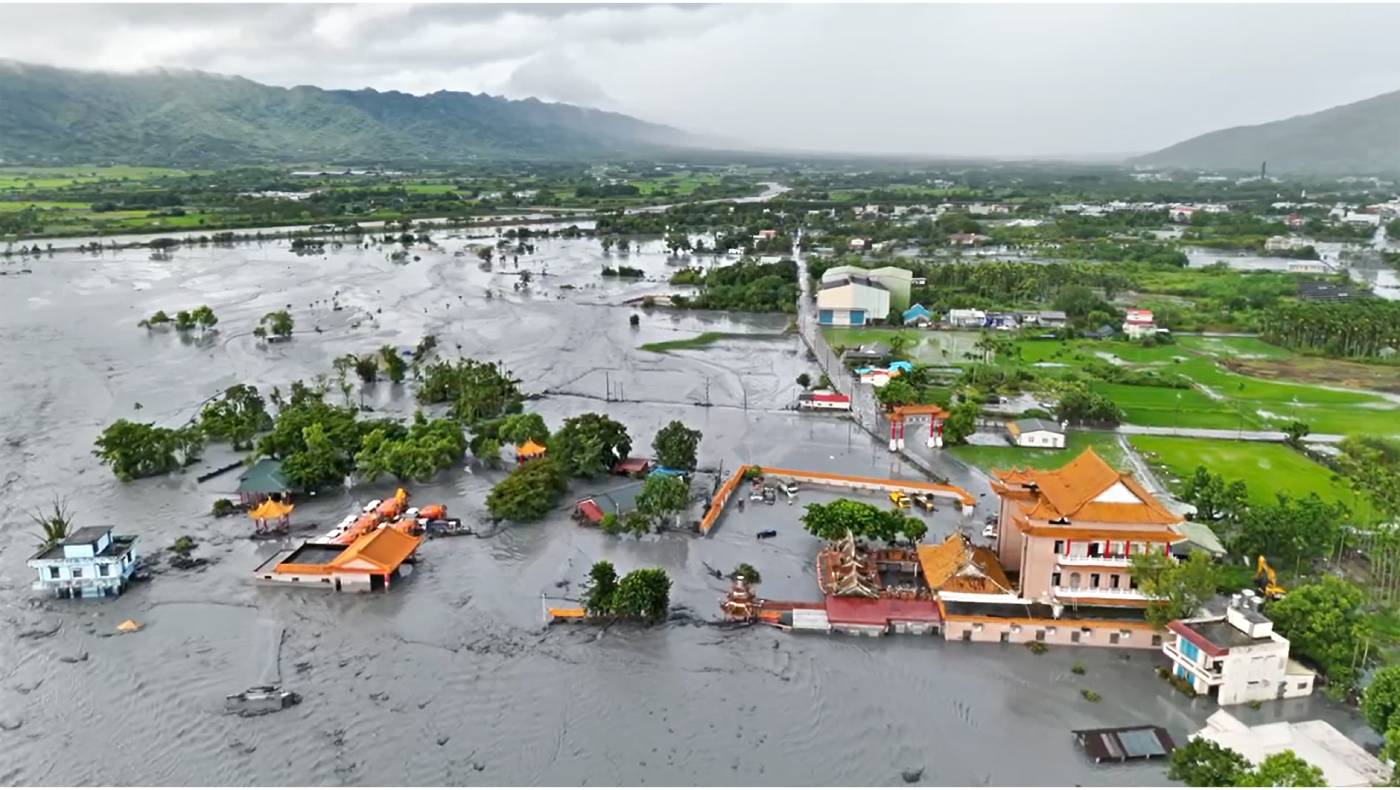
Following historic, torrential rainfall from Super Typhoon Ragasa, floodwaters from the Matai’an Creek barrier lake in Taiwan’s Hualien County surge into Guangfu Township on the afternoon of September 23, 2025. Photo/Jungfeng Chen
SHARE
On September 23, 2025, after days of unrelenting rain, the natural barrier lake upstream of Hualien’s Matai’an River gave way. With its banks breached, an estimated 68 million tons of water were soon unleashed, roaring more than 1,000 meters into Guangfu Township in just half an hour. The torrent tore through bridges, swallowed roads, and engulfed homes in a swell of brown water. After the flood receded, it left behind layers of mud — and left communities at a standstill.
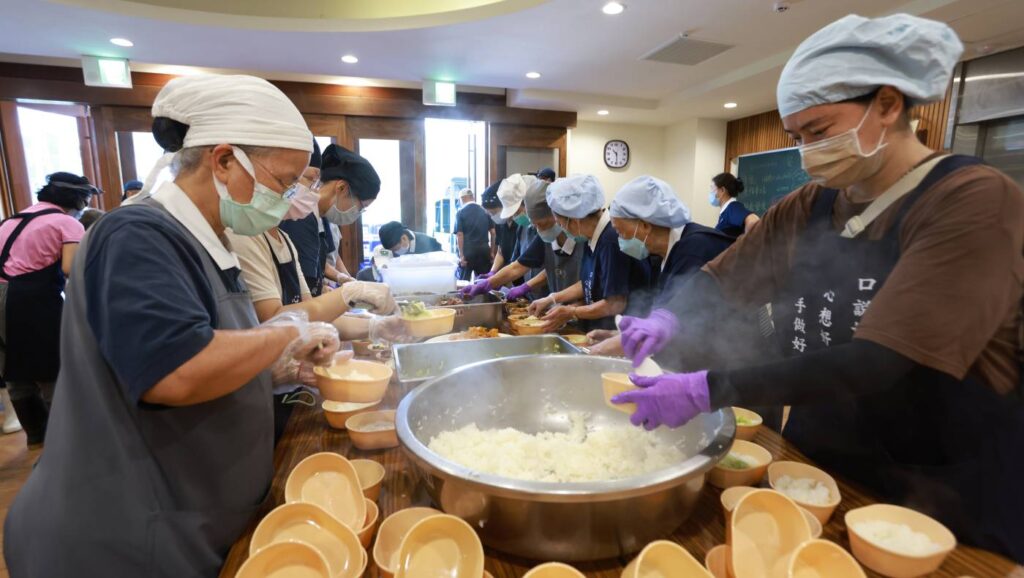
Tzu Chi rapidly mobilizes volunteers to the front lines for disaster relief, with catering volunteers serving thousands of hot meals daily to disaster survivors and “Shovel Superheroes” from across Taiwan. Photo/Chinte Chan
When the Mountains Released the Sea
Classified internationally as a Category 5 storm, Super Typhoon Ragasa brought record-breaking rainfall to Taiwan’s east coast, and struck Guangfu, home to many residents who are seniors and members of the Indigenous Amis tribes, with the force of a tsunami.
Formed following a massive landslide caused by Tropical Storm Wipha in July, the barrier lake upstream of Hualien’s Matai’an River had risen rapidly, and a disaster soon became inevitable. The Matai’an River Bridge fractured, its piers vanishing into the current. Near the riverbank, water rose to the height of a one-story house, sweeping away vehicles as panicked residents fled for safety. In footage from DA.AI News on September 23, a woman clung desperately to an electrical pole in the raging floodwater, struggling to keep from being swept away.
Typhoon Ragasa’s torrential rains cause the barrier lake upstream of Matai’an River to overflow, and floodwater surges into Guangfu Township, Hualien County. This aerial view of the Matai’an River on September 24 shows muddy currents still rushing downstream from the barrier lake. Photo/Jungfeng Chen
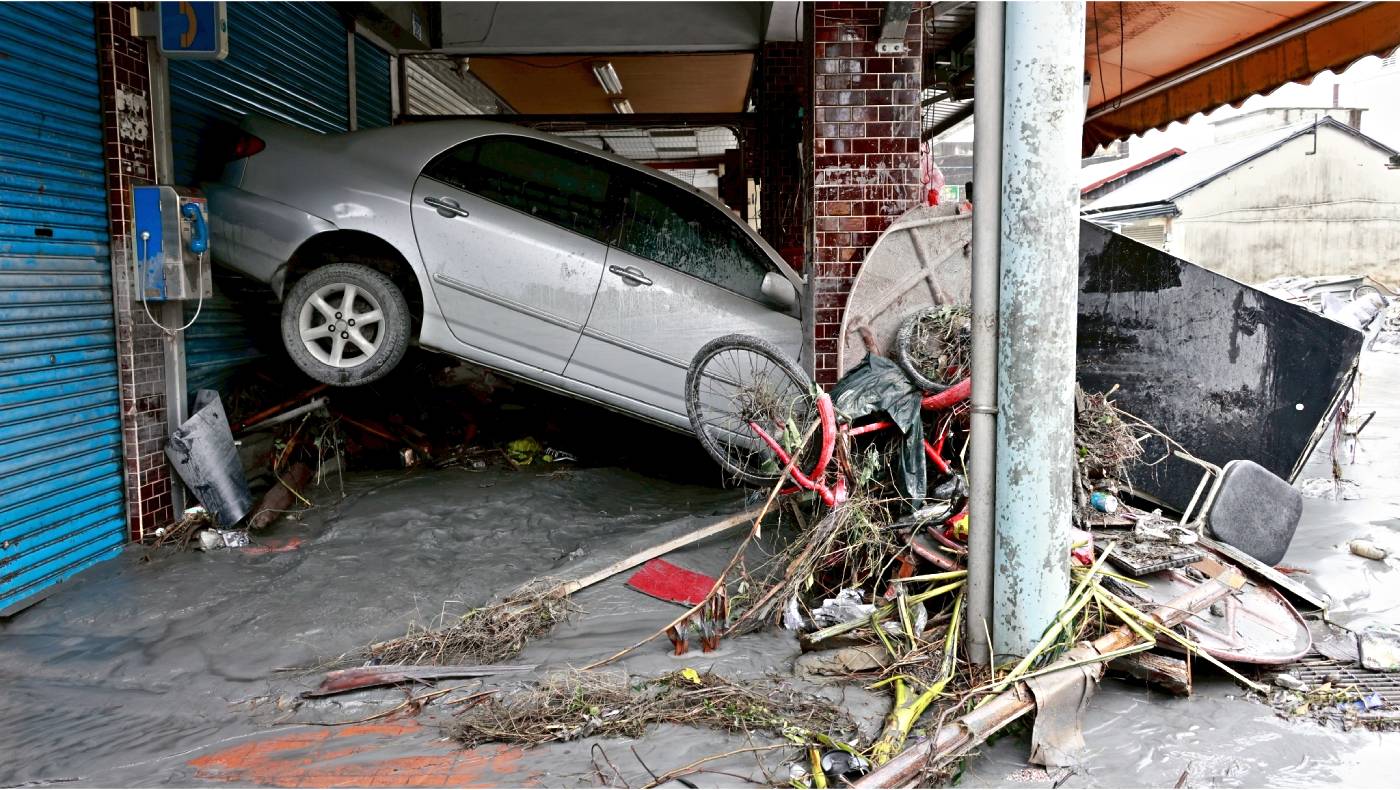
As floodwater receded, Guangfu Township lay scarred and devastated, with vehicles hanging precariously from where they had been swept away. Photo/Mingtao Lo
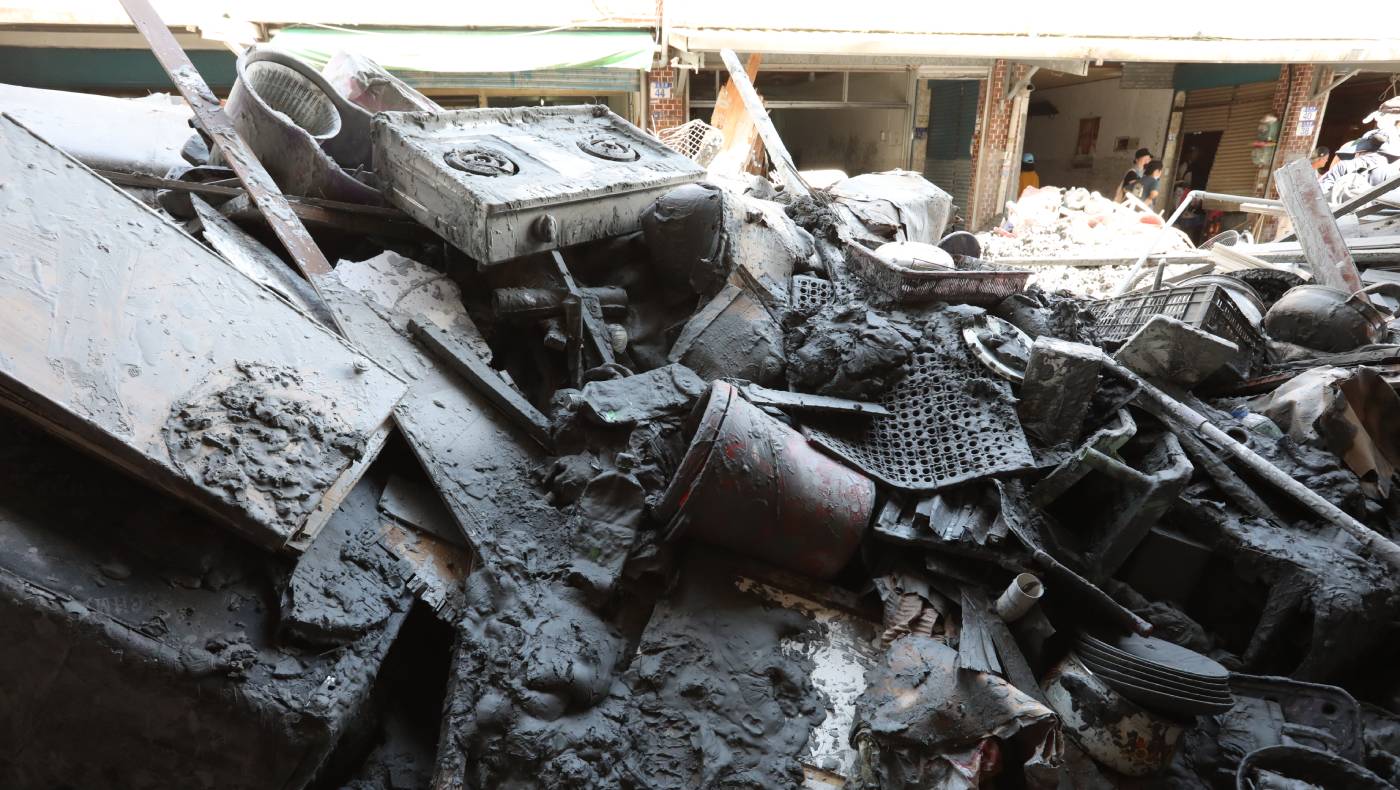
Thick layers of silt emit foul odors, burying traces of past life. Photo/Paoching Chiang
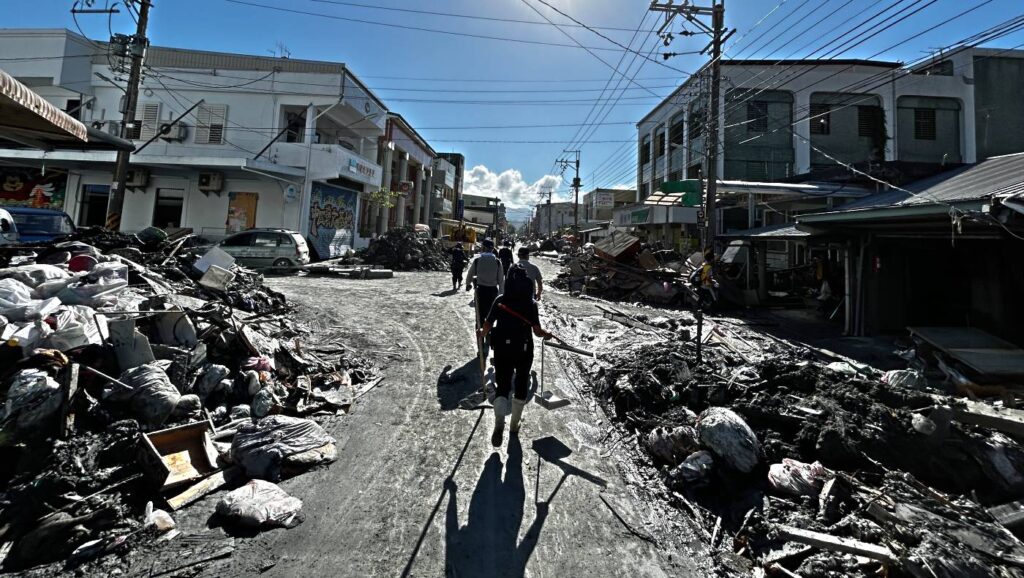
When the floodwaters finally withdrew, they left behind thick, foul-smelling layers of silt — some waist-deep — alongside overturned furniture and shattered tiles. The debris told of entire lives suddenly uprooted. According to Taiwan’s Central Emergency Operations Center, as of October 18, the floods had tragically taken 18 lives, caused 107 injuries, and six people were still unaccounted for.
However, just as helplessness began to settle over Guangfu, the first signs of hope soon arrived.
The Arrival of “Shovel Superheroes”
“To Hualien, any tickets?”
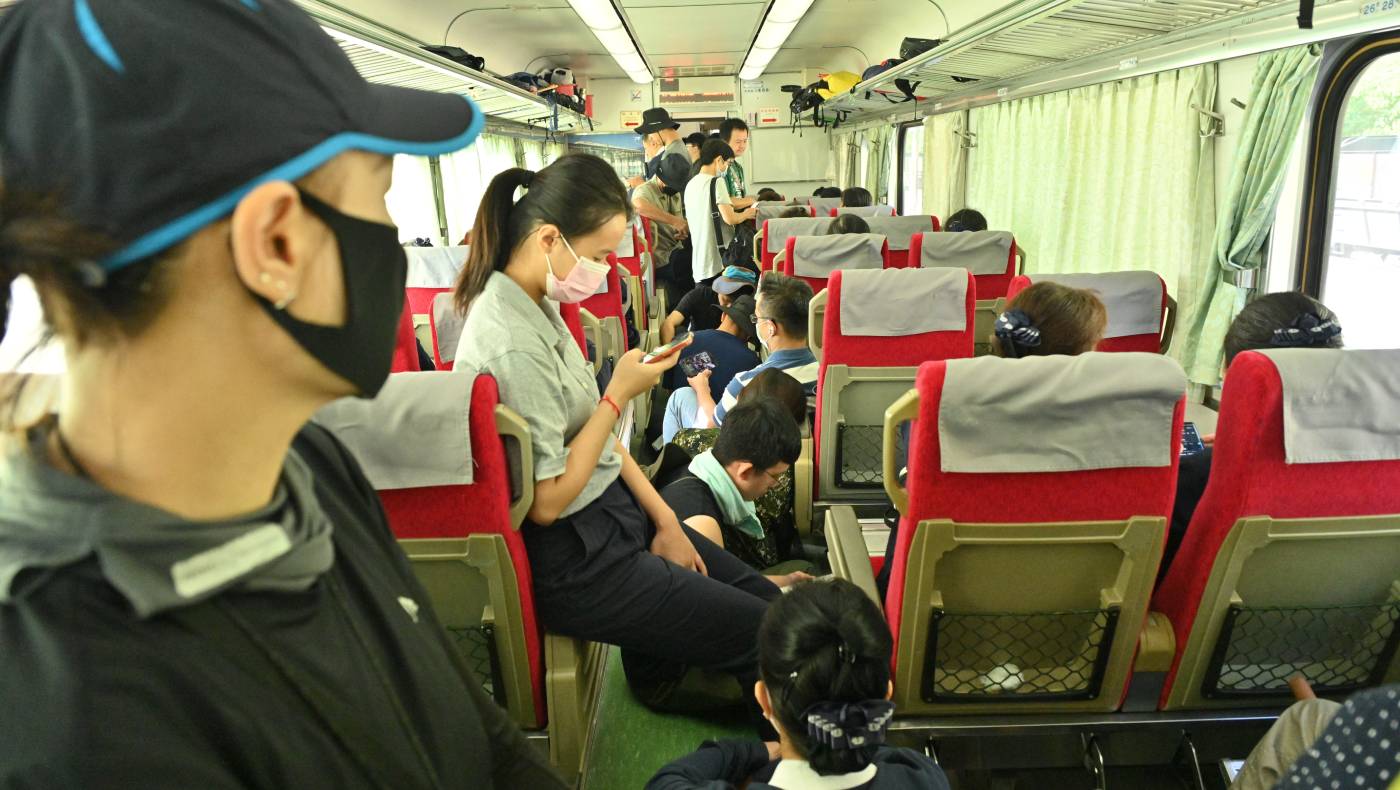
The phrase echoed through stations as people armed with shovels, brooms, and buckets boarded eastbound trains for Guangfu, every car packed to capacity. Some stood for hours, unwilling to wait for another day.
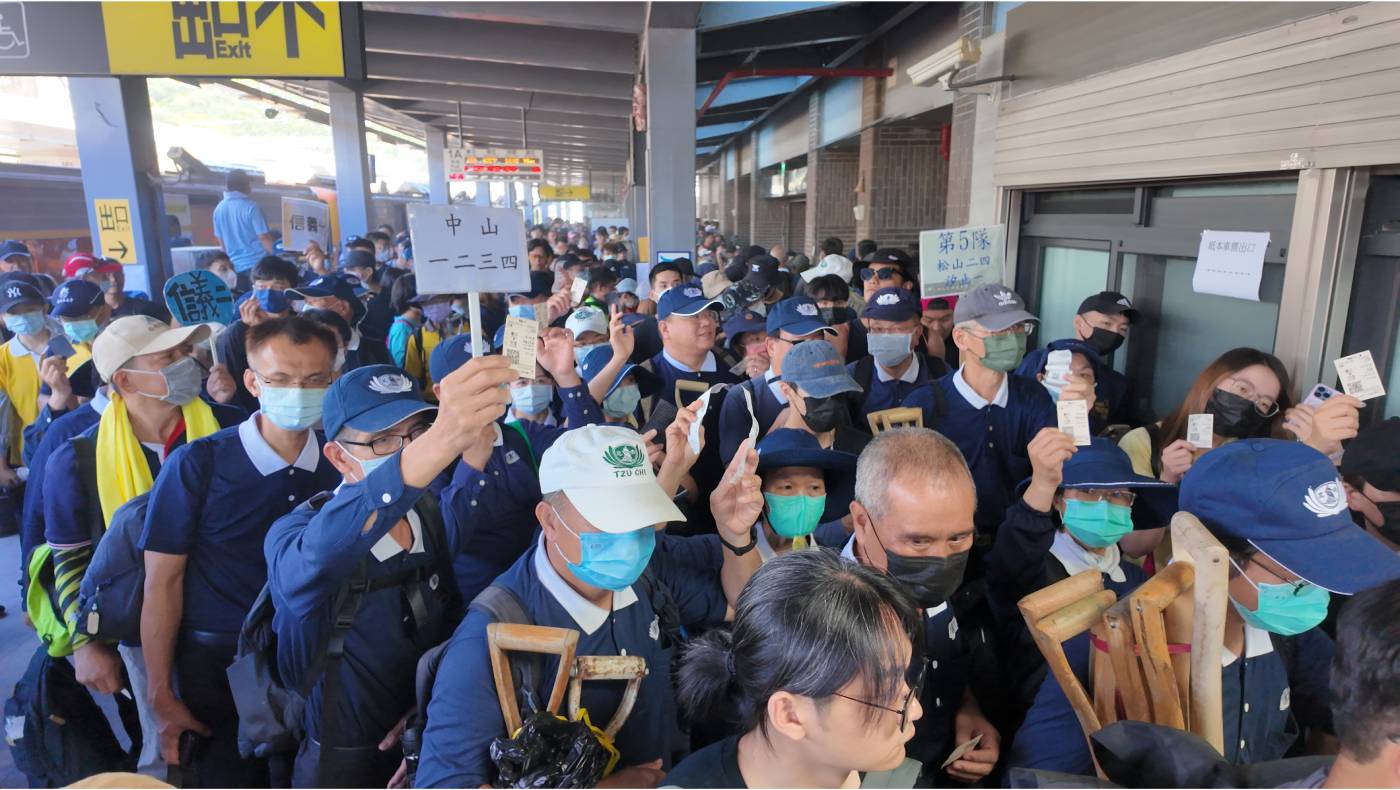
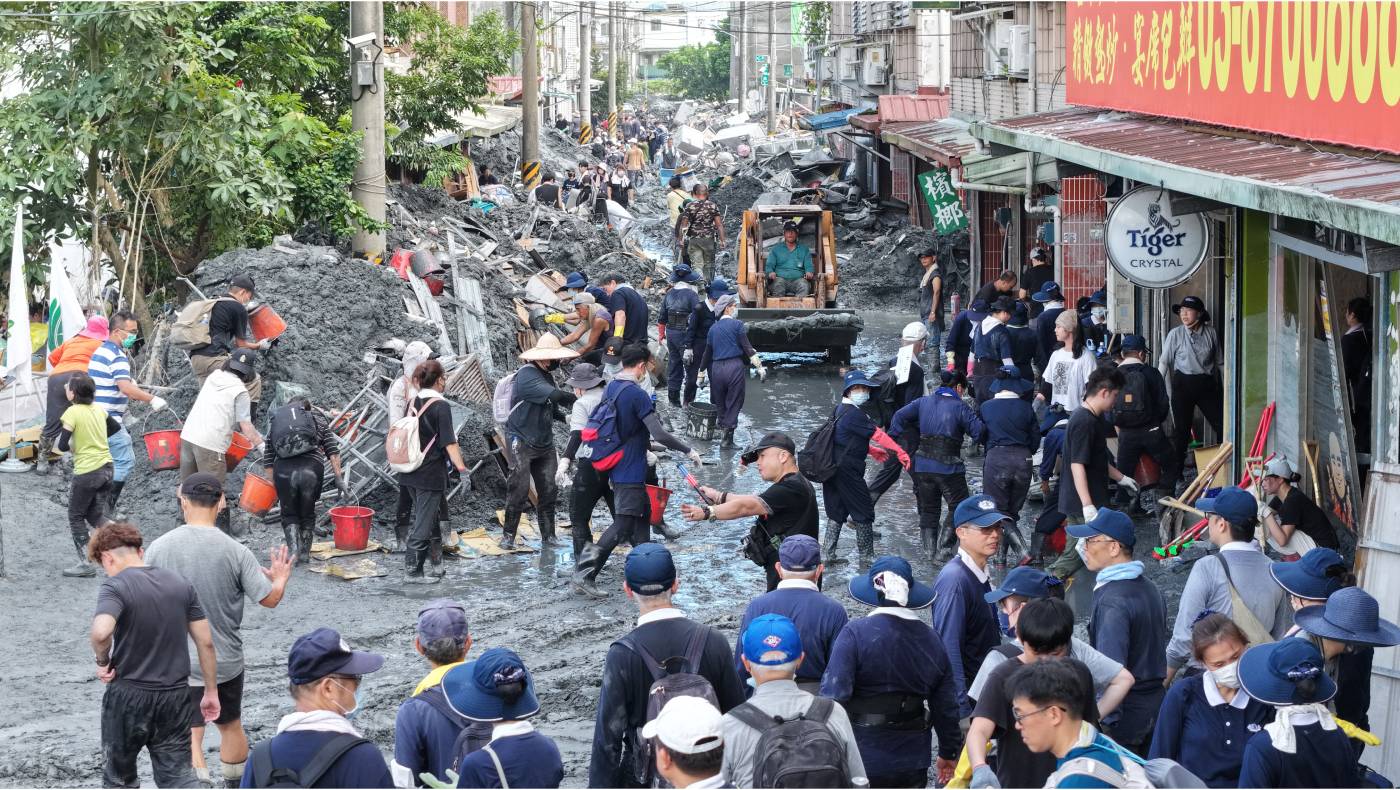
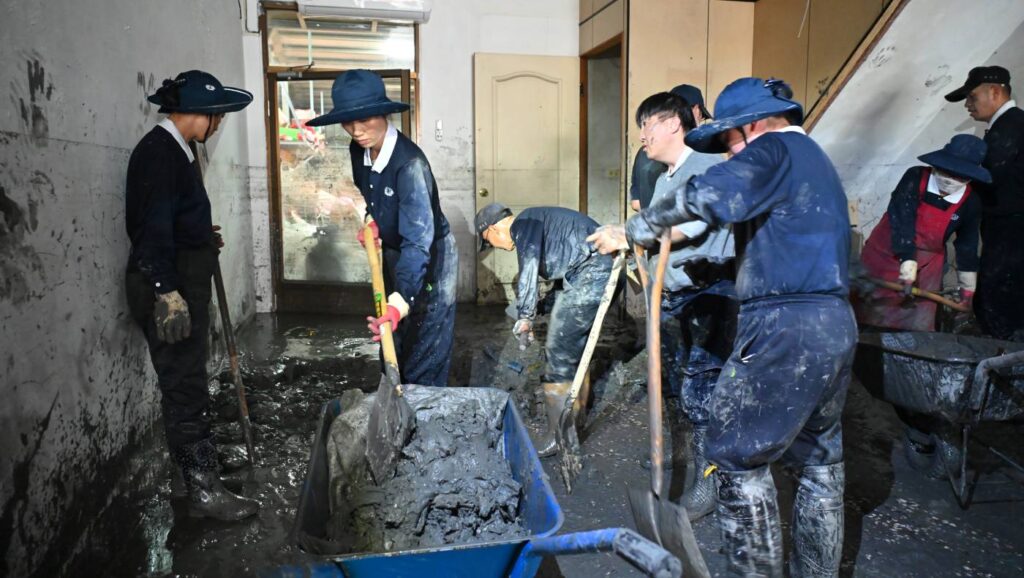
When each train reached the rural station, the platform instantly swelled with hundreds of helping hands. Clad in rubber boots and gloves, they poured onto the mud-covered roads. Side by side, they worked in streets and homes, shoveling mud, hauling debris, and cleaning up in solidarity with strangers who urgently needed their help. Together, these individuals were determined to clear the muddy paths so machinery could take over and begin large-scale excavation. Meanwhile, Tzu Chi volunteers in kitchens stirred fragrant pots over open flames and packed meals.
Every train car bound for Guangfu is packed to capacity. Standing, sitting on the floor of the aisles, holding their own tools, they are the “Shovel Superheroes” supporting the disaster area. Photo/Mingtsun Huang
The station in disaster-stricken Guangfu Township is packed with people arriving from all over Taiwan to help. People hold their tickets high above their heads, waiting for ticket inspection before exiting. Amid the crowd, figures in blue-and-white uniforms are seen as countless Tzu Chi and youth volunteers join the cleanup efforts. Photo/Liyu Tsai
The muddy sludge contains unknown pollutants, including feces, pesticides, batteries, gasoline, and garbage. Yet, Tzu Chi volunteers and the Shovel Superheroes fearlessly wade into the disaster area, undeterred. Photo/Shaomin Chen Li
Each layer of mud and debris lifted revealed another glimpse of hope, their determination gradually transforming the community, one street at a time. Among the volunteers was Ms. Chen, who traveled from Syuejia, Tainan. Once a survivor of Typhoon Morakot in 2009, she now stood as a rescuer.
“During Typhoon Morakot, I took shelter at the district office and saw Tzu Chi sisters already waiting there for everyone,” she recalled. “When disaster strikes, they’re always the first to arrive, cooking hot meals. I used to be among the ones receiving help. I should give back, hoping to inspire a virtuous cycle of kindness.”
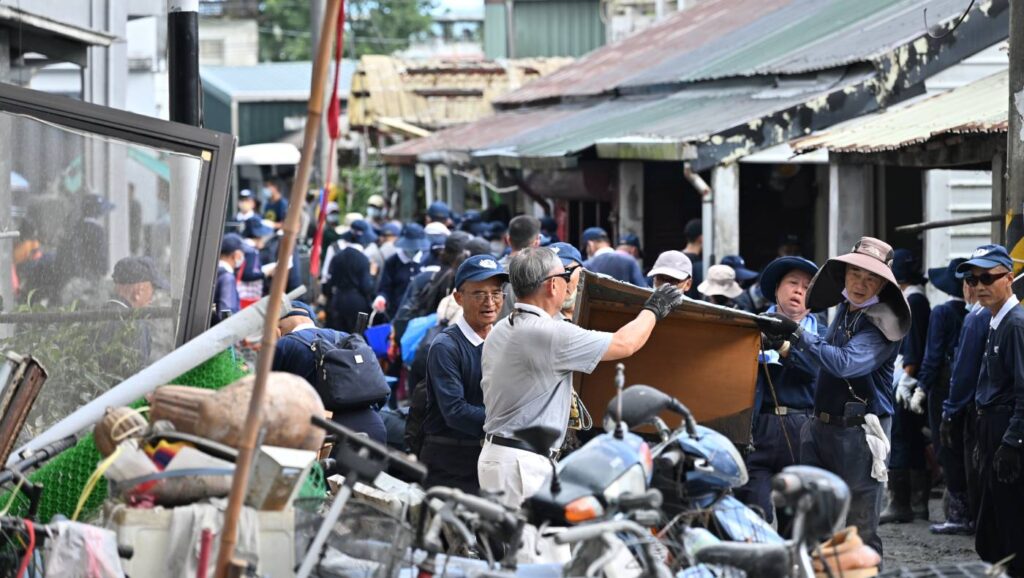
In the narrow alleys of the disaster area, Tzu Chi volunteers work together to move heavy furniture. Photo/Wanchiao Lin
These volunteers soon became known as the “Shovel Superheroes.”
Others followed similar instincts. Yuhsuan Yeh, a graduate of Tzu Chi University and now a junior high school teacher in Hualien, bought shovels, brooms, gloves, and wheelbarrows out of her own pocket and drove them to Guangfu.
“Though I had to visit several stores to get everything, I met kind-hearted shop owners. When they learned it was for disaster relief, some of them just sold at a discounted price,” said Yeh, smiling. “Human resources are limited, but supplies can be reused. Anyone in need can take what they need.”
Tzu Chi volunteers wield shovels and spades to clear thick mud from homes. Photo/Yenhsien Li
For survivors like Mr. Cheng, the sight of so many strangers arriving to help was life-changing. “I returned home on the fourth day after the disaster,” he shared. “Upon entering, I saw mud everywhere and didn’t know where to begin. Just as I started cleaning, suddenly 30 or 40 people rushed in to help. This catastrophe showed me that volunteers from all over Taiwan came to Guangfu to assist us. Taiwanese people are kind and compassionate. Once my home is restored, I will also sponsor and help those in need.”
A Warm Support System
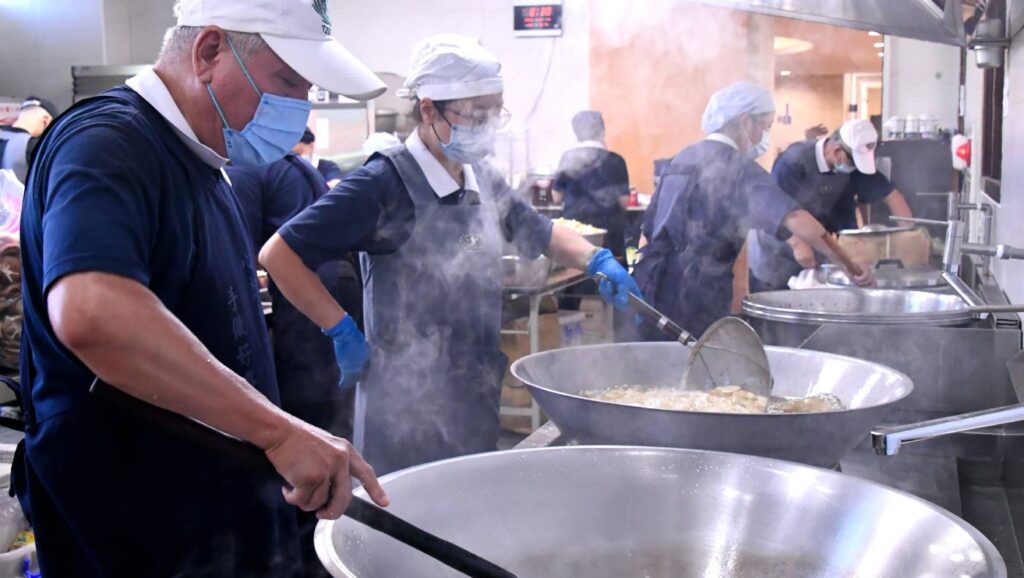
Just 20 minutes from the disaster zone, Tzu Chi’s Jing Si Hall became a bustling command center for meal preparation. “Food supplies are the most critical need right now,” emphasized Tzu Chi’s founder, Dharma Master Cheng Yen, during a disaster response meeting. People will need strength to rebuild their homes, indeed, and a hot meal will offer genuine comfort after a disaster, she emphasized. And so, in the affected area, where the clanging of metal scrapers clearing mud mingled with the sweltering heat and muddy water, another group of “superheroes” worked up a sweat. Instead of shovels, they wielded spatulas.
A Jing Si Abode near the disaster zone serves as a disaster relief hub, where catering volunteers prepare hot meals for both survivors and the Shovel Superheroes. Photo/Wentsung Liao
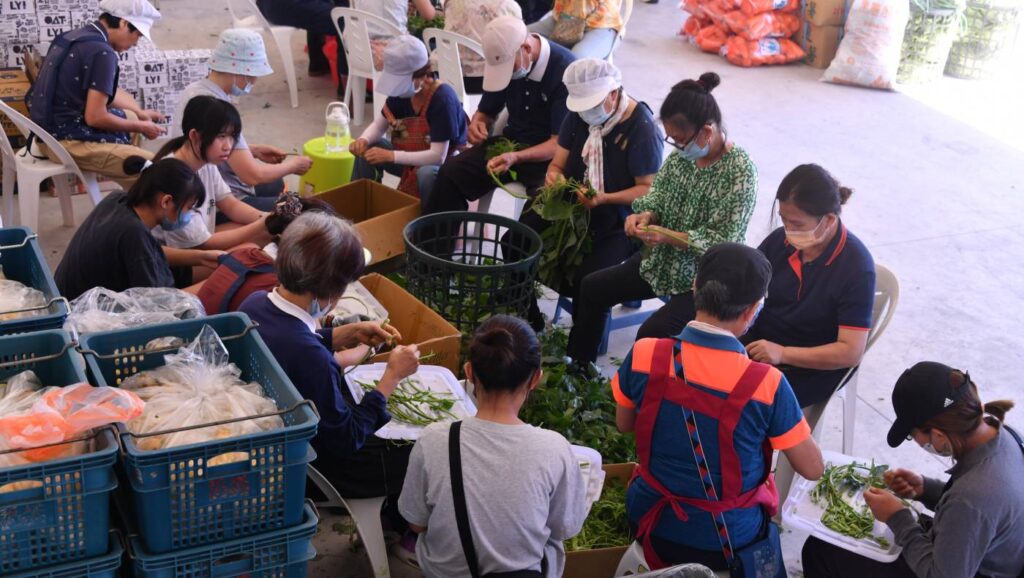
The Jing Si Hall serves as a disaster relief hub, where catering volunteers start preparations at dawn, meticulously sorting and cleaning vegetables. Photo/Wentsung Liao
By 3:00 AM each morning, the kitchen was already in full swing. By sunrise, it was alive with the rhythmic clatter of chopping as volunteers washed, prepared, and stir-fried.
We simply want all Shovel Superheroes, disaster survivors, and our military personnel to enjoy hygienic, delicious meals, knowing that we have their back.
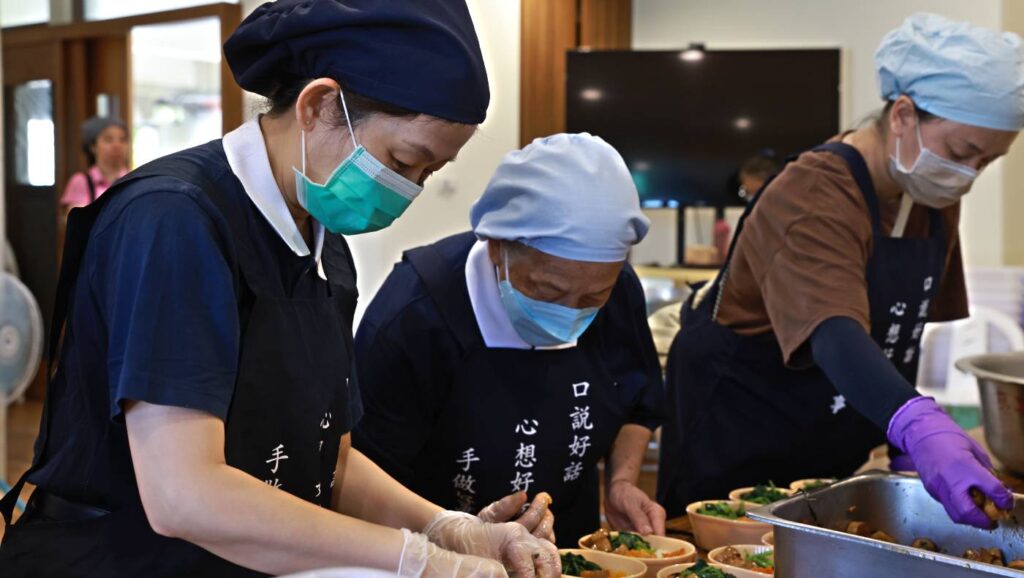
Each day, 7,000 meals were delivered from the kitchen, not only to disaster shelters but also piping hot to the Shovel Superheroes. Social media brimmed with messages of gratitude. “The stir-fried carrots and vegetarian mince were gone before I knew it!” said one helper. “Tzu Chi’s meal utensils, chopsticks, containers, and whatnot, are all reusable. Though mostly vegetables, the variety is amazing; so delicious!” added another. “Tzu Chi’s logistics rocks!”
On September 27, Tzu Chi volunteer Yang Yuegui (left) participates in the meal packing line, filling each lunchbox with her sincere gratitude for the cleanup volunteers. Photo/Chinte Chan
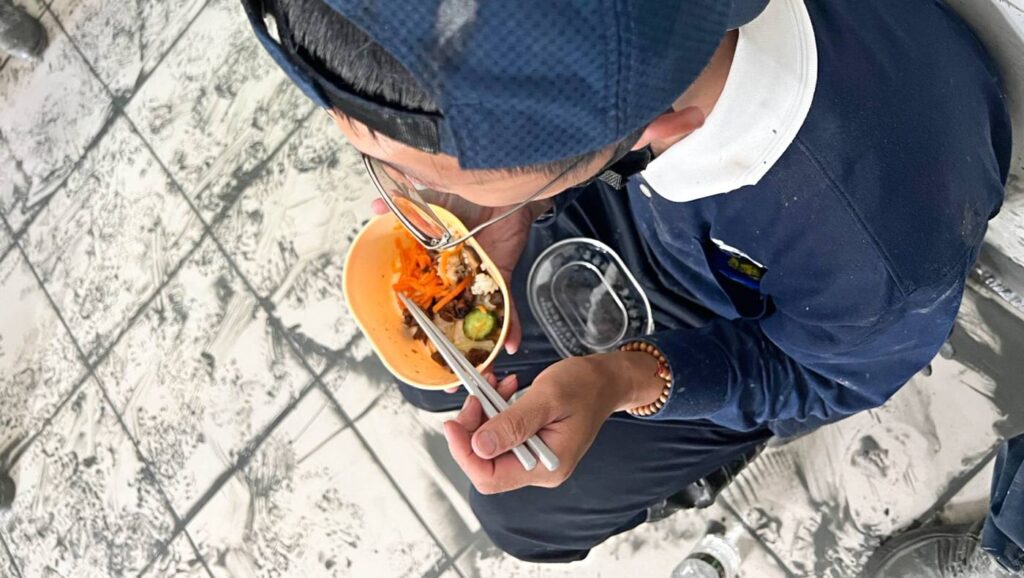
At lunchtime, volunteer Hsiencheng Lai takes a moment’s rest in a residential living room to eat a meal prepared by the catering volunteers, gathering strength for the next phase of cleanup work. Photo/Shihpin Li
“When we arrived at the rest stop and opened the lunch boxes, everyone exclaimed in unison, ‘Wow! It smells so good!’ and ‘So delicious!’ These voices surrounded us, becoming the most touching and rewarding moments,” shared one Tzu Chi volunteer.
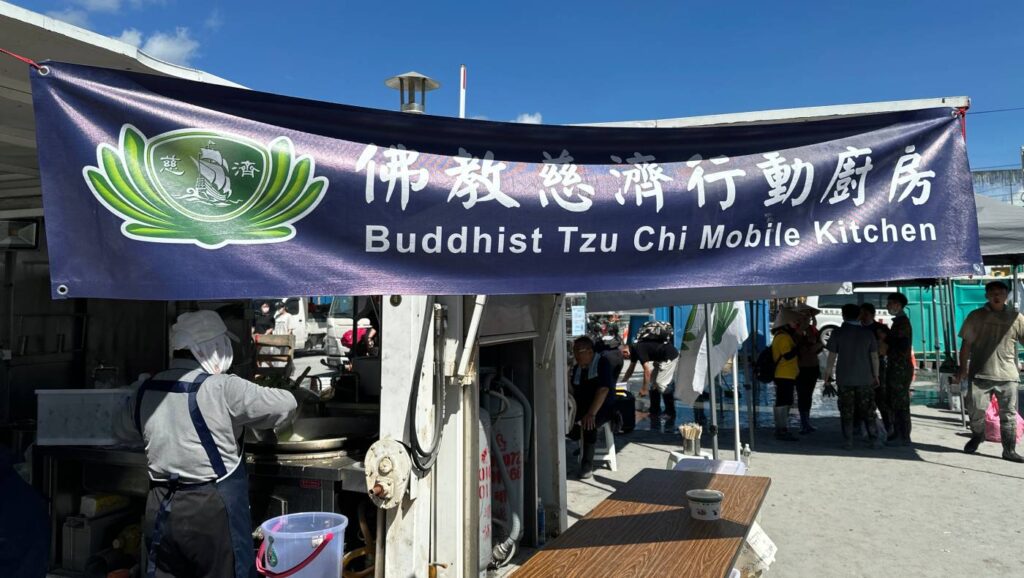
As the area around Guangfu Station was heavily affected, Tzu Chi set up a mobile kitchen directly in front of it. Equipped with solar panels and a water-purification system, the mobile kitchen could produce 1,200 four-dish-and-one-soup meal boxes on average every three hours — and operate seamlessly even in disaster areas without running water or electricity. Thousands of vegetarian meals, from stir-fried noodles to savory congee, soup noodles, and vermicelli soup, were prepared daily for residents and relief workers. Mung bean soup and ice pops were also offered to help these superheroes beat the heat, ensuring both rescue workers and local residents could replenish their strength.
The Tzu Chi mobile kitchen set up in front of Guangfu Township Train Station prepares thousands of vegetarian meals daily to nourish the weary bodies and minds of cleanup volunteers. Photo/Buddhist Tzu Chi Foundation
Tzu Chi’s mobile kitchen setup serves as a “warmth-delivering tool” in disaster relief, tracing its origins back to the 921 Earthquake in 1999. While witnessing survivors cooking in tents, Dharma Master Cheng Yen expressed concerns about hygiene and asked volunteers to explore safe, sanitary solutions. After three years of design, development, and testing, a volunteer from Hsinchu, Chienyin Tsai, completed the first-generation mobile kitchen in 2002.
With the mobile kitchen, we no longer need to gather stoves and kitchenware. We can swiftly enter disaster areas to provide hot soup and tea, which are urgently needed by the survivors.
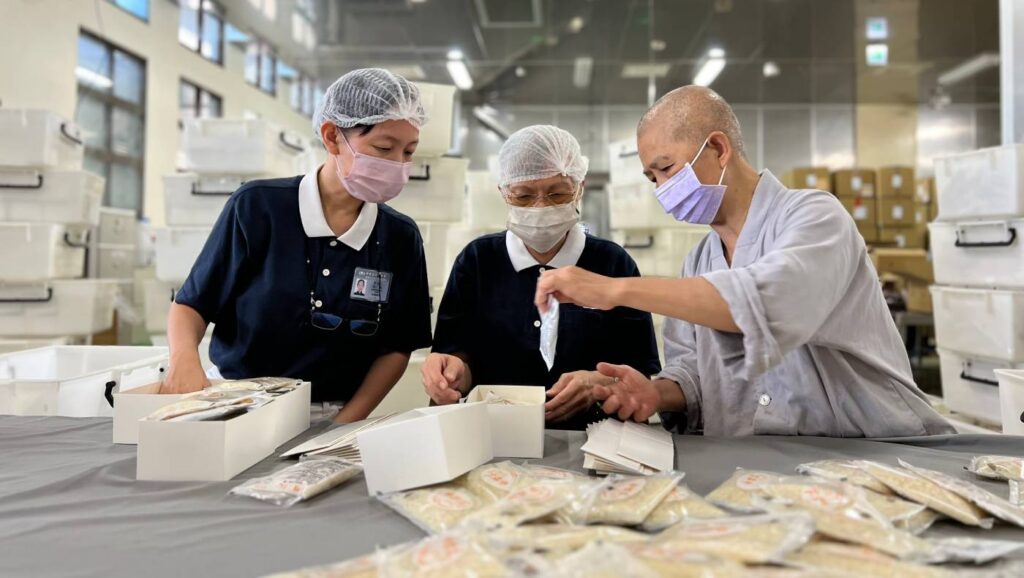
Dharma Masters at the Jing Si Abode prepare care packages containing instant meals, perilla soda crackers, and instant vegetarian stir-fry mixes. Photo/Ssuchia Huang
The second-generation mobile kitchen debuted during the 2015 TransAsia Air Crash relief. “Adapting to different locations, our kitchen cooking tools can be quickly assembled like building blocks to prepare meals. After use, they can be easily disassembled and cleaned,” explained volunteer Shuhui Yang.
The Jing Si Abode also worked around the clock to deliver 2,000 meals to the disaster area. “Our hearts are filled with best wishes, and we hope to swiftly deliver the compassion of Master Cheng Yen and the resident Dharma Masters to the disaster area, so our fellow countrymen and those in need can have their stomachs filled,” said Master Te Kun of the Jing Si Abode.
With extensive disaster relief experience, Tzu Chi understands that mobile kitchens may be unable to reach certain remote areas with disrupted roads, or that local conditions may be too harsh to set up a mobile kitchen. Yet, disaster relief supplies like instant rice and noodles, which are relatively lightweight, easy to store, and ready to eat with just water, allow survivors to quickly access a filling meal even without gas, electricity, or hot water. The convenience embodies Tzu Chi’s hope and care for affected families, helping them rebuild stability beyond survival.
Compassion on Every Front
In the days and weeks that followed, Guangfu’s transformation was slow but clearly visible. The Shovel Superheroes worked hard to move heavy, viscous mud shovel by shovel, relaying mountains of debris. Roads began to reappear from under the mud, and walls regained color.
As of October 10, Tzu Chi had mobilized 25,616 volunteer shifts, provided 39,995 meals, prepared 40,360 hot meals via mobile kitchens, distributed 3,106 care packages including fragrant rice, supplied 1,445 relocation kits, distributed 581 medical kits, and offered 3,701 free medical services.
Through the collective efforts of the “Shovel Superheroes,” roads in Guangfu Township reemerge from the mud. Photo/Mingan Chien
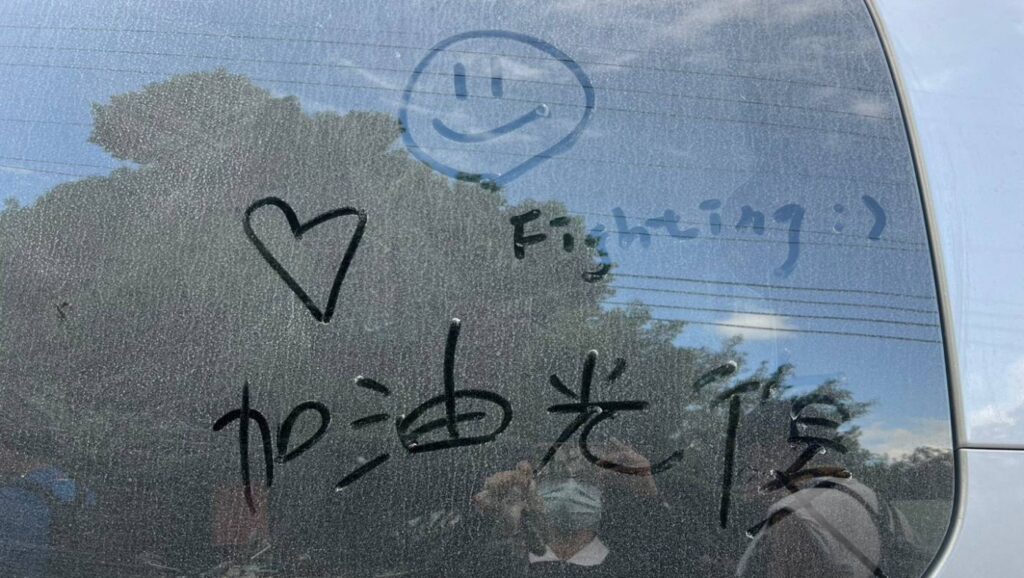
Car windows, once submerged by floodwater and covered by mud, now bear warm messages of encouragement from volunteers supporting Guangfu Township. Photo/Chingfang Lin
Tzu Chi’s support continues to expand, driven by a commitment to companionship. Tzu Chi USA, too, joined the effort, mobilizing immediately after the disaster to raise funds for affected residents. Volunteers in Seattle, Washington, launched a Mooncake Charity Sale before the Mid-Autumn Festival, donating all net proceeds, and the Tzu Chi USA Northwest Region held a fundraising concert on November 9 to support Guangfu disaster survivors.
Although the floodwaters have long receded, love continues to flow in Guangfu. What these extraordinary individuals held were shovels, spatulas, and the hands of disaster survivors, but what they gave would last far longer, as reconstruction is not only about clearing mud or rebuilding homes, but restoring dignity, comfort, and hope. Through every layer of mud cleared, every meal shared, and every heart consoled, Guangfu’s story has become a living testament to resilience and to the enduring power of compassion in action, indeed.