Inspired to Join the Tzu Chi Family: Our Broadening Volunteer Base
Written by Ida Eva Zielinska
Published #79 | Winter 2025 Issue
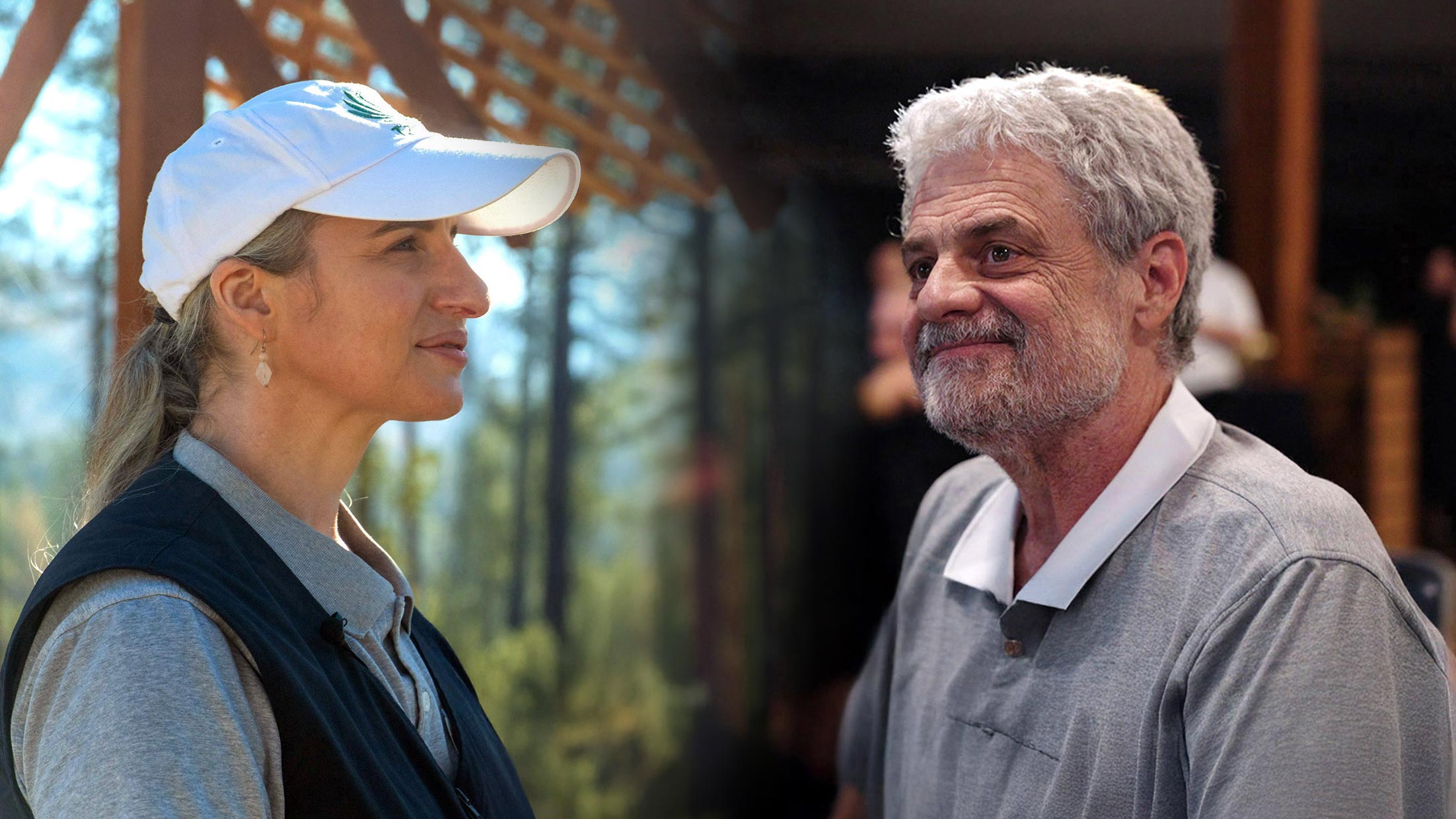
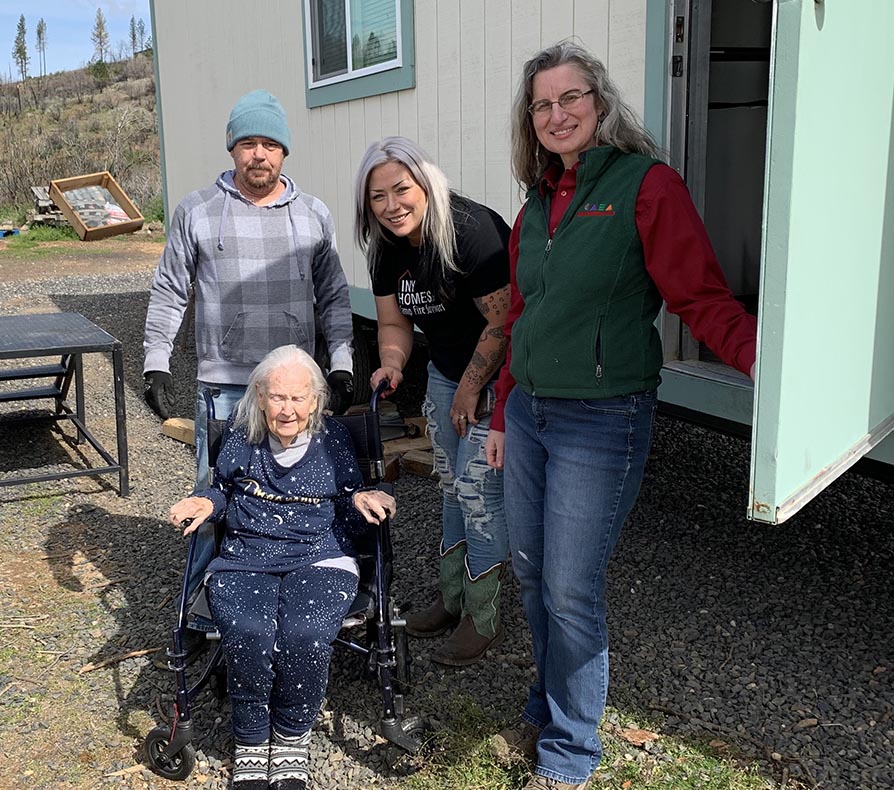
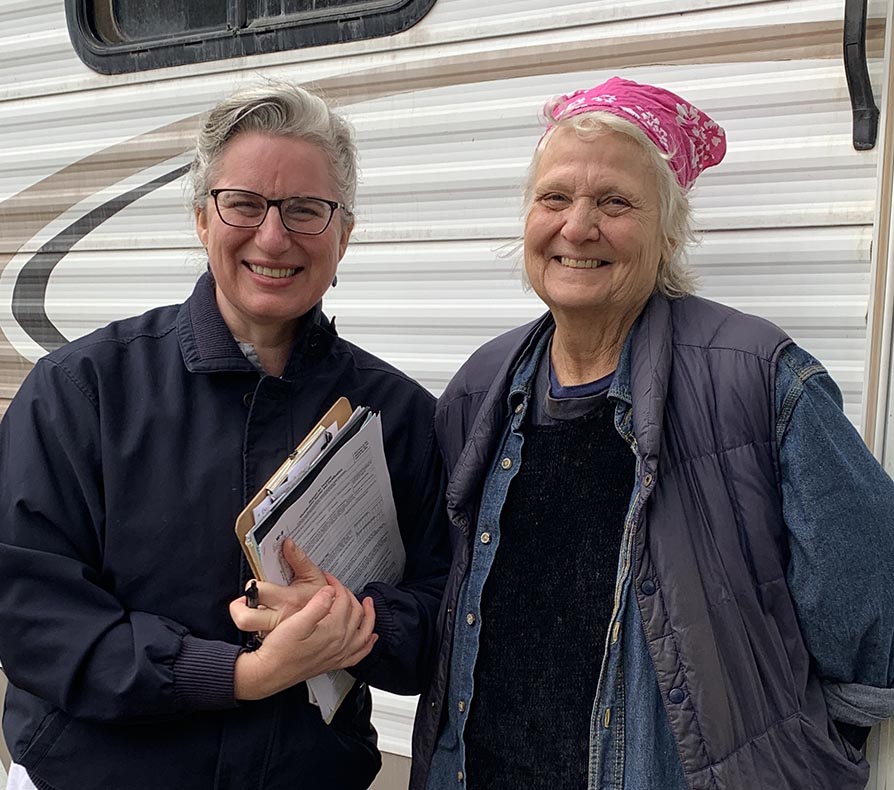
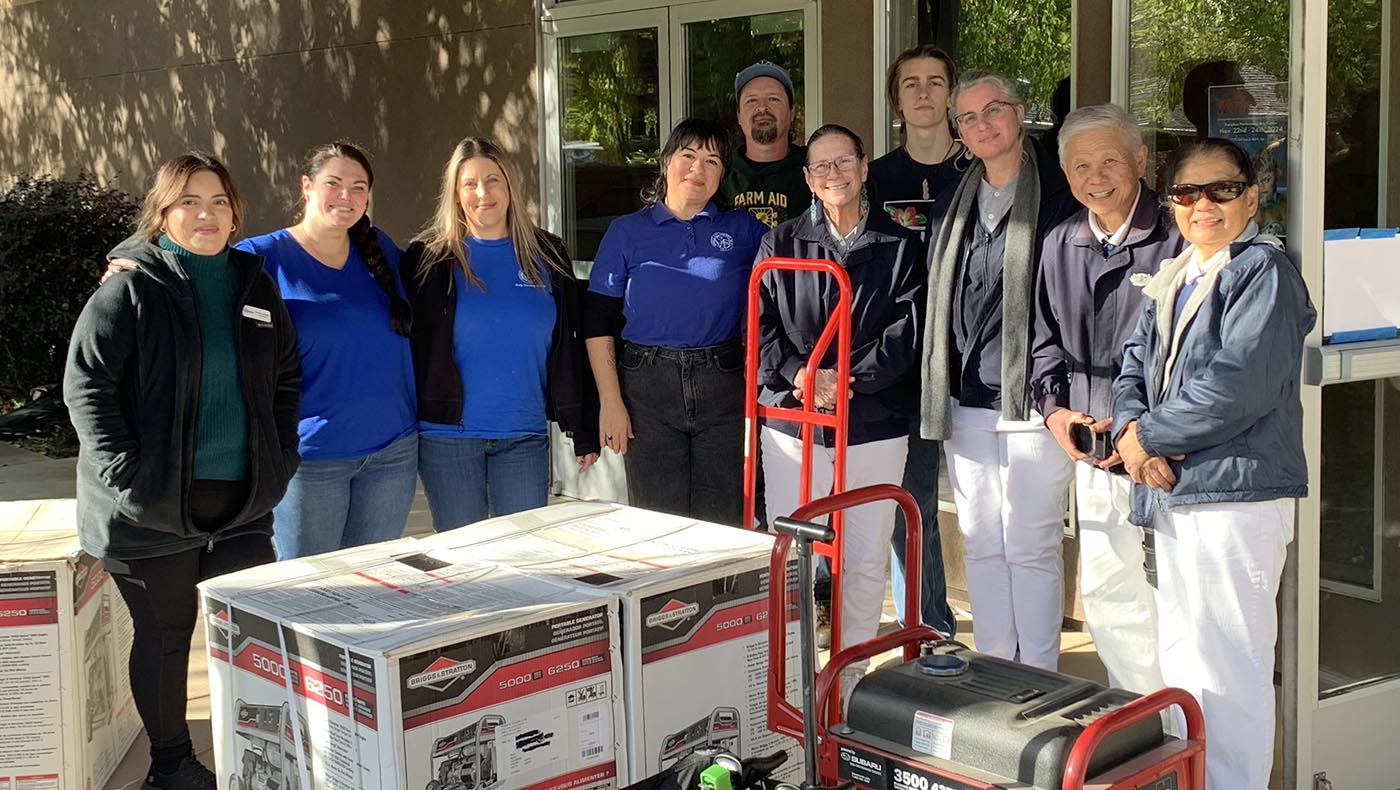
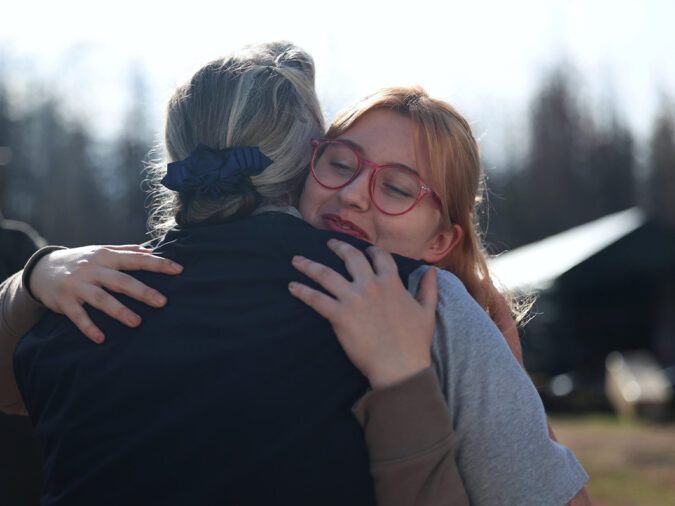
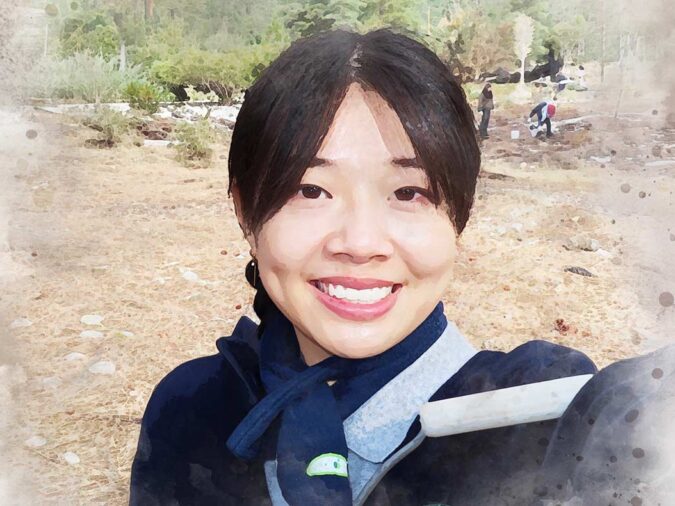
In October 2020, Bobbie Rae Jones, Tzu Chi Chico Recovery Resource Center Disaster Case Manager, witnesses as a family, who had been living in a cramped fifth-wheel trailer on their property since losing their home in the Camp Fire, finally receives adequate housing through a home replacement program she helped them access. Photo/Huan Xun Chan
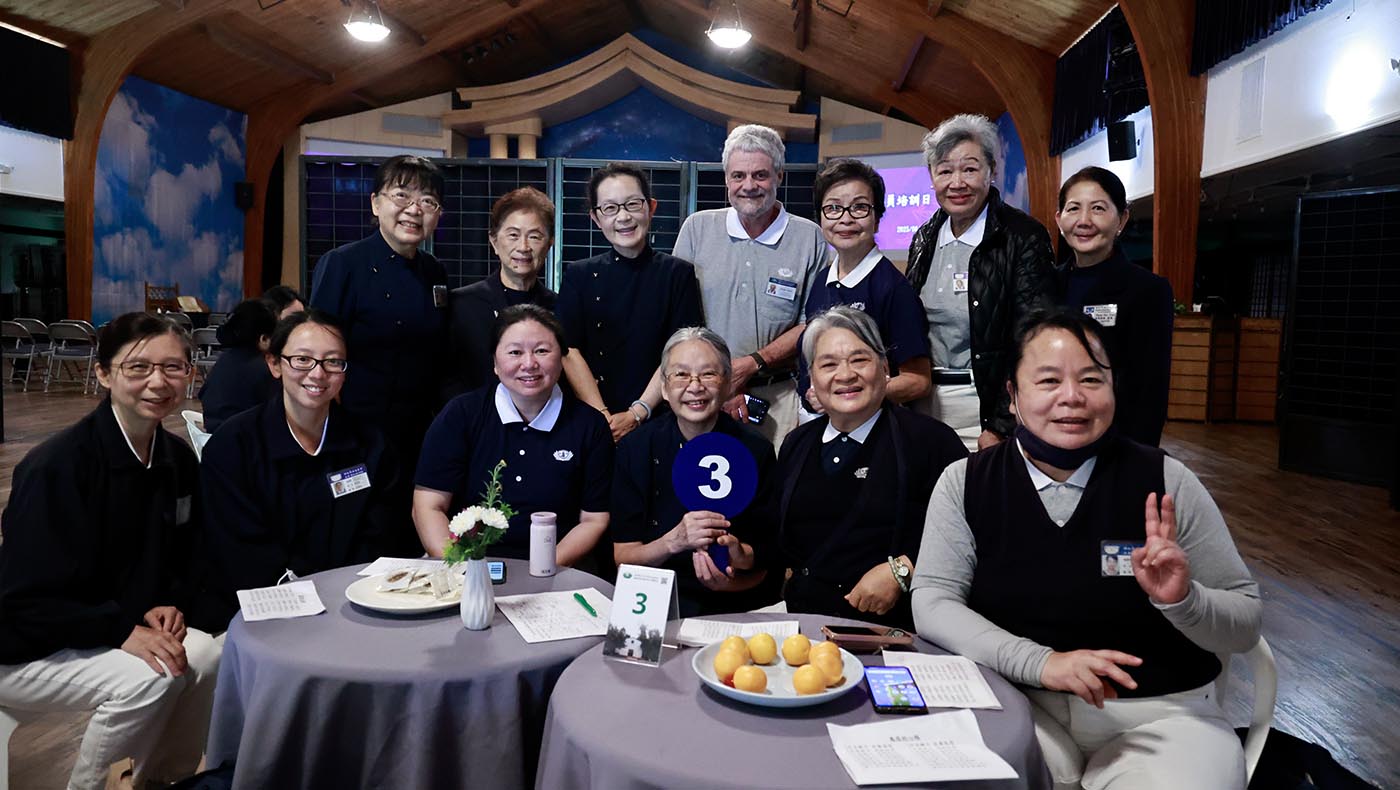
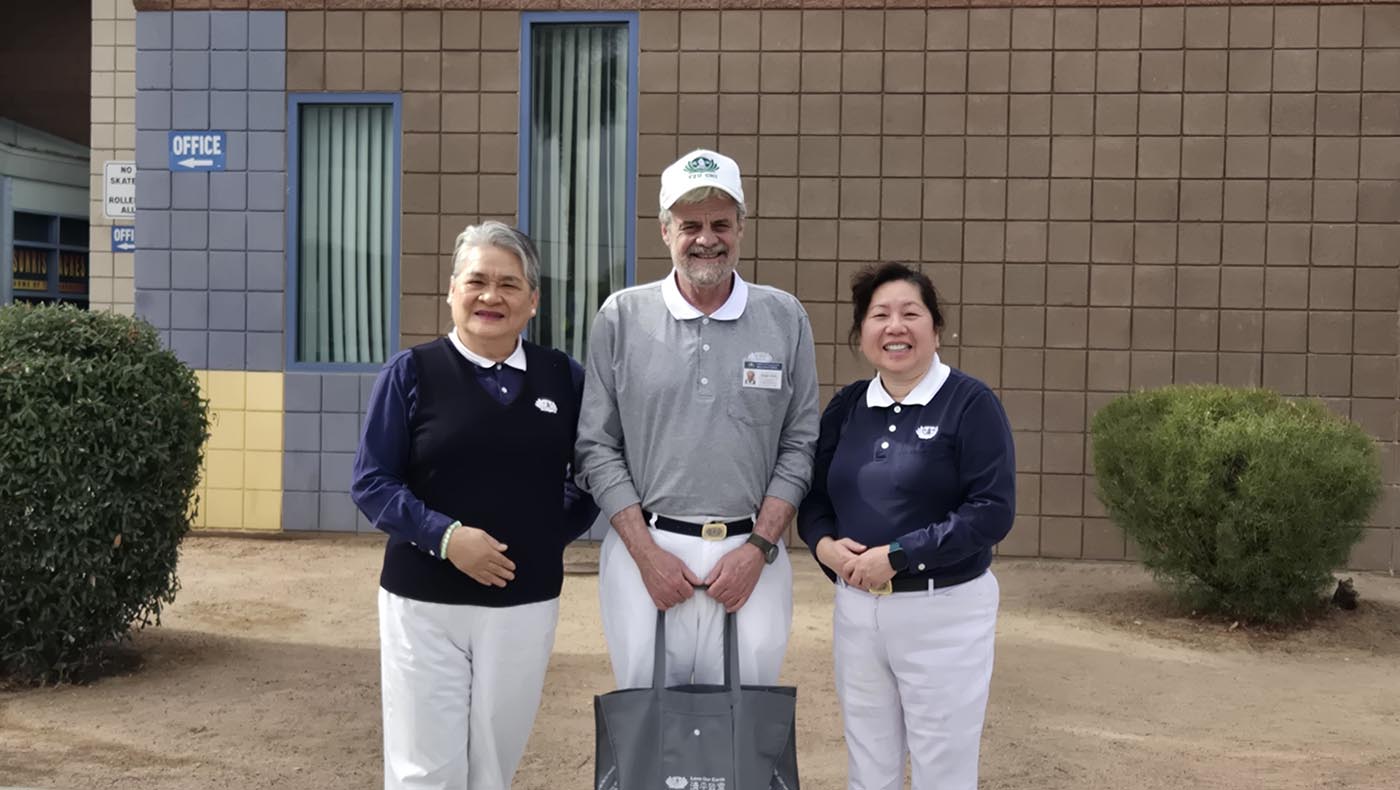
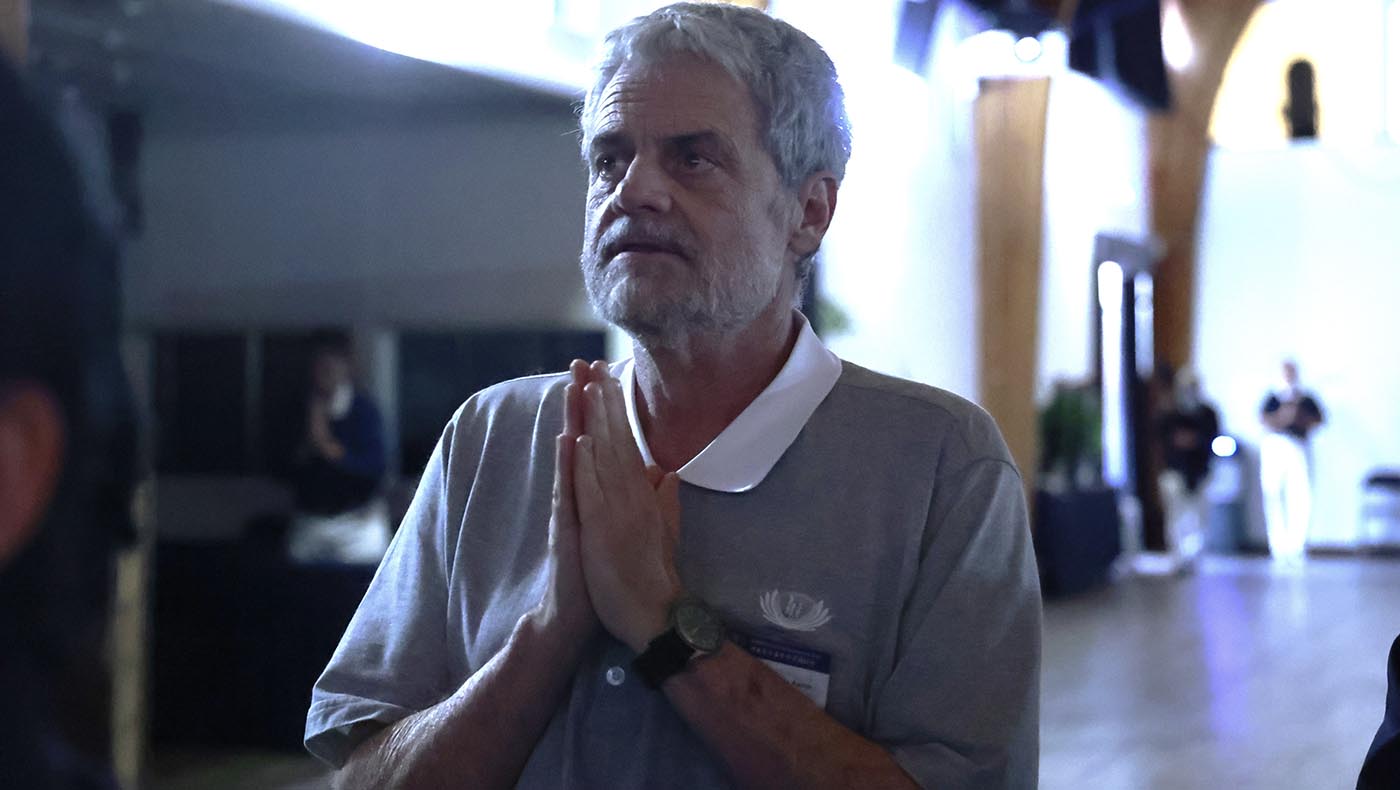
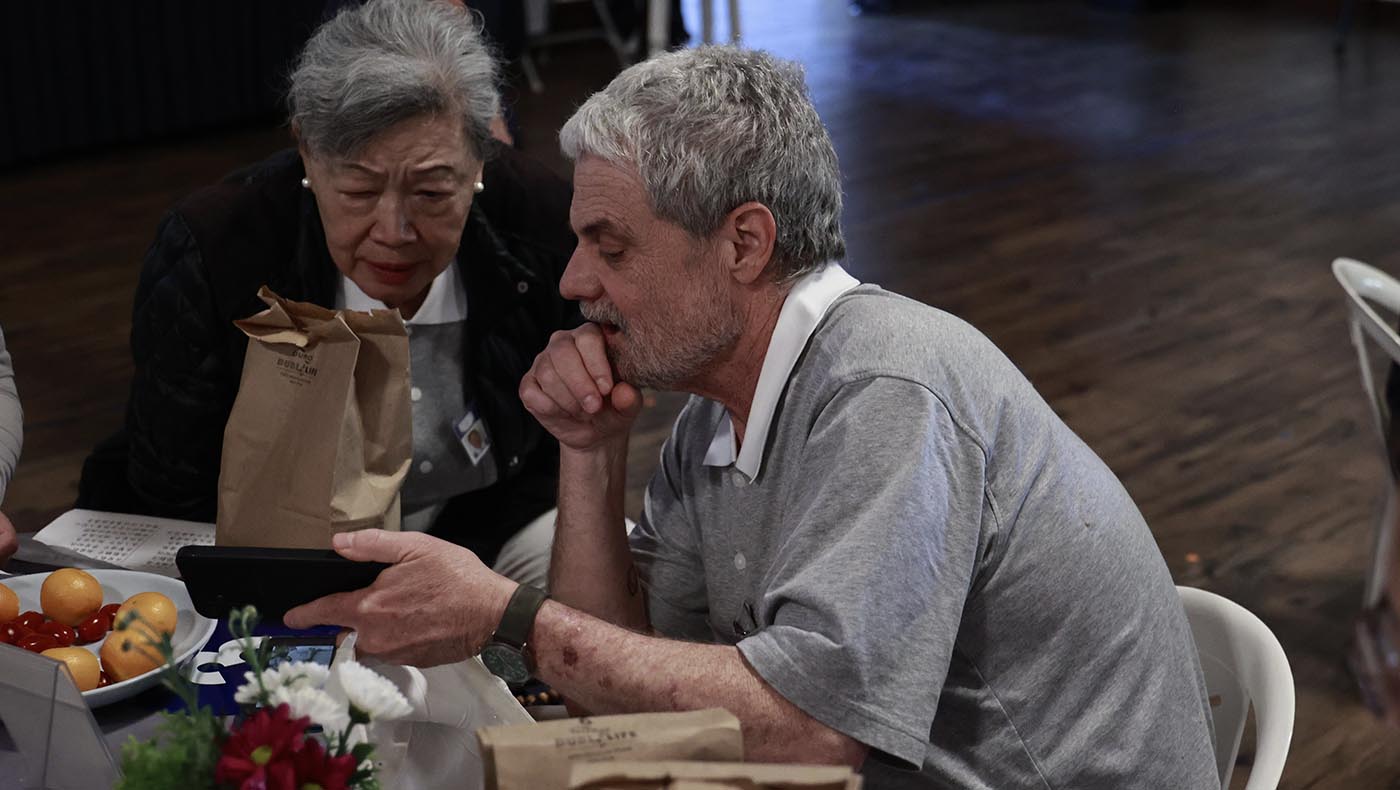
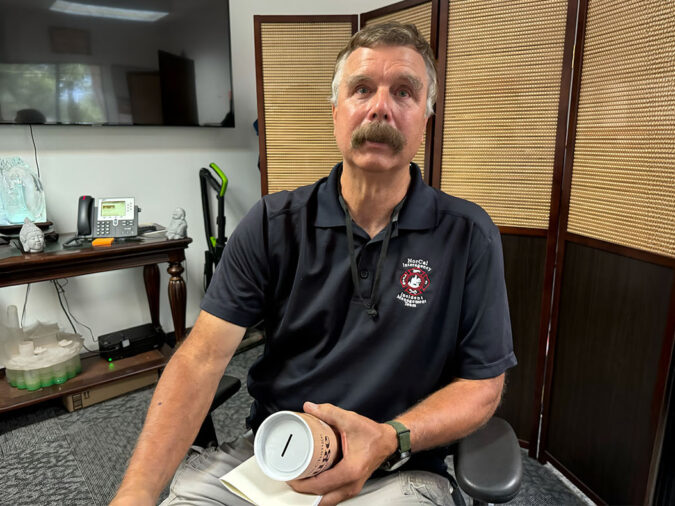
In June 2025, Douglas Aaron, who has completed Tzu Chi’s formal volunteer training and is on the path to certification, attends a Spiritual Care Retreat at Tzu Chi USA National Headquarters in San Dimas, California, deepening his skills in post-disaster emotional support and volunteer self-care. Photo/Yanxin Piao
SHARE
“Every time I hear Dharma Master [Cheng Yen] speak, she mentions something about the necessity of showing compassion to all the beings. And that sits with me. That’s the important thing in my life,” Douglas Aaron, who after two years of formal training will be officially certified as a Tzu Chi volunteer by the end of 2025, said with solemn sincerity. “Everything that she talks about resonates and rings inside of me as being true,” he continued, placing his hand on his heart over the gray shirt of his Tzu Chi volunteer uniform, while maintaining steady eye contact, his tender gaze betraying that he has seen more than his share of suffering.
“When you put the gray shirt on, that’s the mantle I can carry and it transforms me,” shared Bobbie Rae Jones, a Tzu Chi USA staff member who will begin official Tzu Chi volunteer training toward certification in January 2026. “I’m having an image of Wonder Woman as she puts her cape on. It’s kind of like that. There’s a formality that speaks to grace,” she reflected. “In this ocean of suffering that can be human existence, there is that practice of connecting with the heart and allowing yourself to have grace, even when you’re challenged, even when other people are challenged, give them grace. And that really just brightens the capacity to work in really hard situations.”
Aaron and Jones represent the broadening base of Americans who have joined the Tzu Chi family, each in their own way. What perhaps makes them stand out is that they are not of Asian descent. They also do not speak Chinese, which further distinguishes them from the most prevalent profile of Tzu Chi volunteers globally.
The Buddhist Tzu Chi Foundation was established by Venerable Dharma Master Cheng Yen in Taiwan in 1966. Today, Tzu Chi is an international organization whose footprints of aid have reached 139 countries and regions, yet the connection to its birthplace remains strong. It is where Master Cheng Yen resides at the Jing Si Abode, the global headquarters of the Foundation and the spiritual home of the entire Tzu Chi family, including volunteers, donors, and beyond.
In each country where Tzu Chi has established a chapter, members of the Taiwanese diaspora often play a central role, thus maintaining this close connection to Taiwan. Their shared culture of origin and common language act as a unifying link, further attracting new members from the same pool. However, Master Cheng Yen’s vision for Tzu Chi volunteers is hardly limited to a single language, cultural heritage, or even religion.
While Tzu Chi is rooted in Buddhism, its core values of Gratitude, Respect, and Love are universal principles. Master Cheng Yen believes that all wholesome religions guide individuals to lead moral and meaningful lives. Thus, Tzu Chi welcomes anyone who sincerely aspires to help those in need with an open and caring heart, regardless of their faith or religious background.
Douglas Aaron and Bobbie Rae Jones happen to be Buddhists, but the path that led them to Tzu Chi is unique to each, their connection nuanced.
On a Journey Toward Inner Peace
“I was born in Chicago, Illinois. My early years were very traumatic. My mother raised me by herself,” Douglas Aaron recounted, settling in to tell his story. He described how his mother had to hold down multiple jobs to support them, working from early afternoon till the next morning, when she would finally return home to get him off to school. “And she didn’t keep those jobs very long. We moved around all the time.”
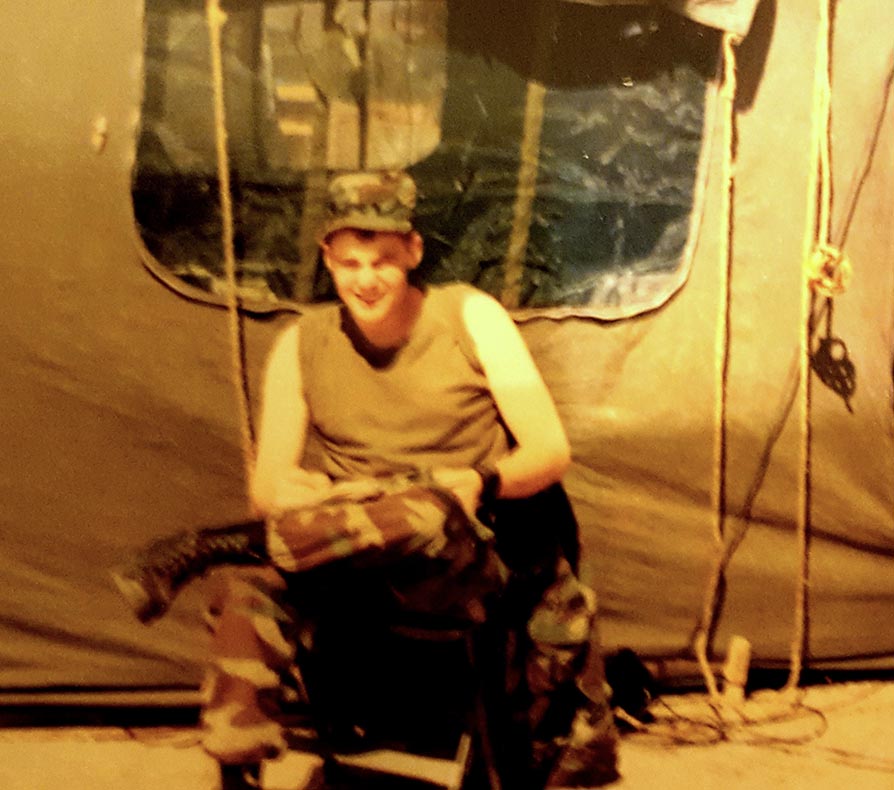
After attending 11 elementary schools, Aaron finished high school in Los Alamitos, California. “I got a job working on an assembly line in a factory in Santa Fe Springs, on the night shift, and it was awful. It was making plastic garbage bags and putting them in boxes. And it was very, very hot there. We had to take a salt pill every time we went to work. And after a year of that, I realized I couldn’t spend my life like that. And so I decided to go into the military. They promised that I would have money for college if I went.”
He went on to serve his country for nine years, living all over Europe and the Middle East. Shortly before he was due to return to civilian life, fate intervened. “Three weeks before I was supposed to be discharged, the war started in Iraq. And so they canceled my discharge so I couldn’t go back home and they sent me to Iraq. And Iraq was a nightmare. The war was awful. Dharma Master [Cheng Yen] talks about the realm of hell, and she says that hell can be here in this world, too, and that lots of people live in hell on this planet. And I experienced that for myself. War is not a thing about handsome soldiers in nice uniforms. It’s about women and children.”
Aaron sustained a serious back injury during his tour. “I left Iraq in an air ambulance,” he said. Yet the impact of his military experience marked him even more deeply. “While I was on the airplane, I took a vow of nonviolence, absolute nonviolence.” Returning to the United States, he joined the peace movement, which led him to discover Vietnamese monk Thích Nhất Hạnh, a renowned peace activist. “He was the first contact that I had with Buddhism.”
“My spirit was damaged by what happened in Iraq. And I started to study the Buddha Dharma hoping that my suffering could be lessened. I thought that if I could go to the temple and study, it would make my Buddha heart bigger,” Aaron explained. He took his studies seriously, even going into solitary retreat at a monastery for nine months and continuing to sit at temples during later college vacations. However, he faced limitations in his ability to do prolonged sitting meditation due to pain caused by his spinal injury and subsequent surgeries. “I just physically wasn’t able to sit on the ground for a long time. And so it didn’t work out that I could sit all the time and be a monk.” Yet he also realized something about himself through such retreats.
Maybe it's just that I'm a very literal person, but when I hear the Buddha say, ‘Save all living beings from suffering.’ I hear that maybe differently than other people. I hear it as meaning, ‘Go out, feed hungry people, and do social work.’ I'm drawn toward focusing on the world, the cities, the towns that need help. So even though I may have spent time learning the more isolated kind of Buddhism, I'm more drawn to the outside. For me, it's more about action and getting out.
Douglas Aaron
Aaron followed through on his call to service, obtaining a master’s degree in social work. “I decided that I would use my Buddha Dharma and my social work together and that I would spend the rest of my days helping suffering beings. I worked for a long time as a social worker. I worked at a hospice for AIDS patients. I worked in homelessness prevention, getting people into shelters and things like that. I did lots of different things. And I never felt any big pull to do anything except help other people.”
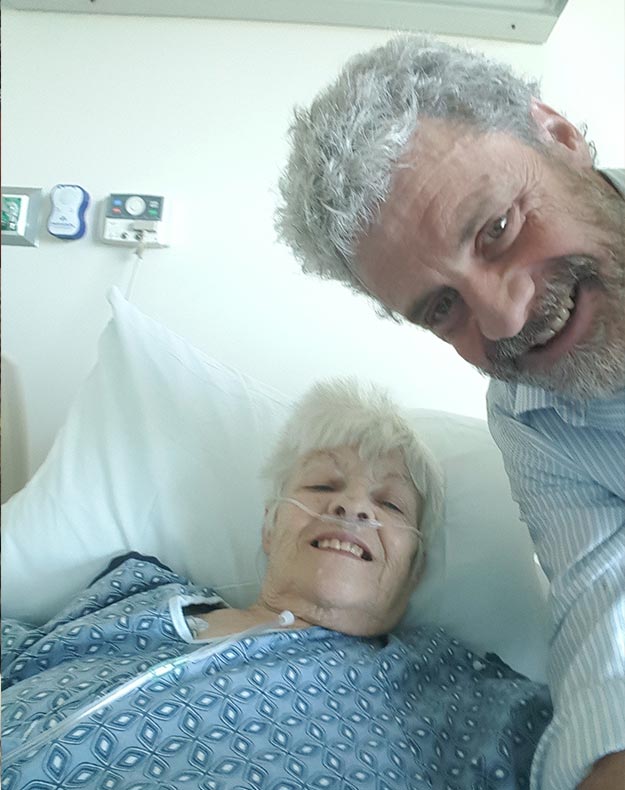
He eventually moved to Las Vegas, Nevada, where his mother had settled, to care for her when she became unable to manage on her own. He looked after her there for seven years until she sadly passed away during the height of the COVID-19 pandemic. Around that time, when everyone was sheltering in place, he searched for Dharma talks online and came across Master Cheng Yen’s Wisdom at Dawn morning lectures on the Lotus Sutra, which struck a deep chord in his heart.
“I wasn’t looking for God. I was looking for a mentor that I could follow. I wanted to find a philosophy that would calm my damaged mind and help to calm other people. And that’s what I found. I became really attached to Dharma Master. I realized that my path, the path that I’ve been walking for decades, was almost the same path that Dharma Master was lecturing on constantly,” he said with joyful wonder.
Aaron began by sending donations through the Tzu Chi USA website. When things began to open up again as the pandemic eased, he reached out to express his interest in volunteering. “I wasn’t even sure there was a Tzu Chi in Las Vegas. But the people in Las Vegas called me at the end of 2022.” In fact, Tsuilin Valenzuela, Director of the Tzu Chi USA Las Vegas Service Center, personally called him and invited him to visit.
“The second that I met Tsuilin and all the women there, I was sold. I had planned on just showing up and helping with things. But the more I got to talk to them, I realized that there actually was a path for me in Tzu Chi,” he recounted. “Tsuilin said, ‘You know, the volunteer classes are starting. You should just come and join.’ And so I did and that was the beginning.”
The formal pathway to official certification as a Tzu Chi volunteer and the blue shirt and white pants uniform of “commissioners” involves three stages.
Orientation/Observership: one year of monthly classes to learn Tzu Chi’s mission, culture, and etiquette, and participate in service.
Training: another one to two years of coursework plus hands-on service across Tzu Chi’s missions, with mentorship by senior volunteers, and passing a review at the end.
Certification: conferred by Master Cheng Yen or her representatives, often at a regional or year-end ceremony. It marks the beginning of a deeper commitment, not the end.
Aaron’s training classes were conducted over Zoom, and he cherishes the experience. “I was really hooked on Tzu Chi before I started, but every day, it grew this feeling,” he shared. “The topics were current so they would show videos from Tzu Chi offices all over the world. That was marvelous. It built in my mind this idea that Tzu Chi isn’t some sort of hard and fast set in concrete, ‘you do these things’ program. It’s a program of, and Dharma Master says this, ‘You feel like you see something that needs to be done? Go do that thing.’ When I watched all of the different people all over the world doing it, and with their own cultural backgrounds, all attacking problems in different ways but getting to the root of suffering, that was wonderful for me.”
As with all Tzu Chi volunteers, his training will continue. In June, he attended a Spiritual Care Retreat at Tzu Chi USA National Headquarters in San Dimas, California. The event, which aimed to train volunteers from various districts to carry out post-disaster emotional support projects, exemplified the initiative of Tzu Chi volunteers. The course was developed by the Deputy CEO of Tzu Chi USA’s Pacific Islands Region, who saw the need to better prepare volunteers in Hawaii to engage in wildfire disaster aid, from emergency relief at the onset to long-term individual case care afterward.
Having been engaged in disaster relief following the Los Angeles wildfires in January, Aaron had himself remarked on the need for such training. “I saw in myself and in other people this getting burned out from seeing so much disaster and so much sadness. This retreat [taught] us how to see that in ourselves and prepare for it, and to see it in other volunteers and to help them prepare, so they can continue to serve people. It helped us learn how to better care for ourselves as volunteers so that we can better care for more people.”
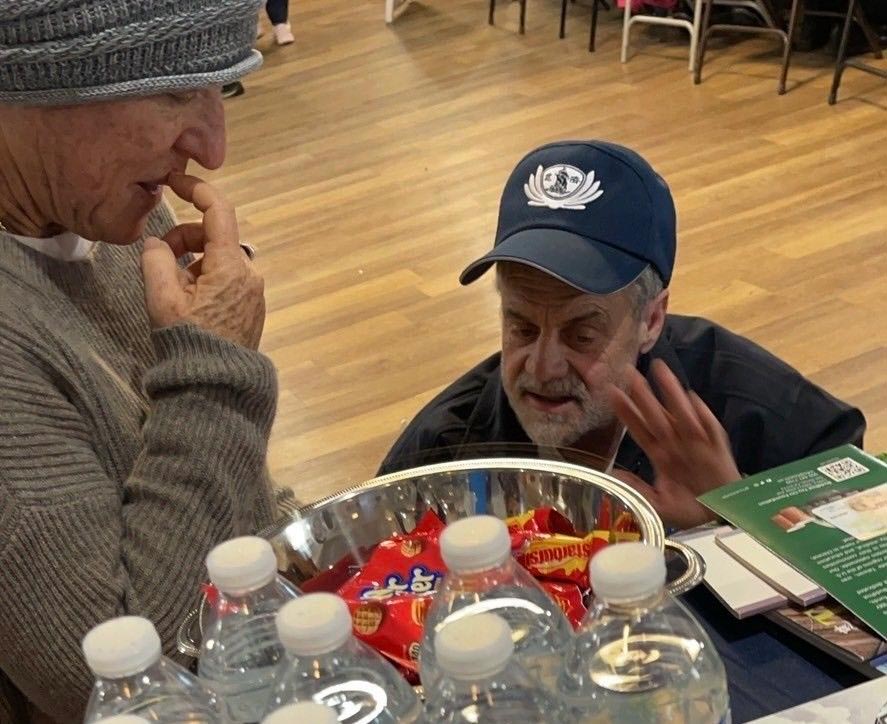
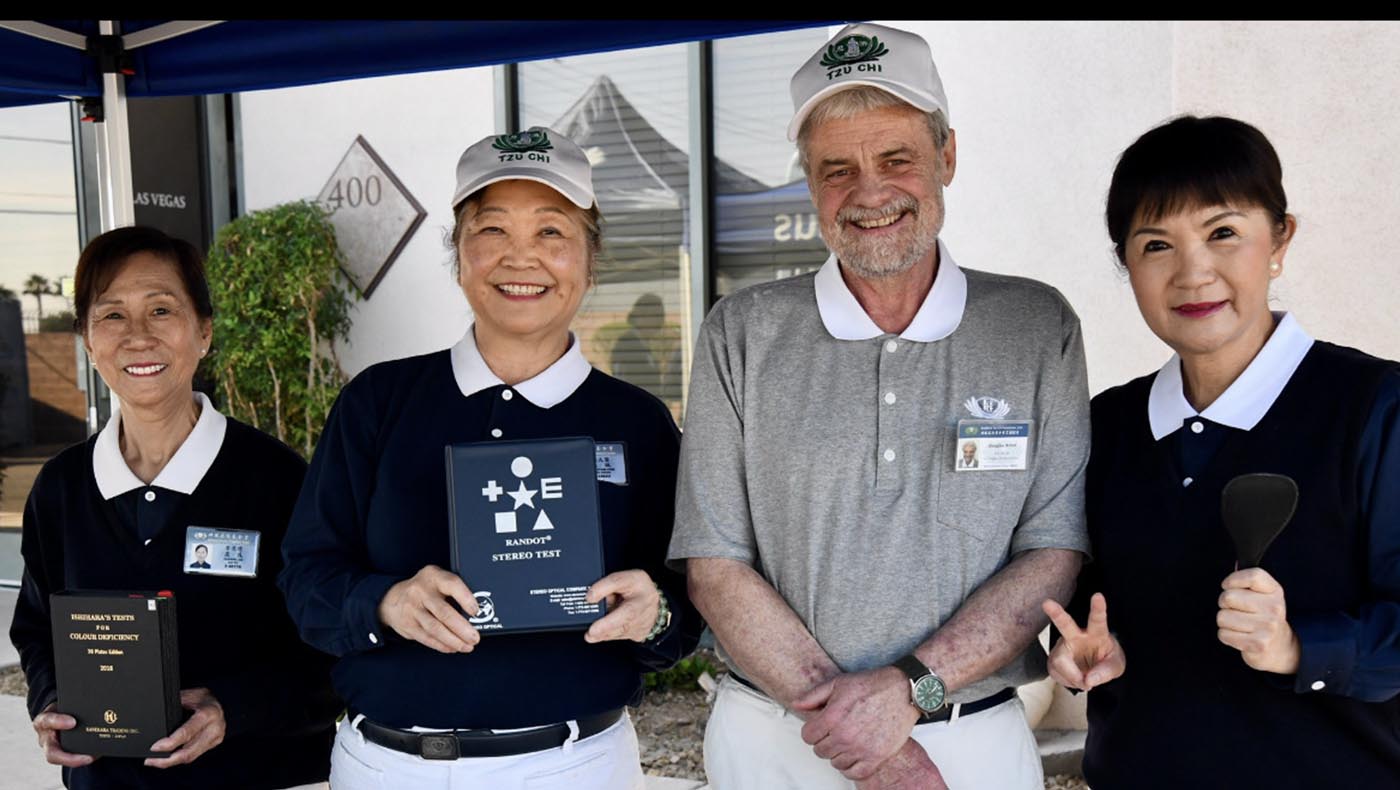
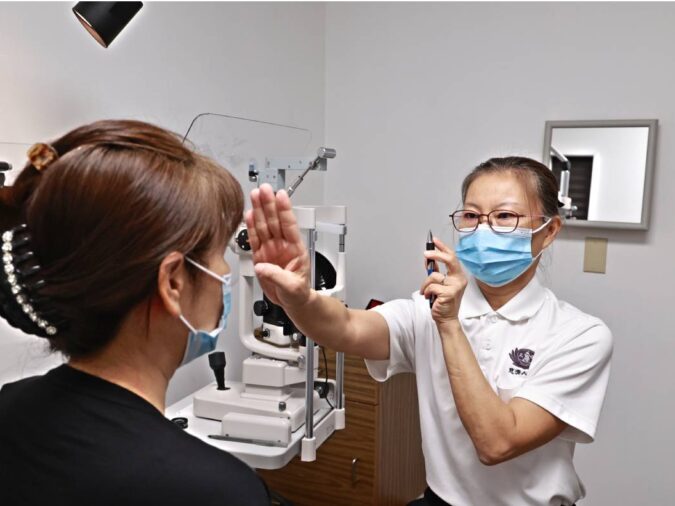
Since he began volunteering, Aaron has taken part in numerous activities. “I started by doing some of the really big events that require lots of strong volunteers.” He then became involved in nearly everything the Las Vegas Service Center volunteers do. “We do the Vision Mobile Clinic. We do the dental clinic. I go to the jail to be with the prisoners. We do outreach for people who are homeless, casework, home visits,” he explained. “It’s wonderful. This is what I’ve been looking for my entire life, a mixture of my social work job and the Buddha Dharma. And that’s what I found in Tzu Chi. My wife tells me all the time, ‘Tzu Chi is the best thing that ever happened to you because you’re a changed person. You’re calm and compassionate and a loving person. And you got that when you started the first day in Tzu Chi.’”
One aspect of his personal transformation within Tzu Chi that he notices in himself is his increased patience, for which he credits the teachings of the Six Perfections in Buddhism (pāramitās in Sanskrit), a path of cultivating generosity, ethical conduct, patience, diligent effort, meditation, and wisdom that formed a core part of his training and now guides his service. “I think that my patience has grown a huge amount dealing with all kinds of people… My patience has increased a thousand fold. So that has probably been the biggest thing.”
Bobbie Rae Jones, who is primarily a staff member, also attests to how deeply transformative the Tzu Chi milieu can be. “I really leaned in on cultivating respect, love and gratitude,” she shared, referring to a recent challenge at work. “It’s different from other office environments, because you can actually address spiritual and emotional issues as they come up. If there is something in you, an issue that you’re trying to address and change, when you work with Tzu Chi, that will be what you’re looking at in the mirror every day. And that will help you evolve,” she mused, while sharing the story of how she joined the Tzu Chi USA family.
Answering the Call to Service
Bobbie Rae Jones has deep roots in Northern California. “My mom grew up in a small, very remote mountain town where I descended from generations of people,” she recounted. Her mother wanted Jones to become an architect, a hope she at first aimed to fulfill. “I started out studying architecture in college and I was accepted to this really prestigious technical university, but I declined it and decided to be an artist, to study art after that.”
However, after a few years, life intervened and she interrupted her studies. “I had a couple of kids and sort of grew a family,” she explained. But when the relationship with her children’s father ended, Jones returned to California State University, Chico, to pursue degrees in art and education, including teaching credentials. Those years of study laid the foundation for her later path as a socially engaged artist and educator, using creative practice to build community and lift up people on the margins.
As Jones progressed through her university coursework, her social consciousness expanded. “When you’re in an education program, they talk about diversity. One of the classes I was taking was in equity, inclusivity and diversity, and that’s when I really started to learn about inequities.” Being a single mother by then, with both her children under the age of ten, further sharpened her growing awareness of social disadvantage. “I learned how challenging it is to just survive with basic needs, housing and food security being on top. I applied to social services and took out loans to pay for rent.”
Her education program also encouraged students to engage in social assistance. “I did actually start volunteering at a shelter, helping to cook food and those sorts of things. Not a lot, but I was getting my feet wet. And then the Camp Fire happened…” Jones had completed her bachelor’s and master’s degrees by then and was about to start her teaching credential program when, overnight, her foray into social service work went into high gear.
The catastrophic Camp Fire, the deadliest and most destructive wildfire in California history, ignited on November 8, 2018, and went on to consume over 153,000 acres in Butte County, burning nearly 14,000 homes. The town of Paradise was almost entirely destroyed, while nearby Chico became a major refuge and support hub for thousands of evacuees.
“Two of my professors lost their homes in Paradise. And many friends in my classes had lost their homes. I had a massage practice. Many of my clients lost their homes. It was just like everybody everywhere was in crisis,” she recounted. “As a resident of Chico, I wanted to help my community, and so I followed other volunteers to the local disaster recovery center. To help the survivors, we had to volunteer with an organization, and that’s when I found Tzu Chi. I saw ‘Buddhist’ and I was like, ‘Perfect, my people.’”
Tzu Chi USA Northwest Region volunteers had set up at the Federal Emergency Management Agency’s Disaster Recovery Center in Chico to provide emergency relief, and they welcomed her help. Jones assisted with intake paperwork, the distribution of cash cards, and the heartfelt task of comforting people. “They let me sit with them day after day and it changed my life, that feeling of compassionate relief that I felt in that month after the Camp Fire.”

Jones has been a practicing Buddhist since discovering the faith years earlier. “I grew up in a Christian home and I didn’t really know there were any religions other than Christianity until I took a class called World Religions. The professor took us on a field trip to a Tibetan Buddhist monastery in Northern California, and when I went there, I really felt at home. After that course ended, I went to a retreat and something woke up in me when I heard the statement, ‘We will work ceaselessly for the liberation of all sentient beings until every last one of them is freed from suffering.’ At that point in my life, I hadn’t really had a purpose, but when I heard that I was like, ‘That’s what I want to do. I want to be in service to help people find freedom.’”
I have a prayer that I say almost every day. It goes something like this, ‘May I work ceaselessly for the liberation of all sentient beings. May I attain enlightenment for the liberation of all sentient beings.’ When I was working with Tzu Chi, I realized that prayer. I felt like I was home and with people that had the same understanding. They were selflessly working ceaselessly to relieve the suffering of all the people that walked through the doors, and nowhere else were they really getting that feeling. That’s why I knew they were my people because I have that same determination.
Bobbie Rae Jones
After completing the initial emergency relief phase at the end of 2018, Tzu Chi USA shifted focus to mid- and long-term recovery programs that led to the establishment of the Tzu Chi Chico Recovery Resource Center, where services include disaster case management, housing support, medical outreach, educational programs, humanistic cultural events, spiritual and emotional support, and resource referrals. Jones came on as one of the first staff members in May 2019, initially as a disaster case manager, and later that year as supervisor.
Serendipitously, her architecture training proved a bonus. Tzu Chi was part of the Camp Fire Long Term Recovery Group, later known as the Camp Fire Collaborative, and through partner agencies, she received training not only as a case manager but also as a rebuild specialist. “So I helped people with trailers. I also assisted people to connect with resources to rebuild their house. I joked about it after, that I should have listened to my mother because here I was still helping people build houses. I had an innate quality to just organize and think that way. It’s very complicated to build a house.”
Looking back on that period, Jones recalled how one crisis seemed to roll into the next. “The Camp Fire was huge, there was so much need. And then the pandemic happened. It was just like the rug was pulled out from underneath the families we were assisting. And it was the middle of the winter when we went to shelter-in-place,” she recounted. “I thought I was in high gear already. I went into 200% more in compassionate action to help these people. They were suffering. And then another disaster happened, and another…” Jones was referring to the 2020 North Complex Fire and the 2021 Dixie Fire – both of which struck while communities were still navigating COVID-19 restrictions.
Jones eventually left her position at the Tzu Chi Chico Recovery Resource Center. “I had started this job thinking I was going to do it for just nine months. And to be in it for three years… I left because I was burned out. I was really grateful for the work I was doing and the service: It fed something in me that needed to do that. But it was very stressful and I was like, ‘I want to try to teach art.’ And so I got a job teaching.”
Nonetheless, she remained engaged in community disaster relief after the Dixie Fire, which had affected her family personally. “I reached out to the social services that were assisting people, and said, ‘Hey, I’ve done this before. Let’s talk.’ I got on their steering committee for the long-term recovery group and I headed that up for a little while… I wasn’t involved with Tzu Chi at that time but I was still in service.”
Jones had also settled into teaching. “And then one day I was standing in Chico, and I looked over to the north. There was this huge cloud of smoke, and that was the Park Fire. I looked at it and I went, ‘That looks like a lot of work.’” Within a few months, she reached out to Minjhing Hsieh, Executive Director of Tzu Chi USA’s Northwest Region. “I said, ‘Do you guys need some help? I can help these families up there.’ And I was hired shortly after that.”
The most recent development in her story is that, in December 2025, Jones decided to enter the formal path toward certification as a Tzu Chi volunteer, and will begin attending monthly Zoom meetings in January. At the same time, in 2026, her staff role at the Tzu Chi Chico Recovery Resource Center, which primarily involved requesting financial resources to assist disaster survivors in rebuilding their homes, will evolve. “I plan to continue to assist families needing emergency care but shift to the social emotional wellness aspect,” Jones shared. “A lot of people are struggling with PTSD [Post Traumatic Stress Disorder] related to some of the events that occurred during their escape from and evacuations from the fires. It would be nice to meet with and collaborate with other Tzu Chi volunteers across the state, to brainstorm ideas based on their experiences working in other communities.”
Extending a Heartfelt Invitation
Bobbie Rae Jones and Douglas Aaron have found a home within the Tzu Chi family, one that resonates with their call to serve others and their Buddhist practice. Yet they recognize that they are in the minority, as they neither share the Asian heritage of most volunteers nor speak Chinese.
Within Tzu Chi, neither has felt that their background is an issue. “I don’t really think about people in terms of how different they are to me. I just came to Tzu Chi and expected that everyone felt like that and they do,” Aaron shared. “I believe that Dharma Master speaks a universal language. And the things that she talks about can be understood and related to by everyone. Someone in Zimbabwe, someone in Las Vegas, everywhere. Everyone knows that they’re suffering and we need to fix it.”
Jones also values the universal message at the root of Tzu Chi’s philosophy – actively practising compassion and caring for others – and feels that the general public connects to it as well. “A lot of people around me really appreciate Tzu Chi and the Tzu Chi volunteers, and I think they identify with those sort of basic human concepts like gratitude, love and respect,” she said.
And yet, both acknowledge the predominance of Chinese within the Tzu Chi world, which could be problematic for some. “A newly starting volunteer might be put off by that. New people could think of it as being very lonely,” Aaron observed, although he hardly feels that this is a deal-breaker. “At least here in Las Vegas, if we get new people, I’ll stick with them and keep telling them that this isn’t something that you need to be frightened about,” he said.
Master Cheng Yen says all the time that everyone is welcome. Speaking Mandarin is not a requirement for applying to be a volunteer. And all of the volunteers, maybe English isn't their first language, but everyone is striving to connect despite language differences.
Douglas Aaron
As for Jones, she is also willing to do her part to help smooth the way for non-Chinese-speaking newcomers to discover and become fully immersed in the world of Tzu Chi. “I would love to lead a book group out of our office, and we’ll meet every week and discuss [Master Cheng Yen’s] Jing Si Aphorisms. I would love to do that.” [Shared through publications and volunteer-led study groups internationally, Jing Si Aphorisms are short, contemplative sayings by Dharma Master Cheng Yen that offer gentle guidance for how to live with wisdom and compassion each day, and for many people they are a first doorway into Tzu Chi’s spirit and teachings.]
Aaron highlighted that while being a Buddhist was a factor in his connection to Tzu Chi, he believes it need not be for others. “As I understand it, it’s a completely interfaith experience. And so if there’s a Catholic person or a Muslim person, whatever, and they’re working as a volunteer and want to be certified, I don’t think it’s necessary to take refuge in the Buddha.”
He further elaborated that during volunteer training, everyone is asked to develop vows of their own, which they are encouraged to take fully to heart when they are certified. “Vows like vowing to save all the living beings from suffering and all of that. Those vows, as I hear them and see them, don’t require you to leave your faith. I truly believe that you can kind of write your own ticket in Tzu Chi. You can take on whatever goals as long as they meet the ‘saving suffering beings’ goal.”
Both Aaron and Jones sincerely extend an invitation to others to explore the path of volunteering with Tzu Chi. “In terms of having a need to help people, like having a feeling in your body to be of service, working with Tzu Chi, volunteering with Tzu Chi, it’s so accessible. They’ve created an environment where it’s safe to go work with people that are in crisis,” said Jones.
She acknowledged how challenging and complicated such activities can be. “People get upset a lot and sometimes I just need a spiritual friend. So within Tzu Chi, I can reach out to a volunteer knowing that there’s this sense of gratitude, respect and love. And that’s a camaraderie that I need. When I didn’t work with Tzu Chi, it was a little drier. The bureaucratic systems can be a little cold to people. They’re more like numbers, right? And so working with Tzu Chi, there’s a warmth when you’re meeting with people and in service. I don’t even know what to call it, what sort of system that Tzu Chi is, but it’s different from being involved in another organization.”
Doing something, like pushing kindness forward, but doing it with a group of people, is much different from doing it alone. When you're working with a community and you're working within numbers, there's a power with that. So, I really suggest volunteering with Tzu Chi. Margaret Mead said a beautiful thing about numbers: that one person can't really change something, but a group of people, they have the force to do a lot.
Bobbie Rae Jones
Aaron also expressed his conviction in the benefits of volunteering. “A person can change their whole life by just doing some really simple volunteer work. It sounds simplistic, but I truly believe that. We live in a climate right now that is primarily negative. And people feel that,” he said. “You can choose to be as negative as your neighbor, or you can choose to take on something that will free you from that negativity. I suggest some volunteer work, helping other people. It gets you away from getting dragged down in the negativity that really pervades the whole planet, it seems. And also by providing some joy to someone else, you can put the anger you have aside.”
Although neither Aaron nor Jones has yet met Master Cheng Yen in person, each was invited to reflect on what they might say if that day comes.
Aaron paused for a moment. “I would just like to give her my utmost thanks for helping me. Even at this great distance, she’s been such a great help to me. So much about the way I conduct myself in the world now, even at my older age, is based on what I’ve learned from her over the past couple of years, truly.”
Jones grew quiet as she pictured it. “I think if I was in her presence, I would just start crying out of relief. Something in me would feel some sort of relief. That this is real, you know, that what I’m doing and what I’m experiencing is mirrored in the grace that’s present within her.”
The Tzu Chi path of compassion in action established by Master Cheng Yen is indeed real, and Douglas Aaron and Bobbie Rae Jones encourage others to discover its hidden blessings for themselves.
Life is happiest when you are needed by others and can do things for others.
Jing Si Aphorism by Dharma Master Cheng Yen
SHARE: