Growing Into Leadership: Tzu Chi Academy Alumni Stories
Written by Jiali Liu
Translated by H.B. Qin
Edited by Ida Eva Zielinska
Published #80 | Spring 2026 Issue
SHARE
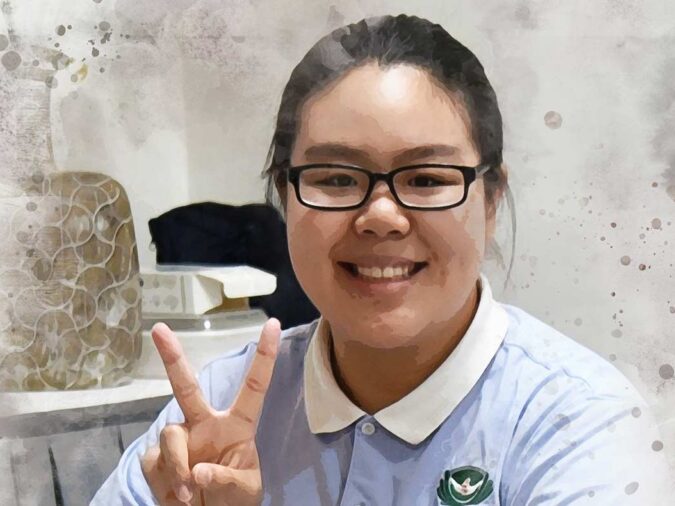
Early on a weekend morning in the parking lot of Tzu Chi USA’s Cerritos Service Center in Southern California, volunteers are busy setting up tents and arranging boxes of produce neatly. Some of the older volunteers strain to make out the small print on the distribution lists through their reading glasses. Others find the information on the tablet screens they hold difficult to navigate. Still others, speaking limited English, attempt to communicate with Spanish-speaking residents, since English is neither group’s first language and the exchange can be challenging. Amid the crowd, Melinda Wu moves back and forth, patiently demonstrating how to scan documents for volunteers unfamiliar with the electronic devices, then turning to explain the process to residents coming to collect food. Her presence helps keep the distribution on track.
Such a coordinating role has become routine for Wu. A college student who commutes from home, she volunteers at weekend distributions whenever she can. “It feels natural to me. Whenever I’m in Cerritos, I come to Tzu Chi. Young people are more familiar with computer systems and have more stamina, so I take on extra tasks to help senior volunteers with duties that are less convenient for them.”
Few people know that Wu’s at-ease manner did not emerge overnight. It is a habit formed early, shaped during her years at Tzu Chi Academy, as she entered the world of Tzu Chi step by step as a child.
Gradually Taken to Heart
Melinda Wu’s first encounter with Tzu Chi came in 2009. At age four, she traveled to Taiwan with her family. Because her aunt, Hungju Wu, was involved with Tzu Chi, they visited the Jing Si Abode in Hualien, the Buddhist Tzu Chi Foundation’s global headquarters, where Dharma Master Cheng Yen resides. For the young child, it wasn’t a trip with a specific purpose so much as time spent following her family’s lead. “I don’t remember much about that visit,” she said. “What I do recall is that the whole family returned to Taiwan together that year. It was joyful.”
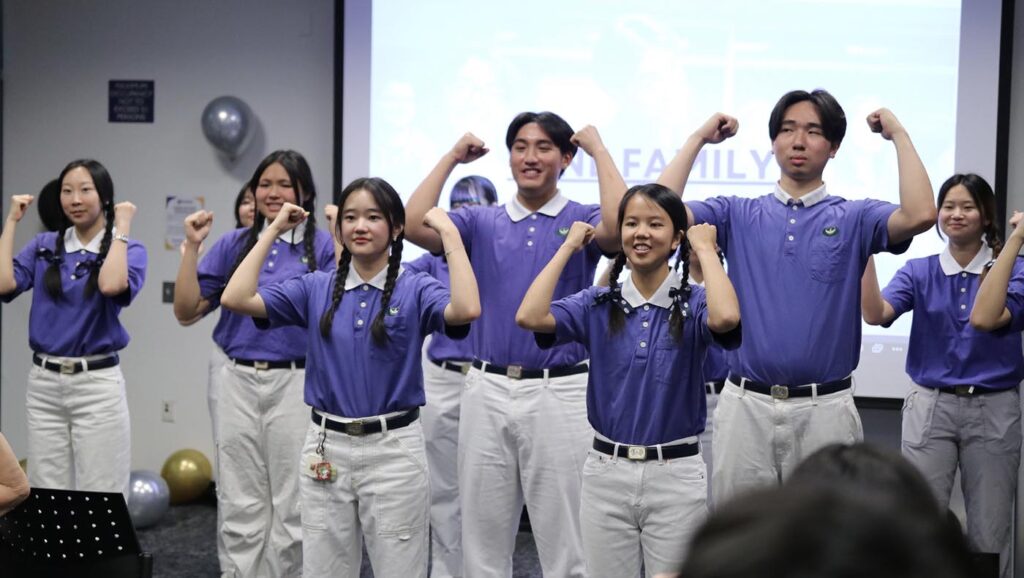
Wu’s earliest clear memories are from when she was five. Living in Cerritos, she traveled to Tzu Chi Academy in Irvine, California, by car every Sunday. The 40-minute drive didn’t feel like a burden. “I never resisted going to the Academy; I actually found it fun,” she recounted. For her, learning Chinese wasn’t difficult. In the cozy classroom, the teacher was kind and classmates were enthusiastic. Wu was so motivated that she even brought her homework along during lunch breaks. “I always finished my dictation assignments, so my parents never had to worry.”
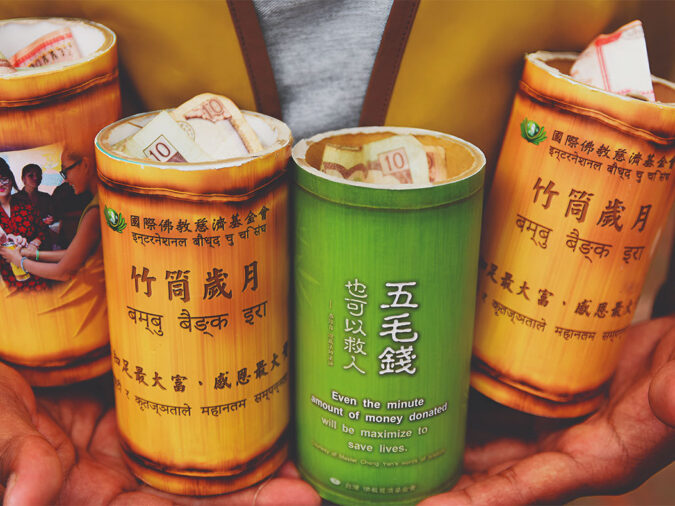
Learning Chinese was only the surface. The deeper influence came from the Academy’s humanistic environment, which began to shape her outlook over time. Wu remembers the Jing Si Aphorisms taught in class – such as “Count your blessings, cherish them, and sow more blessings” – as well as the bamboo bank story. She also remembers watching a video one day and, afterward, beginning to carry reusable utensils. “Since then, I have almost never used disposable chopsticks again. Whenever I dine out, I always bring my own.” This wasn’t compliance after a reminder. It was a choice that had naturally become part of her.
During those years at the Academy, Wu’s mother served as a class mom, often helping with charity sales at the Jing Si Book Corner stall outside the classroom. Later, her aunt became a certified Tzu Chi volunteer and served as a class advisor for the Tzu Chi Youth program when Wu was in fourth and fifth grade. Wu’s weekends were spent not only in the classroom but also at various events: environmental activities, bamboo bank drives, and fundraising efforts. “I didn’t think much about it then. I just followed my aunt and mom and went whenever I had the chance,” she said lightheartedly, recalling those days.
Wu wasn’t only accompanied by her family, but also treated like the volunteers’ own child. Some knew her favorite foods, some reminded her to bundle up when it got chilly, and others, when she caught a cold, sent a flurry of messages urging her to rest well… These seemingly ordinary acts of care steadily built a sense of security within her.
Every time I attend a Tzu Chi activity, it feels familiar and I feel at ease.
Melinda Wu
Alumni
Tzu Chi Academy, Irvine
With this constant companionship, Tzu Chi had long become part of her “everyday life,” and the desire to give back gradually took root in her heart. “Whenever I have the chance, I’m willing to step forward, even if it’s just an extra pair of hands. I hope to lighten the burden on the senior volunteers.”
This resolve wasn’t a sudden impulse. It grew along with her, guiding her step by step from a cared-for child to someone willing to move to the front of the crowd and take on responsibility as a future Tzu Chi volunteer.
SHARE
Stepping Into the Relay of Responsibility
“In 2017, I attended my first U.S. National Tzu Shao (Tzu Chi Youth) Camp. To be honest, I went somewhat reluctantly because I was quite shy when I was younger, and I didn’t speak much, especially with strangers.” Nearly a decade later, Melinda Wu still remembered her hesitation. That year, she was a middle school student and didn’t have many expectations for the camp. It was her aunt’s encouragement that finally gave her the courage to take that step.
That experience turned out to be the first time Wu was truly immersed in the Tzu Chi Youth community, with young people from across the United States gathered together. The camp wasn’t just a schedule of activities and classes. It offered a structured introduction to Tzu Chi’s missions and values. For the first time, Wu saw so many peers her age, from different cities and backgrounds, dedicating themselves and taking on responsibility in their own ways.
“Back then, there weren’t many Tzu Shao from Cerritos, maybe just a few dozen,” she recalled. “But at the national camp, seeing one or two hundred gathered together, the vibe was truly different.” Through repeated sharing and interaction, she also learned from more senior participants and slowly opened up.
Wu later attended the University of California, Riverside, where she joined the campus Tzu Chi Collegiate Association. Over time, she moved from simply participating in activities to helping coordinate events and eventually serving as president. The shift brought more than a change in title: It brought real pressure and responsibility. “Before, it was just helping out when I participated. But once I joined the Tzu Chi Collegiate Association, I started taking on more responsibility.”
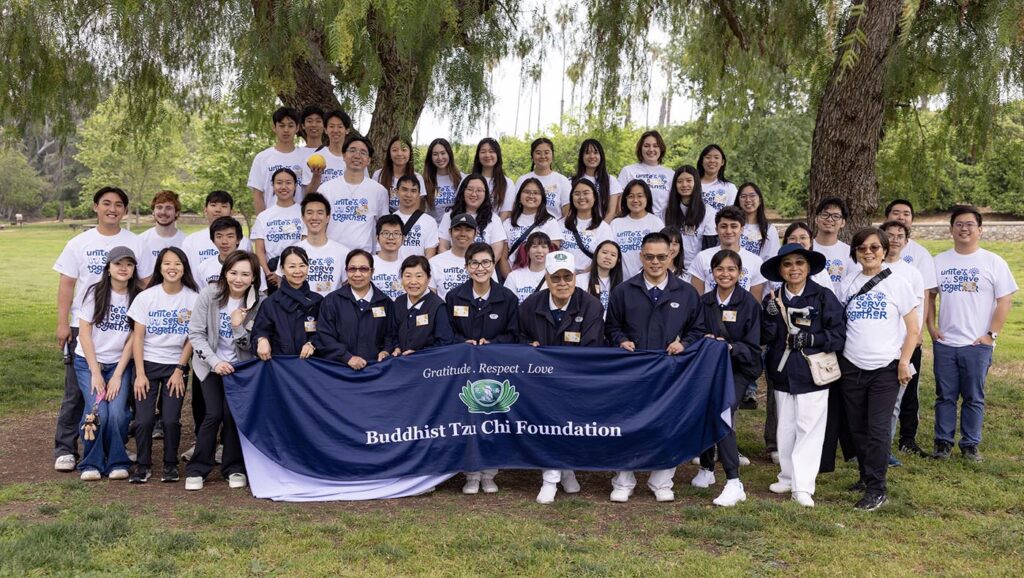
When Wu began planning events, coordinating volunteers, and scheduling activities, she gained a clearer view of the intricate preparations involved. “So many things require planning far in advance. That’s when I truly appreciated how dedicated the senior Tzu Chi volunteers are. If there is anything I can do and am good at, I will definitely help.”
In 2024, after the COVID-19 pandemic, the in-person U.S. National Tzu Chi Youth Camp resumed. This time, Wu was no longer a participant. She was the Deputy Chief Coordinator. Preparations for the September camp – including inviting staff, planning courses, handling registrations, and coordinating with headquarters and local contacts – began as early as March. Once the camp launched, days were filled with classes and activities, while evenings became hours of repeated discussions, process refinements, and staff rehearsals, often lasting well into the night. “It truly wasn’t an easy job,” she admitted.
As Wu moved between senior volunteers and younger participants, she came to realize that the people she had relied on in her youth were aging. Different generations also had different expectations about pace, format, and innovation. “A lot of the time, my role is to get both sides to take a step back,” she said. On one hand, she needed to understand the veteran volunteers’ years of accumulated experience and practices; on the other hand, she had to listen to the ideas of younger staff and participants. That kind of coordination requires patience and understanding, and above all, a willingness to carry the legacy forward.
Before, it was the senior volunteers who guided us through everything. Now, I hope to gradually take over and help shoulder more of their responsibilities.
Melinda Wu
Alumni
Tzu Chi Academy, Irvine
Looking back on the journey from 2017 to 2024, Wu’s role changed, and so did her place within the group. But to her, it was never about taking someone’s place. It was about carrying forward what she had received and, little by little, taking on her share of responsibility. In that sense, it was a relay.
Discovering the Wider World of Tzu Chi
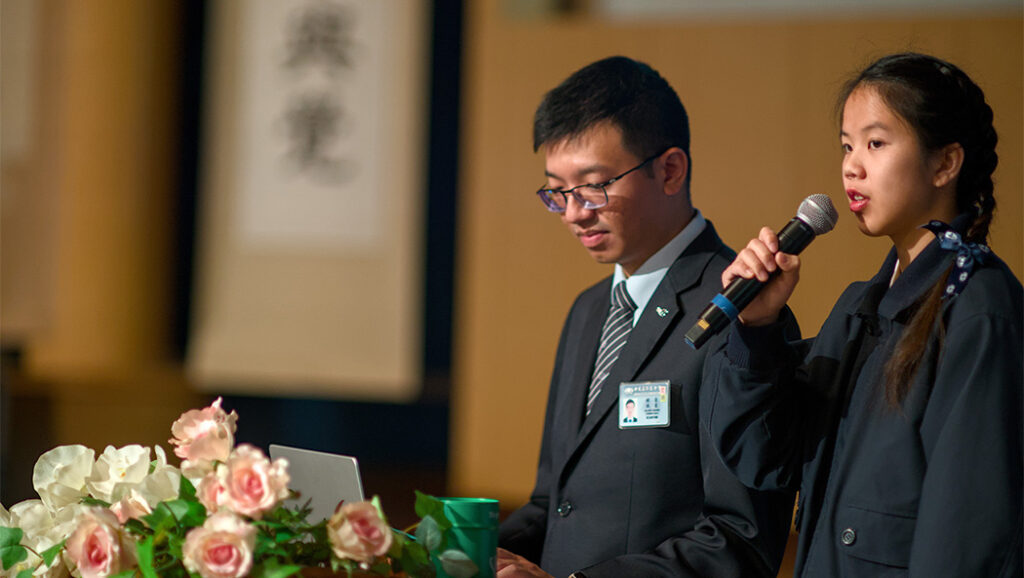
In late 2024, Melinda Wu traveled to Taiwan to participate in the Global Tzu Chi Collegiate Association camp. During a heartwarming discussion forum, she stood at the front of the stage as the emcee. Within the forum’s respectful atmosphere, she guided the program from one sharing segment to the next in a steady voice and saw a different side of Tzu Chi. “I truly realized how vast Tzu Chi really is after returning to Taiwan.”
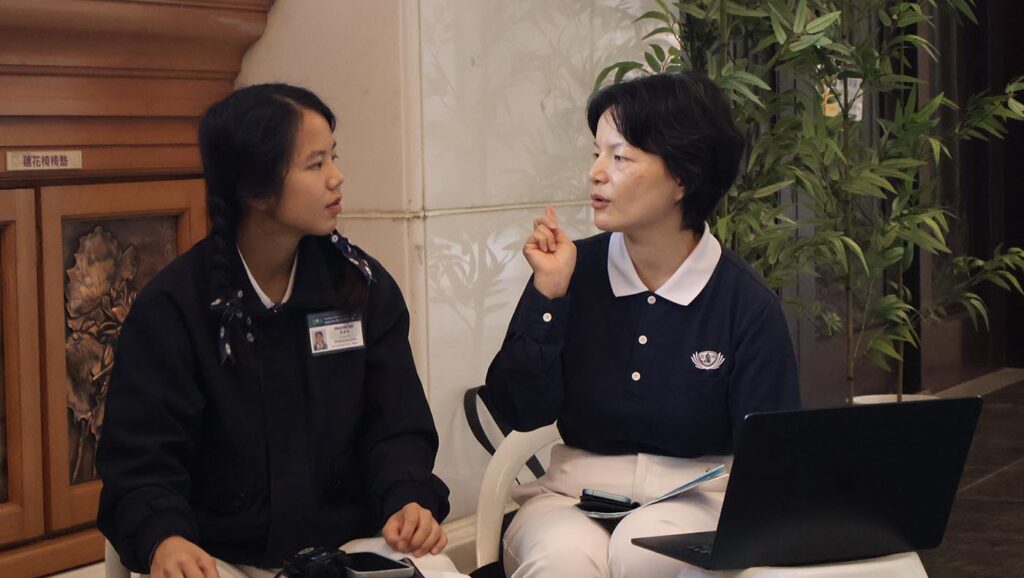
In the United States, Wu’s involvement with Tzu Chi USA largely centered on community service. This trip was the first time she fully stepped into the broader scope of the Buddhist Tzu Chi Foundation’s humanitarian efforts. People spoke about the hardships of international disaster relief and shared how Tzu Chi chapters were established overseas. The stories moved her deeply and prompted her to rethink her role within the organization.
In the U.S., our work primarily involved helping those in need within our local communities. But returning to Taiwan and hearing these stories made me realize that the Tzu Chi spirit is a legacy that must be passed down from generation to generation.
Melinda Wu
Alumni
Tzu Chi Academy, Irvine
After the camp, Wu went to the Jing Si Abode in Hualien once more. The familiar path she had walked as a child now felt different. The tenderness of being cared for and guided in her youth transformed into a solemn commitment. “I want to bring what I learned in Taiwan back to the United States, accompany more young people, and pass it on.”
Life didn’t slow down after Wu returned to the United States. While continuing her studies, she interned at Tzu Chi USA’s Education Development Office, learning the details of administration and training, convening meetings, planning events, and coordinating with regional contacts. The work wasn’t always “fun,” Wu admitted, but the longer she did it, the harder it was to step away.
In addition, Wu remained deeply involved in supporting activities for Tzu Chi Youth and the Tzu Chi Collegiate Association. She helped coordinate Tzu Chi Youth classes across regions, designed synchronized community service initiatives spanning multiple states, and organized opportunities for young people to visit Taiwan, hoping to share the moments on the Tzu Chi path that had moved her most.
“Many Tzu Shao volunteers leave after high school graduation, and I wonder, ‘If someone stayed by their side and offered a hand, would they stay connected?’” Wu said. She doesn’t rush to make young people stay. Instead, she helps them get to know each other, work together, and find the roles that suit them best through mutual companionship. “Not everyone needs to take on responsibility immediately, but at least they shouldn’t lose the connection,” she added. Above all, she hopes that for the younger generation, Tzu Chi isn’t just a childhood memory, but a “home” they return to often even after they have grown up.
Looking back on Melinda Wu’s journey, from being led by the hand into the Jing Si Abode at age four to choosing to step forward and take on responsibility today, her life wasn’t transformed by any single moment. Tzu Chi had long become the rhythm of her life, as natural as breathing or walking. If she didn’t remain involved, she would feel something was missing. Now, she models that steady, natural way of showing up for the next generation, and the path continues onward.
SHARE: