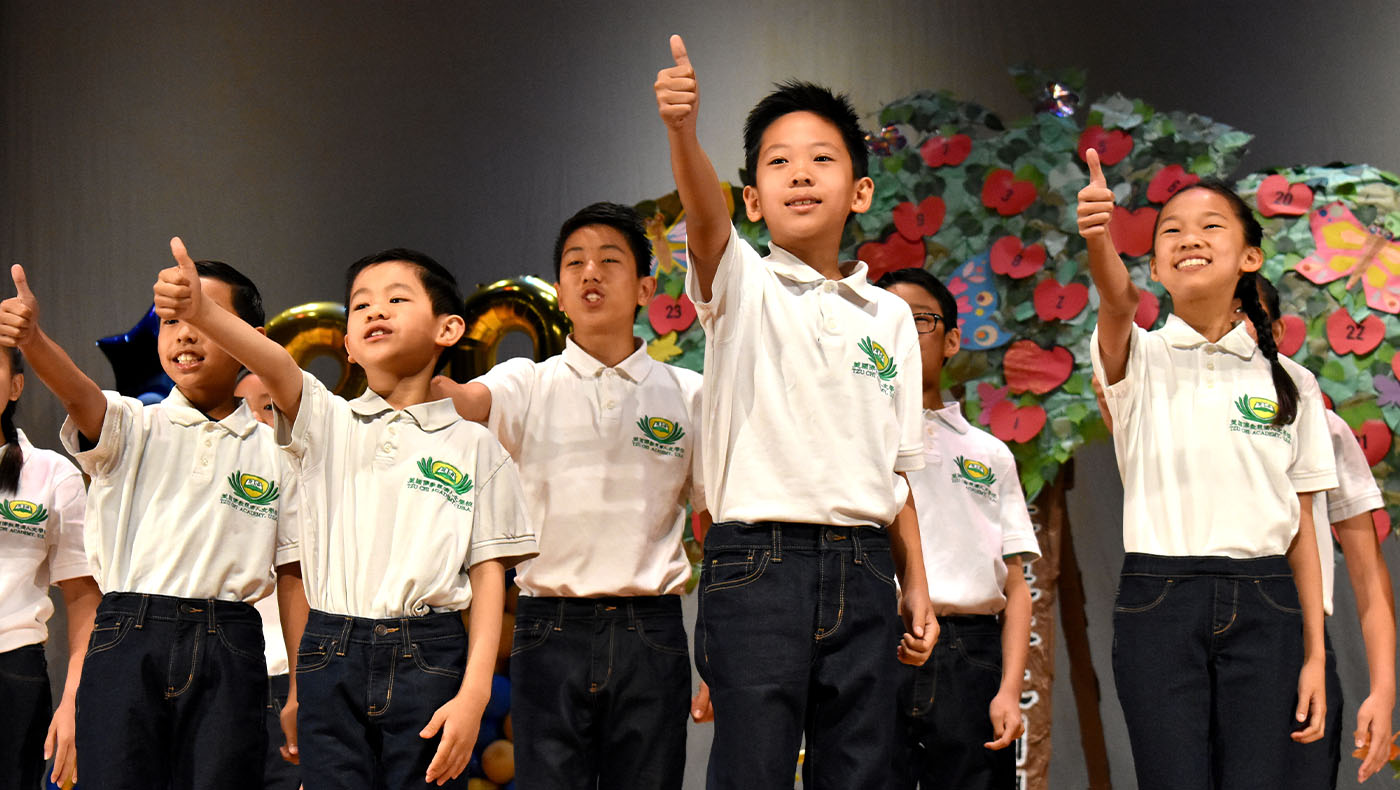
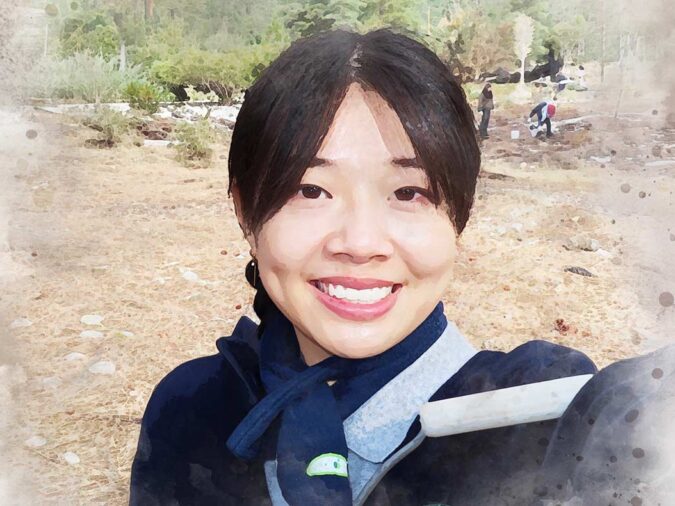
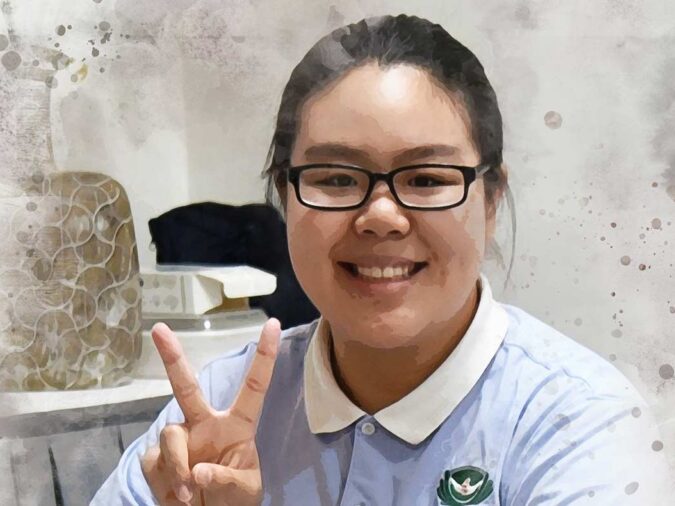
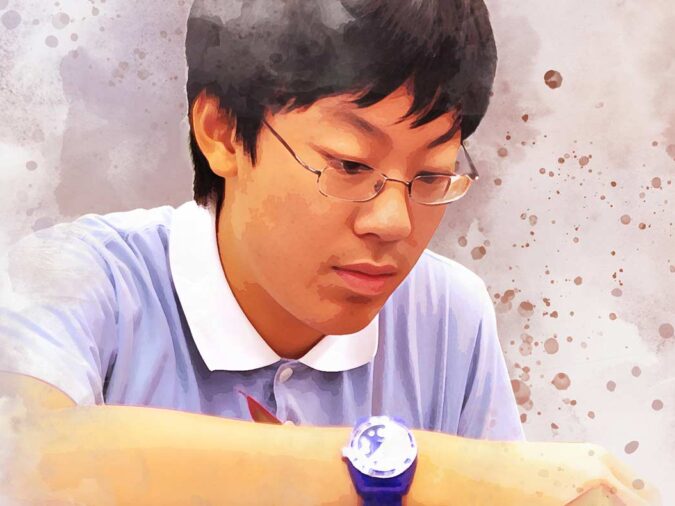
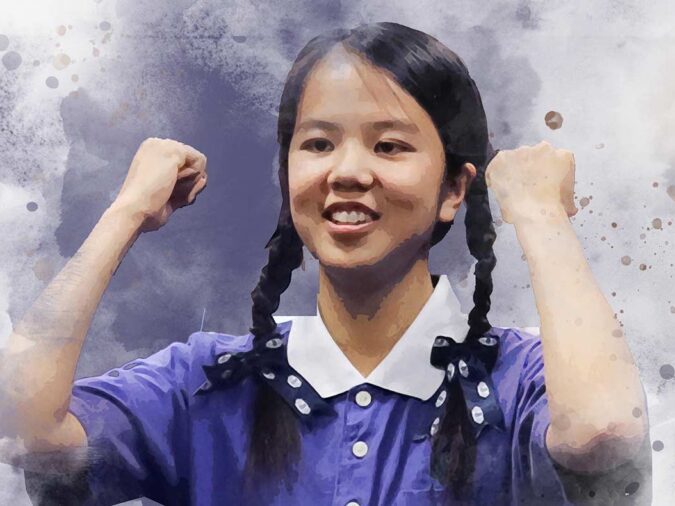
Students perform a group recitation at the graduation ceremony of Tzu Chi Academy, Los Angeles, on May 19, 2019. Photo/Wesley Tsai
SHARE
SHARE
More than 30 years ago, when Tzu Chi was just beginning to take root across the United States, early volunteers – many from Taiwan – spent weekend after weekend teaching and caring for the children of other volunteers at the organization’s offices. At that time, there were no classrooms, no schedules, and no educational systems, but they all hoped the children would not forget the Chinese language or lose their character and values as they grew up in America, while their parents devoted themselves to volunteering.
Little did anyone know that those heartwarming moments of teaching Chinese, making handicrafts, weaving Chinese knots, and simply spending time together would become the starting point for Tzu Chi’s educational mission in the United States.
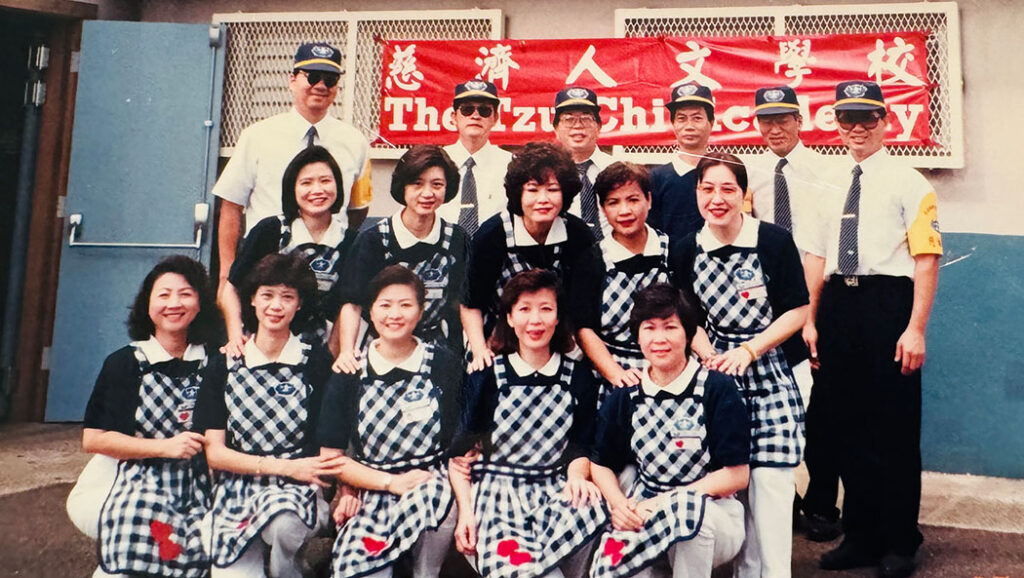
Emerging from those early efforts, the first Tzu Chi Academy in the U.S. was officially established on April 1, 1994. Over the past 30 years, what started as one school has grown into a nationwide network of 26 academies, bringing together thousands of students, parents, and volunteers in a shared educational community.
The origins of Tzu Chi’s educational mission in the United States can be traced back to April 14, 1991. To allow volunteers to focus on group practice, the Tzu Chi chapter in the U.S. (now Tzu Chi USA), encouraged by then-CEO Stephen Huang, established a Tzu Chi Youth Group in Cerritos, California. Meanwhile, across the nation, other educational groups for volunteers’ children had already begun to take shape under different names.
There was no formal structure or curriculum, only a group of volunteers willing to offer their time and knowledge. That early spirit of accompanying one another’s children became the foundation for the schools that were later established.
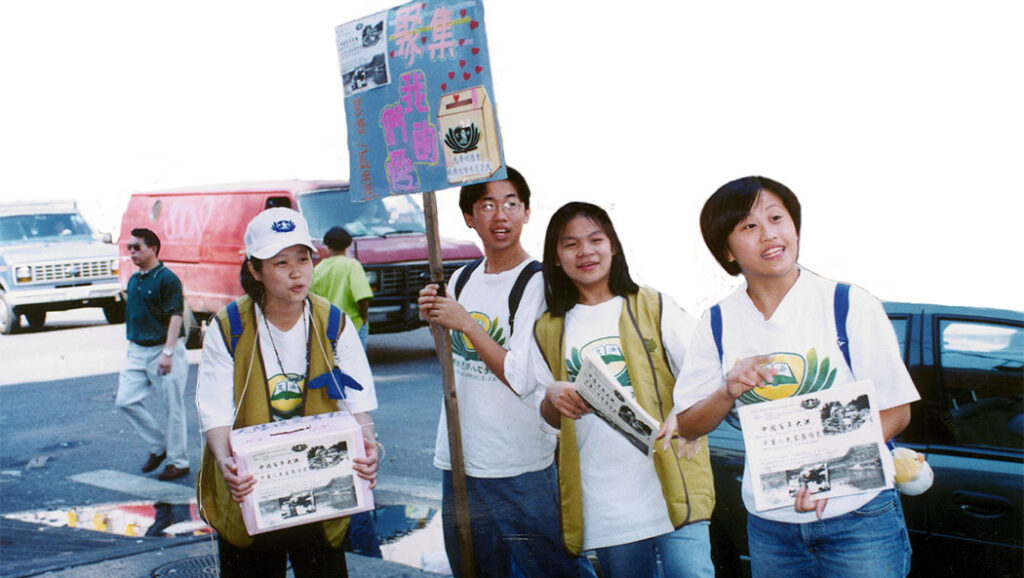
On September 30, 1991, children from the Tzu Chi U.S. chapter’s Chinese language class raise funds on the street for disaster relief in Central and Eastern China following severe flooding in May and June. Photo/Buddhist Tzu Chi Foundation
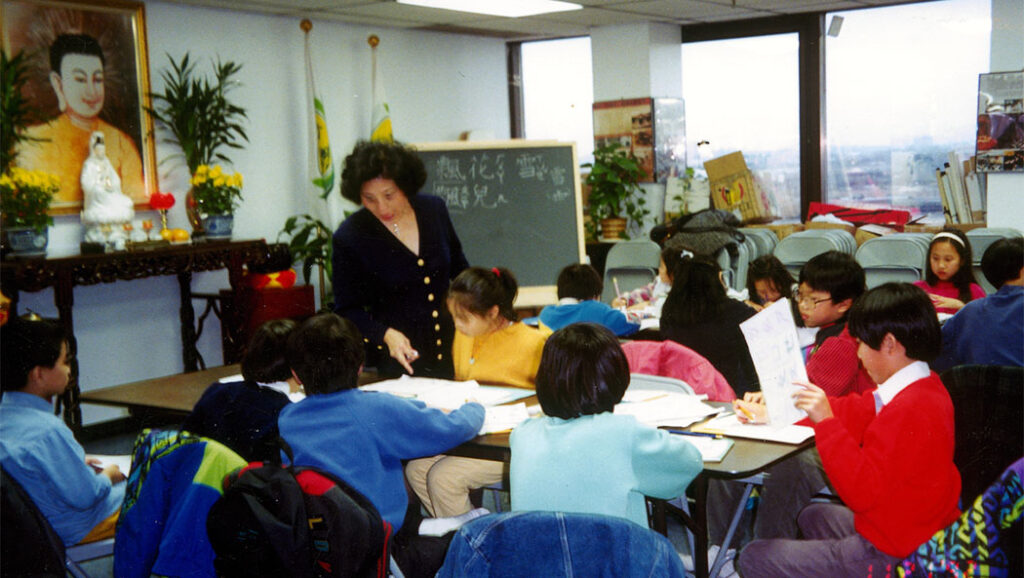
In November 1992, the Chinese language class at the New York branch of the Tzu Chi U.S. chapter – which later became Tzu Chi Academy, New York, established in 1994 – meets in a small office, with An Chang as its first teacher. Photo/Buddhist Tzu Chi Foundation
SHARE
In 1992, the Tzu Chi U.S. chapter launched Chinese language classes for youth, hoping to give Chinese American children the opportunity to learn Chinese, understand Chinese culture, and cultivate ethics and moral character. Initially, there were only six or seven students, but the program quickly grew to 30 or 40. As the needs of both parents and children increased, the curriculum evolved beyond Chinese language instruction alone to include enrichment classes, and an educational blueprint centered on humanistic values gradually began to take shape.
In 1993, the Tzu Chi U.S. chapter established its first Buddhist Tzu Chi Free Clinic in Alhambra, California (now known as Tzu Chi Health Center, Alhambra). In 1994, the chapter took its second major step by launching the first Tzu Chi Academy in the United States, Tzu Chi Academy, Los Angeles.
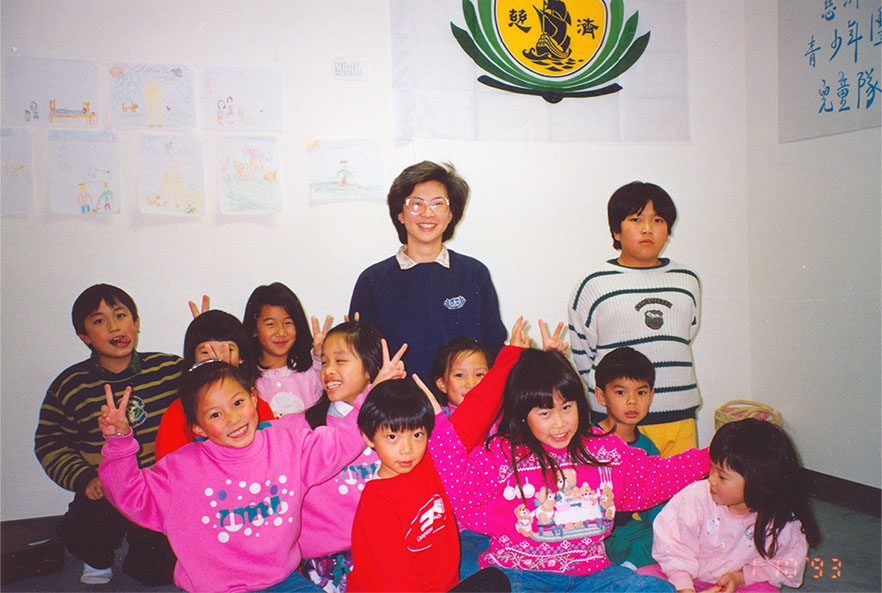
A Tzu Chi children’s class in Northern California, seen here in October 1993, was established with the support of Hsiuchin Lin Wang, affectionately known as “Silicon Valley Grandma” and one of Tzu Chi’s earliest volunteers in the U.S., then carried forward by Tzu Chi volunteer Mingling Hsieh. Photo/Tzu Chi USA Northwest Region
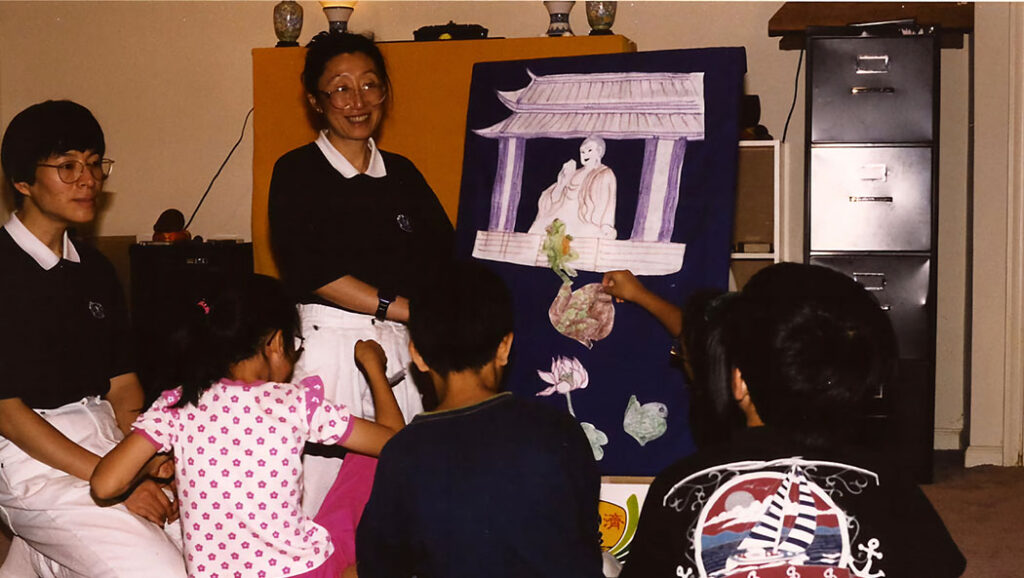
From June to July 1996, a children’s class in the Greater Washington, D.C. area – a precursor to Tzu Chi Academy, Washington, D.C. – is held in Duchih Song’s townhouse basement and consists of Dharma teachings, Tzu Chi stories, and sign-language skits or craft activities. Photo/Tzu Chi USA Greater Washington, D.C. Region
Seeking Neither Fame nor Profit
Paulina Luan, who was a parent at Tzu Chi Academy, Los Angeles, in its early years and later became a key force behind Tzu Chi’s educational mission in the United States, knows the school’s history well. “One of the most important priorities of the U.S. chapter at that time was the Academy, and Stephen Huang was the key figure in launching it,” she recounted. Huang was then Executive Director of the Tzu Chi U.S. chapter.
On January 16, 1994, the Tzu Chi U.S. chapter held its first preparatory meeting, formally proposing the establishment of a Tzu Chi Academy based on its existing Chinese language classes. However, the plan to open a Chinese language school stirred concern in the community. “It was questioned why Tzu Chi needed to establish a school when there were already many Chinese schools in the area,” Huang said decades later when looking back at the early history of Tzu Chi’s educational mission in the U.S. on its 20th anniversary.
At that time, we communicated with the heads of other Chinese schools to explain that Tzu Chi's educational endeavors were not for fame or profit, but to integrate Master Cheng Yen's concept of 'holistic education' into life education and implement it in the community.
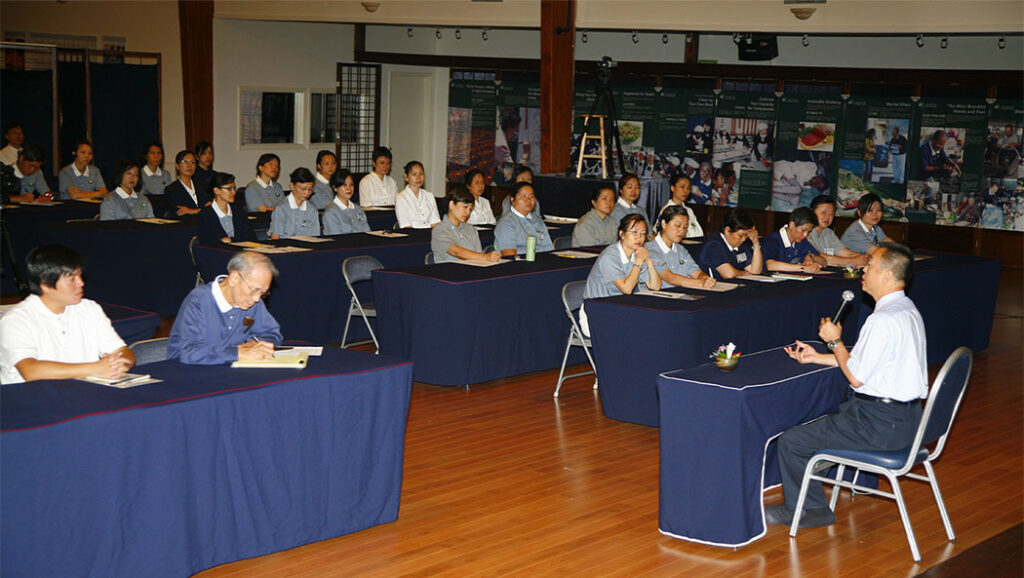
On August 23, 2008, Stephen Huang (right), Executive Director of Tzu Chi Global Volunteers, speaks about the qualities of a Tzu Chi educator during an intensive training day for Tzu Chi Academy teachers and Tzu Chi Teachers Association members. Photo/Meihsueh Lin
Giving Structure to Good Intentions
When the first Tzu Chi Academy was being built from scratch, everyone volunteered with enthusiasm, but the question of roles soon arose. Who would oversee academics? Who would handle enrollment? Who would take care of administration? Many responsibilities were simply taken on by whoever was willing.
Establishing a school was a completely new endeavor for the Tzu Chi U.S. chapter, and its Executive Director, Stephen Huang, was both the pioneer and the first principal of Tzu Chi Academy, Los Angeles. As the school’s administrative structure was formalized, Kuanwen Chuang became principal, while Liching Wu and Kueichu Wu served as vice principals. All of the teachers were unpaid volunteers.
With Tzu Chi Academy, Los Angeles, operating on a stable footing, demand began to emerge across the United States. Volunteers in Northern California, Texas, and elsewhere hoped to formally establish academies of their own. “This was a crucial turning point,” Paulina Luan said. For the Tzu Chi Academy system to expand nationwide, it would need a solid foundation in order to “grow into a large tree.” To make that possible, the Tzu Chi U.S. chapter formed an Education Advisory Committee to develop a replicable model and guide the expansion of Tzu Chi Academies across the country.
Already deeply involved in the day-to-day operations of Tzu Chi Academy, Los Angeles, first as head of the administrative team, where she helped introduce computerized operations, and later as vice principal, Luan was well positioned to expand her role beyond the school itself. During Yun Yan’s tenure as Acting Executive Director of the Tzu Chi U.S. chapter, she was invited to become the chapter’s Executive Secretary, giving her the opportunity to take part in educational affairs at a broader level. She went on to serve on the Education Advisory Committee and as Director of the Education Development Office at Tzu Chi USA National Headquarters.
Paulina Luan essentially set aside her own career to devote herself to education. When the Tzu Chi Education Foundation was established in November 2004, she became its first Chief Executive Officer and later also served concurrently as Deputy Chief Executive Officer of Tzu Chi USA until stepping down on August 22, 2020.
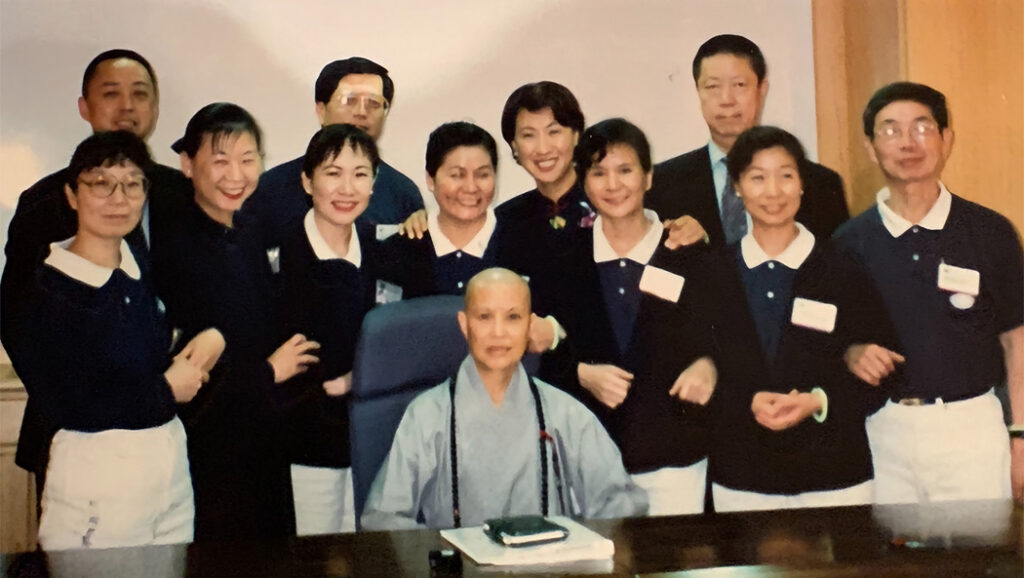
In 1998, Paulina Luan (back row, second right) returns to Taiwan to receive Tzu Chi volunteer certification and, together with Tzu Chi volunteers from the United States, visits Master Cheng Yen at the Jing Si Abode. Photo/Courtesy of Paulina Luan
Yan, who recognized Luan’s abilities early on, also served a term as Acting Principal of Tzu Chi Academy, Los Angeles, during her 1998 to 1999 tenure as Acting Executive Director of the Tzu Chi U.S. chapter. “I have to mention that my daughter also graduated from the Academy,” she said. “Today, it has become highly sought-after. Many of my former neighbors now want their grandchildren to attend Tzu Chi’s kindergarten. It is very popular, and admission even requires a lottery.”
I believe that in the U.S., the best way for Tzu Chi to shine and make an impact is through education and medical care.
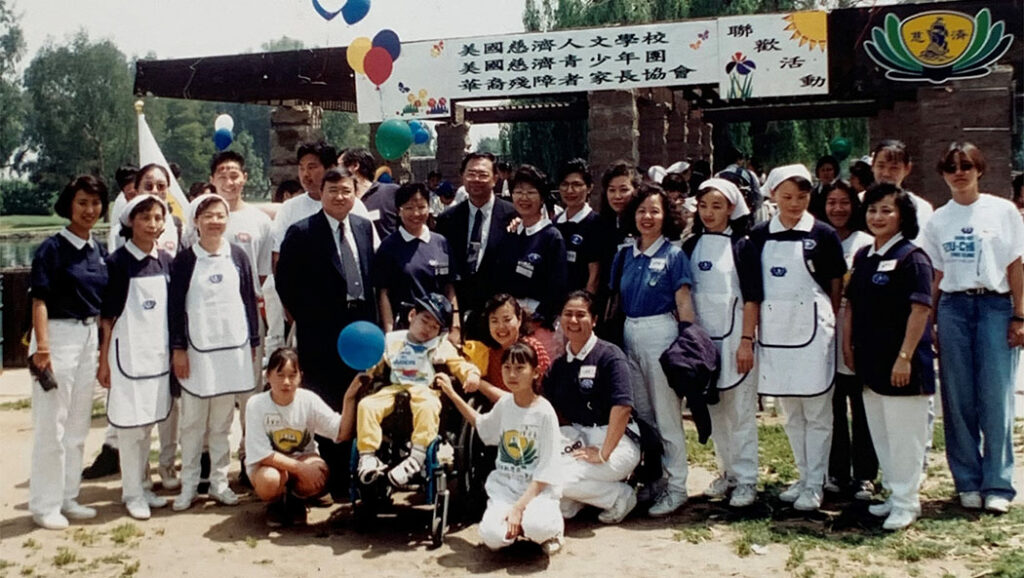
Yun Yan (front row, standing fifth left), then Acting Executive Director of the Tzu Chi U.S. chapter, participates in an event co-organized by Tzu Chi Academy, Los Angeles, the Tzu Chi USA Youth Group, and the Chinese American Parents Association for the Disabled. Photo/Courtesy of Yun Yan
Turning Structure Into a Replicable Model
While serving as Executive Secretary of the Tzu Chi U.S. chapter during Yun Yan’s term, Paulina Luan was also a successful businesswoman who ran a large technology consulting company. The other members of the Education Advisory Committee were likewise accomplished professionals from different fields.
Drawing on business management methods, the committee developed a complete set of standard operating procedures (SOPs) to cover all details, from the roles of the Principal and Vice Principal to standards for Academic Affairs, Finance, and Administration; from minimum class size to enrollment requirements; and from financial transparency to venue contracts.The SOPs were stored on portable discs commonly used at the time, so volunteers preparing to open a new school could take them back to their local areas and copy and paste the model.
However, SOPs on paper weren’t enough. The education team emphasized that anyone hoping to start a school had to come to Los Angeles for firsthand observation, while those seeking to open a class needed a complete academic and administrative team in place. With regions spread so far apart, the effort could not go far without strict implementation. For that reason, when different areas were preparing to establish a Tzu Chi Academy, the Education Advisory Committee required them to first observe a full Sunday of school operations in Los Angeles, from classroom instruction to administrative procedures and volunteer assignments, with clear demonstrations and explanations throughout.
When schools across the country were preparing for enrollment and opening day, the education team would always visit in person to offer guidance and support. “Back then, the team was small, and some members were balancing Tzu Chi responsibilities with regular jobs,” Luan recalled. “Each time we visited, one or two Principals, Vice Principals, or Directors of Academic Affairs would join us to help review the overall plans and related documents, ensuring that each school had clear standards for course planning, administrative structure, and school operations.”
At the same time, the education team respected regional differences, recognizing that each area had its own cultural background and community character. Without departing from the core spirit, they adapted to local conditions and made appropriate adjustments so that each school could retain its own distinctive identity.
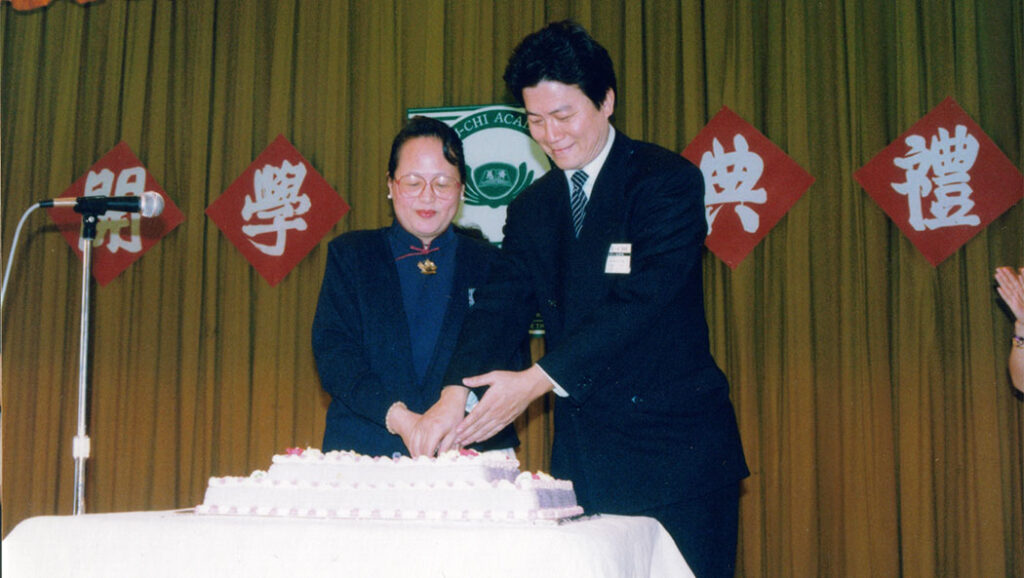
Yu-E Lin (left) and Wayne Chang (right), members of the team that established Tzu Chi Academy, Northern New Jersey, cut the cake at its inaugural ceremony on February 2, 1997. Photo/Tzu Chi USA Mid-Atlantic Region
Once the organizational structure and school systems were in place, the real challenge became recruiting faculty. In the early years, the Academies expanded rapidly, with schools opening in different locations. However, the pool of teachers came from diverse backgrounds. Some knew how to teach Chinese but were unfamiliar with Tzu Chi, while others were deeply familiar with the Tzu Chi spirit but lacked teaching experience. A balance had to be found between philosophy and professional expertise. This convinced the education team that faculty training had to be continual, with teachers travelling to Taiwan not for visits, but for genuine study.
Ongoing Faculty Development in Taiwan
The education team arranged for teachers to travel to the Buddhist Tzu Chi Foundation’s global headquarters in Taiwan to take part in Tzu Chi Teachers’ Association workshops, children’s education programs, and boot camps. Through these experiences, they learned how to integrate Jing Si Aphorisms into lesson plans and daily life. From craft design and camp activities to what teachers wrote on the board and how they guided students in class, every detail focused on learning how to bring the Tzu Chi spirit into everyday life, deepening teachers’ understanding of Tzu Chi’s philosophy and helping them avoid drifting from its core values.
“We go back at least two or three times a year, without missing a single year,” Paulina Luan said with a smile. “The first time we went back, we learned that we could write ‘Parents’ love is as great as the sun’ on teacups, naturally bringing Jing Si Aphorisms into our craft classes.” This kind of exchange not only improved teaching techniques, but also helped align educational values.
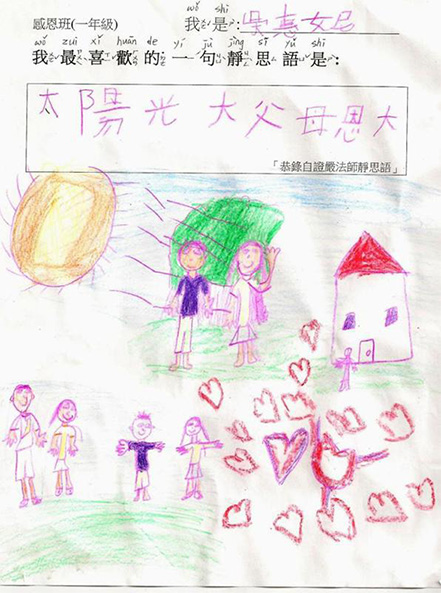
On April 17, 2010, Huini Wu, a humanities class student in Las Vegas, expresses the Jing Si Aphorism “Parents’ love is as great as the sun” through drawing. Photo/Tzu Chi USA Las Vegas Service Center
“We consult Master Cheng Yen before doing anything. Tzu Chi’s education system in the United States has been passed down from her. We must follow closely in the footsteps of the Foundation in Taiwan and of Master Cheng Yen,” Luan said.
Without the Tzu Chi Teachers’ Association and the support of the Tzu Chi Foundation in Taiwan, we would not be where we are today.
That support from Taiwan is reinforced through ongoing study and administrative exchange in the United States as well. In addition to the standard operating procedures already in place, the monthly administrative meetings of Tzu Chi Academies across the country also help keep Tzu Chi’s broader mission in clear focus.
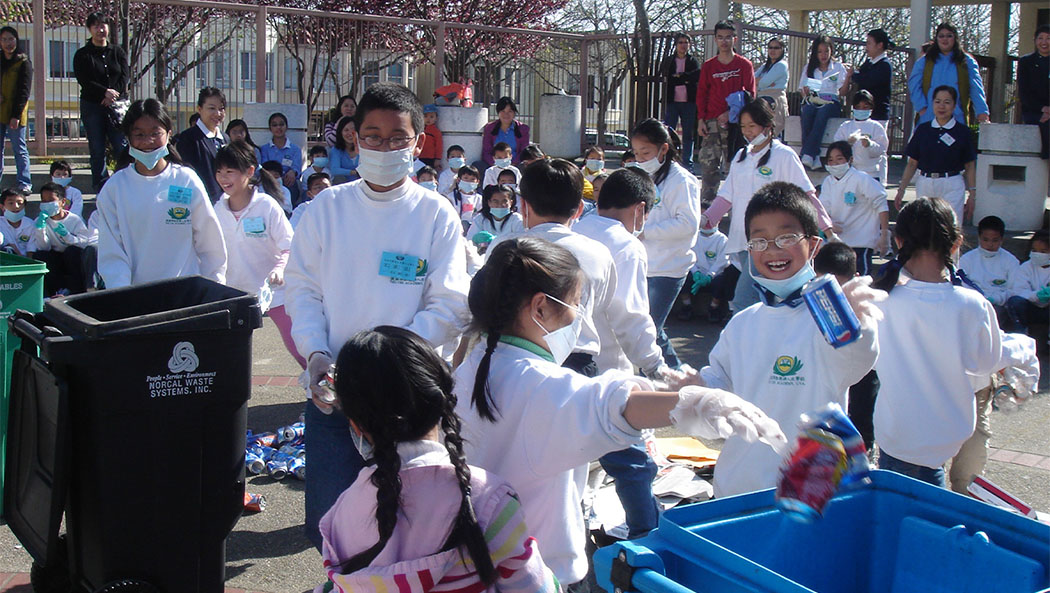
During an environmental protection class on February 13, 2006, students at Tzu Chi Academy, San Francisco, sort recyclable materials. Photo/Lulu Lin
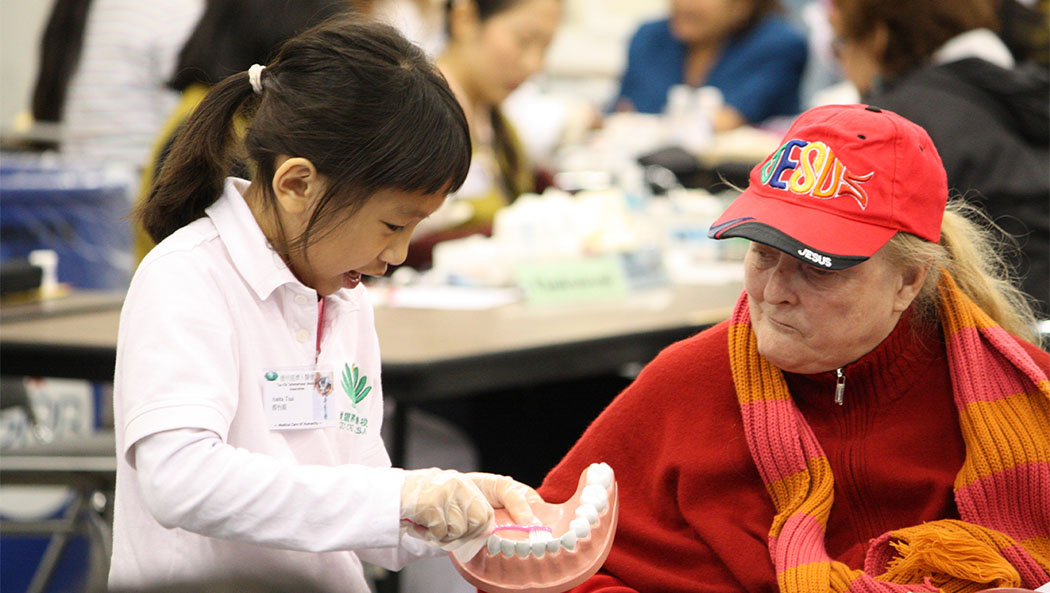
A student from Tzu Chi Academy, Houston, shows a care recipient how to brush her teeth during a Tzu Chi free clinic event on November 26, 2009. /Photo/Mingta Wu
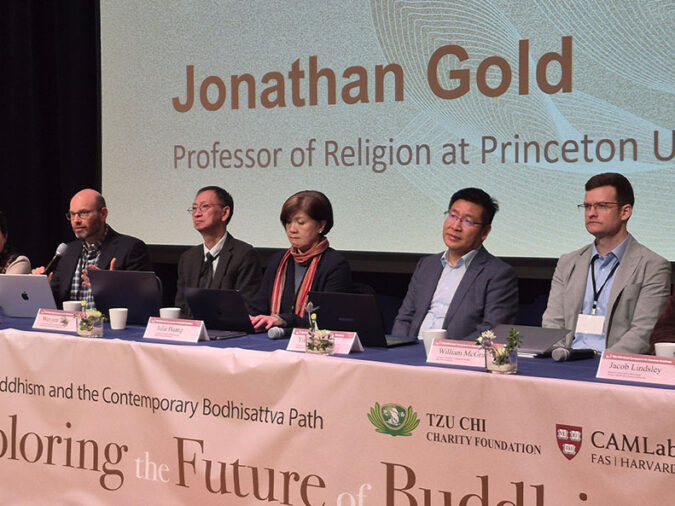
Participants in the National Humanities Education Workshop at Tzu Chi USA National Headquarters tour the campus on June 27, 2008. The event brought together 141 faculty and staff from 19 Tzu Chi Academies across the U.S., along with educators from local Chinese schools. Photo/Chingwang Chen
Through ongoing study and exchange, teachers have come to understand that Jing Si Aphorisms are not meant for memorization, but for life education; not for preaching, but for teaching by example. There have been countless examples of children bringing the values they learn through Jing Si Aphorisms into family life, deeply moving their parents.
Luan recalled a pivotal moment from when she first joined Tzu Chi as a volunteer. One day, while cleaning the floor of the Buddha Hall, she overheard another volunteer happily sharing that her child had learned a Jing Si Aphorism at a Tzu Chi Academy: “A birthday is a mother’s day of hardship,” which teaches children to honor their mother for the suffering she endured in giving birth. Hearing this, Luan was truly touched and came away wanting the same kind of values-based education for her own child. It was this transmission of values through Master Cheng Yen’s Jing Si Aphorisms that led Luan to enroll her child in the Academy, and she later began promoting their teaching across the United States.
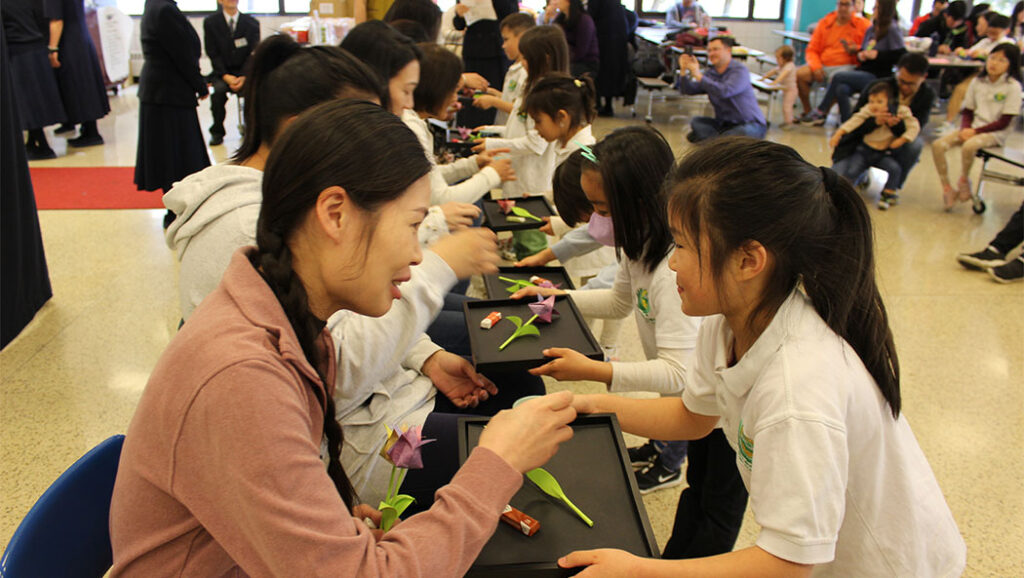
On Mother’s Day, May 12, 2024, students at Tzu Chi Academy, Pittsburgh, serve tea to their mothers, expressing filial piety and gratitude. Photo/Kuochih Cheng
The Class Parent System
Among the distinctive features of Tzu Chi Academies are their teams of “class moms” and “class dads,” who serve as a bridge between teachers, students, and parents. Class moms were already involved in the Tzu Chi U.S. chapter’s Chinese-language classes, the precursor to the Academies. Then, on September 10, 1995, as Tzu Chi Academy, Los Angeles, began its second academic year, the school officially added class dads for a practical reason.
At the time, the Academy was renting Clifton Middle School across from the Tzu Chi U.S. chapter office, and every classroom had to be restored to its original condition after use. The added workload of moving materials, maintaining the space, and helping ensure campus safety led to the formal introduction of class dads. They received training before the start of the school year, and more than 20 fathers signed up for the first session.
Since then, every Tzu Chi Academy class has class parents. They are there not to look after or accompany their own children, but to serve the entire class. Many parents initially just wanted to spend time with their children, but the education team encouraged them to treat every child as their own, and the results have indeed been excellent.
The class parent system has become an important platform for volunteer development. Many of Tzu Chi’s executives across the United States began as class parents at an Academy and gradually became involved in Tzu Chi’s missions through school activities. In this way, the Academies nurture not only students, but volunteers as well.
Tzu Chi Academy, Hawaii, established in 1996 alongside the formation of a team of class parent volunteers, rents Ala Wai Elementary School for Sunday classes. Photo/Tzu Chi USA Pacific Islands Region
“Class dads, class moms, and parents come to the Academy at least 32 times a year,” Paulina Luan noted. “Their attendance rate is even higher than that of regular Tzu Chi volunteers. And when Academy students take part in Tzu Chi activities, their parents accompany them as well.”
The Academy is a cradle of volunteers. There are countless examples of parents who began by accompanying their children and later became volunteers and leaders themselves.
Students at Tzu Chi Academy, Long Island, and their family members assist with a winter clothing distribution on December 13, 2014. Photo/Huangchuan Wang
Many students who graduate from Tzu Chi Academies go on to join Tzu Chi Youth groups or the Tzu Chi Collegiate Association, where they continue volunteering. Many also later return to serve in volunteer or administrative roles at the Academies. Others may leave after graduation, but years later, drawing on their own memories of attending an Academy, they send their own children there in turn. In this way, humanistic education is passed down from generation to generation.
Parents’ willingness to send their children to Tzu Chi Academies is a vote of confidence in the organization. “We should be grateful to parents for entrusting their children to a Tzu Chi Academy, helping create a virtuous cycle,” Luan often says.
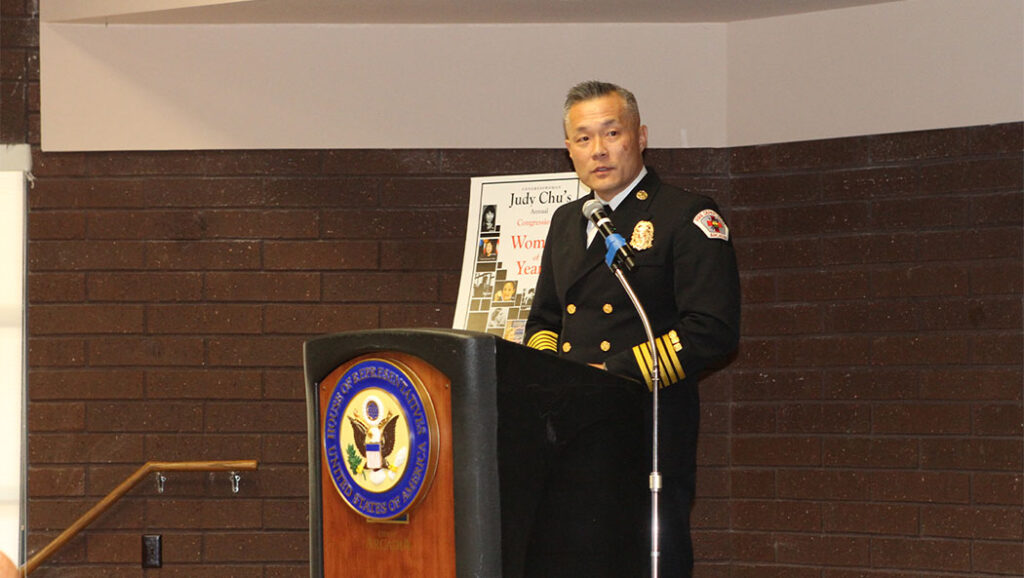
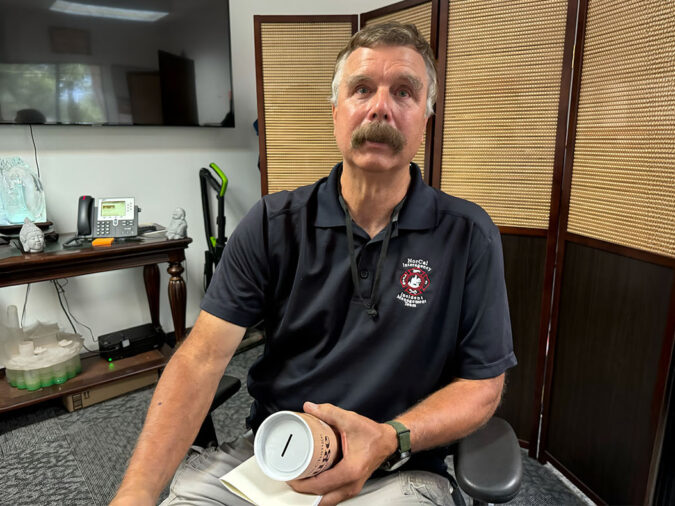
Arcadia Fire Chief Chen Suen speaks at Representative Judy Chu’s 15th annual Congressional Women of the Year Awards Ceremony in Arcadia, California, on April 19, 2025. A graduate of Tzu Chi Academy, he reflected on the school’s impact on his life and expressed gratitude for Tzu Chi’s long-standing contributions to the community. Photo/Jennifer Chien
A Slow Yet Steady and Far-Reaching Mission
The logo of Tzu Chi Academies, “Passing on the Bodhi Spirit” (with bodhi, a Sanskrit term in Buddhism, meaning awakening or enlightenment), reflects the conviction of every volunteer who takes up Tzu Chi’s educational mission, which is to help shape future generations. As Chingchuan Shih, Director of the Education Development Office at Tzu Chi USA National Headquarters, put it, “The Academy is not only a place for language and character education, but also an important starting point for passing on the Tzu Chi spirit.”
Many children are brought to Tzu Chi Academies by their parents at a young age to learn Chinese and humanities, and they grow up in the Tzu Chi family. From initial passivity, they gradually become active participants who are willing to give. Their wish is no longer simply to be cared for and supported, but to learn from the volunteers’ selfless dedication and example.
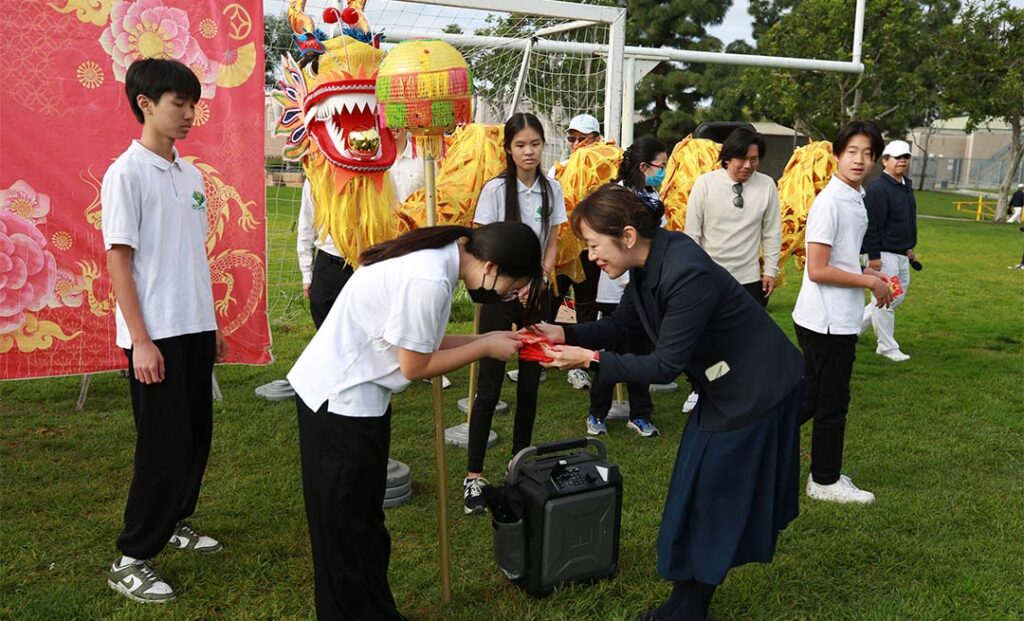
At a Lunar New Year celebration for parents and children at Tzu Chi Academy, Irvine, on February 18, 2024, Chingchuan Shih distributes traditional red envelopes symbolizing blessings and good fortune to students. Photo/James Huang
Unlike other areas of Tzu Chi’s work, where a patient’s relief may be seen immediately after a medical consultation or disaster survivors may be moved to tears the moment they receive emergency cash aid, passing on the Bodhi spirit does not produce instant results. Shih is therefore often asked what Tzu Chi Academies have accomplished and where those children have gone. Though her answer focuses on just one element within the Academies’ humanistic education, it points to an impact that is far-reaching. “Through the teaching of Master Cheng Yen’s wisdom in Jing Si Aphorisms, character is quietly nurtured over time. Compassion and love take root in children’s hearts and continue to grow throughout their lives,” she explains.
“Over the decades, we have also seen many children grow up and remain with Tzu Chi, wholeheartedly taking on the responsibility of carrying its missions forward,” Chingchuan Shih adds. As Paulina Luan has said, education is the slowest mission, yet also the most profound undertaking and an important link in the transmission of Tzu Chi’s Dharma lineage.