No Way Home, No Way Forward: The Plight of Haitian Refugees
Written by Pheel Wang
Translated by H.B. Qin
Edited by Ida Eva Zielinska
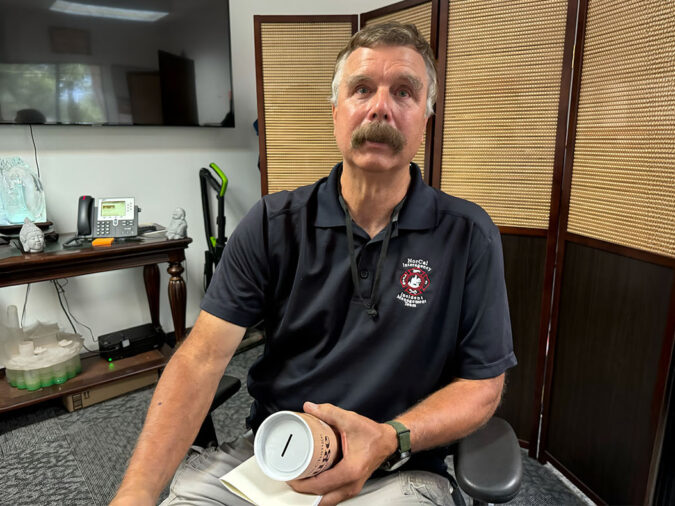
Published #78 | Fall 2025 Issue

Haiti, an impoverished nation grappling with ongoing instability, descends into even greater turmoil after the July 7, 2021, assassination of President Jovenel Moïse. The surge in gang power fuels widespread violence and unrest, pushing many to flee and driving a new wave of refugees. Photo/Odelyn Joseph, AP (picturedesk.com)
SHARE
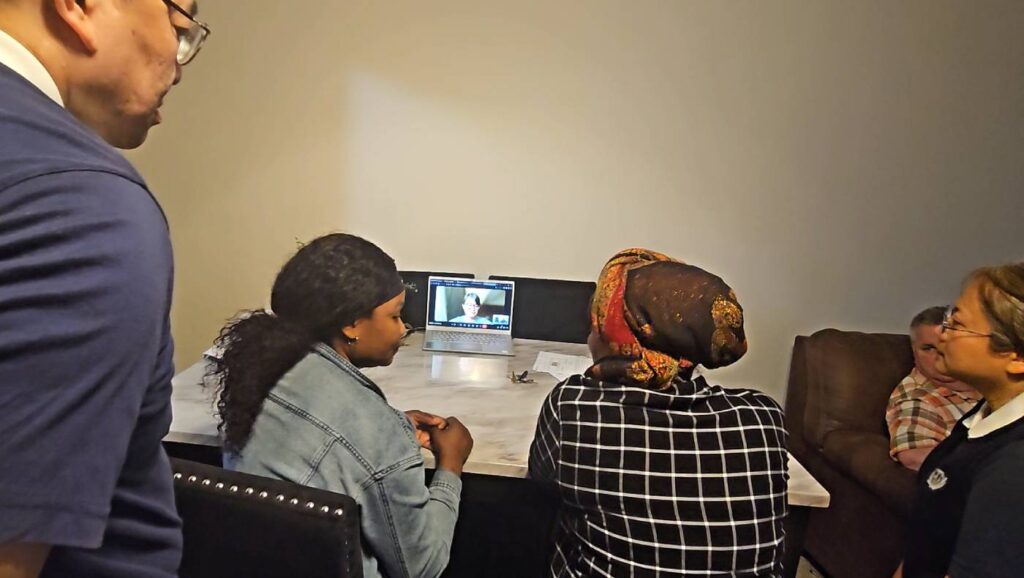
When the camera on her home computer switched on, Esther, a Haitian refugee living in Minnesota, appeared with Tzu Chi volunteer Jason Li and translator Nadia Taussaint, ready for her interview. (Like the other refugees featured in this story, her name has been changed to protect her identity.)
At first, her four-year-old son was a bit restless, but since he was already comfortable with the volunteers, they soon coaxed him aside to play. As the interview began, Esther was asked when she came to the United States. She paused, trying to remember. “2023? Or was it… 2022?” After thinking it over, she turned to Li, who was standing behind her, and asked, “When did I come to the U.S.?” He was caught off guard, wearing a look that said, “How should I know?” Then he burst out laughing. “Why are you asking me?” As Esther realized the absurdity of asking him, everyone in the room joined in the laughter.
Turning to Tzu Chi for help had become second nature to Esther over the years. “Whenever I needed something, I would use a translation app to text Jason in Chinese: ‘Hey Jason, we’re out of food…’” she said, switching between Haitian Creole and simple English. “Rain or shine, Tzu Chi always brought us fresh groceries.”
No one would have guessed that the cheerful Esther had suffered from severe depression after arriving in the U.S., requiring long-term treatment. “My husband was murdered right in front of me and our two children. One of them was just six years old at the time,” she recounted in a somber, quiet tone. “I had to escape Haiti to seek asylum, but my two children couldn’t come with me. They stayed in Haiti… My story is very, very dark…”
Temporary Political Asylum
“Dark is precisely the right word to describe her life…” said Jason Li, who oversees charity services for Tzu Chi USA Midwest Region’s Minnesota Office and has had the most contact with Esther. Since April 2023, he has been delivering fresh produce each month to the homes of families like hers.
“When I first met Esther, her eyes were full of sadness and wariness. She was under temporary political asylum as a witness,” recounted Tzuying Pan, director of the Minnesota Office. She recalled that, at the time, Esther seemed as fragile as glass, her emotions ready to shatter at the slightest touch.”
I have evidence they killed someone, and I’m very scared. They didn’t just kill [my husband] and walk away; before they killed him, they brutally beat him and then shot him. No one knows who did it, but I know what they did. I fought back, and they slashed me several times.
Esther [pseudonym]
Haitian Refugee
Esther lowered her head and rolled up one of her sleeves, revealing a deep scar on her arm. “You see the scar on my arm? They also cut me on my backside. They came in and did whatever they wanted. They beat me and made sure I understood: They could kill me.”
The scars remain with her, impossible to ignore. Each time she reveals them, the old wounds seem to open again – not bleeding, but silently shedding tears of unbearable pain.
On July 7, 2021, Haiti’s president, Jovenel Moïse, was assassinated in his own home, leaving the country without a legitimate, elected leader and stalling core functions of government. Armed gangs quickly seized the opportunity to expand, eventually taking control of more than 60% of the capital, Port-au-Prince. Violence surged. The justice system and police were unable to maintain order, while the healthcare and education systems teetered on the brink of collapse.
Between January and March 2024, armed gangs launched a coordinated offensive demanding the resignation of interim Prime Minister Ariel Henry, who had fled the country in late February. They stormed two main prisons in the capital, resulting in the escape of more than 4,600 inmates, including gang leaders. They also attacked Toussaint Louverture International Airport, halting flights and preventing Henry from returning.
According to the United Nations Office of the High Commissioner for Human Rights (OHCHR), at least 5,601 people were killed in 2024 due to gang violence, and a further 2,212 were injured and 1,494 kidnapped. One of the deadliest single incidents occurred in December 2024, when the Wharf Jeremie gang carried out a massacre in Cité Soleil, killing at least 207 people.
The international community expressed growing alarm over Haiti’s deepening humanitarian crisis. UN agencies estimated that millions of Haitians faced acute hunger and displacement, prompting many to flee and fueling a new wave of refugees.


Refugees risk their lives on the run. On November 15, 2022, the U.S. Coast Guard rescued 12 Haitian migrants left abandoned by smugglers on the rocky cliffs of Monito Cay, Puerto Rico, and transferred them to U.S. Border Patrol agents in Mayagüez. Photos/U.S. Coast Guard Puerto Rico
Esther was among those swept up in the crisis. She and her current husband met while they were both fleeing their countries. They married in South America, had a child together, and later applied to enter the U.S., hoping to join relatives.
After arriving in the U.S., Esther later obtained protection under Temporary Protected Status (TPS) following Haiti’s redesignation in 2022. TPS allows people already in the country to remain temporarily and apply for work authorization. While covered, she could apply for asylum, a separate protection that can lead to lawful permanent residency if granted. However, until then, she remained ineligible for federal subsidies or assistance.
“There were almost no resources. When I first arrived in the U.S., I received a SNAP coupon, which provided a subsidy of $26 a month, but it only lasted for three months,” Esther remembered. (SNAP stands for the federally funded Supplemental Nutrition Assistance Program.)
“We did not get a work permit immediately. It took more than a year to get it. So my husband and I had to work under the table,” Esther said. She earned a few dollars here and there braiding hair for Black women in the neighborhood.
In time, her husband managed to find formal employment, but the challenges didn’t end there. “When my husband finally found a job, they terminated him,” Esther explained. His limited English made communication difficult, and he struggled to meet expectations at work.
Esther’s early days in the U.S. were also marked by emotional hardship. “I needed to see a psychologist,” she acknowledged. On top of her mental health struggles, everyday logistics posed significant challenges.
“Once, when I went to the hospital, I asked where I could learn English. They told me there were free classes in the community, so I went,” she recounted. But her access to this assistance didn’t last. “I didn’t have a car, and I couldn’t take the bus because I couldn’t read the English signs. After a while, I had to stop going.”
And then there were the ever-present financial constraints. “Everything in the U.S. was so expensive, we just couldn’t afford it,” she added. At first, their relatives tried to help, but over time, the support dwindled, and the couple had to navigate their new life mostly on their own.
Esther was trapped. She couldn’t go back to Haiti, and ahead was only overwhelming pressure. She had no choice but to grit her teeth and keep going.
Sometimes there was no food in the house, and we would go the entire day without eating, just watching our child cry from hunger. There was no one to help us. There was a food bank, but I didn’t speak English and didn’t know how to drive. Only Tzu Chi was left.
Esther [pseudonym]
Haitian Refugee
Steady Help Appears on the Horizon
Tzu Chi volunteers met Rose Gbadamassi, Executive Director of Haitian Communities of Minnesota, at a nursing home. “She happened to be recuperating there when we came to offer care and companionship,” Tzuying Pan explained. “When we performed sign language and introduced Tzu Chi, she became very interested. After she was discharged, she began referring refugee cases to us, and Esther was one of them.”
Jason Li, who oversees Tzu Chi’s distributions in the area, remembers how difficult it was to communicate with Esther the first time they met. They had to rely entirely on translation apps. “She didn’t know a word of English back then,” Li recalled. “She, her husband, and their child were living in a basement apartment in a building without an intercom. It was small, dark, and full of unpleasant odors. Someone was always smoking marijuana in the building, which made it hard to breathe for anyone not used to the smell. The police came to the building often to check on things.”
Not only was the family’s living situation challenging, but their personal circumstances were equally difficult. “When I asked Esther how many people were in her family, she burst into tears,” Li said. “She thought constantly of her two children still in Haiti. At the time, she was pregnant with her second child since arriving in the U.S., and was also in therapy. Overwhelmed with sadness, she cried every day… Then, just as she was about to give birth, she miscarried.”
Li can never forget the message Esther sent in September 2023. “It still breaks my heart every time I think about it… She had lost her baby and had to stay in the hospital for three days. She texted me not to talk about how sad she was, or how she was coping, but simply, ‘Can you help me? I can’t pay my rent…’ She didn’t even have time to grieve her loss. Her only thought was how to keep a roof over her family’s head, even if the place they lived in was far from ideal.”
After assessing the situation, Tzu Chi provided Esther with financial assistance. Finally, in December 2023, a year and a half after arriving in the U.S., Esther received her work permit. That changed what was possible for the family.
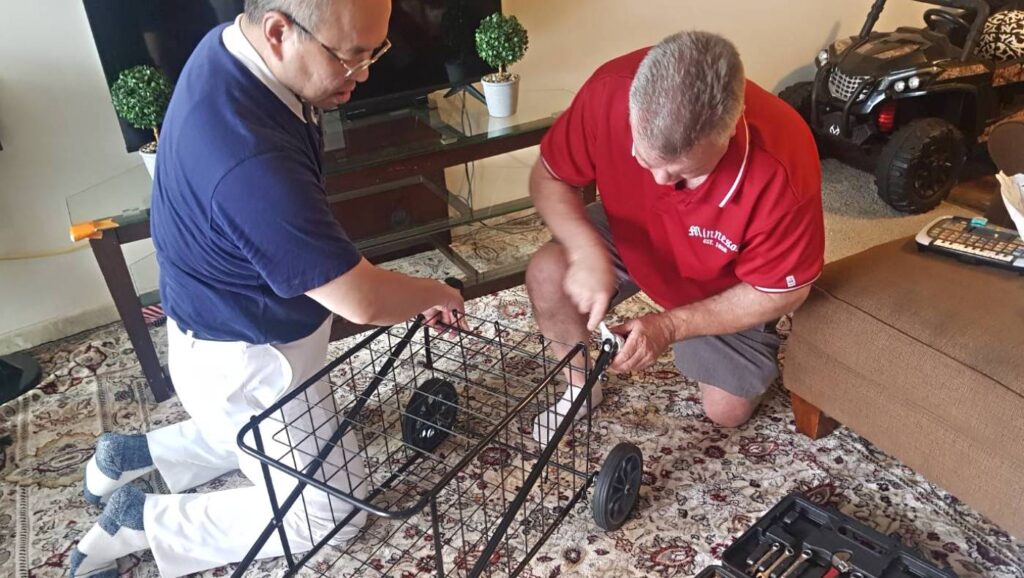
“Esther and her husband were finally able to work legally. They took turns, one working the morning shift, the other the evening, because someone always had to be home with their child,” said Pan. “Both worked hard, and as their finances improved, they moved to a better apartment.” Unfortunately, the stability proved to be fragile.
“By mid-2024, we received another message: Esther was struggling financially again. When we visited, we realized that their new rent was too high. It was $600 more than their old place,” Pan explained.
During that visit, Pan and the team sat with Esther to review the family’s income versus expenses. The accounting caught her by surprise. “She realized that, in order to give her child a safer living environment, they had moved to a better apartment, but their two salaries could not cover it. So her depression started again,” Pan noted. There was hope, however. “After we did the math, Tzu Chi provided them with a few hundred dollars a month for three months to help them pay off part of their debt. Otherwise, they would have had to pay interest. When the lease expired, they moved to a less expensive place.”
Even with steady jobs, Esther’s family’s income remained unpredictable. She was a substitute worker at a fast-food restaurant, picked up only when others couldn’t make their shifts. Together, she and her husband earned about $2,000 a month, and prices kept rising. “Before their move, she reached out to Jason Li and told him their cupboards were empty. We responded right away,” Pan said. She and two other volunteers each bought different groceries. “When we arrived at her apartment with the food, we saw her relatives and friends; everyone she knew had gotten her call.” Tzu Chi was the only charity present.
“She’s already made so much progress!” Pan exclaimed. “When we first met in 2023, she needed everything interpreted. By 2024, Esther could understand and respond in English, though we still brought a translator for support.” Esther’s family still faced setbacks, but Pan felt both concern and admiration for the couple’s perseverance. “I told them, ‘We’ve been through this too. When we immigrated to the U.S., we also faced many difficulties. We truly understand what you’re going through.’ Over time, that helped them trust us and let us be there for them.”
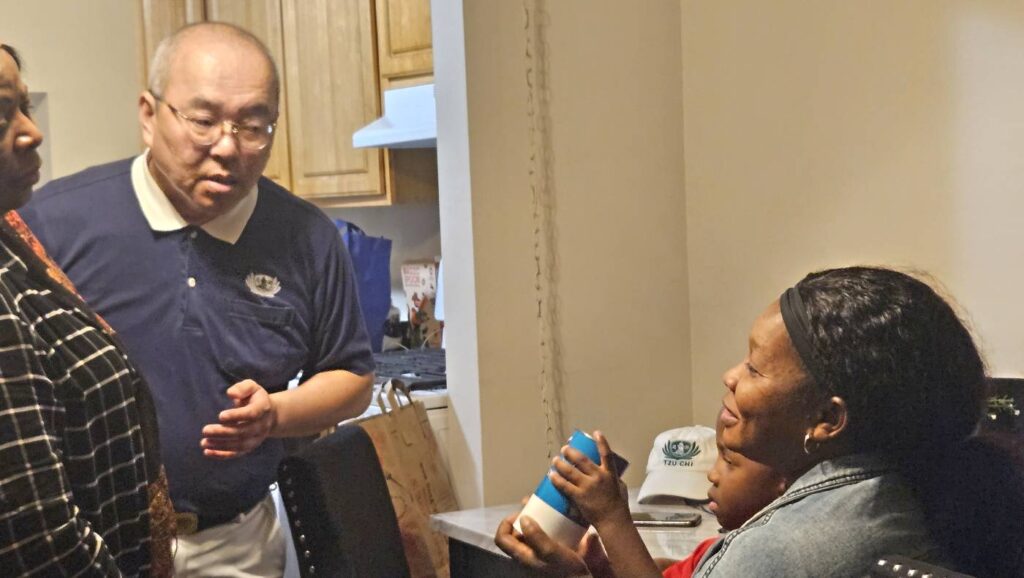
Despite constant financial strain, Esther always managed to save a little money to send back to Haiti for her children’s schooling. “Even with so few resources, they get good grades. That’s my greatest joy!” she noted. This year, Esther and her husband managed to save $3,000 to buy a used car. “I got my driver’s license! Now we have a car, even though sometimes it acts up – once it broke down on the highway and we had to call a tow truck,” she laughed, gesturing animatedly. There was no hint of discouragement in her voice, only enthusiasm, as their lives were finally moving forward.
I know Tzu Chi did everything they could to help me get back on my feet. It wasn’t everything I hoped for, but I understand they have so many other people in need. What mattered most was their heart. I’ll never forget it. They caught me when I was falling and never gave up on me.
Esther [pseudonym]
Haitian Refugee
A Refrigerator That Listens to Buddhist Chants
In Minnesota, Tzu Chi USA’s food distributions have become a lifeline for refugees from many countries, including Haiti. Yet the program itself began amid hardship.
“In 2020, when the pandemic swept the globe, Master Cheng Yen and the monastics at the Jing Si Abode sent instant rice, noodles, and protective supplies to the U.S. out of compassion. After receiving the shipment, we gathered additional food from local Asian supermarkets and began small-scale distributions to shelters, struggling schools, and centers serving Mexican refugees,” said Tzuying Pan. “Then, on September 26, we held our first large-scale distribution at the Thai Temple, primarily serving Asian ethnic minorities and reaching nearly 400 families.”


Tzu Chi Minnesota has limited volunteers and resources, yet the team always finds a way forward. The same resolve guided their food distributions. “We sorted through applications from those families to identify any special food needs and followed up with phone calls. We also received refugee referrals from local community organizations for Karen people (an ethnic minority from Myanmar) and for Haitians,” Pan recalled. “In November 2020, we launched our first ‘Love Delivered to Your Door’ produce distribution,” she added.
“The volunteers got it right on the first try,” said Jason Li, proud of the quality fruits and vegetables they distribute. “Some organizations like Second Harvest load up boxes on trays for nonprofits to haul away. But we go to the food bank ourselves and hand-pick each item, choosing only what we would be willing to eat ourselves. We check the expiration dates and avoid anything old. It takes time and energy, because we’re squatting down and searching like treasure hunters.” “The cold storage is freezing,” added volunteer Yann Khan. “We have to wear coats to avoid frostbite, or move everything out and squat on the floor to make the selection.”

But there was another problem. With no Tzu Chi service center in Minnesota, where could they store and pack all the fresh produce? Pan offered her own house; they would use the garage as the main storage area and the driveway for packing. “In winter, it wasn’t a problem, because Minnesota was so cold, we could keep everything in my garage and it would stay fresh. But in the summer, we needed a refrigerator,” she said.
“We do our distribution on the third Saturday of every month, but since the food bank is closed on Saturdays, we have to pick up fresh produce two days in advance. Once, when the food bank found out we mostly served Asian families, they asked if we wanted the large quantity of cilantro they had. I told them, ‘No way, I don’t have enough fridge space.’ They were shocked: ‘You do food distribution without a big refrigerator?’” Pan smiled at the memory. “So they helped us find a secondhand commercial fridge!”
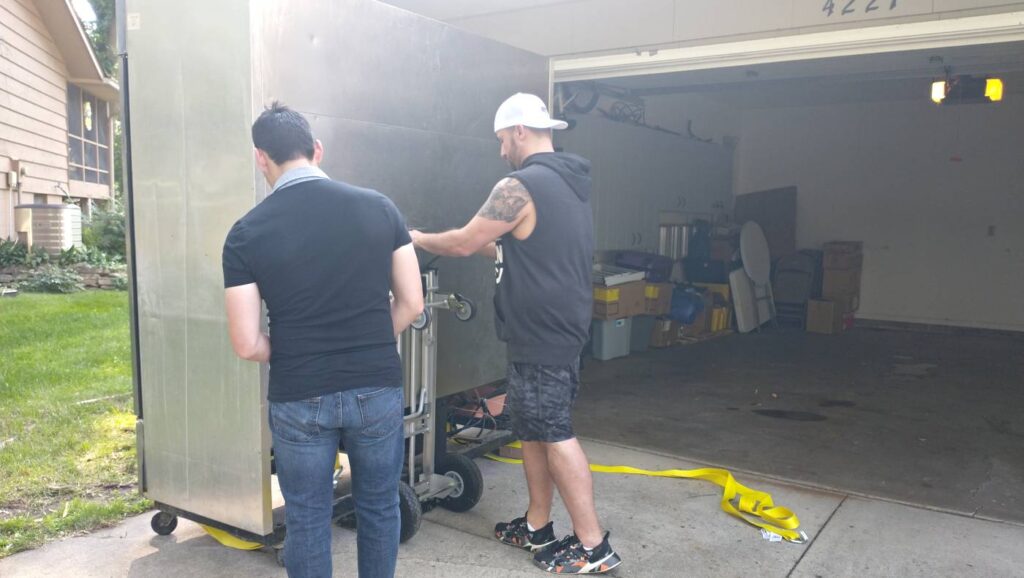
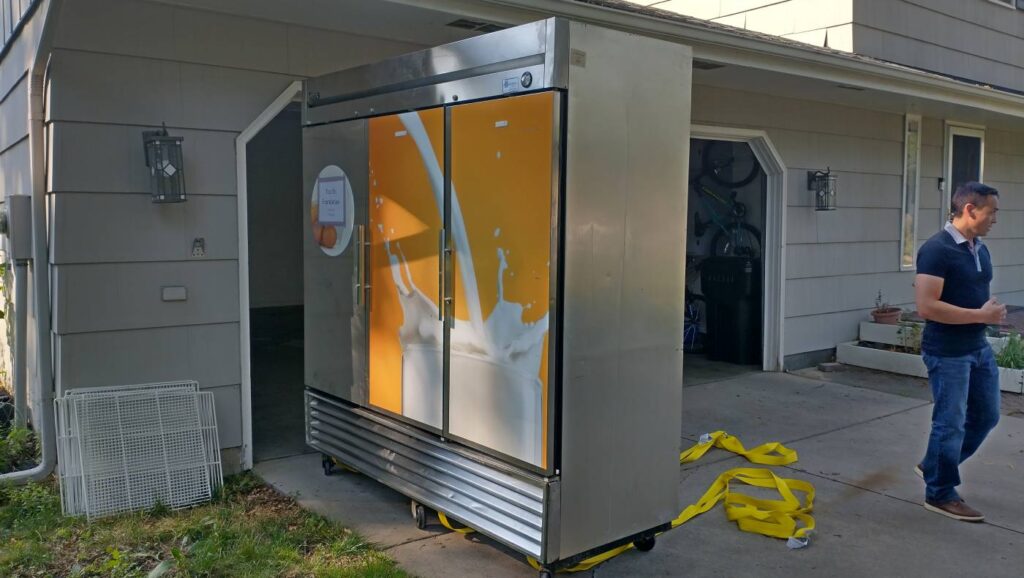
On July 15, 2021, a large commercial refrigerator arrives at Tzuying Pan’s home. Because it is too tall, it has to be tilted on its side to be moved into the garage. Photos/Tzuying Pan
For Pan, this “cilantro story” is less about fridges and more about the workings of compassion and karmic connection. “It was like bodhisattvas gathering like clouds,” she said, using a familiar Tzu Chi phrase to describe how help arrives just when it’s needed — as if compassionate beings respond to suffering the moment it appears. “In the winter, Asian grocery stores even let us use their wholesale warehouses to store vegetables and use their space to pack. It’s just too cold to work in the garage or driveway, so we’re able to do everything inside the store,” she added.
Tzu Chi USA’s Minnesota Office now also accepts cases referred by the county hospital and serves Afghan refugees. On average, it helps about 50 households each month. The distribution requires significant effort at each step, from purchasing and packing the food supplies to delivering them to recipients’ homes. Even though the office has only 10 to 12 regular volunteers, everyone remains determined to continue this work, often finding innovative solutions to difficulties as they arise.
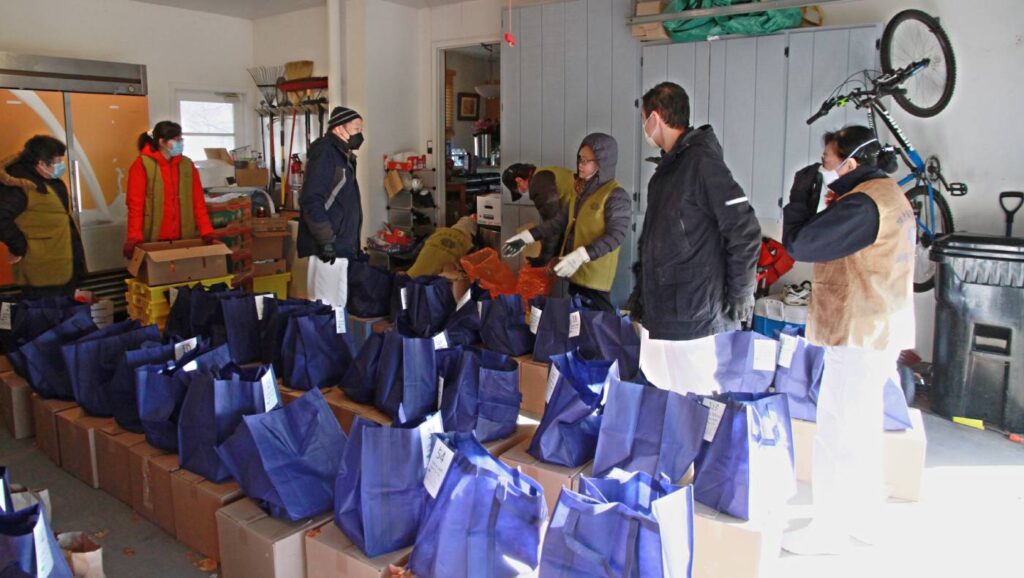
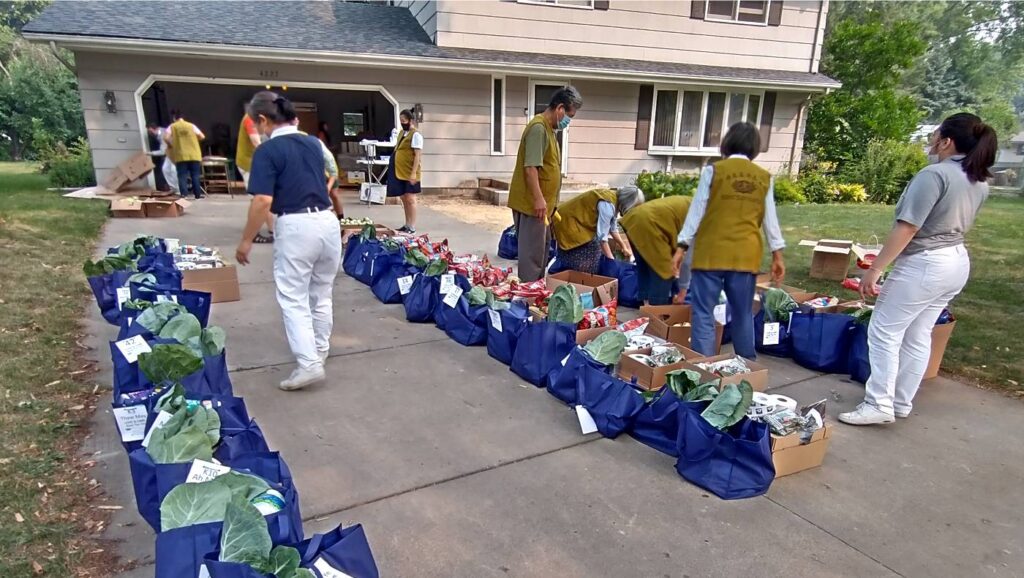
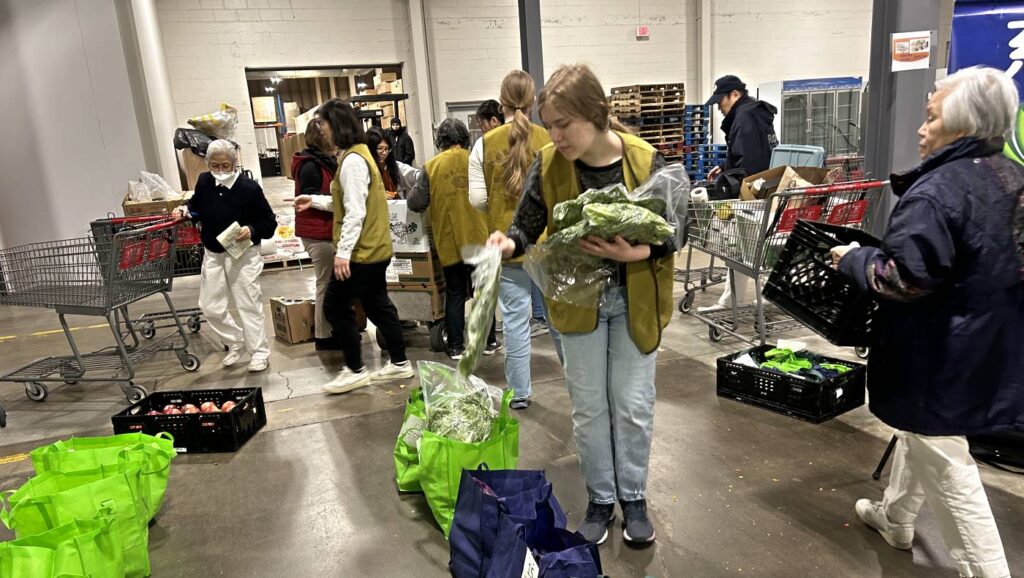
One ongoing challenge? Keeping the donated food fresh. “The refrigerator hasn’t been behaving lately. We have to keep an eye on the temperature. When the food arrives on Thursday, we turn the fridge on and immediately start playing Buddhist chants for it. Really, we do! If we don’t, it drops below zero and the food freezes,” volunteer Khan said with a smile. To ensure that those in need receive fresh fruits and vegetables, these dedicated volunteers employ every strategy they can think of. “We have to thank it, talk to it, and ask for help. It really works!” Khan added.
It takes unwavering commitment and heart to support care recipients, which the volunteers in Minnesota embody through their perseverance to find resources and solutions, and their wisdom as they help refugees face ever more daunting challenges.
Coping With Uncertainty
“Recently, we have clearly felt that the quality and quantity of what we get from the food bank have become increasingly unstable,” Tzuying Pan said with some concern. “The food bank receives its fruits and vegetables from large wholesalers like Costco; they only get as much as the companies donate. Recently, the food bank’s produce hasn’t been as fresh as before. It’s like it has been stored for a long time. In the past, there were lots of large bags of cabbage or radishes to pick from, but now there are often only a few.”
Ongoing uncertainty around recent trade tariffs has only made things worse. With new import taxes putting increased pressure on international trade, many businesses have raised prices in advance, and some cargo shipments have been disrupted, affecting the U.S. supply chain and driving shortages and price hikes.
Still, Pan and her team refuse to lower their standards for Tzu Chi’s distributions. “Now we have to go to other grocery stores to buy fresh produce, and it’s obvious things have gotten more expensive. Luckily, Asian supermarkets know we’re doing charity work and give us a discount,” she noted.
Beyond tariffs, shifts in U.S. immigration policy in 2025 have brought new fear and hardship to refugees who entered legally in previous years.
“When I was in Haiti, I was afraid to go out; there were always gunshots outside. But after I came here, I started to worry when my husband went out to work, because I never knew if he would be taken by immigration officers and deported…” Maranda said, her voice full of despair. “This isn’t a normal life…”
Maranda [pseudonym] is another Haitian refugee supported by Tzu Chi. She traveled through the Dominican Republic, Nicaragua, Honduras, and Guatemala before finally reaching Mexico City. After more than four months of waiting there, she entered the U.S. legally through a U.S. Customs and Border Protection port of entry in Texas, then made her way to Minnesota to live with her husband’s relatives. She was preparing to apply for Temporary Protected Status (TPS), but recent policy changes could make that path more difficult.
In May 2025, shifts in immigration policy narrowed humanitarian protections, including some TPS designations, leaving many refugees already in the country at risk. The following month, the Department of Homeland Security moved to end Haiti’s TPS designation – leaving thousands of Haitian nationals in limbo – though subsequent court challenges altered the timeline for when any termination could take effect. For TPS applicants like Maranda, the way forward remains uncertain. Meanwhile, for Esther, who has lived in the U.S. under TPS since 2022, her status and work authorization are now at risk, and the threat of deportation looms.
After coming to the U.S., what I like most is the sense of security. In Haiti, the police will not come and no one will care if there are bodies on the street. No one knows who did it, and even the ambulance will not come… Now my biggest wish is to let my two children leave Haiti, but the current U.S. policy is unclear. I can’t apply for them to come to the U.S., and we can’t protect ourselves…
Esther [pseudonym]
Haitian Refugee
Esther spoke softly, without crying. Three Tzu Chi volunteers in uniform stood behind her like guardian angels. Translator Nadia Taussaint held her hand and listened. As soon as Esther finished, Taussaint unexpectedly began to cry. “Oh… my God…” she murmured, then continued translating for Esther through tears.
“I was in the darkest place. Around the time of my miscarriage, I had no idea what to do to make things better. But they brought me food, financial help, dish soap, daily necessities… So many times, they put money in an envelope so my family could get through that difficult time. Only God could arrange something like this. These volunteers are like people from another distant planet, but because of God, we were connected. These strangers walked into my life and brought me light, brought me hope…”
When Esther finished and Taussaint completed the translation, the room fell quiet. Everyone embraced. Tears of sorrow and gratitude, and a shared sense of encouragement and solidarity, mingled in a silence that spoke more than words ever could.