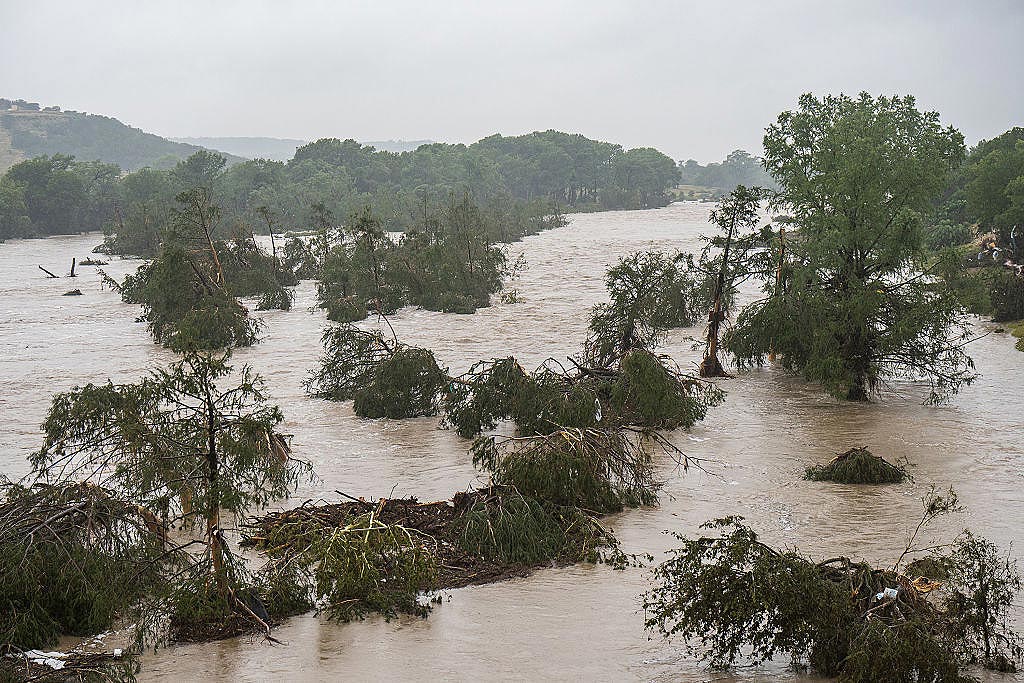
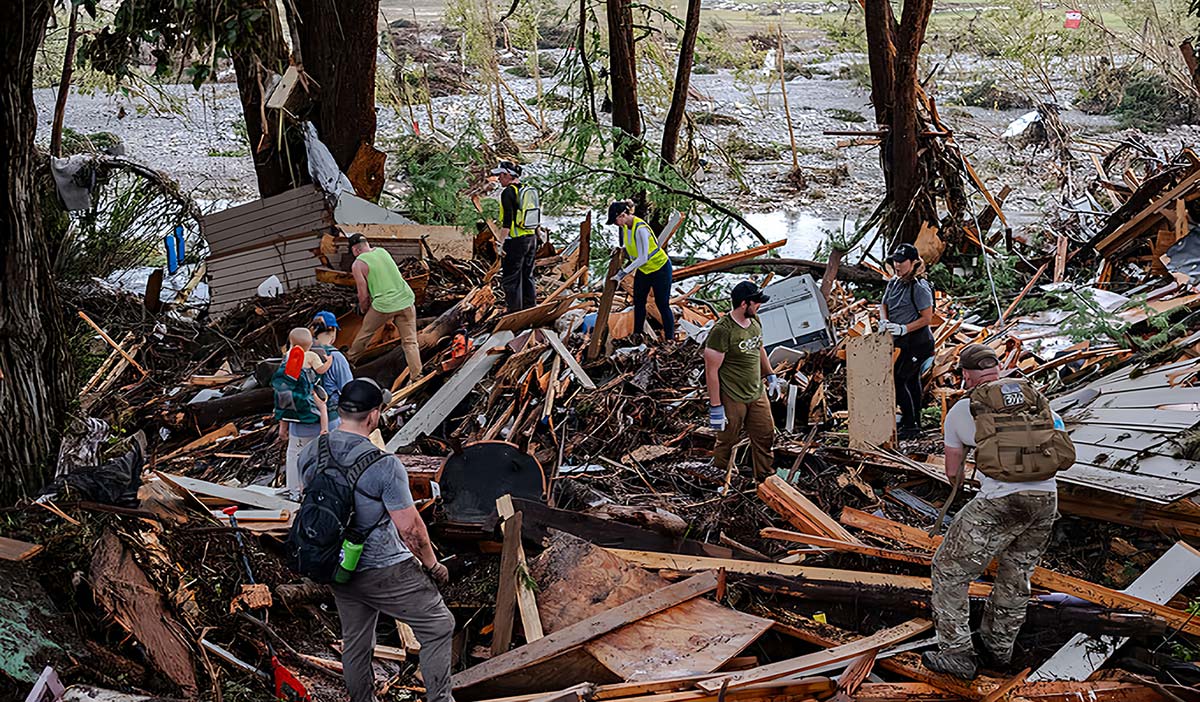
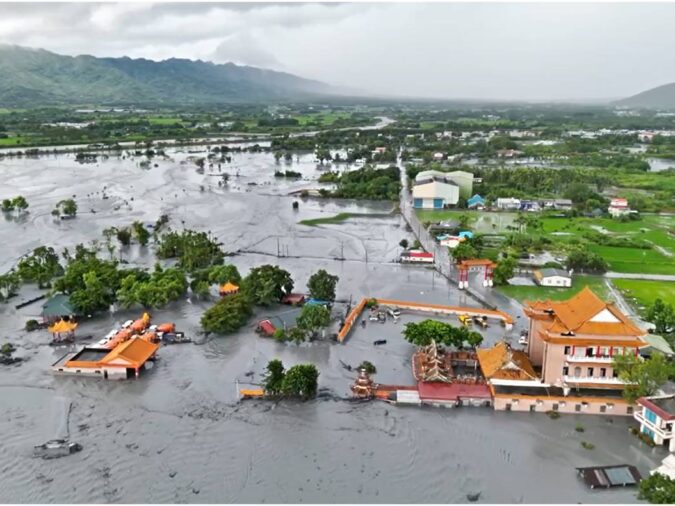
The Guadalupe River overflows its banks in Kerrville, Texas, on July 4, 2025, after hours of torrential rain. The catastrophic flooding spurs Tzu Chi USA’s Southern Region to launch a disaster relief mission. Photo/Eric Vryn (Getty Images)
SHARE
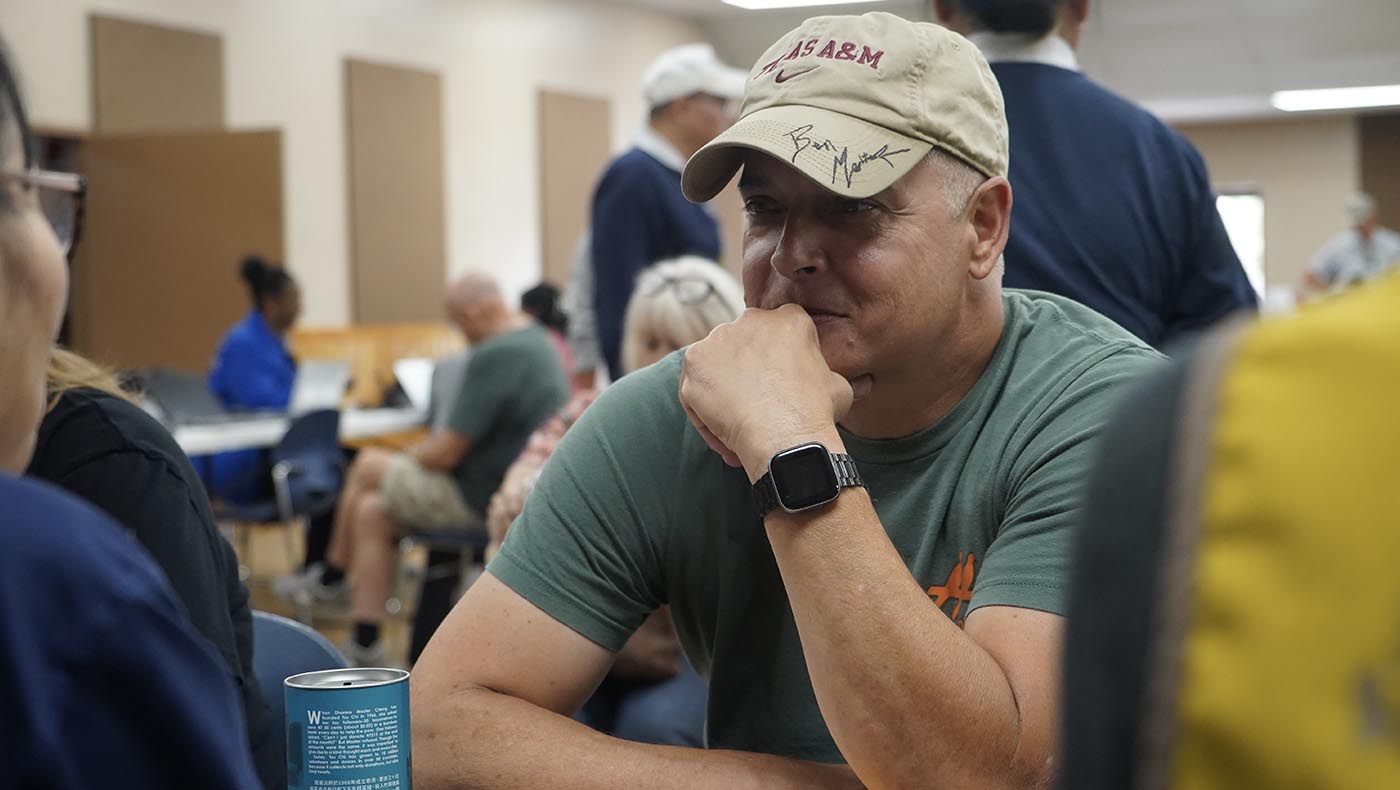
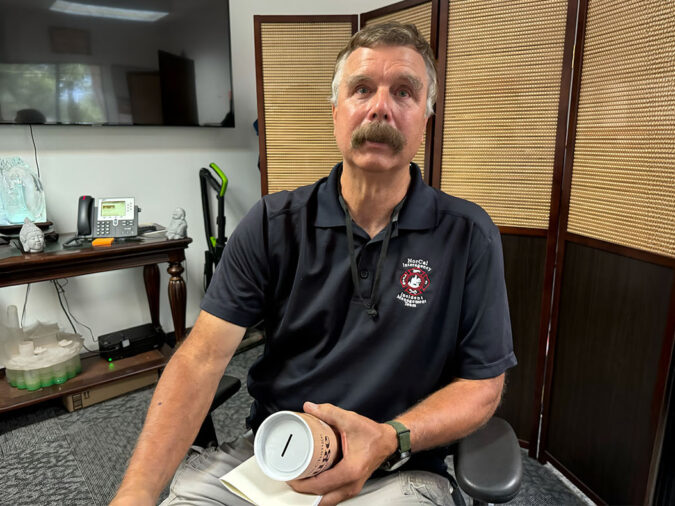
“Nobody knew it was coming. And it was fast. I mean, like in minutes the water was coming up…” Tzu Chi care recipient Jon Bender recounted in disbelief on July 26, 2025, at the Disaster Recovery Center (DRC) in Burnet County that the Federal Emergency Management Agency (FEMA) had set up in the aftermath of devastating and deadly flash floods that had swept through parts of Texas earlier that month.
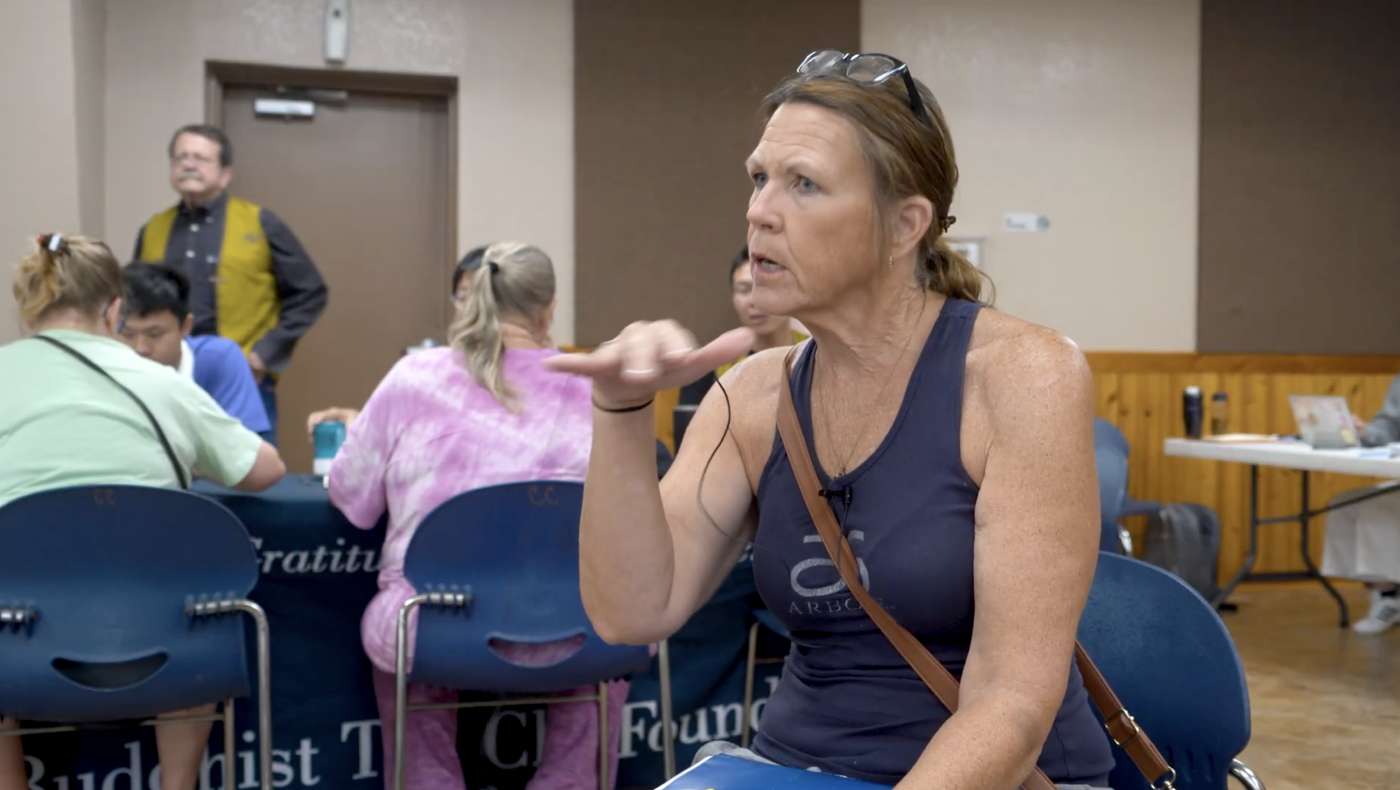
“My son was in his RV, and he woke up to use the restroom. He looked out the window and said it was like being on a beach, with waves of water coming in,” said Kendall Milburn, another survivor who had come to the DRC for help. “He told his girlfriend, ‘We have to get out of here.’ Within two or three minutes, they opened the door, and the water was already coming into their trailer. They got through to 911 and were told, ‘You need to get to higher ground.’ They said, ‘We’re waist-deep in water. There is no higher ground!’”
In the predawn hours on the Fourth of July, a Friday in 2025, as Americans nationwide slept, expecting to enjoy a fun-filled Independence Day weekend, a thunderstorm complex was slowly making its way across the Texas Hill Country, dropping heavy rain: a month’s worth in a single night. Given the terrain, with its steep slopes and rocky ground, the torrent of water was forced into creeks and river systems, causing their levels to rise rapidly. In Kerr County, the hardest-hit area, the Guadalupe River rose about 26 feet in just 45 minutes.
By the time alerts escalated, the catastrophic surge had already inundated low water crossings, and escape routes were closing, not only in Kerr County but across the Hill Country and the Austin region, including Burnet, Kendall, Travis, and Williamson counties. Within hours, as people frantically searched for the missing, officials began confirming fatalities. By mid-July, the statewide death toll had climbed past 130, with the vast majority in Kerr County. Further breaking the nation’s heart, more than 35 of those who perished in that county were children, many of whom were staying at riverfront summer camps along the Guadalupe.
Search and rescue workers dig through debris looking for any survivors or remains of people swept up in the flash flooding that struck the Texas Hill Country in early July 2025. Photo/Jim Vondruska (Getty Images)
Beyond the tragic loss of lives, the disaster also destroyed and severely damaged homes, leaving families displaced, in shock, and uncertain of their next move. Tzu Chi USA’s Southern Region volunteers heard their cry for help and began mobilizing an aid mission without delay.
The Texas Flood Relief Mission Begins
In keeping with Tzu Chi’s standard disaster relief practice, the first step is to travel to affected areas to assess conditions on the ground. As Tzu Chi USA Southern Region Executive Director Sean Lo put it, “Tzu Chi’s principle in disaster relief is to walk into the disaster area in person. We cannot rely on paperwork alone; only a field visit safeguards sincerity, integrity, and trust.”
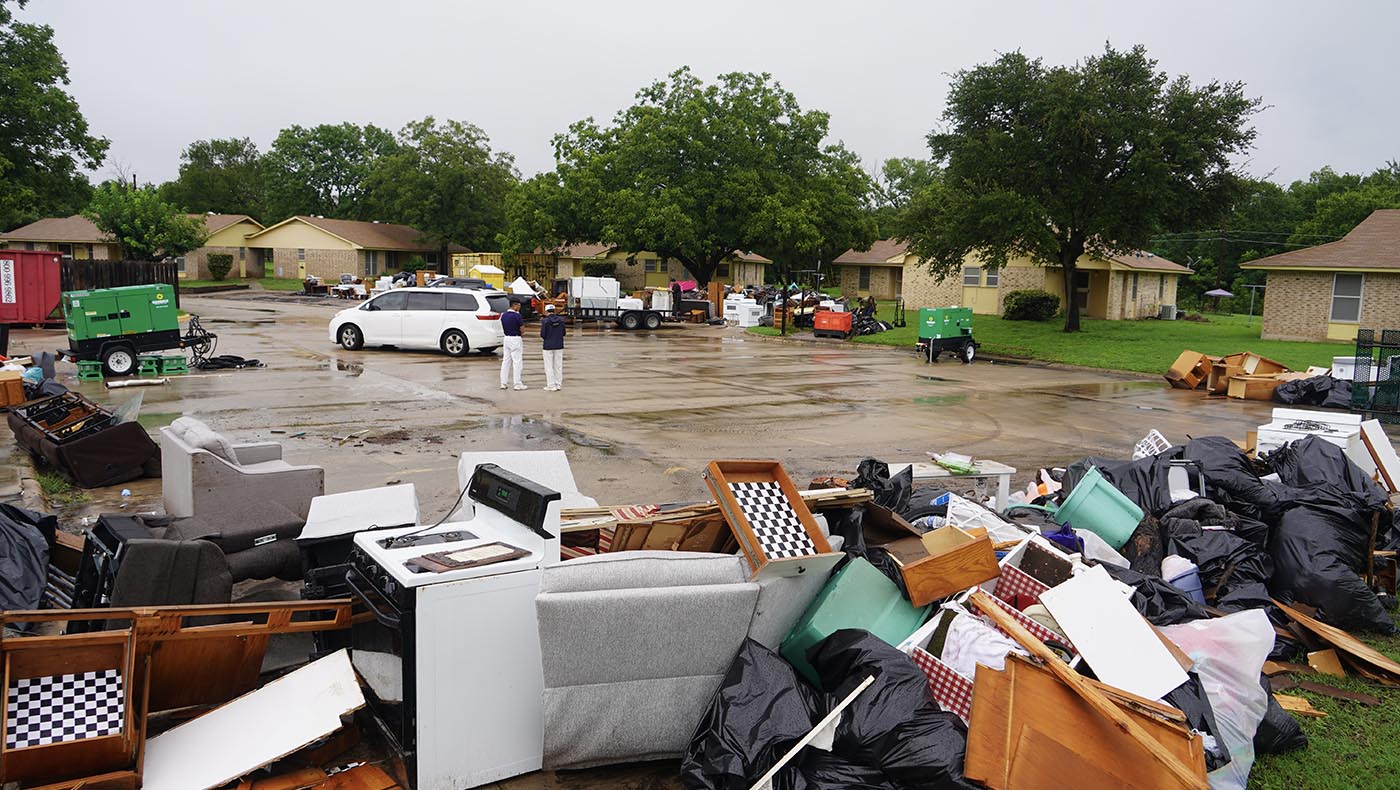
On July 13, with many roads in Kerr County still closed and access restricted, the disaster assessment team focused on Travis and Burnet counties, braving heavy rain and road closures to document the damage. The destruction they witnessed was widespread and heartbreaking. “Disaster is merciless. Families had to throw out refrigerators, stoves, and sofas, and some homes were not fit to live in,” said volunteer Harry Huang. “We came to bring love and hope so people feel someone cares and they can stand up again.”
Tzu Chi volunteers pause amid debris and discarded appliances during their disaster assessment in the Texas Hill Country on July 13, 2025. Photo/Luca Yeh
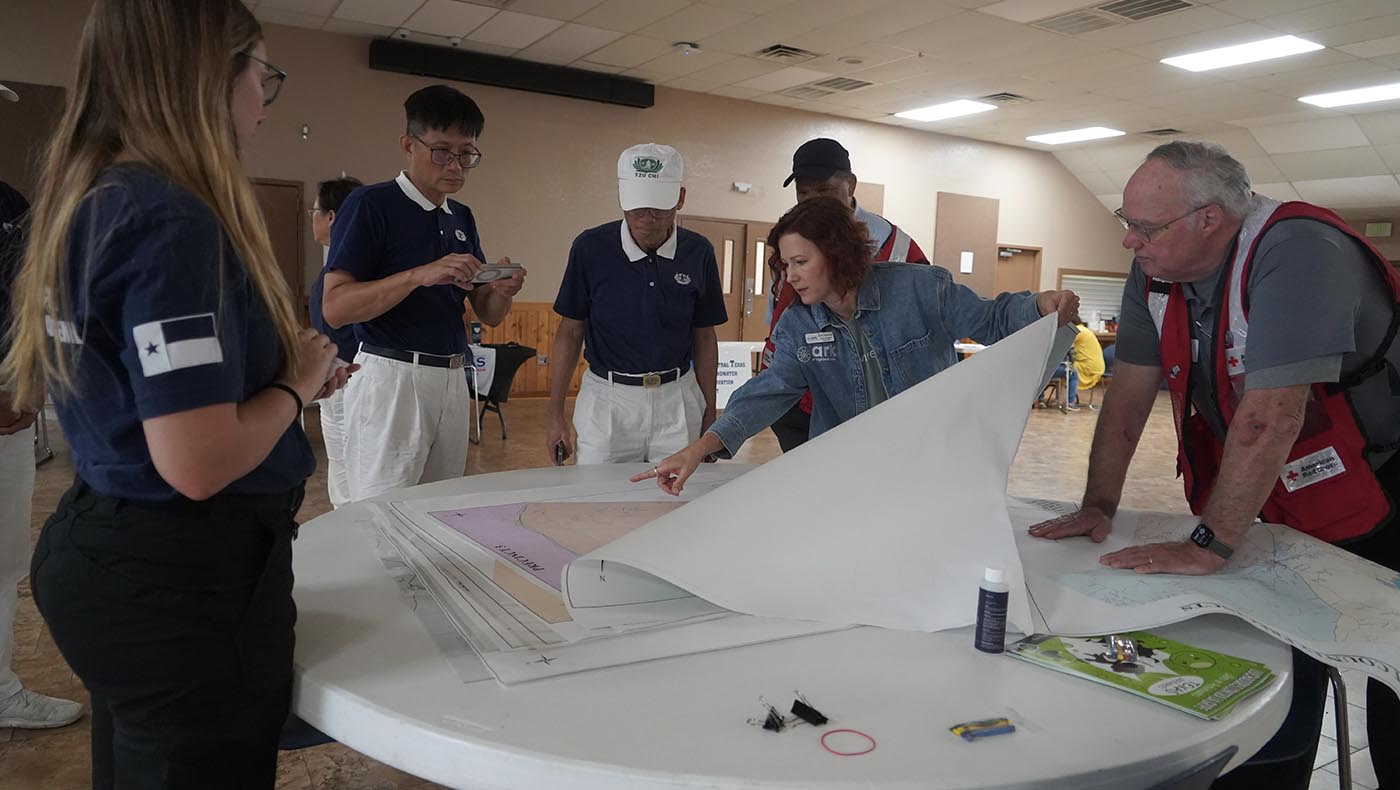
In conjunction with the disaster assessment, the team sought to coordinate with local and state emergency management to secure an official list of affected households. Austin Service Center Director Tsang-Bin Wen reached out to San Antonio volunteer Daisy Pai to see if she had contacts at relevant agencies. “I had worked with the Red Cross in 2017; at that time, it was a tornado,” Pai said. She emailed her contacts to relay Tzu Chi’s intention to provide relief, and the team met with representatives on July 13. “They informed us about the progress of their work and where we could start the distributions, because this flood affected many counties. We decided to start with Burnet, then Travis County.”
The next step was obtaining a list of impacted residents. “In the past, the list was provided by the Red Cross. This time, the system in Texas may be different, so our list was provided by the government,” explained Wen. “We had never encountered such a situation before when doing the disaster assessment,” Lo elaborated. “After we gave a simple briefing, the local government official believed us and was willing to give us the information.” At times, government agencies unfamiliar with Tzu Chi are reluctant to hand over such data. The trust extended by Paige Saucer, that official, was a boost that helped speed the process of getting aid to those affected.
The Tzu Chi team confers with government official Paige Saucer (left), a representative of local charity Ark of Highland Lakes (middle), and an American Red Cross official (right). Photo/Luca Yeh
However, given that people in the area were also unfamiliar with Tzu Chi, inviting disaster survivors to the relief distribution via text message or email presented a new problem. “We were worried. With today’s technology, everyone is cautious,” said Lo. “They might think it is not real.” Fortunately, Ark of Highland Lakes, a local charity, agreed to help by sending the email invitations. “When local people send emails, it increases credibility,” Lo said with gratitude.
Even so, as Tzu Chi volunteers prepared to distribute cash cards at FEMA’s Disaster Recovery Center in Burnet County on July 26, their worries did not lift just yet. “A few days before the distribution, we learned that only one response had been received, one text message. And that text message said that the disaster survivor lived 100 miles away and could not come,” shared Wen. “We felt restless. Maybe few people would show up.”
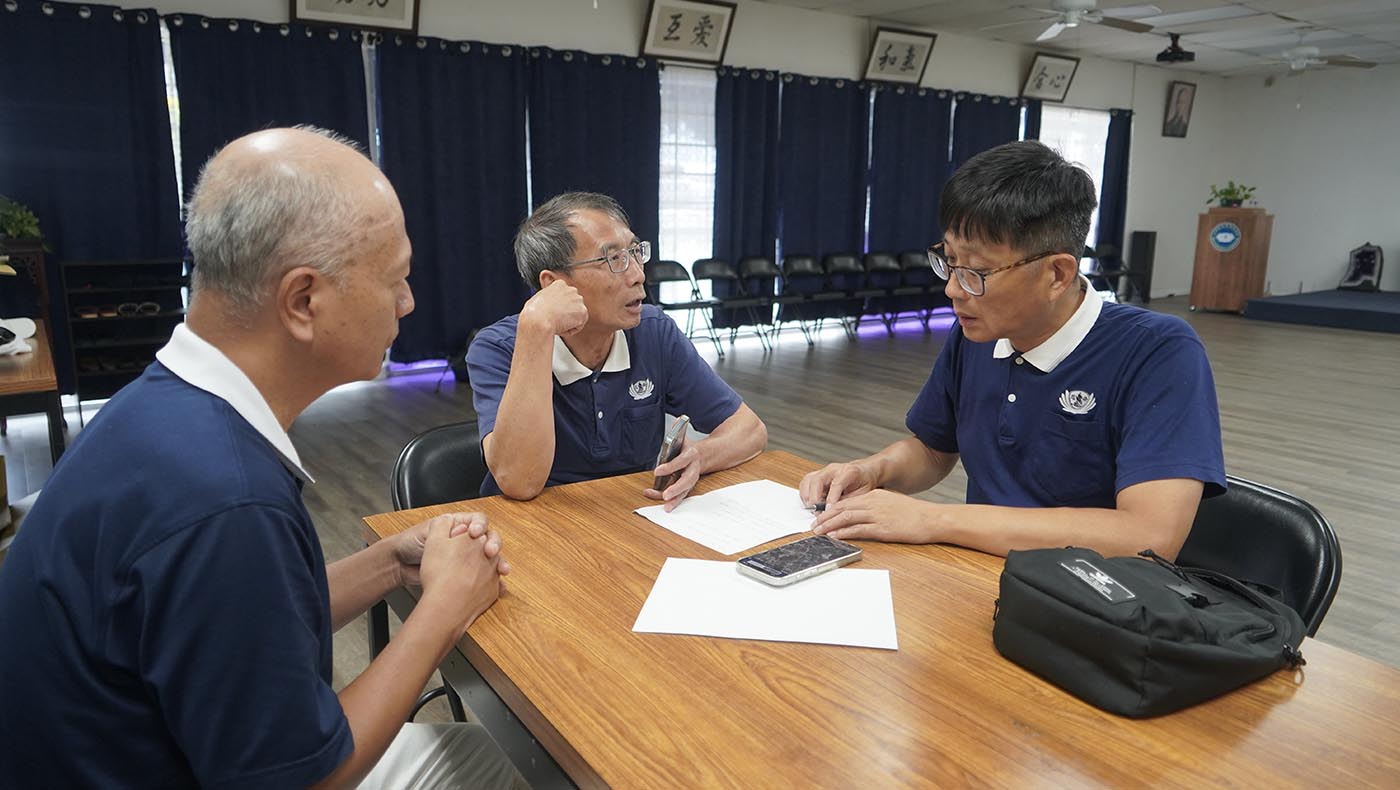
During the July 13 disaster assessment, Tzu Chi USA Southern Region Executive Director Sean Lo (middle), Austin Service Center Director Tsang-Bin Wen (right), and Tzu Chi volunteer Harry Huang (left) discuss logistics and share concerns about attendance at the first distribution. Photo/Luca Yeh
From Stress to Relief: The First Distribution
On July 26, with all preparations completed and the list of invited disaster survivors in hand, it was time to hit the road toward the Burnet Community Center, where FEMA had established its Disaster Recovery Center (DRC) and where Tzu Chi USA would be stationed.
Just before 5:00 AM, Sean Lo and a team of five Tzu Chi volunteers departed from Houston, driving the roughly 165 miles to Austin in close to three hours. Arriving at the Austin Service Center, they met Tsang-Bin Wen and 22 other volunteers. The whole group of 29 then headed toward the City of Burnet, reaching their destination a little over an hour later.
A volunteer team departs Houston before dawn on July 26, 2025, to first rendezvous with volunteers in Austin, then press on to FEMA’s Disaster Recovery Center in Burnet as a 29-person group. Photo/Luca Yeh
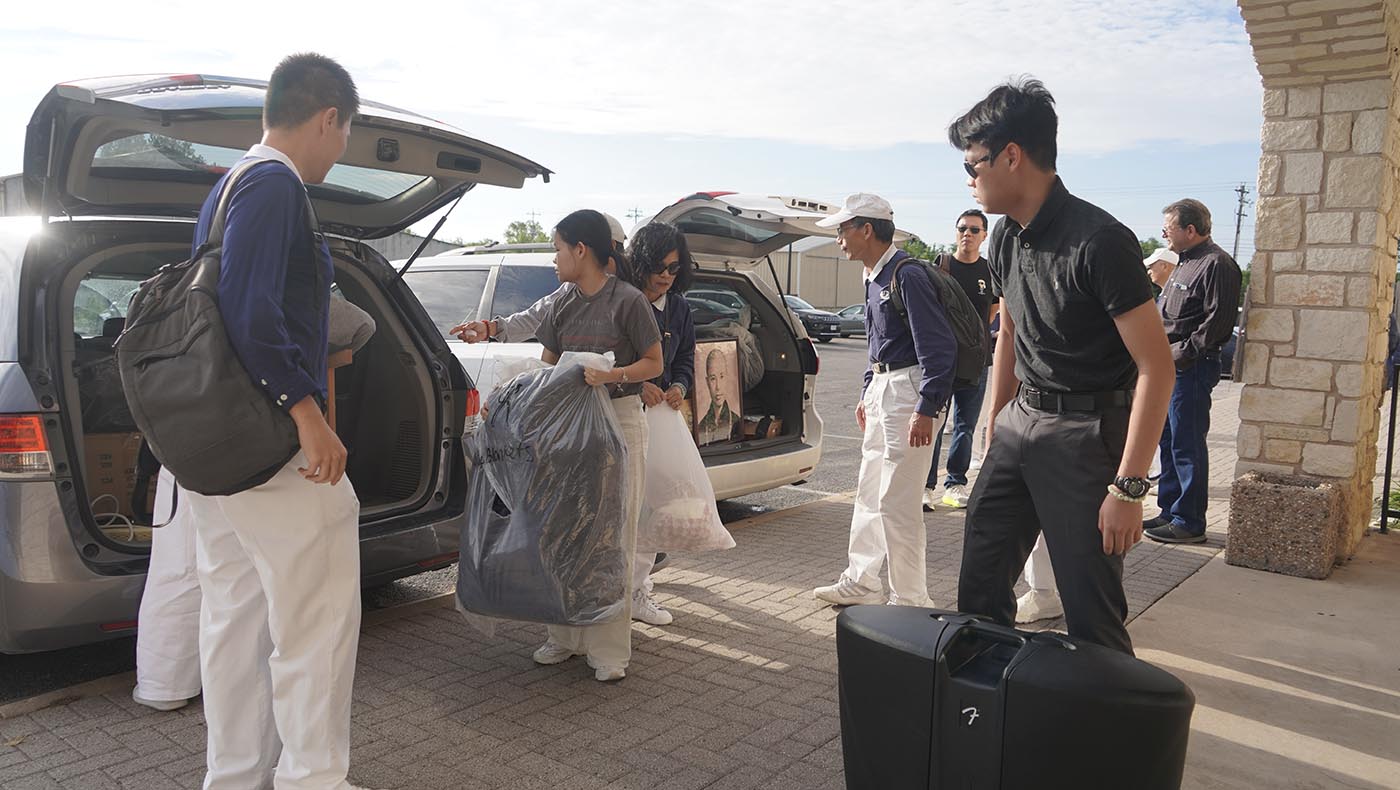
Upon arrival in Burnet, the disaster relief team unloads the materials they brought to set up Tzu Chi’s station inside FEMA’s Disaster Recovery Center. Photo/Luca Yeh
SHARE
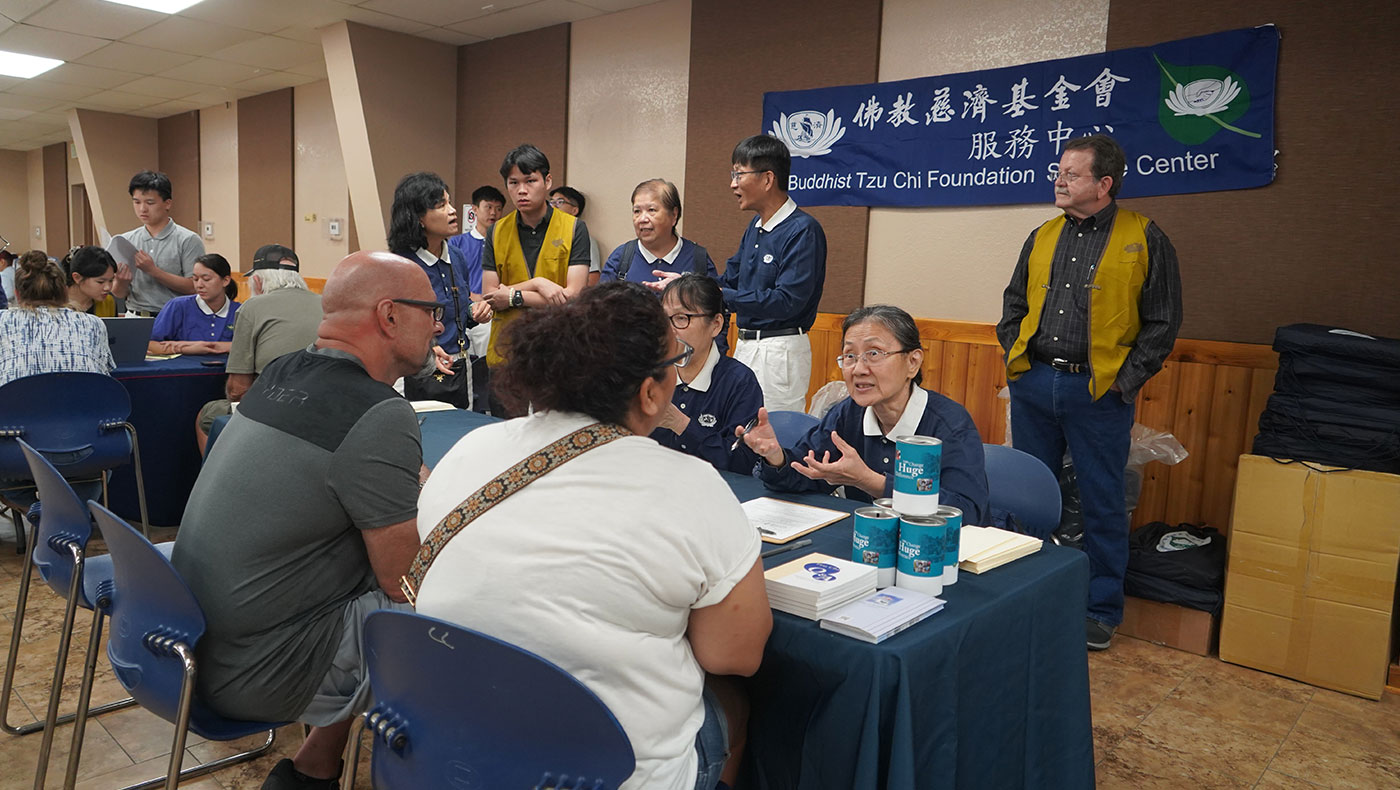
For the Austin Service Center team, it was their first time setting up at a FEMA DRC. “Since it wasn’t a location hosted by Tzu Chi, the area we were assigned was quite small,” said Wen. “All the volunteers were very cooperative, even though the setup was a bit complicated.” “We were in the same hall as many other organizations,” added Lo. “Everyone was initially unfamiliar with each other, but after they saw how we operate, I believed the outcome would be successful.”
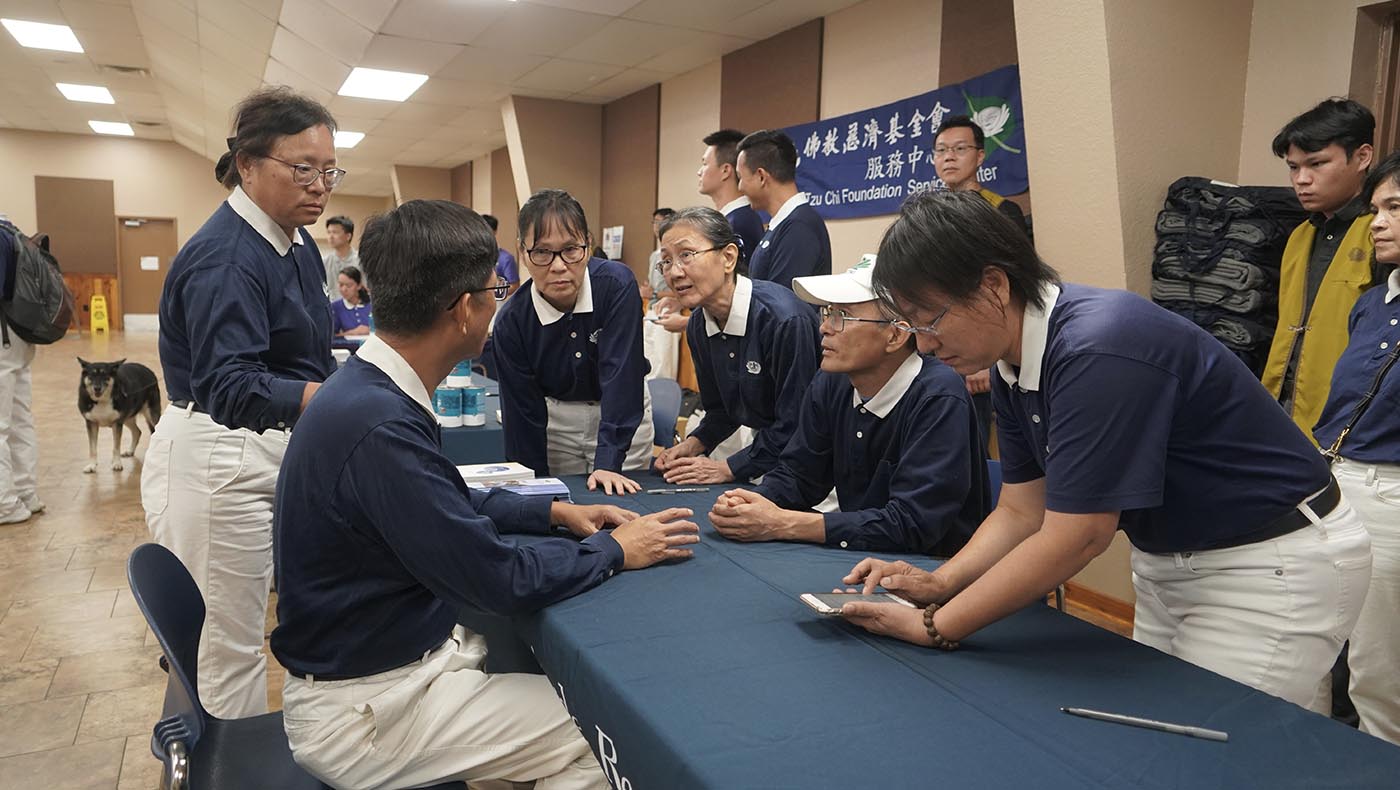
After setting up the distribution station in tight quarters, Tzu Chi volunteers exchange reminders and encouragement with one another before the distribution begins. Photo/Luca Yeh
Indeed, operations ran smoothly, from check-in to ID and address verification, all the way through to cash card distribution. And, to everyone’s reassurance and welcome surprise, despite the low response rate from the people on the list, the turnout was substantial. “We invited over 60 households, nearly 70. Forty-one households attended, which is an excellent result. Based on past records, an attendance rate of 25% would already be good,” Lo reported.
“Seeing so many come, we feel relieved,” shared Wen. “We could personally represent Tzu Chi’s love and the love of people from around the world to the disaster survivors through the hands of our volunteers.”
| The Night the Waters Rose
As the flood survivors received cash cards, they shared about the night the river waters rose and upended their lives. “Nobody knew it was going to 26 feet, and it was fast. It started at 4:37 AM, and they warned us at 6:38 AM. That was the biggest problem. But I could see it. I have a service dog that warned me; otherwise, we wouldn’t be here,” Jon Bender said.
Jon Bender is grateful that he and his dog survived the flood. Photo/Luca Yeh
Kendall Milburn described her son Greyson’s harrowing escape alongside his family and neighbors as they were trapped in a riverside RV park and could not reach higher ground. Their only chance of survival was to climb atop the roof of a car, which itself was on the verge of floating away in the rush of floodwater. “Greyson and his neighbor, Joe, wedged the car so they could get their dogs, the children, the women, and another elderly woman in the park, and they helped them up,” Milburn recounted.
Next, the men tried to climb up. Joe succeeded, but Greyson had a close call. “My son got onto the top of the car, and he slipped, and he could already feel the car moving. So he just lunged toward Joe, who was on his stomach with his arms reaching out, and they pulled him up,” she said, uneasy even at the thought of her son’s brush with death. “They spent the next three to four hours on the rooftop. The Coast Guard was bringing helicopters in to take the people trapped on top of their trailers, in their trailers. As the water started to recede, rescue boats were able to come in, and they finally got into a rescue boat.” Greyson Milburn was among the lucky. “He saw one of the residents floating down. And later we found out that he drowned…”
Kendall Milburn describes how her son Greyson managed to climb atop a car during the flood, and although he slipped off, others pulled him back up, saving his life. Photo/Tzu Chi USA Video Team
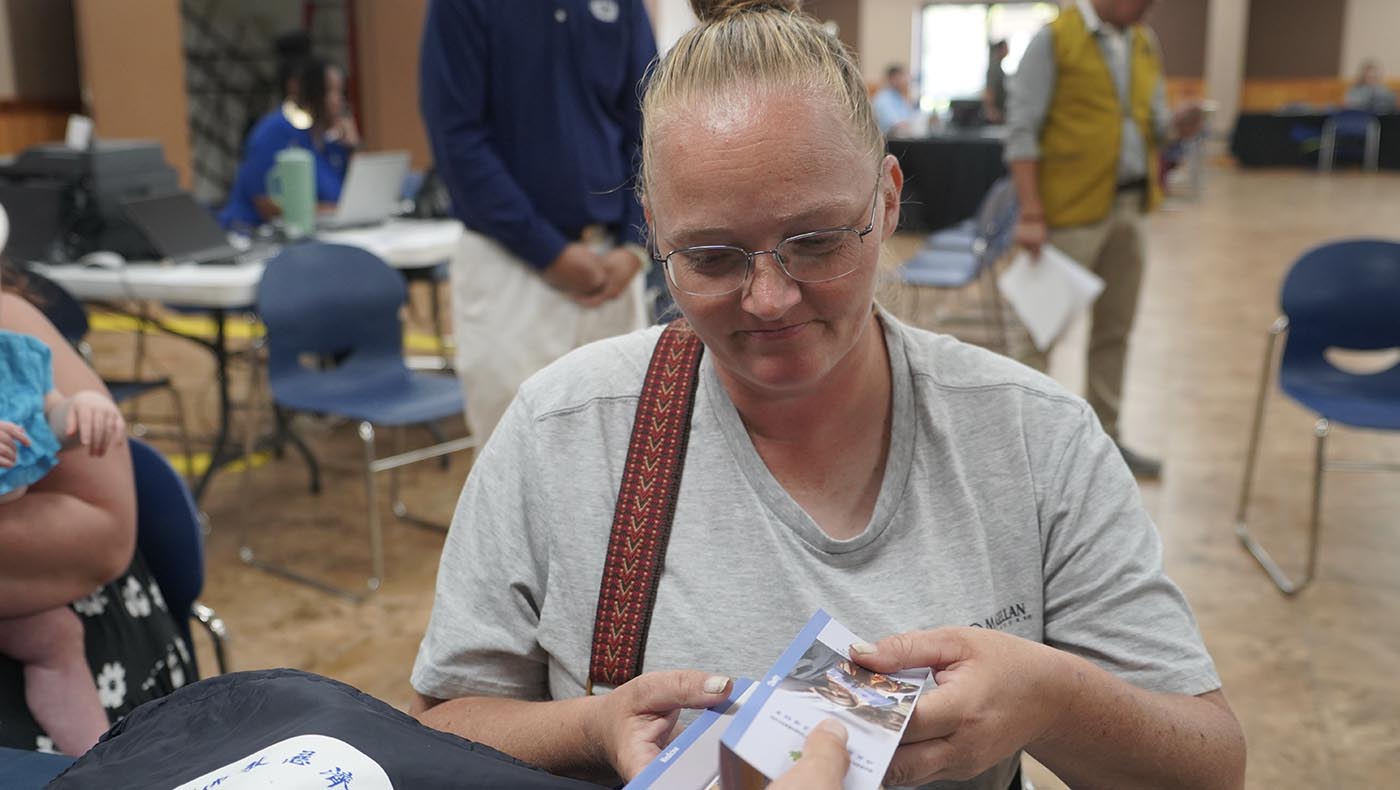
Melissa Williamson also endured trauma that night, although the danger was not immediately evident. “My dog was barking throughout the night, and at one point, he was just growling and scratching and jumping. I got up to show him that it was just a rainstorm. It was not,” she said. “The water was already up to my door frame, several feet of water. It was rushing through with a current that I was not going to challenge. I went and looked out the front door. My truck was already underwater.”
Unable to flee, Williamson called 911 to report her situation, then climbed into the ceiling, bringing her dogs with her. Thankfully, she survived. “I stayed in the ceiling for about 40 minutes, and then the Burnet Fire Department actually showed up and got me out of the house. They rescued everybody on our street, including our dogs, and three cats survived. So everybody made it out.”
| What the Flood Took
Everyone knew they were fortunate to be alive, since so many Texans had lost their lives. Even so, coping with the material losses felt insurmountable.
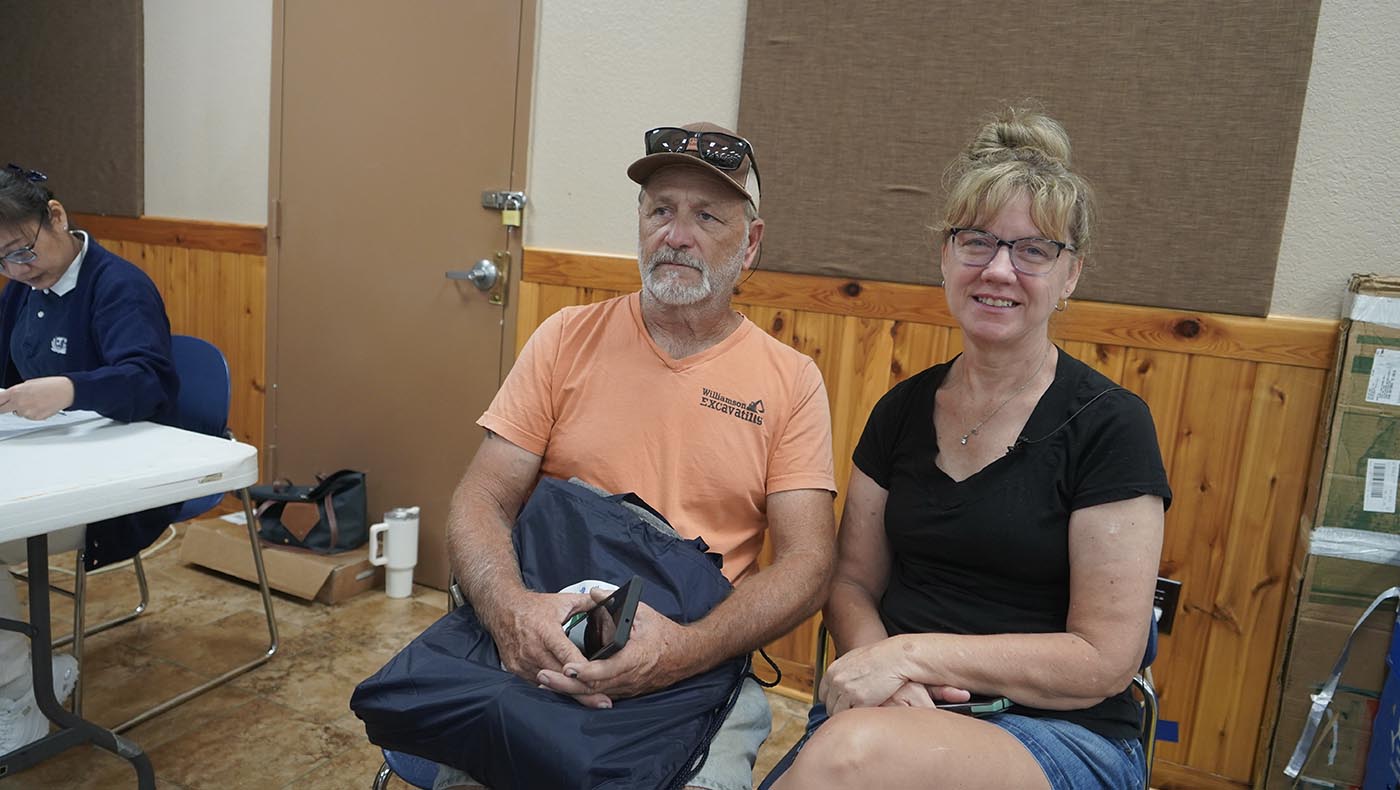
Jennifer Nicholson and Ronnie Williamson finished each other’s sentences as they shared their flood story with Tzu Chi volunteers. “It was a matter of about three minutes,” Nicholson began. “From nothing to about four feet deep,” Williamson picked up the thread. “And everything in somebody’s house is low: all your furniture, all of your belongings, your clothes, appliances,” Nicholson continued, with Williamson adding, “so even though we only got four feet in our house, we pretty much lost everything. If it was hanging above four feet, that’s all we have left.”
“We own a business as well, Williamson Excavating. He lost all of his work tools and everything he needs to make a living,” Nicholson went on. “So pretty much, you know, 57 years of his life, 54 years of my life, everything was just wiped out, and all of our memories, all of our special belongings and everything, just gone in a matter of minutes.”
As they wait their turn, Ronnie Williamson is somber while his wife, Jennifer Nicholson, musters a slight smile, both knowing the scale of their losses means a long recovery ahead. Photo/Luca Yeh
“Not everybody has their vehicles. On my street, mine was the only car that survived because I got it out before the rest of the flood came through,” Jon Bender said. His home took in about four feet of water, but it can be repaired. “I’m living in my daughter’s boyfriend’s drum room, so my dog and I are there; otherwise, I’d be living in my Jeep.” Still, compared with what so many lost, those inconveniences felt secondary. “Not everybody has their houses. It literally picked up the homes and moved them; it all depended on where you were.”
Kendall Milburn explained that her son, Greyson, is among those with no home to return to. “We’re from California, but he moved out here almost a year and a half ago for his job, and everything’s gone,” she said. “He lost his trailer. He lost his vehicle. He has a co-worker who is allowing him to stay in her little RV. But he’s homeless, really. It’s kind of like starting over. It’s devastating.” Yet there was space for immense gratitude. “He has lost everything, but not his life, thank God. I’m just so thankful for that as his mom.”
| Coming Together as One Family
The volunteers listened as survivors shared their woes, grateful they could offer some help at such a difficult time. Providing a cash card and supplies such as blankets was just one aspect of their care, as moral support was equally important.
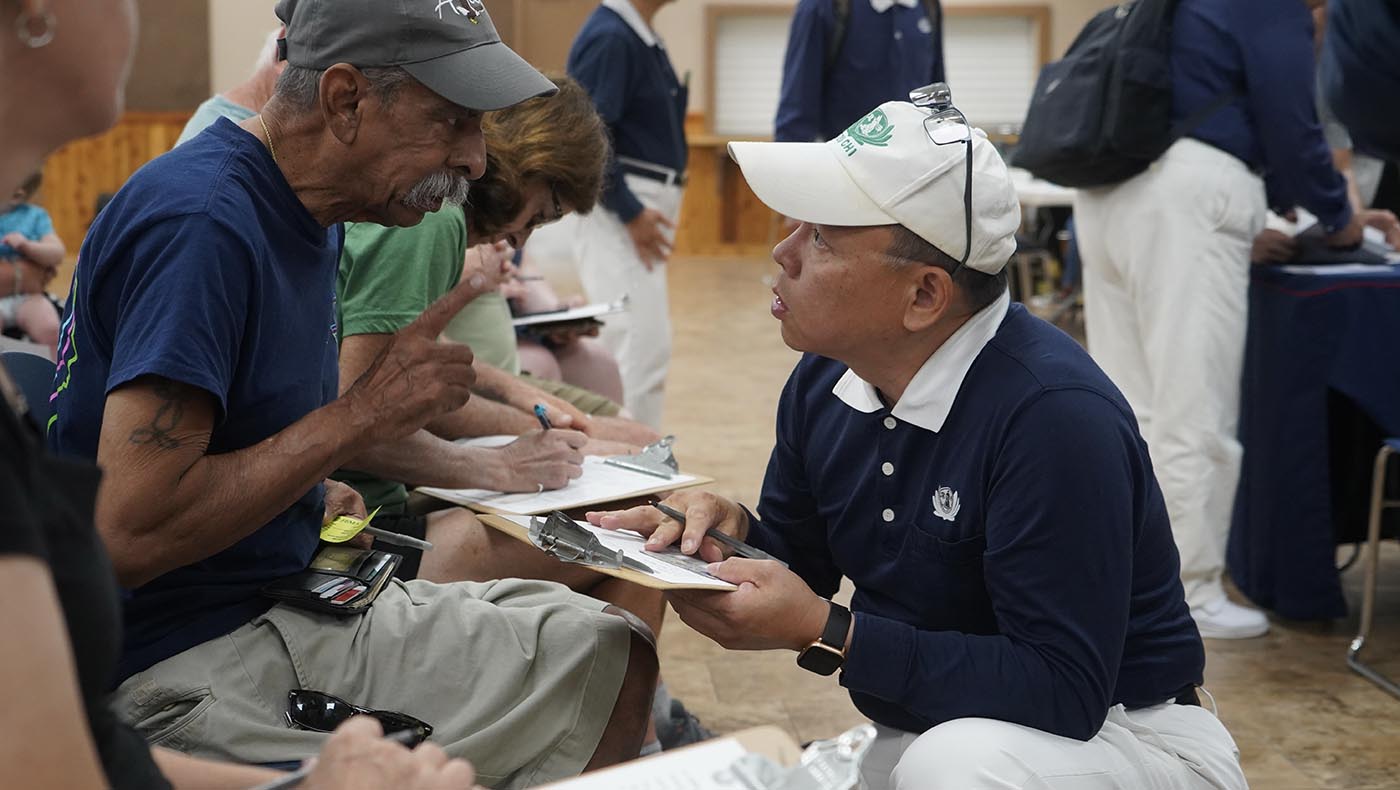
Tzu Chi volunteers welcome each flood survivor with respect and care, listening attentively throughout the aid distribution process from registration to filling out paperwork and cash card issuance. Photo/Luca Yeh
It was heartwarming for them, too, to learn how communities had come together to assist those affected. “When I came back home the next day after the flood, I was just walking in circles. I didn’t know what to do. Volunteers [from the community] started showing up that day. They came in, a group of about 30 people, and just started clearing everything out of my house. Not just throwing it out like nobody cared. They were very respectful in everything that they did,” Melissa Williamson recounted. “Watching the community come together the way that they have, and the support that we’ve gotten from outside resources, has been overwhelmingly great. It’s helping so much.”
What you guys came out to do for us, it helps in ways that you couldn’t understand. Every little bit that everybody is giving helps so significantly.
Melissa Williamson accepts a cash card from a Tzu Chi volunteer, expressing gratitude for the heartwarming support she is receiving. Photo/Luca Yeh
Jennifer Nicholson and Ronnie Williamson also experienced an outpouring of community support. “I think at one point we had about 100 to 150 people at our house, volunteers who just showed up out of the blue,” Nicholson said. “They helped us dig through the rubble, and we managed to save a little bit of stuff that we thought would be unsavable, possessions that are of sentimental value,” Williamson added.
As for the cash card from Tzu Chi, it too was a blessing, as the couple explained how they were saddled with mortgage and utility payments while neither can currently work. “The money… I mean, it’s…” Williamson began, “…invaluable,” his wife said, completing his thought.
There are no words. Thank you is not enough. I'm so grateful for people like you who say, ‘Hey, here's this little bit, all we can do, but it's yours. No questions.’ It brings peace back to you. You find peace back in humanity.
Nicholson also pointed out the emotional care, the attentiveness of the volunteers. “Just to be able to come here and talk to you guys, and you offer a caring smile and a hug,” she said. “That’s a release as well. We’ve been able to talk a little bit. It’s a big stress reliever. You don’t realize how much it helps, but it does. It helps,” her husband concluded.
“The work you guys are doing here is amazing. I mean, look at how many people you’ve served today,” said Kendall Milburn, marveling at the assistance her son, Greyson, received. To make her gratitude concrete, she lifted the bamboo bank in her hand and said, “I’m taking this to California with me, and we’ll fill it and send it back to pay it forward. God bless you guys, we appreciate you so much.”
For this, the Tzu Chi team was also appreciative, as it captures the heart of Tzu Chi’s spirit. “As we told the disaster survivors, these funds are a global expression of love, a blessing from people around the world, hoping you can recover,” said Tsang-Bin Wen. Sean Lo totally agreed.
We don’t expect them to necessarily give money back to us. Yet we encourage them to spread this great love in the future; when their community is in need, or when they have the ability, to walk this path of compassion and great love just like us.
Bamboo banks are always nearby as cash cards are issued, and volunteers share Tzu Chi’s history and spirit of giving, demonstrating how small daily donations accumulate to provide relief when others need it most. Photo/Luca Yeh
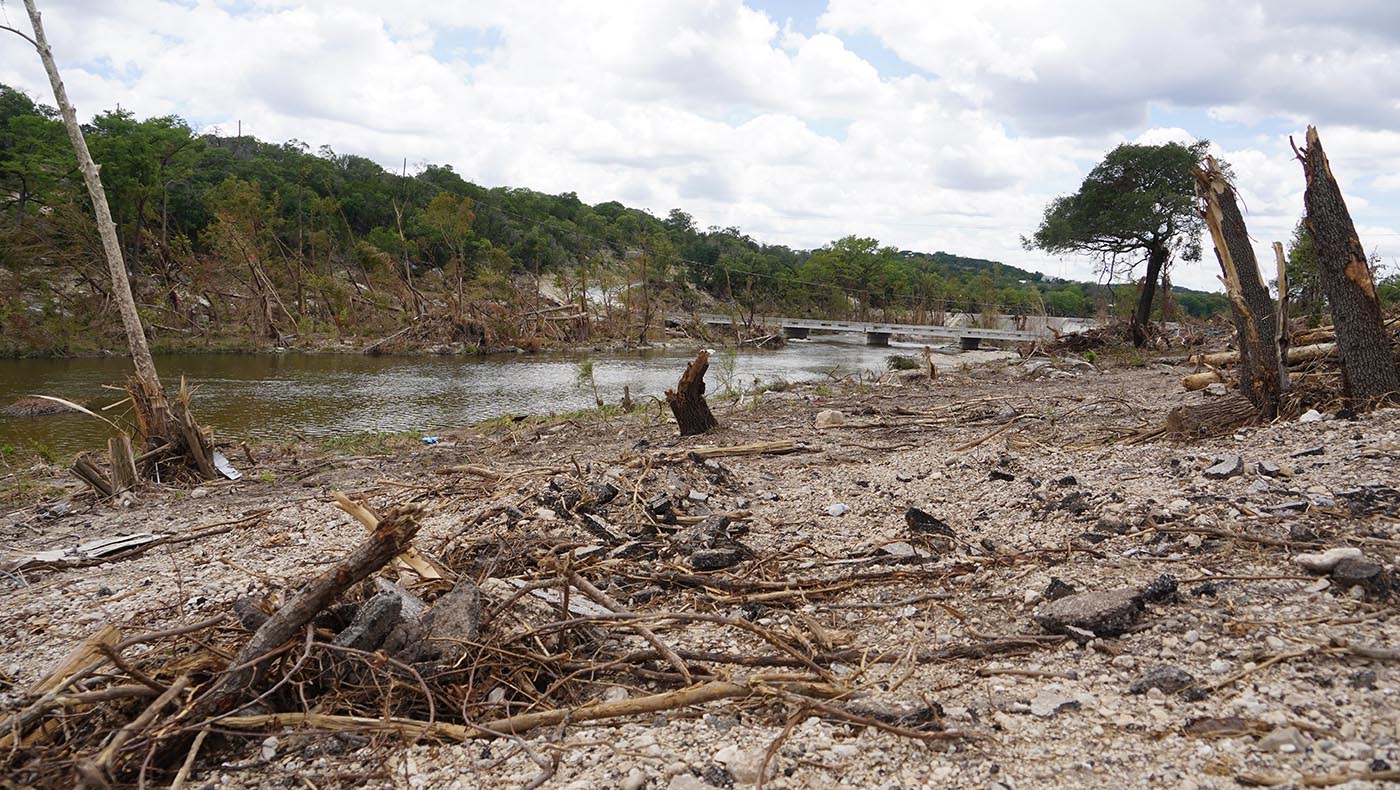
After the distribution concluded, a seven-person team drove approximately 100 miles to Kerrville in Kerr County to survey damage and recovery needs, laying the groundwork for a distribution there. Along the way, they noted high water beneath bridges, riverbanks scoured by the flood, and many disaster zones still under restricted access. “The disaster area remains inaccessible, which means the situation inside is still quite severe,” said Lo. It was a stark reminder that ongoing aid is essential. In fact, more distributions were already underway.
En route from Burnet to Kerrville, high water still flows beneath bridges and splintered trees line river banks, a grim testament to the flood’s force. Photo/Luca Yeh