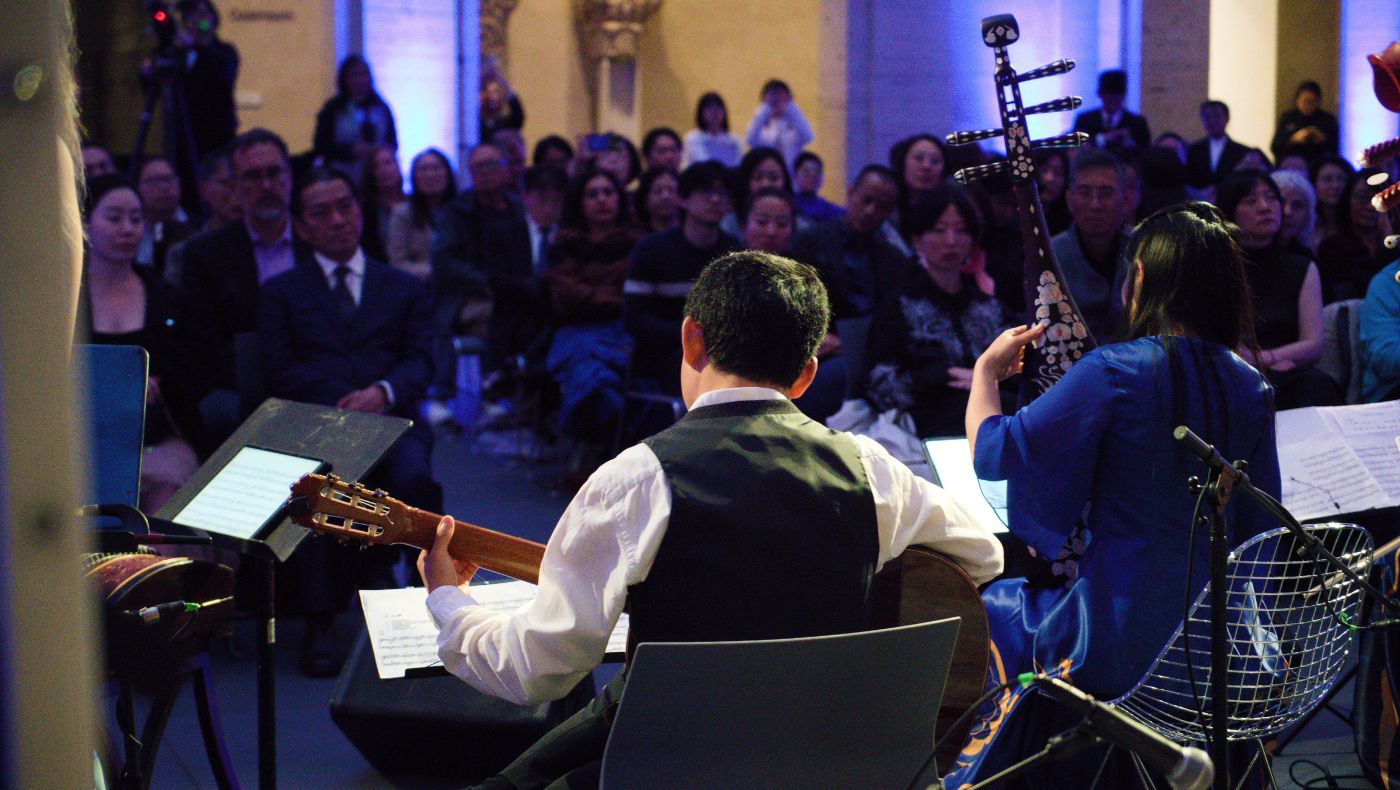
Within the Harvard Art Museum’s Calderwood Courtyard, the collaborative Under One Sky concert launches a musical journey spanning civilizations. Photo/Hector Muniente
Written By Chen Chen
Translated by Adriana DiBenedetto
Published #81 | Summer 2026 Issue
SHARE
On the evening of May 9, 2026, blue light bathed the stone arcades of the Harvard Art Museums’ Calderwood Courtyard. Here, as Tzu Chi commemorated its 60th anniversary and Dharma Master Cheng Yen’s 90th birthday, the Under One Sky concert, presented by the Buddhist Tzu Chi Charity Foundation in collaboration with the Harvard FAS Cognitive Aesthetics Media Lab (CAMLab), would soon commence. Seventeen musicians took their seats with their instruments: the tabla, taiko, pipa, guqin, and double bass. Echoing the spirit of the ancient Silk Road, musical traditions that emerged across Asia and North America converged once more, this time reverberating through the enclosed travertine atrium designed in the style of an Italian piazza.
“We all dwell under the same sky. Therefore, we hope to bring together different voices and different civilizations on the same stage through this concert and the power of music,” expressed Chenchen Lu, Co-Founder and Associate Director of the Harvard FAS CAMLab. “Tonight’s concert will undoubtedly serve as the grand finale of this three-day series of events.”
On the other side of the globe, Taiwan welcomed the early morning of May 10, and the Buddha Day Ceremony at the Jing Si Abode in Hualien was about to begin. As the morning bells in Hualien rang, the concert responded from across the Pacific with a musical journey spanning generations.
Opening with Aspirations
At the program’s opening, Rey-Sheng Her, Deputy CEO of the Tzu Chi Charity Foundation, announced, “This concert is presented with the partnership between Tzu Chi and Harvard University, featuring the ‘Silk Road Ensemble,’ the Artistic Director of which is the world-renowned cellist Yo-Yo Ma, along with several Grammy Award-winning musicians. They will join 17 musicians from Taiwan, Japan, China, and other regions to perform Buddhist music. This event celebrates Tzu Chi’s 60th anniversary and offers blessings for the Venerable Dharma Master Cheng Yen’s 90th birthday.”
The first to take the stage was an ensemble of 11 Chinese musicians. “We accepted Harvard University’s invitation in September 2025, and we’ve been preparing ever since,” recalled Yang Jin, pipa performer and president of the Chinese Musicians Association of North America, who served as the convener of the Chinese musicians for this musical gathering. “Most of us studied at the Central Conservatory of Music in China before coming to the United States for further education and careers. Although we are now scattered across various universities and orchestras in the U.S., we share a common vision: to create more beautiful music together,” Jin said.
Peers who once pursued their musical dreams together reunited that night under the arcades of Harvard. The opening piece they chose for the evening was Aspirations, a song most familiar to Tzu Chi members.
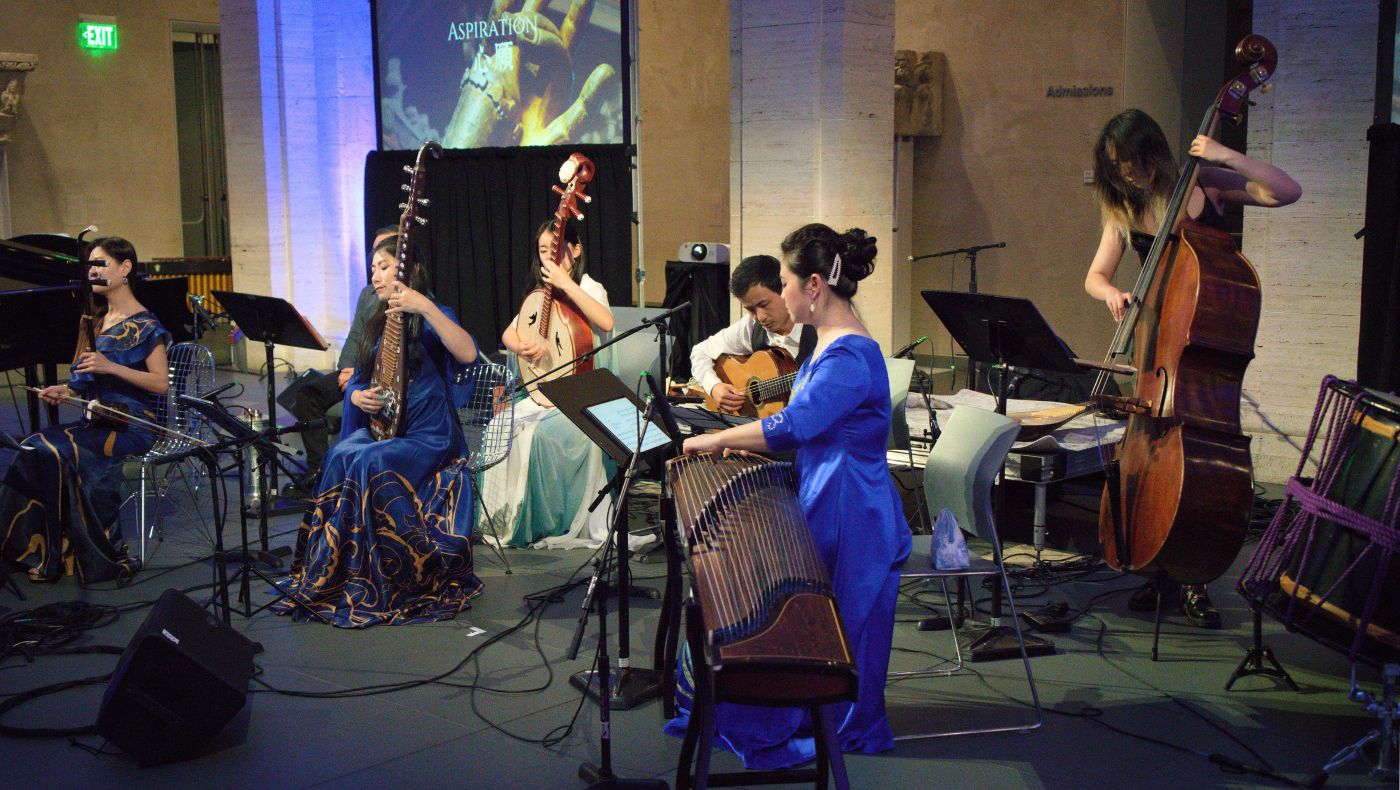
“When we first heard Aspirations, we were deeply moved, not only because the melody is so beautiful and perfectly suited for our traditional Chinese instruments, but also because our shared aspiration aligns with that of Tzu Chi: We hope the world will be filled with love.” Through the gentle plucking of the pipa, the flowing tones of the guzheng, and the expressive notes of the erhu, the melodies resonated deeply within the hearts of all assembled. Though there were no accompanying vocals, the heartfelt emotion carried by these masterful notes left a truly lasting impression.
Wang Lu, a professor in the Department of Music at Brown University and the winner of the Berlin Composition Award and the Guggenheim Fellowship, and Yao Chen, head of the Composition Department at the Central Conservatory of Music, delivered remarkable back-to-back performances. Drawing from the same roots of Chinese music but employing distinctly different contemporary approaches, the two composers each revealed their own unique musical landscapes.
Composer Wang Lu noted that the collaboration differed from a conventional Western classical rehearsal process. “We don’t rehearse,” said Lu. “We’re open to each other’s interpretation. It’s risk-taking, and the risk-taking is based on a deep trust in each other’s humanity. When we decide to play and when to stop, and not to be dominant.” Lu connected the rehearsal philosophy to the spirit of Tzu Chi, expressing that everyone in the world is different and no one is perfect, yet each person has a role, and by working together in harmony, they create beauty in the world.
This really reflects what Tzu Chi has been about; this humanistic, core nature of how we should treat each other.
Wang Lu Composer and Pianist
New Voices of Dunhuang
This spirit of shared humanity carried directly into the next performance, as renowned Taiwanese guqin musician Yang Hsin-Yi offered a musical response with the contemplative musical composition, “Siddham Chapter.” Originally from Taiwan, Hsin-Yi is the founder of the Boston Guqin Society and Boston Guzheng Ensemble. As her fingertips touched the strings, the entire courtyard fell instantly silent, with only the clear tones of the guqin’s seven strings echoing softly through the arcades.
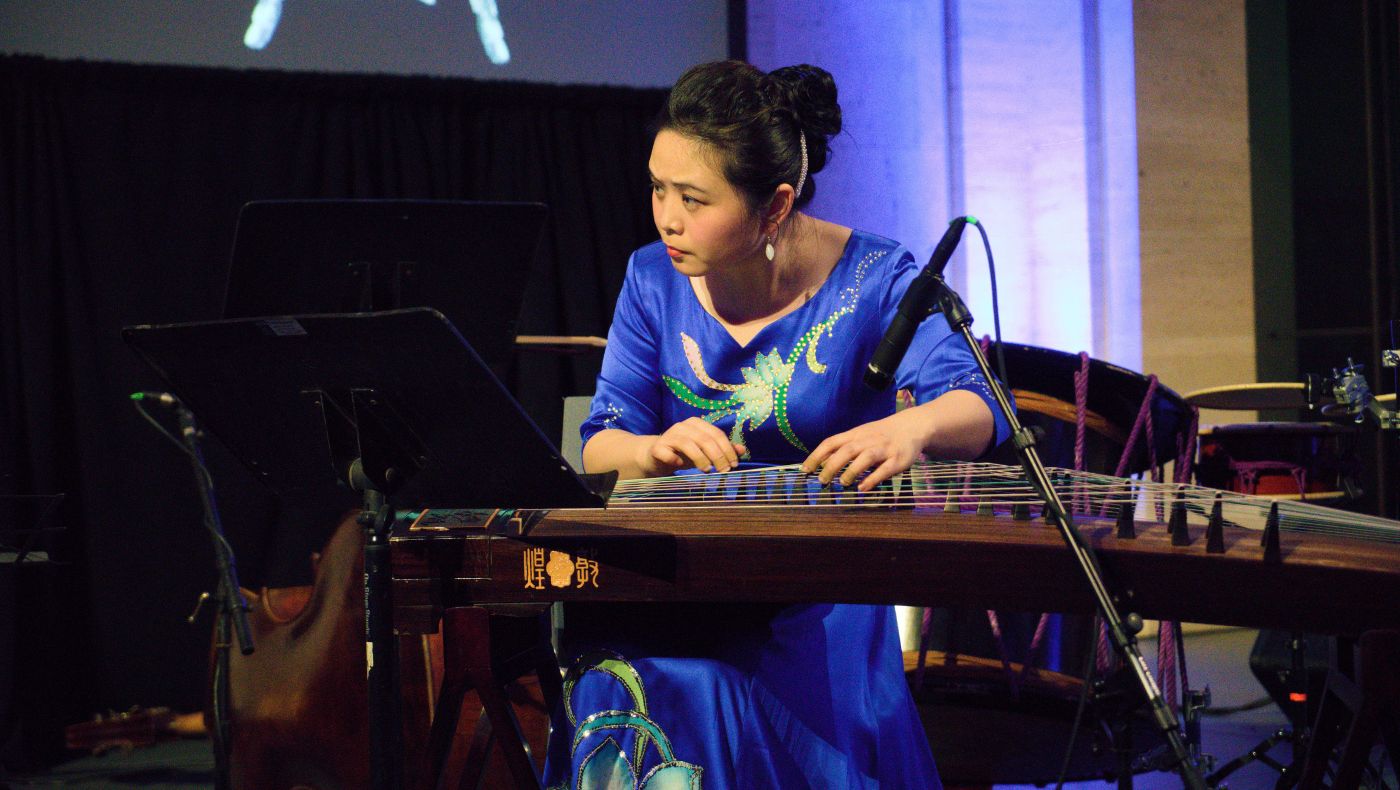
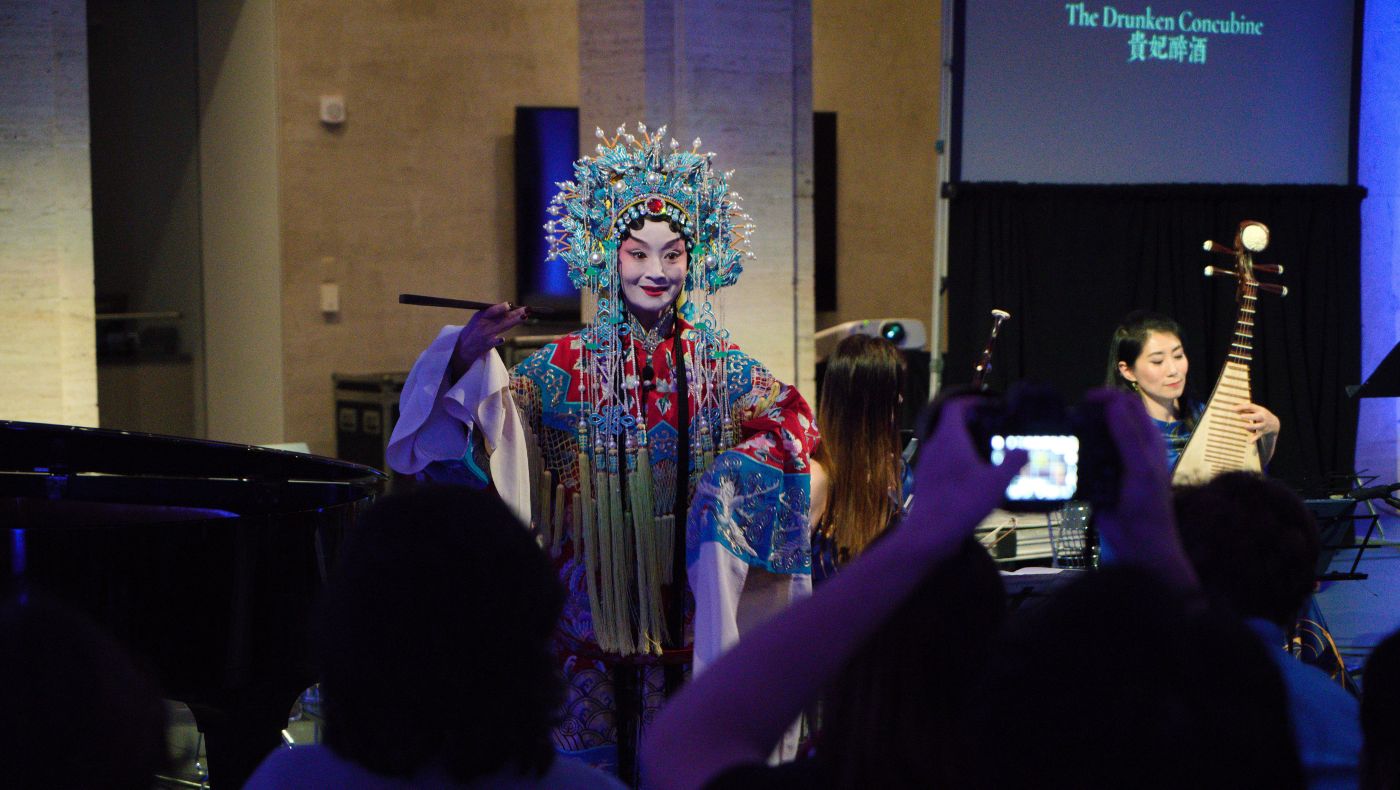
The ensuing performance of The Drunken Concubine was a uniquely dramatic moment. Dressed in an embroidered theatrical costume and adorned with a dazzling headpiece, renowned Chinese Kunqu and Peking Opera performer Jia Yonghong took the stage. With a flick of her sleeves and a gentle unfurling of her fan, Yonghong juxtaposed the moonlit Tang Palace and the grace of Concubine Yang Yuhuan beneath the arcade of the courtyard.
During the performance, Yang Jin’s instrument took on a particularly radiant presence; the pipa in her hands held a special significance. “This pipa was specially made for this concert,” explained Jin. “The pipa you are seeing now is a replica of the famous Tang dynasty pipa housed in the Shōsōin repository.”
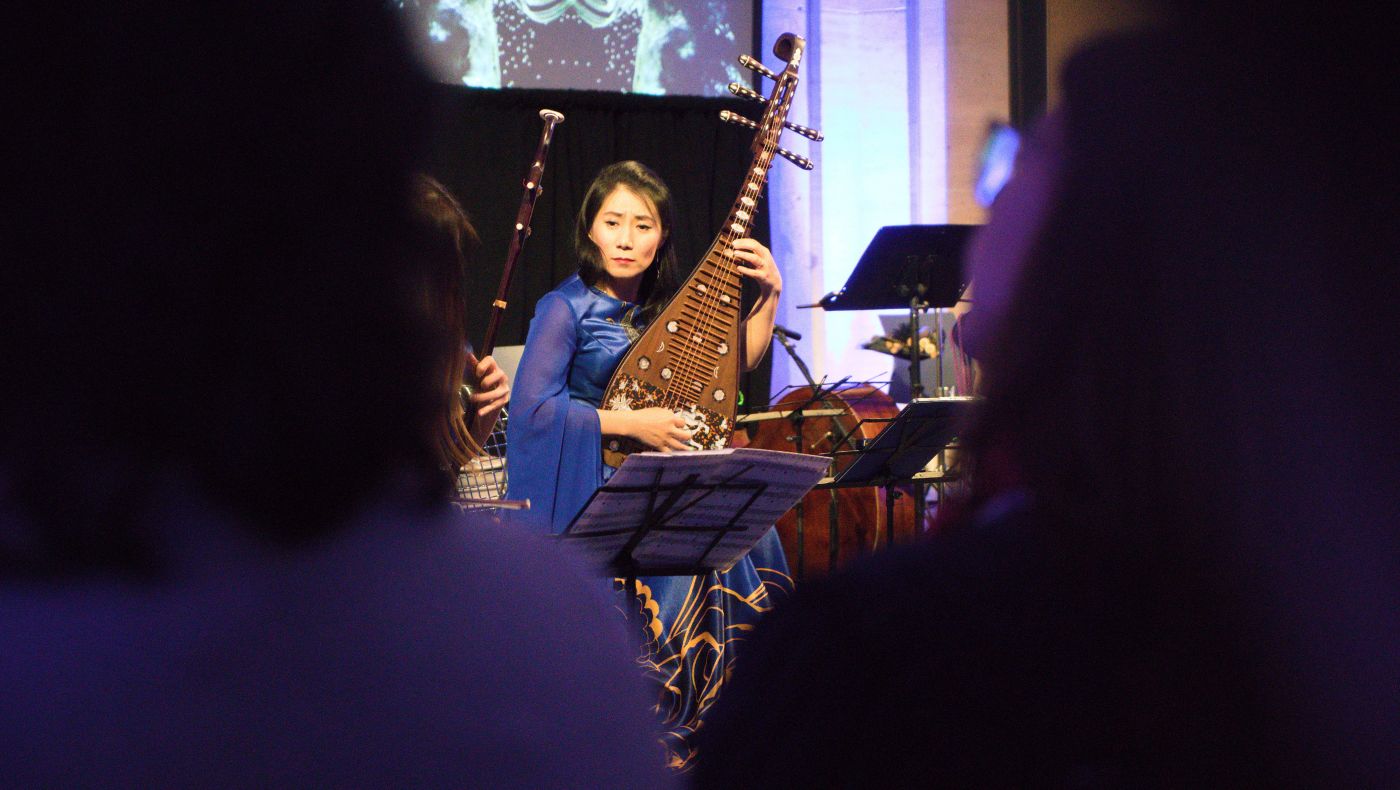
The finale of Part I of the evening’s program was New Voices of Dunhuang, a piece derived from the ancient Tang Dynasty musical scores discovered in the Dunhuang Library Cave. In an interview, Jin discussed the process of the performance, saying, “We are deeply grateful, as many teachers and predecessors have already translated the ancient scores and academically deciphered the fragments retained in Dunhuang. What we can now see is the translation work of Professor Chen Yingshi, an authority on Dunhuang musical score research at the Shanghai Conservatory of Music. There have been several months of careful discussion and refinement among several musicians; we explored how to use China’s three most representative instruments – the pipa, guzheng, and erhu – along with percussion and piano, to reinterpret our reverence for tradition. So, while we incorporate improvisation, we must always respect the original traditional scores, their progression, and their structure.”
Based on the translation of ancient scores, Yao Chen had rearranged the music, bringing together the pipa, guzheng, erhu, ruan, piano, and percussion, to breathe contemporary life into melodies from a thousand years ago.
A Tribute to the Spirit
While the first half of the evening explored the artistic legacies of China and East Asia, the second half traced Buddhism’s roots back to India, where a new ensemble of musicians invited audiences into a contemplative exploration of enlightenment, compassion, and interconnectedness.
Indian tabla master Sandeep Das served as the artistic director for Part II of the concert. As the stage lighting turned warm, Das sat cross-legged, his hands gently caressing the drumheads of his tablas. He is one of the most iconic contemporary Indian percussion masters, a core musician of the Silk Road Ensemble, and a Grammy Award winner. Accompanying him are sitar master Abhik Mukherjee, Das’s disciple, Bailey O’Donnell, world percussion master Shane Shanahan, double bassist Matt Small, and Japanese taiko and shinobue player Kaoru Watanabe.
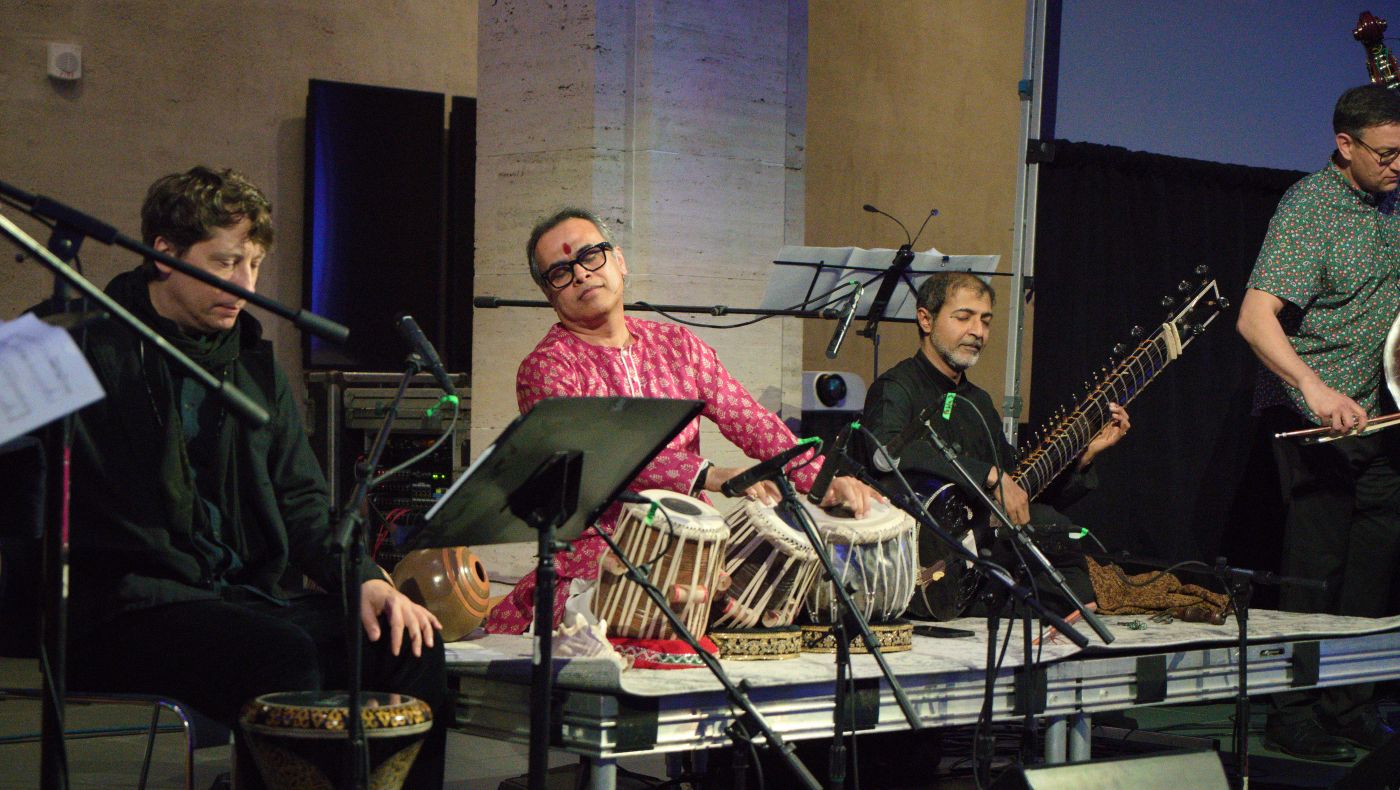
Das chose Bodhichitta and Sunyata as the theme for the section. “I grew up in a town called Patna, 20 miles away from where Buddha was born,” said Das. “It’s a connection to my roots. I’m preparing pieces that touch the concept of enlightenment and the concept of spreading love.”
Das did not view his performance as merely a program for this event. “For me, it’s not a concert,” he said. “I’m thinking of it more as a meditation. We perform concerts all over the world, but this one is different.”
The spirit of music and the philosophy of Buddhism are one and the same; both are about harmony and love. Tzu Chi upholds a beautiful belief that within every person lies humanity and divinity.
Sandeep Das Master of Indian Classical Percussion
“Namaste means, ‘My inner soul bows in reverence to your inner soul,’” continued Das. “I believe the spirit of music and the philosophy of Buddhism are one and the same; both are about harmony and love.”
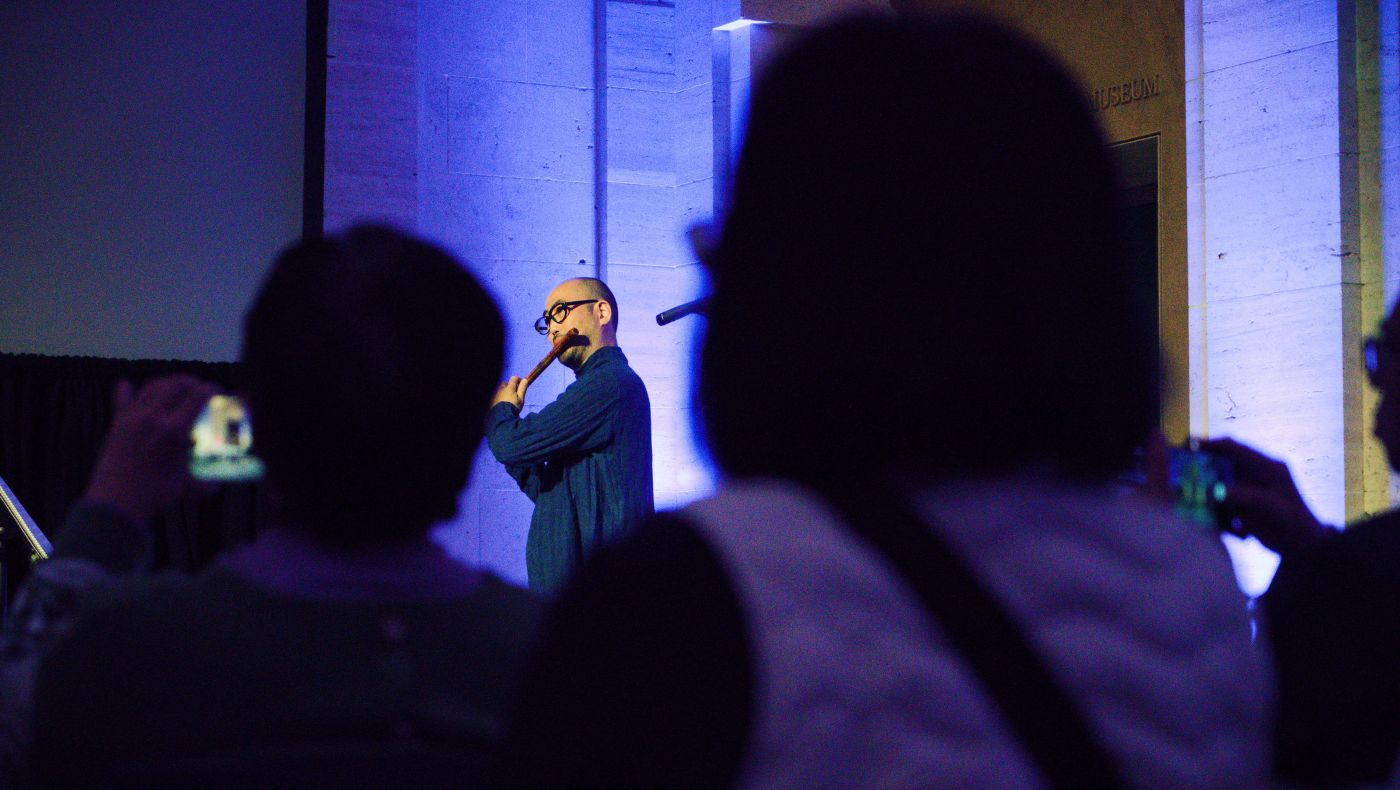
When Kaoru Watanabe’s fue sounded, clear and resonant, the entire ensemble established a riveting harmony alongside the different instruments. “I love listening to the resonance of my instrument, and I love listening to the resonance of my partners’ instruments,” said Watanabe. “I hope and believe that the audience will feel it, too. Our breaths will blend together, and the sounds of the instruments will resonate within each of us.”
Music is a language that transcends borders. We hope that through our music, we can break down all barriers and differences, bringing everyone together.
Yang Jin
President Chinese Musicians Association of North America
The program concluded with the following words: “May these sounds reach every corner of the universe, soothing the suffering of all sentient beings.” That night, Tzu Chi joined hands with Harvard University to convey this aspiration through melody.
A Promise Across Ten Thousand Miles
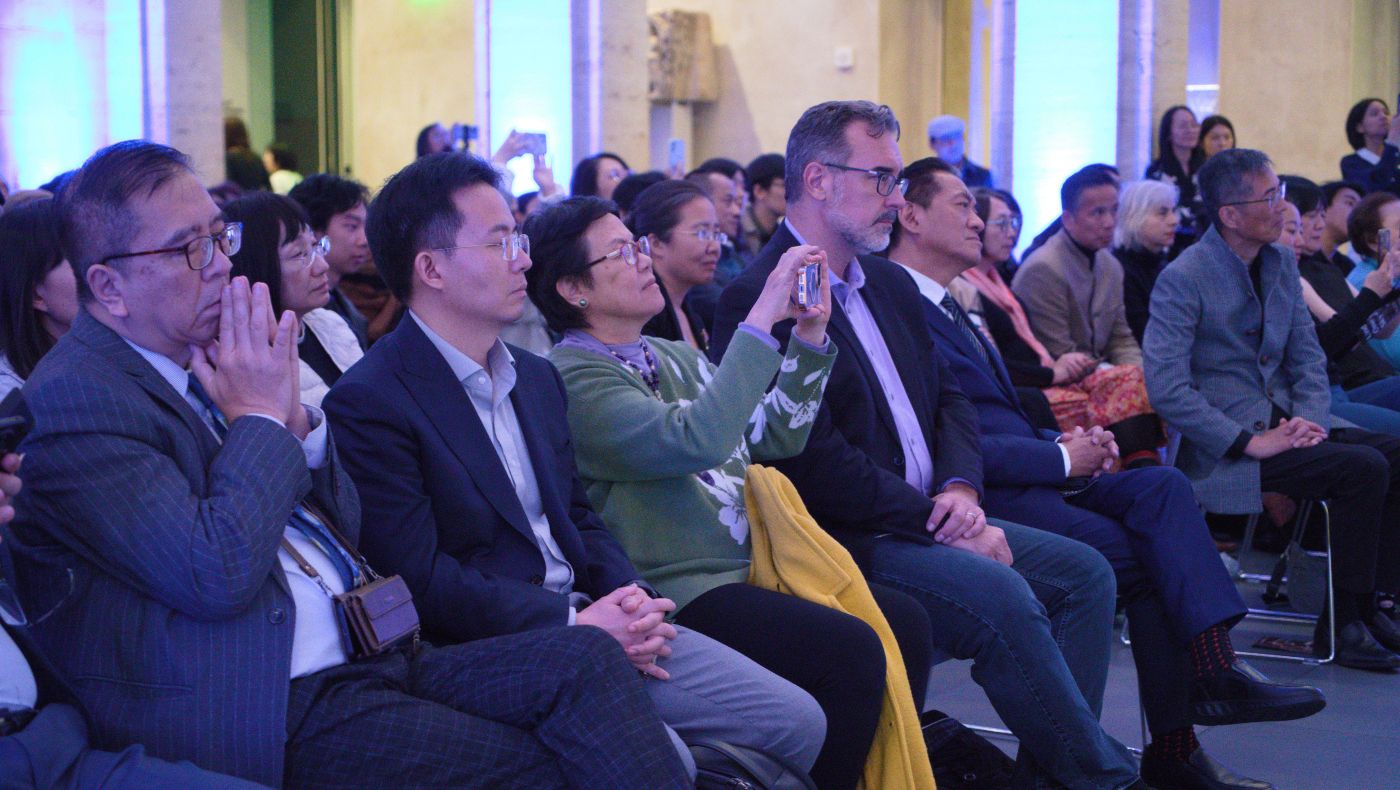
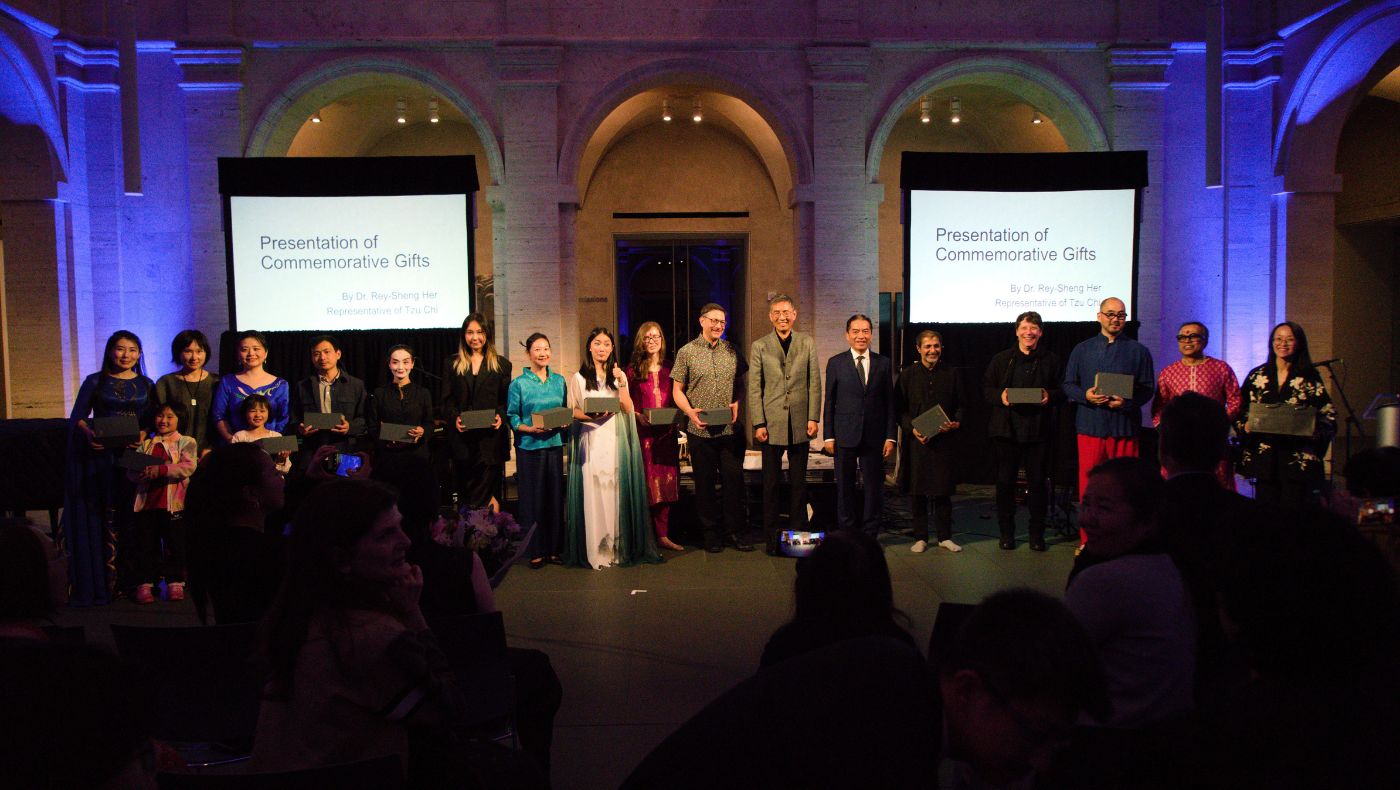
When the final note faded away, the entire audience rose to their feet with enthusiastic applause. Rey-Sheng Her imparted a broader historical context for the day’s event, sharing, “The Silk Road played a crucial role in the first globalization of Buddhism in human history. Through the Silk Road, Indian Buddhism spread to Central Asia, eventually reaching China, and from there to Korea, Japan, and South Asia. Thus, the Silk Road symbolizes the globalization of ancient Buddhism. Today, we seek to renew that spirit of exchange and understanding by bringing Buddhist values into dialogue with contemporary global society.”
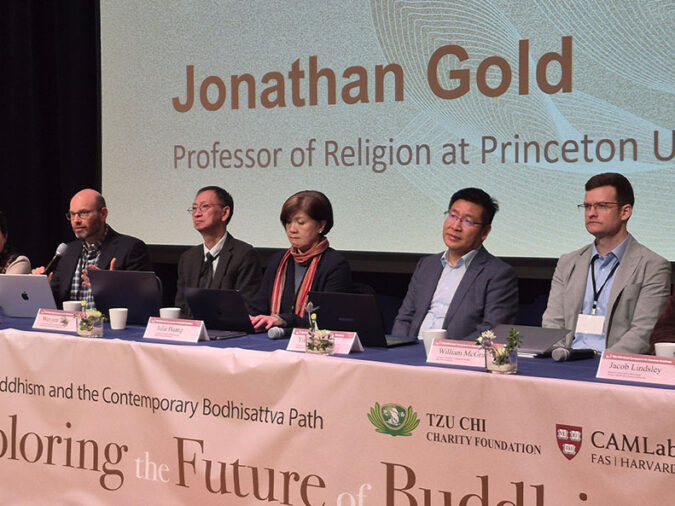
William McGrath, assistant professor of Buddhist studies at New York University, expressed his admiration as well, saying, “I lived in China for several years and know that this performance was of a very high standard. I was already exhausted after three days of intensive academic forums, but after the concert, I felt incredibly uplifted.”
Justin R. Ritzinger of the University of Miami also observed the care taken to ensure each element complemented all others. “This concert was incredibly rich and diverse in musical style and instrumentation, blending Chinese, Indian, and Western styles with powerful rhythms. The venue’s acoustics and atmosphere were simply stunning,” he said.
A Shared Heart Across the World
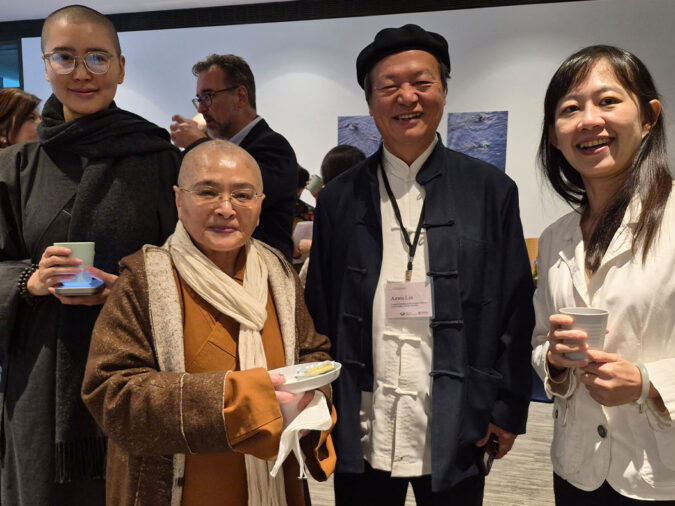
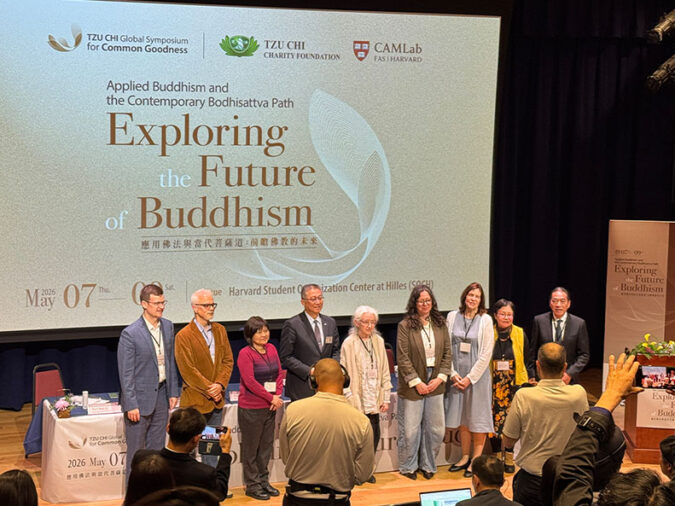
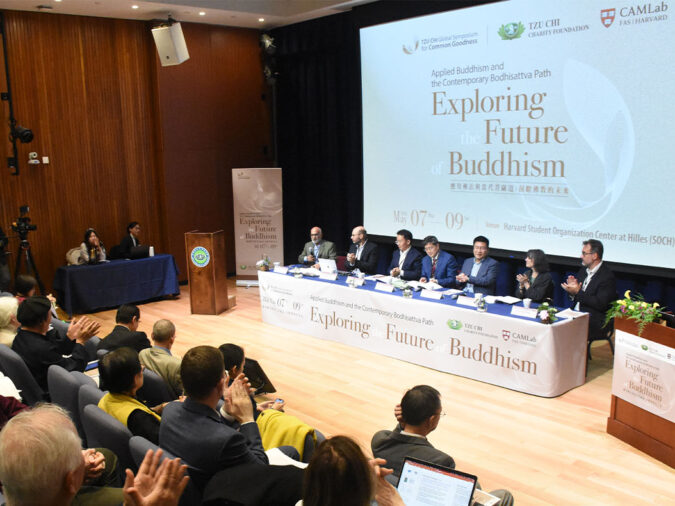
2026 marks Tzu Chi’s 60th anniversary and Dharma Master Cheng Yen’s 90th birthday. To commemorate the dual historical milestone, Tzu Chi and Harvard’s CAMLab additionally organized a joint dialogue spanning academia, the arts, and faith.
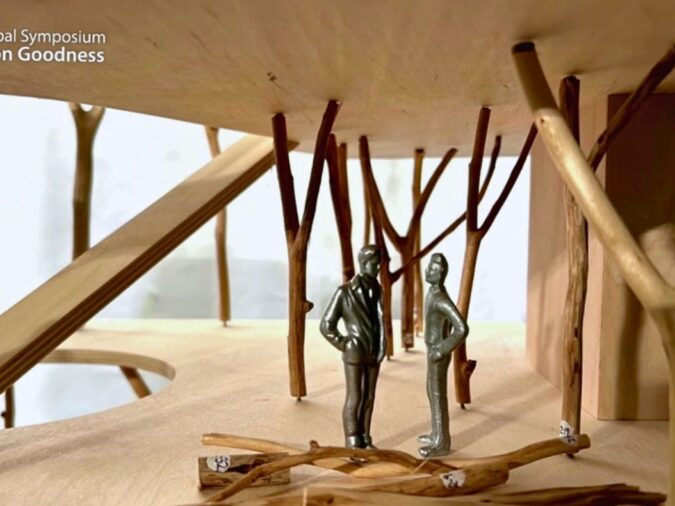
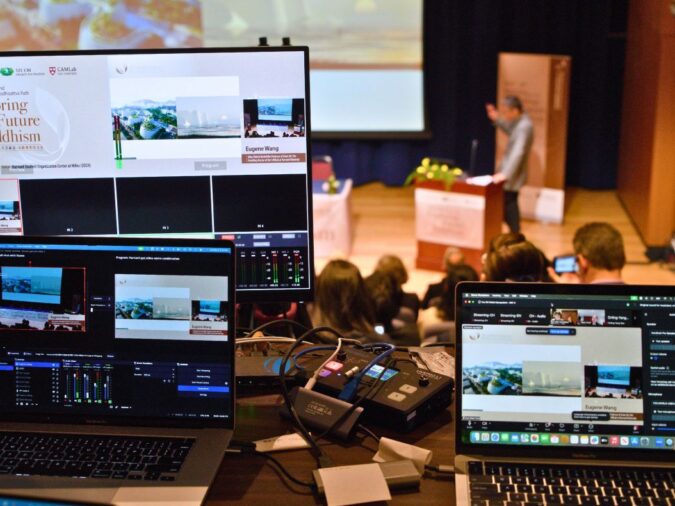
“This series of academic seminars is probably the largest academic event we’ve ever hosted at Harvard’s CAMLab,” Chenchen Lu shared with excitement. The three-day forum unfolded along a clear thematic thread: the first day explored Buddhist philosophy and the traditional frameworks of Buddhist studies; the second delved into Dharma Master Cheng Yen’s thought and the contemporary practice of the Bodhisattva path; and the third focused on design, architecture, ecology, and multisensory meditation experiences.
We all dwell under the same sky. Through collaboration and by transcending borders, we can collectively reimagine the future.
Chenchen Lu
Co-Founder and Associate Director Harvard CAMLab
Rey-Sheng Her also offered a concise summary of the series’ intent: “The content of these three days is exceptionally comprehensive and rich. It encompasses many important concepts: ‘Engaged Buddhism’ and the ‘Contemporary Bodhisattva Path.’ We discuss engaged Buddhism because the Dharma must genuinely benefit the secular world, and it must be applicable to every professional field and to everyone’s daily life.”
What is presented through these artistic forms is the underlying philosophy, a philosophy filled with love, compassion, tranquility, and bliss, which ultimately elevates our wisdom and compassion.
Rey-Sheng Her
Deputy CEO Tzu Chi Charity Foundation
Through ancient melodies, contemporary interpretations, and instruments carrying centuries of history, Under One Sky brought together voices from across cultures and generations. What’s more, it was a living expression of the values that have guided Tzu Chi for six decades: compassion, connection, and the belief that despite our differences, humanity shares one sky, and one fervent heart.
SHARE:
SHARE:
One ripple of kindness.
Thousands of lives touched.