2026 Tzu Chi Global Symposium for Common Goodness:
Designing Buddhist Futures (Part B)
Written by Ida Eva Zielinska
Published #81 | Summer 2026 Issue
SHARE
Architecture, Ecology, and Systems Thinking
In her presentation “Trees as Teachers,” Sheila Kennedy, Professor of the Practice of Architecture at Massachusetts Institute of Technology, explored how trees can guide an architecture rooted in the interconnection between the health of the natural world and human well-being. Bringing ancient arboreal wisdom into conversation with contemporary design, digital tools, climate urgency, and forest ecology, Kennedy grounded the inquiry in Buddhist tradition, noting that trees appear in early Buddhist art before figural representations of the Buddha. Moreover, the Buddha’s life unfolded in forests and beneath trees, most famously beneath the Bodhi tree at the Mahabodhi Temple in India, where he attained enlightenment.
“Trees have been teachers,” Kennedy said. The question, then, was how architecture could relearn from them. “Architects and humans have forgotten how to read trees. We used to be able to see a part or a need within the form of a tree.” Industrialization changed that relationship, replacing close attention to the whole tree with systems that cut, standardize, and extract. “What that has done is it’s removed the human touch. It’s removed us very far away from the tree when we think about wood today.”
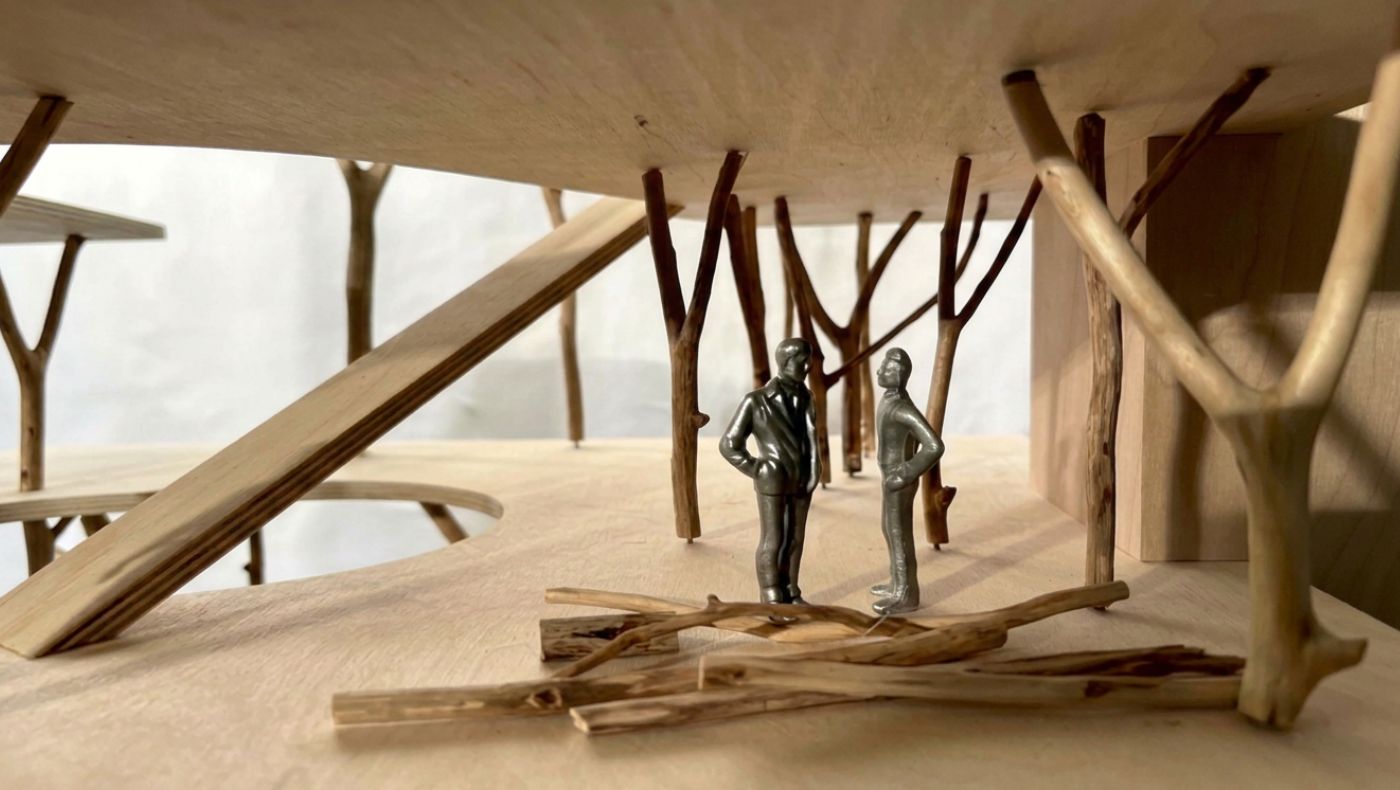
Through TREE FORM, a research and design project presented at the Berggruen Foundation’s NEXT EARTH exhibition during the 2025 Venice Biennale di Architettura, Kennedy and her team asked, “How could we learn from the natural intelligence of trees in their natural form before they were chopped up?” The project focuses on branching forms often discarded when trees are processed for lumber, even though this part of the tree is structurally powerful, acting as both column and beam in architecture. Using digital scanning, computational modeling, and structural engineering, TREE FORM explores how these branching structures could be used in construction. Kennedy imagined people gathering “in the presence of trees,” where even ordinary questions about wood, sawdust, and material use could open into a fuller understanding of how branching tree forms might be valued and reused rather than treated as waste.
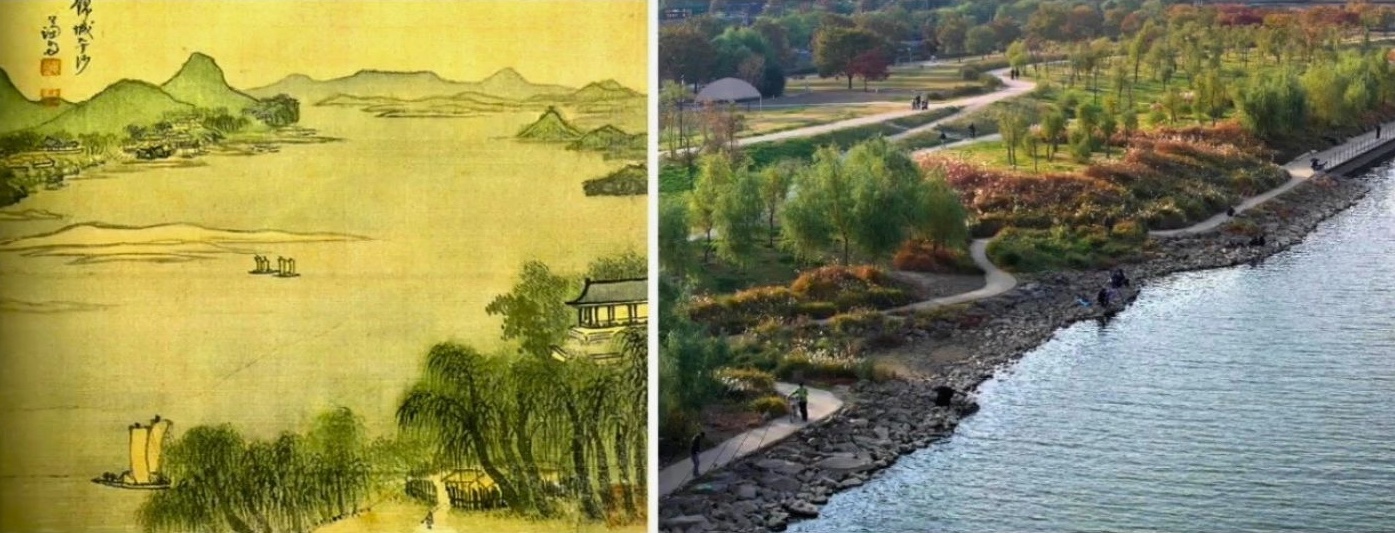
Jungyoon Kim, Associate Professor at Harvard Graduate School of Design and Co-Founder of PARKKIM, a landscape architecture practice based in Seoul and Boston, approached landscape architecture through sansu, the Korean reading of the East Asian concept often known in Chinese as shanshui, or “mountain and water.” In “Reworlding Sansu through Nature-Drawn Boundaries,” she presented sansu not as a remote scene to be contemplated from a distance, but as the lived ground of cities, climate, infrastructure, and daily life. “In the era of a changing climate, it is relevant and timely to analyze how projects in each bioregion have responded to their environment. We need to reorient ourselves, move beyond senseless political borders, and reestablish our relationship with mountain and water.”
Kim briefly introduced Designers of Mountain and Water: Alternative Landscapes for a Changing Climate, a Harvard Graduate School of Design exhibition and conference that organized Asian landscape projects by bioregion rather than national borders. She then turned to PARKKIM’s own work, using the Yanghwa Riverfront in Seoul as a clear example of “alternative nature,” a constructed landscape that does not imitate nature’s appearance, but functions within its specific environment. Along the Han River, the project accepted that the river could not simply be restored to a nostalgic sandy shoreline. Instead, it worked with seasonal flooding, silt, and mud, reshaping flat terraces into slopes so mud could flush back into the river as floodwaters receded while opening public access to the water’s edge. The riverfront now looks surprisingly natural, but that quality came not from copying natural forms, but from precise collaboration with hydraulic engineers and ecologists.
In Kim’s view, such projects show how inherited ideas of sansu can become systems for living with climate change, moving beyond scenery toward active forms of landscape intervention. “In Buddhist or Neo-Confucian cultures, our Asian ancestors have been interacting and intervening with sansu or shanshui in very poetic, respectful, and even systematic ways,” she said. The task now is to carry that inheritance into the present through landscape architecture. “In the world we are living in now, and the world we are moving into, the contribution through landscape architecture methodology will be to create spaces that are highly engineered artifacts, precisely fitted into given bioregions by very sophisticated intervention, yet that quietly offer the functions, beauty, and experience of nature as gently and naturally as flowing water.”
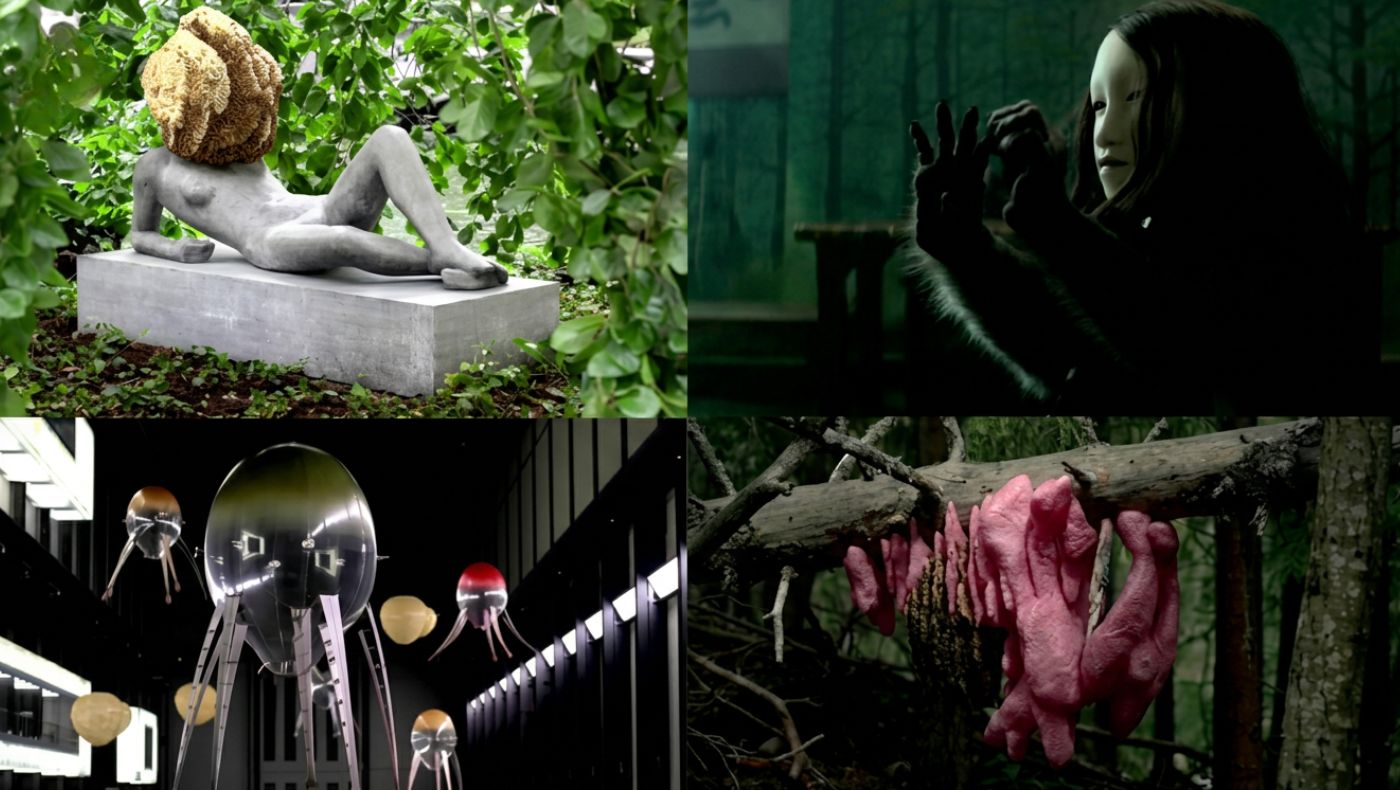
Yu Han Goh and Huai-Yan Chang, Co-Founders of SALAD Dressing, a Singapore-based landscape architecture practice, asked how design might shift human attention toward forms of life people often fail to perceive. In “On the Being of Plants,” Goh began with the moon, “humanity’s longest companion and a mirror through which we contemplate our existence,” before turning to technology as a tool for extending perception. The 1969 Apollo 11 moon landing produced an unexpected reversal. “We didn’t only see the moon, we saw ourselves. The Earth appeared as a blue marble, floating alone in the darkness, fragile and yet alive.” Goh connected that shift to the teaching often associated with the Śūraṅgama Sūtra, “Do not mistake the fingers pointing at the moon for the moon itself,” before applying it to technology. “Sensors, cameras, algorithms, and simulations are the fingers that extend our limited senses to a world that we cannot easily perceive. But the danger is that we could become enchanted by the instrument and forget the life it reveals. The tool should not replace a living world, it should return us to it.”
Across projects involving native flora, carnivorous plants, mimosa, tree pulses, moon gardens, and shadow gardens, Goh and Chang have explored how plants challenge human assumptions about intelligence, agency, and perception. What they found is that plants communicate through chemical signals, respond to repeated stimuli, and move through rhythms too subtle or slow for human senses to register. In one project, a dendrometer measuring the tiny expansion and contraction of a tree trunk made its hidden pulse visible through ripples in water. Such works asked whether humans are limited not only by their ideas, but by their bodies, speeds, and assumptions about what life should look like.
Chang expanded Goh’s reflections on plant perception into environments designed around plant life. In a shadow garden SALAD Dressing designed in a tropical valley, humidity, temperature, water, stone, and light were calibrated for plants rather than human comfort, revealing that, “Darkness is not absence. It is orientation.” This plant-centered approach reached a larger scale in SALAD Dressing’s work on the Singapore Pavilion at Dubai Expo 2021, developed in collaboration with architects. Chang framed the pavilion as part of a broader “planetary performance” in which human, plant, digital, and architectural systems interact. In that context, architecture was “not an object, but a self-sustaining cyborg holobiont, a system shared by human beings, other living beings, and digital beings.” In biology, a holobiont refers to a host together with the organisms that live with it; here, the term helped frame architecture as a shared ecological and technological system. Drawing on the Buddhist image of Indra’s Net, “where one diamond shines, all others sparkle simultaneously,” Chang imagined architecture not only as an intelligent building, but as “a sanctum where many intelligences finally meet to express together.”
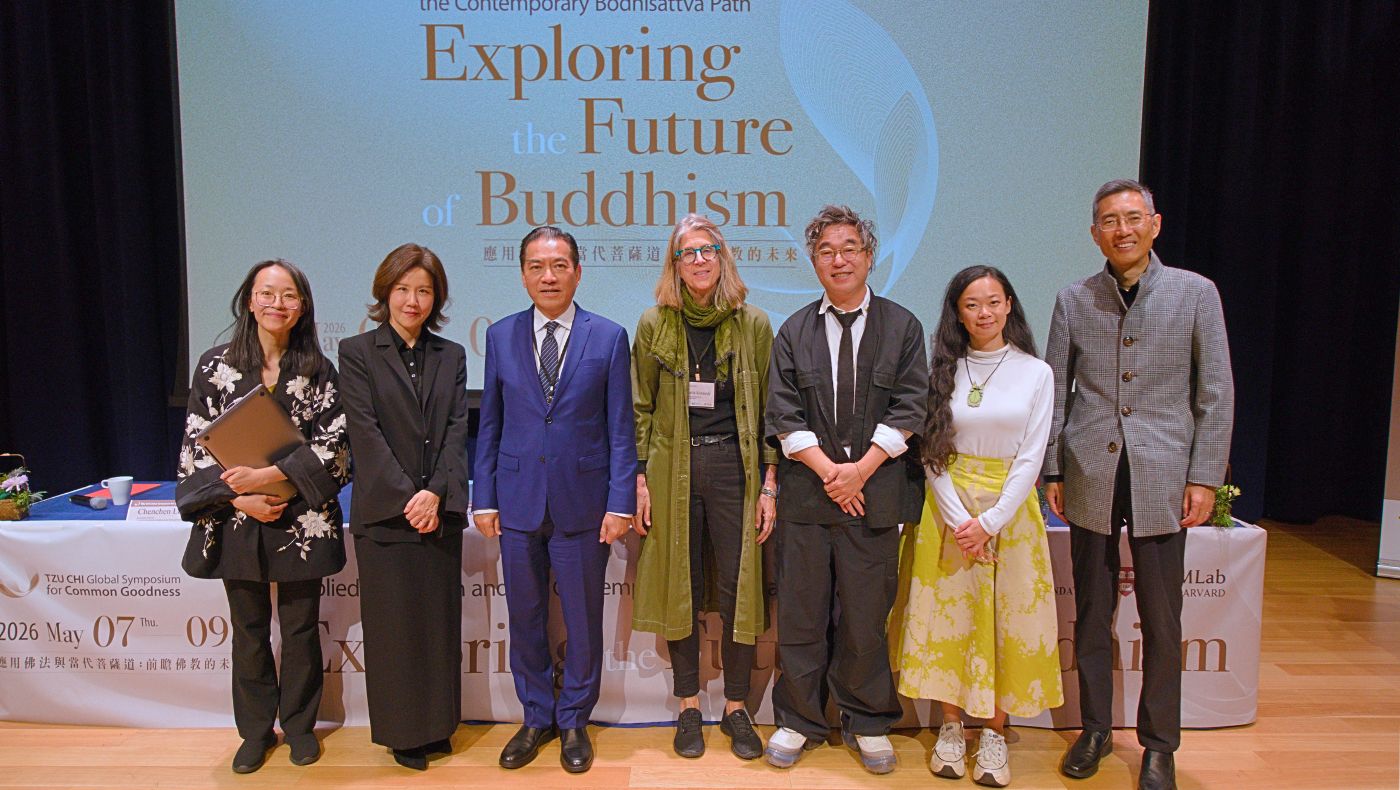
During the Q&A that followed, moderator Chenchen Lu drew together a central challenge running through the panel, namely, the modern assumption that humans stand outside nature as managers or controllers. The discussion also returned to older and Indigenous forms of ecological knowledge, including Buddhist tree protection practices in Southeast Asia, where monastic robes are wrapped around trees to mark them as ordained and protect them from harm. Such examples suggested that imagining future worlds may require learning again from ways of living with nature that have never fully disappeared. That movement from ecological systems to perception and lived experience led naturally into the next panel.
Mind, Meditation, and Multi-Sensorial Experience
“We are living in such a digitalized world. But because of that, I think the importance of multi-sensorial bodily dimensions of the built environment will only get amplified, ironically, maybe helped by digital technologies,” said Jungyoon Kim, Associate Professor at Harvard Graduate School of Design, who moderated the symposium’s final panel. “Sound, community, environment, heritage, and memory are all vulnerable objects of care. How do you think about the aesthetics of intervening, of calming our minds, shaping a community, reanimating fragments, or reconstructing a cave, especially when your audience may not be Buddhist at all?” Kim’s questions foreshadowed the concerns the speakers would address.
Monique Mead, Director of Music Entrepreneurship at Carnegie Mellon University, began the presentations with “Journey to Enlightenment: A Musical Pathway into Meditative States,” weaving together spoken reflection, violin performance, and the resonant tones of singing bowls. She presented sound meditation as a form of experience design, one that can draw the anxious mind toward stillness without requiring prior training. “For hundreds of years, Buddhists have been practicing meditation as a path to liberation, freedom from the constraints of our conditioned mind, that warped perception that causes suffering,” she said. “In theory, the steps of meditation are really very simple. But in practice, at least for me, it often goes more like this: Sit, breathe, mantra. Repeat. Mind on mantra. When thoughts arise, back to mantra…” As her words gave way to violin, the audience could experience the movement toward stillness she had been describing.
Mead then turned to John Cage’s 4 Minutes and 33 Seconds, a landmark composition made entirely of rests, in which the expected silence of a concert hall is instead filled by coughing, nervous laughter, rustling, and the ambient sounds of the room. “Where this piece fails as a concert meditation, it stands as a powerful philosophical statement that questions the very nature and purpose of music. Strongly influenced by the mentorship of Indian musician Gita Sarabhai, Cage adopted the philosophy that the purpose of music is to sober and quiet the mind, thus making it susceptible to divine influences.” During the pandemic, as anxiety, stress, and depression rose among students at Carnegie Mellon University, Mead carried that philosophy into her own work and asked, “How then would you create music that is able to capture the anxious mind and draw it into stillness with no effort beyond listening?”
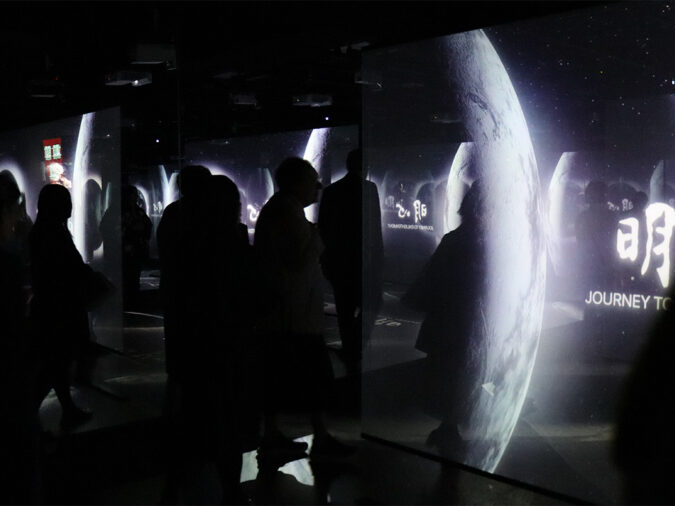
Drawing from ancient sound practices, neuroscience, and music therapy, Mead developed a sound protocol using quartz singing bowls and a notation system, then trained student practitioners to hold daily group sound meditations, or sound baths, at Carnegie Mellon. “Over the past five years, we’ve held hundreds of sound meditations, and in the research we conducted, it showed significant and immediate improvement in mood and stress.” At the symposium, she demonstrated soundscapes inspired by four stages of meditation, namely, grounding, focus, bliss, and expansion. She then connected the practice to Guanyin, the bodhisattva who listens to the cries of the world and is featured in the Journey to Enlightenment exhibition. “I saw all the elements of this sound practice come together, listening, holding space, expanding awareness through compassion. Wherever there is life, there is sound. And wherever there is sound, there is potential for transformation.”
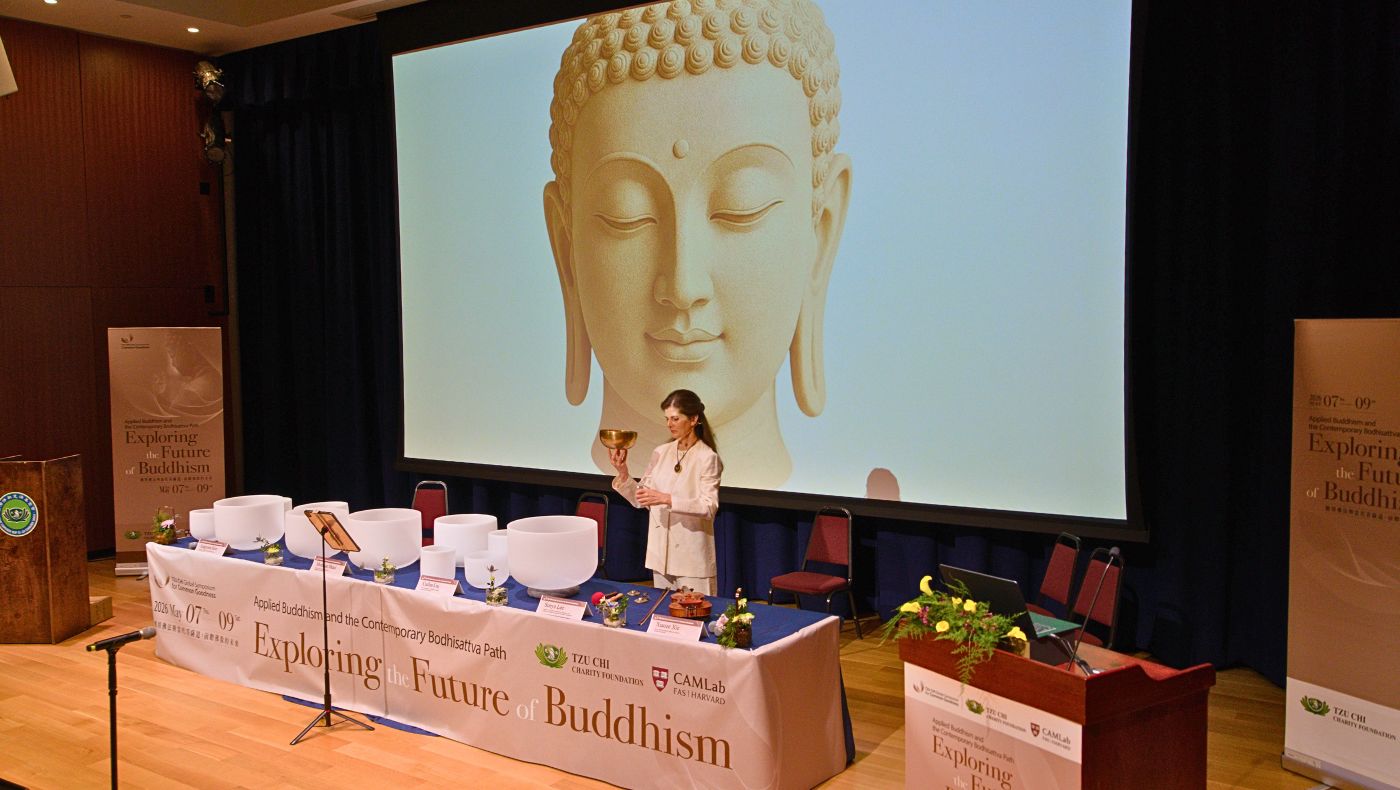
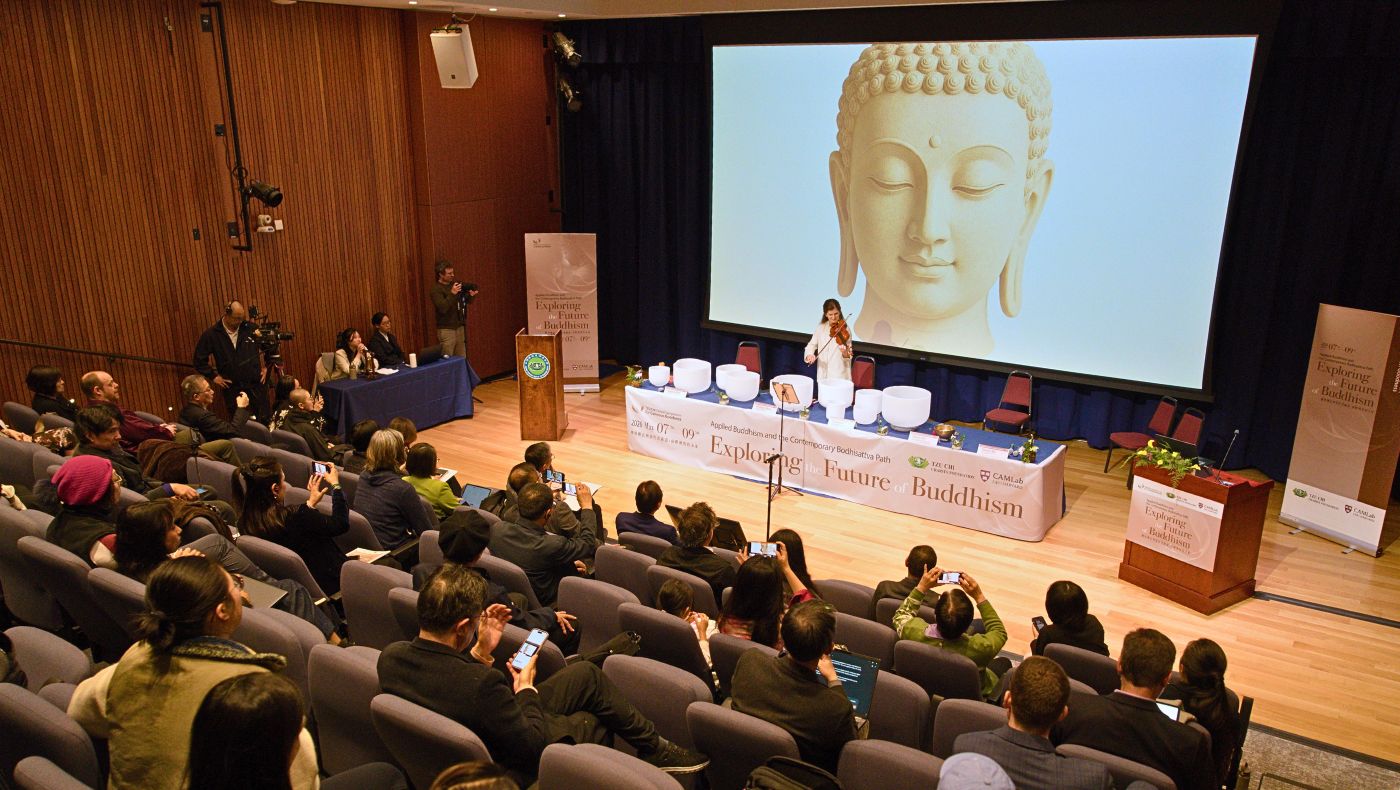
Monique Mead presents “Journey to Enlightenment: A Musical Pathway into Meditative States,” moving between violin performance and singing bowls as she explores sound meditation as a path toward stillness. Photos/Hector Muniente
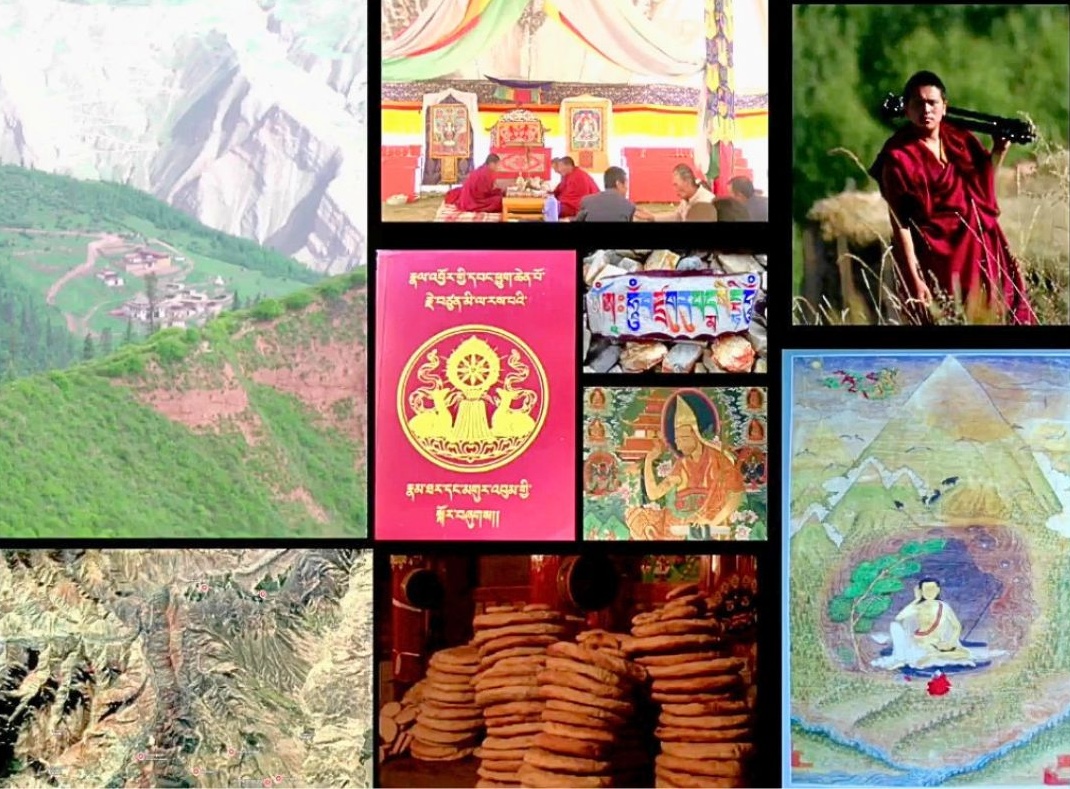
Cuilan Liu, Associate Professor in the Department of Religious Studies at the University of Pittsburgh, presented “Hor nag maṇi: Buddhist Chanting and Community-Building in Northeastern Tibet,” approaching sound from the perspective of a living Buddhist chanting tradition. She began with Milarepa, the 11th-century Tibetan Buddhist yogin, poet, composer, and singer, whose religious songs, known in Tibetan as mgur, expressed spiritual realization and were transmitted orally from practitioners to lay audiences. Liu initially found that the practice of chanting Milarepa’s songs had largely disappeared in central Tibet, but her fieldwork in northeastern Tibet’s Amdo region led her to the Hor nag maṇi festival, where monks and lay communities have preserved a related chanting tradition.
Held annually by a small Gelugpa monastery and eight affiliated villages in the region, the festival centers on a shared practice. Monks chant from two songbooks, including one associated with Milarepa, while villagers respond with the mantra Om mani padme hum. “They will only chant the six syllables over and over again. And the goal is to finish the entire songbook by the end of the festival.” This interactive, participatory form of community practice led by the monks also binds the monastery and villages into a living network of mutual support. Villagers rely on the monks to remain connected to Buddhist practice, while the monastery receives offerings that help sustain monastic life.
“What we are seeing here is an institutional effort aiming at preserving a Buddhist musical tradition,” Liu said. Kept alive there without interruption for 300 years, this tradition also clarifies an important distinction in Buddhist monastic life. Reciting and chanting, which use religious texts with tunes ranging from simple to complex, are permitted when they serve a devotional purpose, while singing, understood as secular, is not. In Hor nag maṇi, monks preserve a sacred chanting tradition rather than a secular musical form.
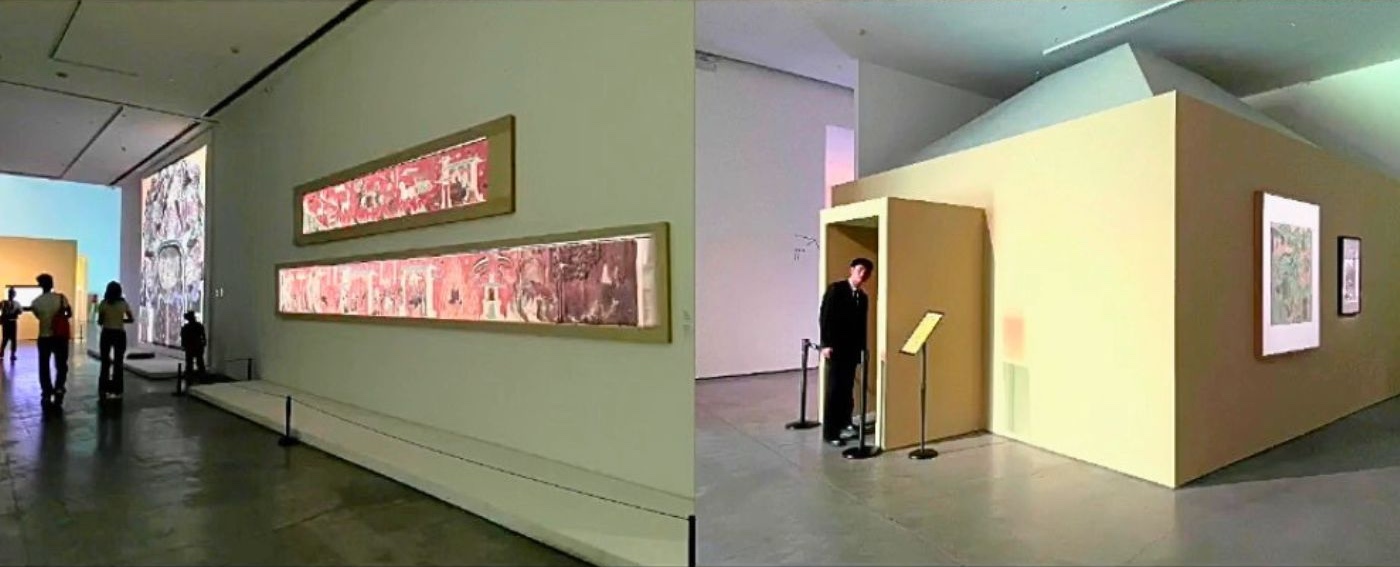
Through her presentation “In the Spirit of Recycle and Reuse: Preserving Buddhist Wall Painting through Replication,” Sonya S. Lee, Professor of Art History, East Asian Languages and Cultures, and Religion at the University of Southern California, brought Tzu Chi’s environmental mission into dialogue with the preservation of Buddhist art and cultural heritage. “These two are very different domains of activities and discourses, but what’s really in common is that both of them are concerned with material objects that are no longer retaining their original function, and also ways to make these objects useful and meaningful again,” Lee said. Focusing on Buddhist wall painting fragments from cave temples along the ancient Silk Road, she proposed that Tzu Chi’s approach to recycling could offer a new way to think about preservation, especially through the use of replicas in material and digital forms.
Lee traced this comparison to Master Cheng Yen’s teaching that environmental care is inseparable from spiritual practice. To reach enlightenment, human beings must cultivate compassion and discover their Buddha nature, and the Earth is the only realm in the cosmos where they have the conditions to do so. Protecting the planet, then, becomes not only an environmental duty, but also a way to preserve the conditions that allow all sentient beings to move toward enlightenment. The same teaching offers guidance for treating manufactured products as living things. “Once you start to treat objects made by people with compassion, that will compel them to extend these objects’ lifetime and also reanimate them so that they become useful again.” That idea opened a way to think about ancient wall paintings whose original architectural settings have been damaged, fragmented, or removed.
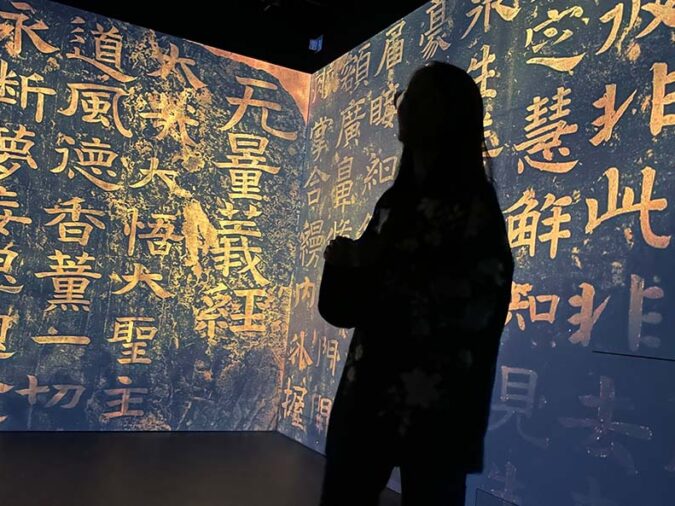
This approach came into focus through the 2024 exhibition Echoes of Camel Bells: Arts and Civilizations along the Silk Roads at the Beijing Minsheng Art Museum, which presented Buddhist wall paintings through several forms of replication. These included framed mural copies displayed like individual artworks and two types of replica caves: A same-scale replica of Yulin Cave 29 in Dunhuang, assembled from handmade copies on paper, and a same-scale reconstruction of Kizil Cave 8 in Kucha, created with digitally reproduced murals after its original paintings were removed in the early 20th century and taken to Berlin. Properly designed, replicas can do more than reproduce an image. They can help visitors enter a lost spatial world, learn from damaged heritage, and participate in making it meaningful again. “When properly designed and communicated, replicas can be a powerful tool to educate people about the past and the present.”
Speaking as an artist practitioner rather than an art historian, Xiaoze Xie, the Paul L. and Phyllis Wattis Professor of Art at Stanford University, closed the panel with “Cosmic Models: Poetic Reveries on the Dunhuang Library Cave.” His presentation centered on Amber of History: Reimagining the Library Cave at Dunhuang, an ongoing project that began during his 2017 residency at the Dunhuang Academy, the research institute that oversees the Mogao Caves, a UNESCO World Heritage Site near Dunhuang in Gansu, China. “Dunhuang has been a place of pilgrimage for generations of artists since the beginning of the 20th century,” Xie said. Faced with its immense historical and cultural weight, he recalled asking himself, “How could I find a different path and unfold different types of works? … How can I balance my sincere respect with creative freedom?”
Cave 17, the Library Cave, drew Xie back again and again. Discovered in 1900, the small grotto once held tens of thousands of manuscripts, paintings, textiles, and other relics later dispersed around the world. Xie shared that he was especially struck by a 1908 photograph of French Sinologist Paul Pelliot seated in the dimly lit cave, sorting loose folios before a wall of materials. “It is such a dense, gloomy and haunting image to me. This scene from over 100 years ago seemed as if it was from yesterday.” When Xie was granted rare permission to enter the cave with a photographer in 2017, the experience became the project’s starting point. “I felt like an amateur archaeologist, and I was thinking how could I blend archaeological analysis and scholarship with poetic imagination in my artwork. Thanks to the 3D data generously provided by the Academy, I eventually came up with the idea of transforming this internal space of the cave into a void, or emptiness, if you will, into a solid volume.”
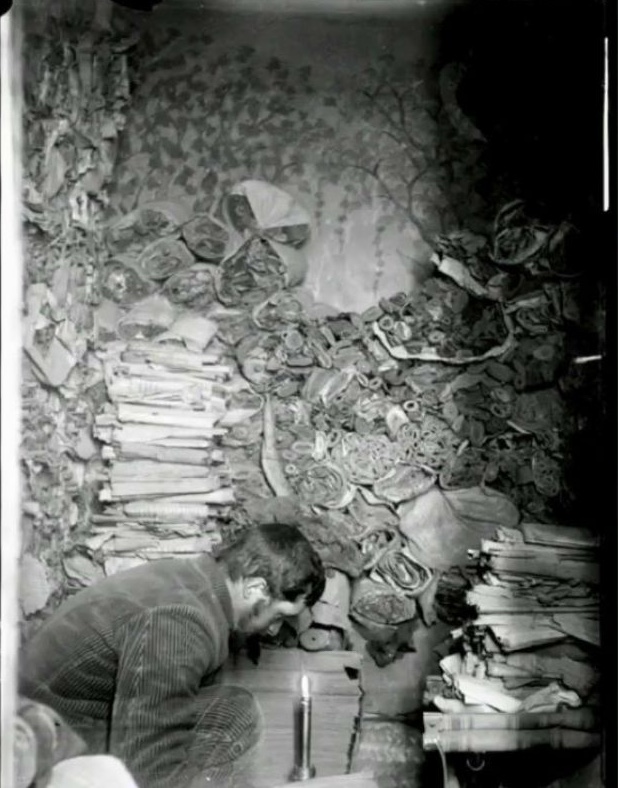
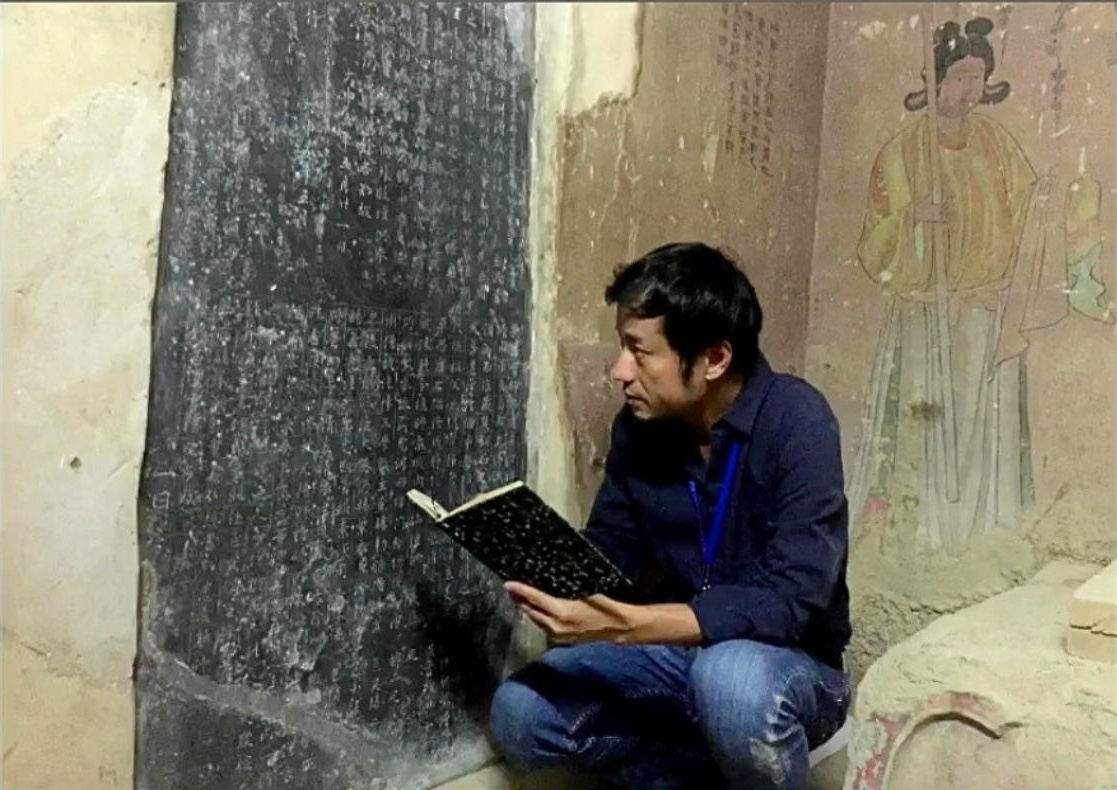
Xiaoze Xie shows the 1908 photograph of Paul Pelliot inside Dunhuang’s Library Cave alongside his own encounter with the cave’s materials, tracing the archival starting point for Amber of History. Presentation Slides/Xiaoze Xie
That transformation became the foundation for a project that unfolded across drawing, sculpture, painting, and multimedia installation. Xie first developed a long brush-and-ink scroll that brought together notes, diagrams, calligraphy, architecture, concept drawings, and fragments of artifacts once housed in the cave, documenting what he called “a process of study, contemplation, imagination, and conceptualization.” In later sculptural works, the cave’s empty interior became an amber-colored volume, with calligraphic characters and other materials suspended inside like traces preserved across time. The project also led him into Buddhist cosmology, star charts, and mandala forms, culminating in a 3D video projection mapped onto a one-to-one model of the Library Cave. Through these works, the cave became not only an archive of dispersed objects, but a model of the world itself. “Being in a Buddhist cave is like being in the cosmos. In other words, a Buddhist cave offers a complete model of the world. It is a miniature of the world.”
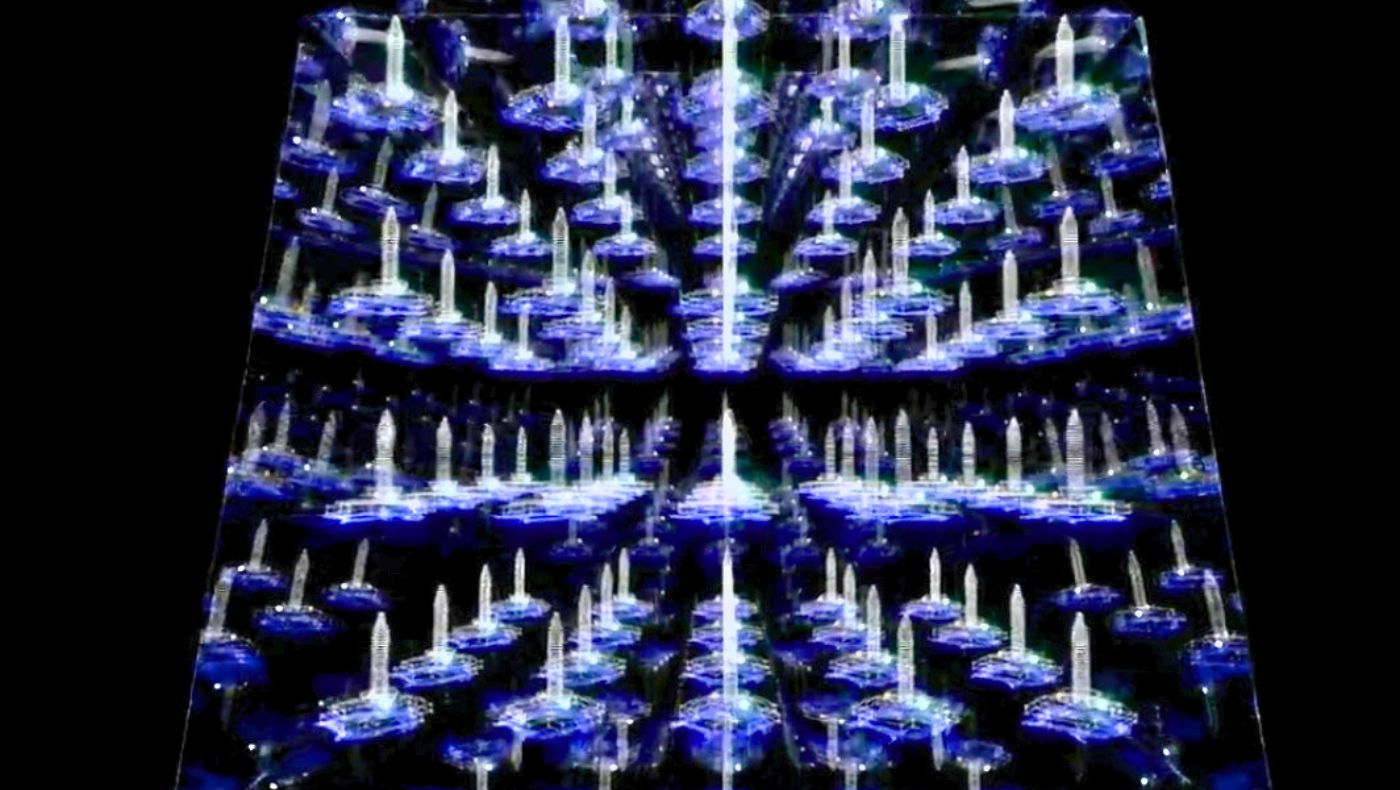
Xiaoze Xie presents the culminating 3D video projection from Amber of History, mapped onto a one-to-one model of Dunhuang’s Library Cave and drawing on Buddhist cosmology to reimagine the cave as an abstract model of the universe. Presentation Slide/Xiaoze Xie
Why These Conversations Matter
As the 2026 Tzu Chi Global Symposium for Common Goodness drew to a close, several speakers from across its three days of presentations offered final reflections on what the gathering had made possible. Rather than pointing to a single conclusion, their remarks lingered on the value of conversations held across disciplines, traditions, and forms of practice.
Weijen Teng, Professor and Dean of the Department of Buddhist Studies at Dharma Drum Institute of Liberal Arts, said what would stay with him was not only the technical detail of philosophical arguments, but the colors, sounds, feelings, accents, faces, conversations, and moments of shared attention that had shaped the gathering. “I have loved the melody of our conversations. And I loved it, not in spite of but because of our disagreements. There was a kind of harmony, I would call it, ‘unharmonious harmony.’” Those disagreements had given the symposium not disruption, but depth and resonance, allowing the conversations to stay alive inwardly.
Justin R. Ritzinger, Associate Professor of Religious Studies at the University of Miami, reflected on applied Buddhism as a movement from idea into embodied practice. To transform the world, ideas matter, but they are not enough on their own. Buddhism must also address “our embodied nature,” including the feelings, relationships, and shared forms that move people into action. “What makes Tzu Chi successful is not simply its ideas or even its logistical sophistication, as impressive as those are, but its ability to evoke feeling that inspires action through embodied practices.” Looking ahead, he concluded, “We need a middle way that neither clings to the forms of the past nor simply apes the present order that is frankly breaking down: forms that are inspired instead by the fundamental functions of body and mind.”
“I’ve been energized and inspired by all your presentations. I have found new hope for the future,” shared Elise Anne DeVido, Associate Professor and Director of the Institute of Religion and Humanities at Tzu Chi University, reflecting on the symposium as “our own three-day journey to enlightenment.” What stood out to her was how the gathering brought artists and designers into conversation with Buddhist scholars and practitioners, opening new ways to think about Buddhist practice in the 21st century. Looking ahead, she emphasized two insights: first, Buddhist care must extend beyond human concerns to the larger web of plants, animals, rocks, mountains, water, ecosystems, life, death, and causality; and second, the Bodhisattva path calls not only on the rational mind, but on the full range of human senses.
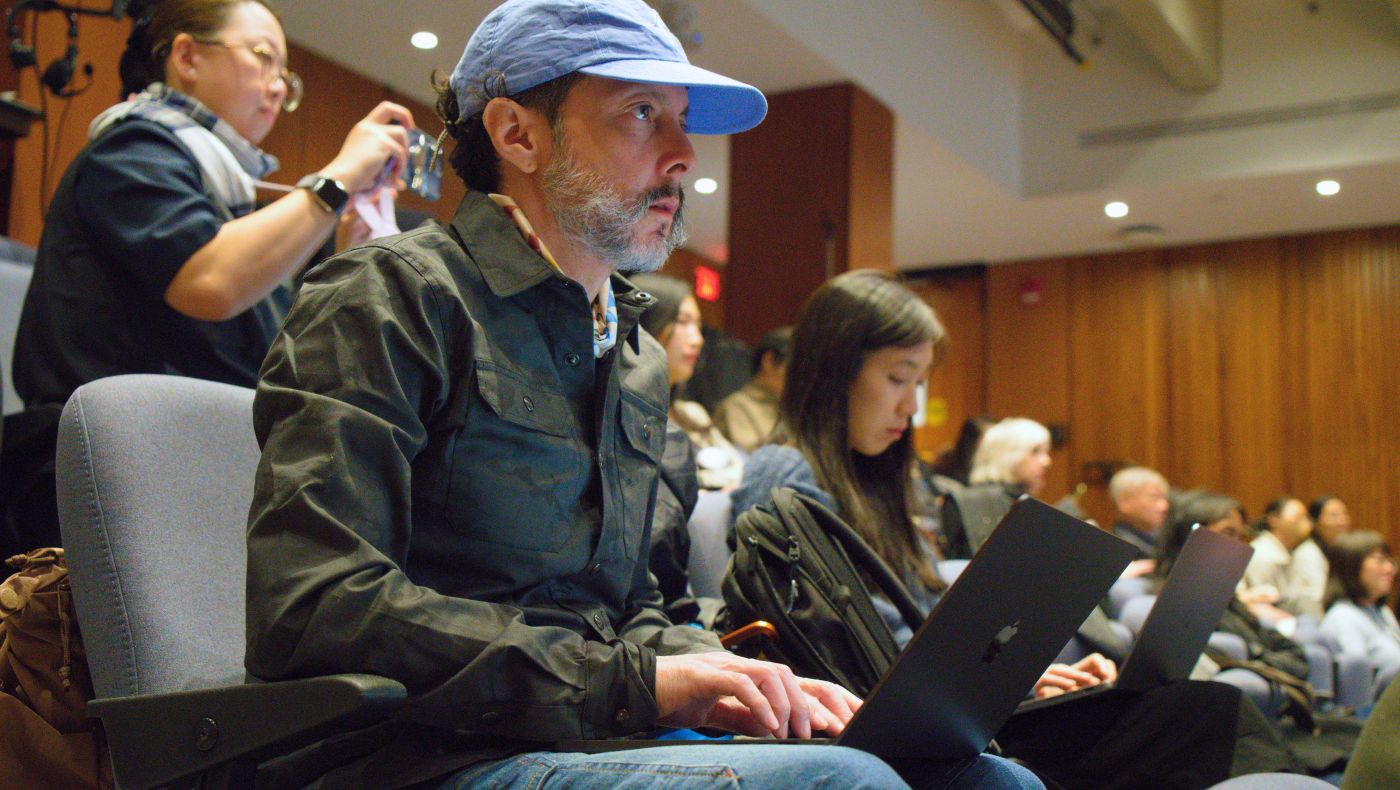
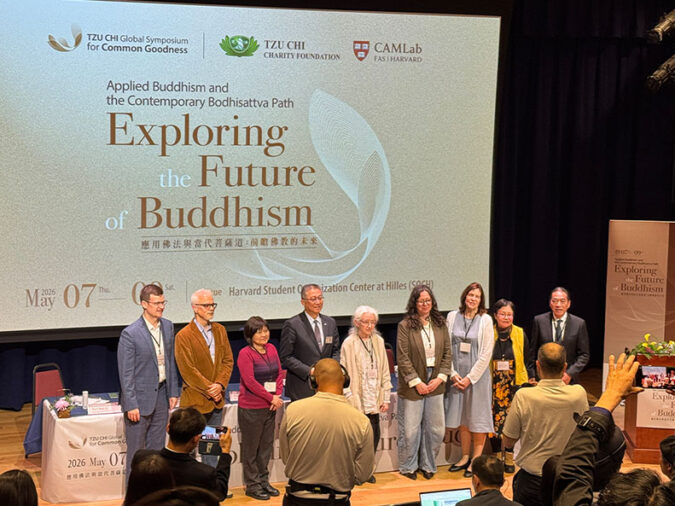
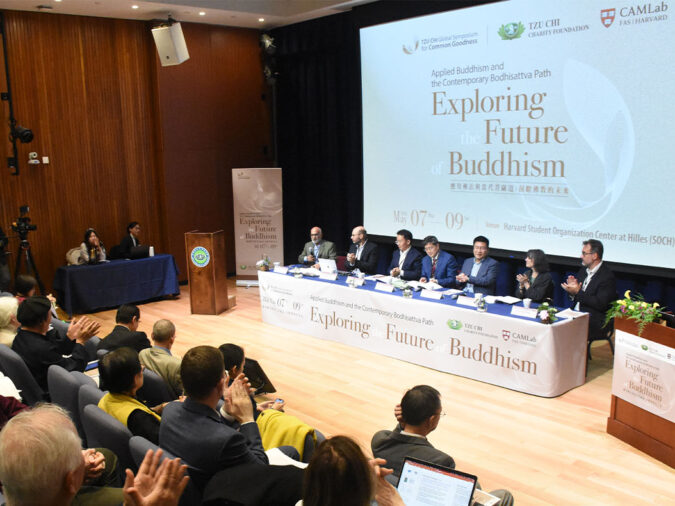
The three days of presentations and dialogue during the 2026 Tzu Chi Global Symposium for Common Goodness leave attendees with much to reflect on as the event draws to a close. Photo/Hector Muniente
Eugene Wang returned to the image of Indra’s Net, a cosmos in which each jewel reflects all the others. “These three days kind of played out this core scenario, where we come from different disciplines, different cultural backgrounds, different communities, and we converge here, not knowing whether we can truly carry out some kind of conversation. There might still be disciplinary gaps to be bridged, but overall I think there are these lasting moments where we feel like we are reflected in others, and others in ourselves.” This also required a shift in perspective. Recalling his own experience at Dunhuang, Wang described realizing that the insects circling him in the desert were not an annoyance, but beings seeking water and life. “You need to think about how they think, and then you understand why they need what they need,” he said. “It is that experience and that sense of how you live with other species, how you imagine how other people think, how other species think, that in the end matters more.”
Rey-Sheng Her, Deputy CEO of the Buddhist Tzu Chi Charity Foundation, closed by returning to the purpose behind the symposium itself. Citing Master Cheng Yen’s teaching, “Apply Buddha Dharma to daily life and bring Bodhisattvas into the world,” he framed applied Buddhism as the work of bringing wisdom and compassion into every field of professional life, from education, medicine, and communication to governance, economy, art, and design. That effort, he said, requires models, tools, knowledge, and collaboration across disciplines. The future of Buddhism, in this sense, is not only a question of what Buddhism should become, but of what kind of world human beings should help create. “We are going to design the future blueprint of humankind,” Her said. “That’s the core compassion and goal of Buddhism.”
SHARE:
One ripple of kindness.
Thousands of lives touched.