2026 Tzu Chi Global Symposium for Common Goodness:
Designing Buddhist Futures (Part A)
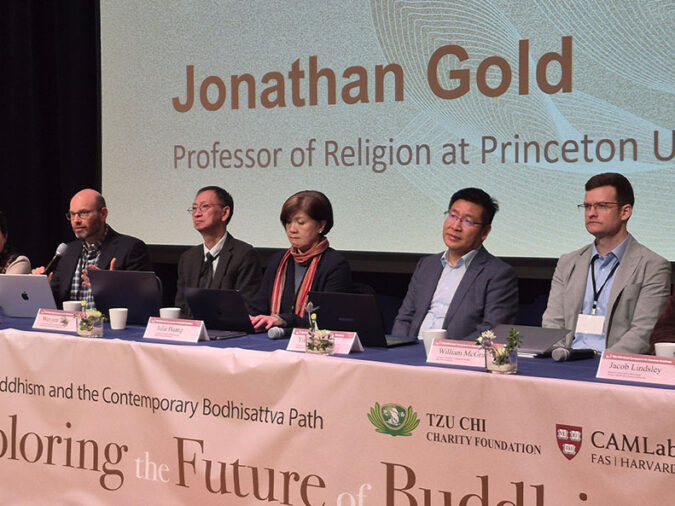
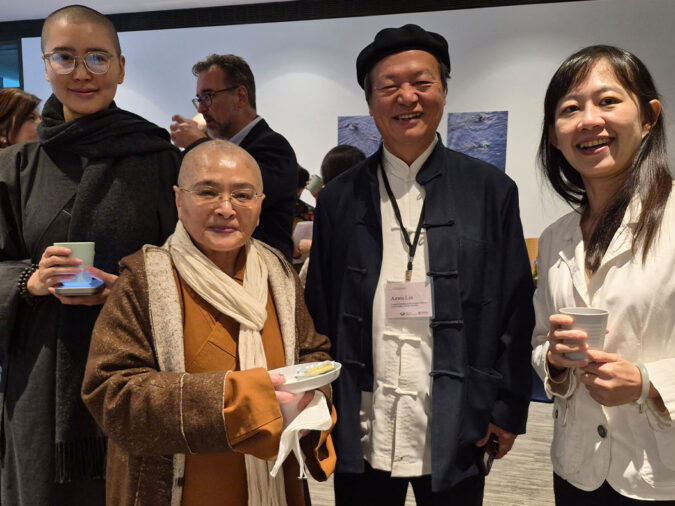
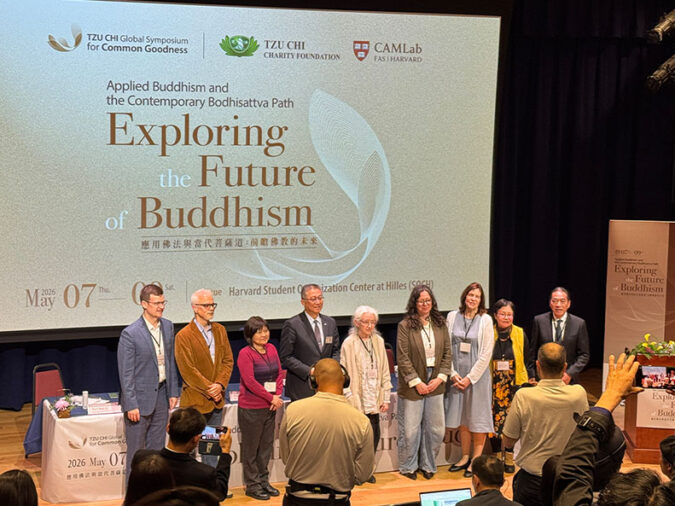
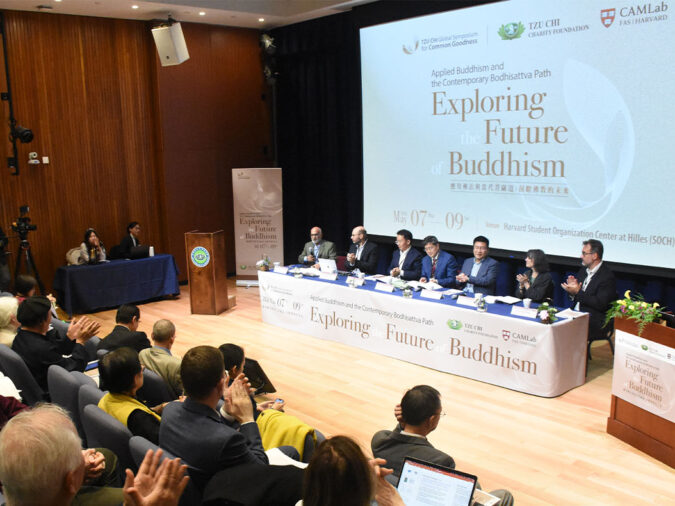
On May 9, the 2026 Tzu Chi Global Symposium for Common Goodness turns toward how Buddhist thought can inform design, while Tzu Chi USA’s media team supports the visually rich program through livestream and other coverage. Photo/Hector Muniente
Written By Ida Eva Zielinska
Published #81 | Summer 2026 Issue
SHARE
“What does Buddhism have to do with design?” asked Eugene Y. Wang, Abby Aldrich Rockefeller Professor of Asian Art at Harvard University and Founder and Director of the Cognitive Aesthetic Media Lab (CAMLab) at Harvard’s Faculty of Arts and Sciences, as he opened his keynote address, “Design After Buddhism: Back to Future,” during the 2026 Tzu Chi Global Symposium for Common Goodness. Held at Harvard University in Cambridge, Massachusetts, from May 7 to 9, the gathering, co-hosted by the Buddhist Tzu Chi Charity Foundation and CAMLab, had already explored how Buddhist teachings move from philosophy and scripture into lived practice, how the thought of Tzu Chi founder Venerable Dharma Master Cheng Yen shapes its humanitarian action, and how the Bodhisattva path can respond to the needs of the contemporary world.
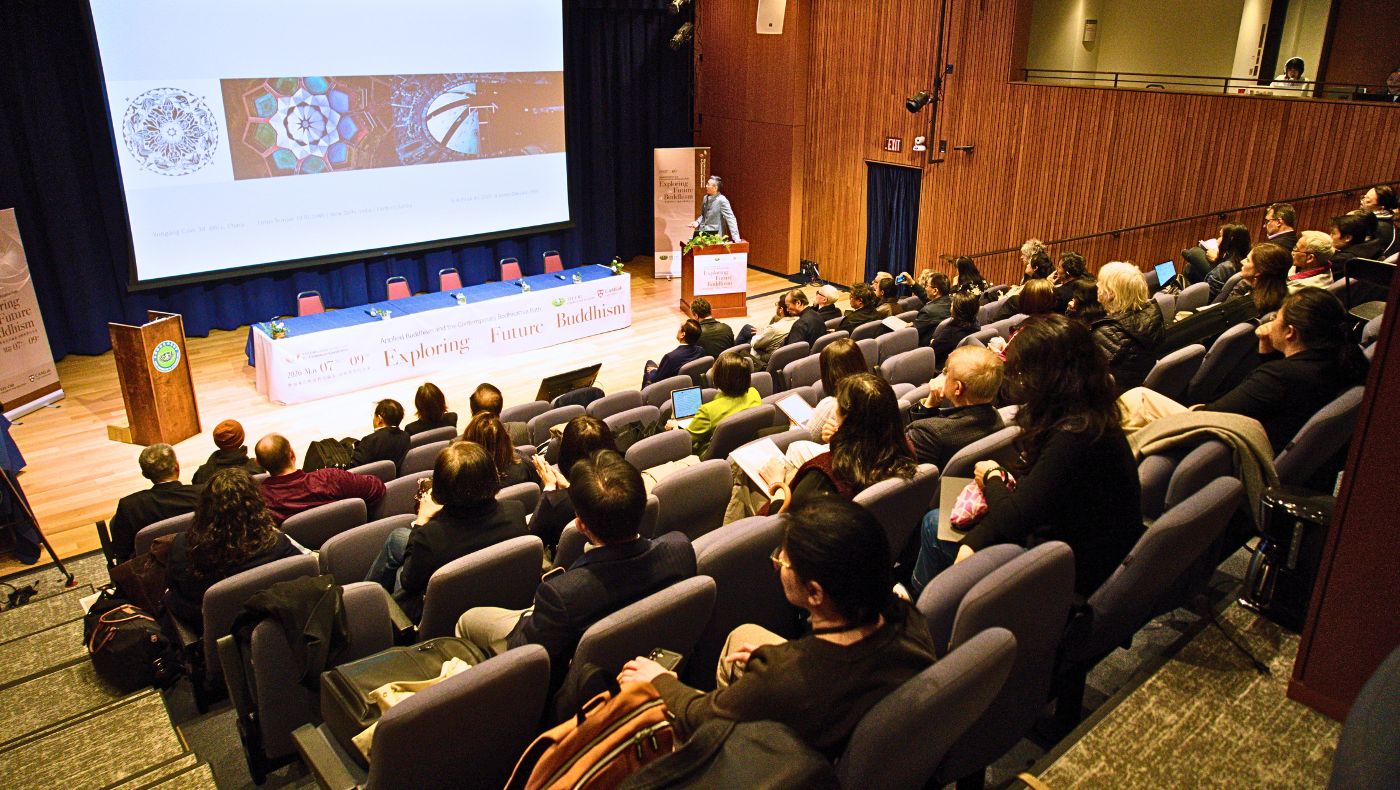
Eugene Wang delivers his keynote address, “Design After Buddhism: Back to Future,” during the third day of the 2026 Tzu Chi Global Symposium for Common Goodness at Harvard University on May 9. Photo/Hector Muniente
On the symposium’s third day, under the theme “Design Futures After Buddhism: Worldmaking by Other Means,” the conversation turned toward design, media, architecture, ecology, and multisensory experience. Wang’s keynote opened this new direction by asking how Buddhist wisdom might inform the way people imagine and design the future, from built environments and ecological relationships to new forms of sensory and media experience. His analysis began from the premise that the connection between Buddhism and design was not incidental. “From the get-go, Buddhism was deeply caught up with the issue of design,” he said, especially in relation to the tension between “built forms” and “biological forms.”
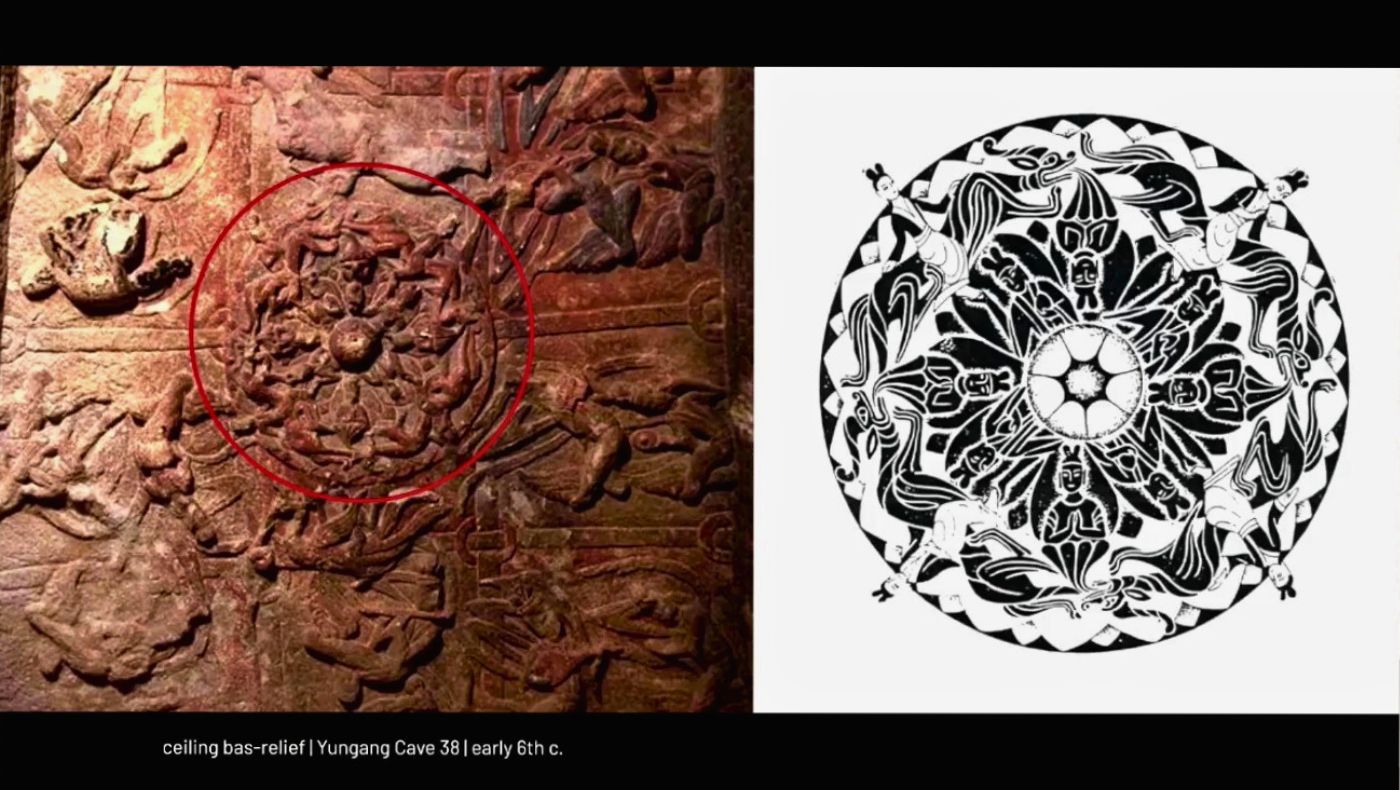
To make his point, Wang showed a sixth-century ceiling bas-relief from the Yungang cave complex in China. “What you have here is this exquisite formal design of how the Buddhist vision of the cosmos works,” he explained. “It encompasses different kinds of realms, the human figure form, the animal form, plant botanic forms, they’re all organized into this very coherent scheme. So it’s all dynamic, it’s all organic, it’s all a holistic kind of field, process, or transformation. Of course, it’s geared towards the Buddhist concept of metamorphosis, transformation, reincarnation, and so on.”
From that medieval example, Wang turned to what he saw as a central challenge for design today. The question was not how to imitate Buddhist visual forms, but how to recover the deeper logic they reveal, a way of imagining life as interdependent, organic, and continuously transforming. In modern design, he observed, that sense of relationship has often been weakened by the 20th century’s “over-mechanized modernist fantasy or indulgence,” in which built forms tend to stand apart from the natural world rather than participate in its processes.
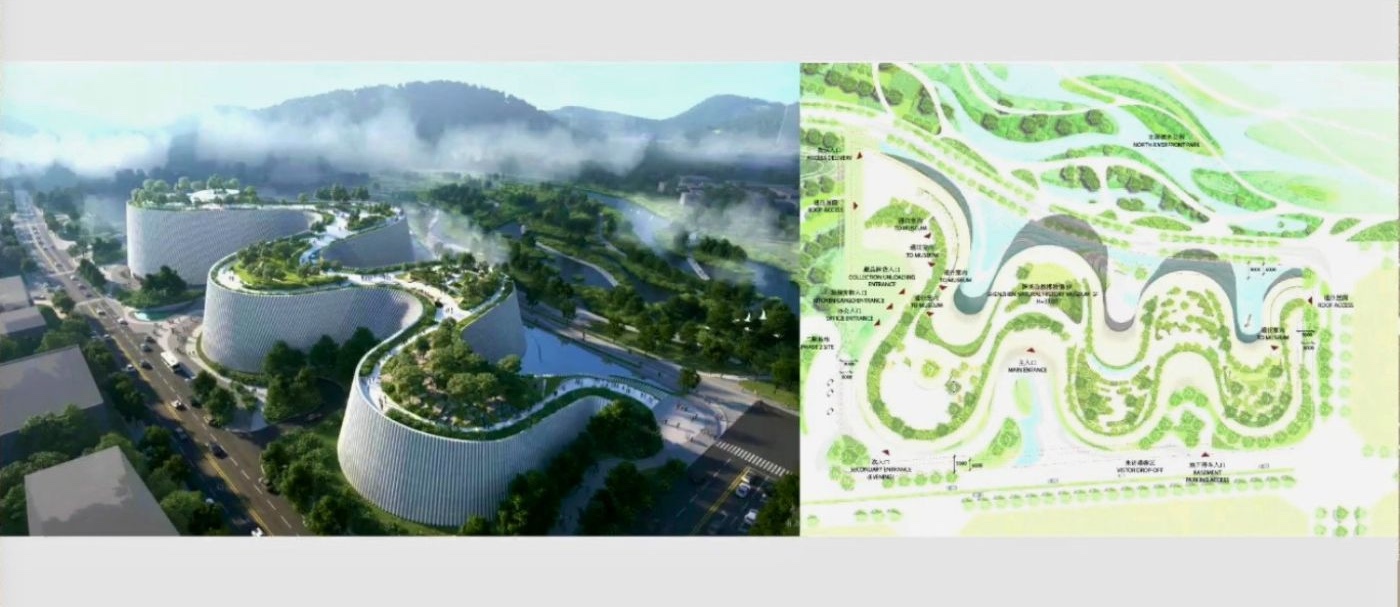
Yet contemporary architecture may be beginning to recover this older insight in new ways. Wang traced that possibility through the international design competition for the Natural History Museum in Shenzhen, China, where architects were asked to create a building that would serve as an unmistakable civic landmark while also merging into a river ecosystem. The competing proposals revealed different ways of answering that challenge, some treating architecture as a form of human control over nature, others softening the separation through greenery or borrowing natural forms from the outside.
The winning design, known as “The Big Wave,” shifted the focus from the appearance of nature to its underlying processes. Responding to the museum’s riverfront setting, the design drew from the way flowing water shapes land over time, treating the building as if it had emerged from the riverbank itself. “What the Shenzhen Natural History Museum demonstrates is that the highest evolution of modern architectural thought is no longer about dominating nature, nor is it about crude literal mimicry,” Wang said. “The future of design lies in profoundly learning from nature’s underlying operational process. It is an act of deep humility.” His keynote offered a powerful entry point into the panel that followed, where speakers continued to explore different dimensions of design.
Speculative Design and Alternative Futures
In his presentation “An Archive of Impossible Objects,” Anthony Dunne, Professor of Design and Emerging Technology at The New School, explored speculative design through objects created not as consumable products, but as ways of loosening the boundaries of what people consider real or possible. “One of the things design does really well is to give tangible form or materiality to alternative belief systems, values, and ways of seeing the world,” he said. “Physically, these objects are present in the here and now, but conceptually, they don’t quite fit in. They’re designs for non-existent worlds, and that’s their value.” Speaking on behalf of himself and his co-presenter and colleague Fiona Raby, he added, “We see designs as a form of inquiry, where design objects are tools to think with and through.”
Dunne described the idea of an “archive of impossible objects,” a speculative collection that would allow people to encounter fragments from alternative ways of thinking about reality. It could draw from science, fiction, the history of ideas, and nonhuman ways of being that are “by their very nature impossible to grasp for human-shaped minds.” The purpose would not be to predict the future, but to create spaces where people can leave behind familiar habits of thought. “Rather than more futures or end points extrapolated from a faulty present, we believe new starting points are needed, spaces to momentarily step out of existing realities to a ‘not here, not now,’ to imagine different ways of being in the world made tangible through design of everyday objects.”
Dunne then extended this inquiry through reflections on nonhuman perception. In Designs for a World of Many Worlds: After the Festival, a speculative design project imagining objects from a fictional festival, he asked what it might mean to design not by welcoming nonhuman beings into an already too human world, but by recognizing that other forms of life inhabit realities shaped by different senses, bodies, and ways of knowing. Such a shift in perspective asks humans to see themselves and the human-made world differently, and to recognize their impact on other life forms. “This project is about encouraging a deeper, more philosophical form of empathy for other life forms we share this planet with, and acknowledging the inaccessibility of their worlds, not by attempting to comprehend their non-humanness, but by celebrating aliveness and unknowability, paradoxically in ways that humans can still appreciate.”
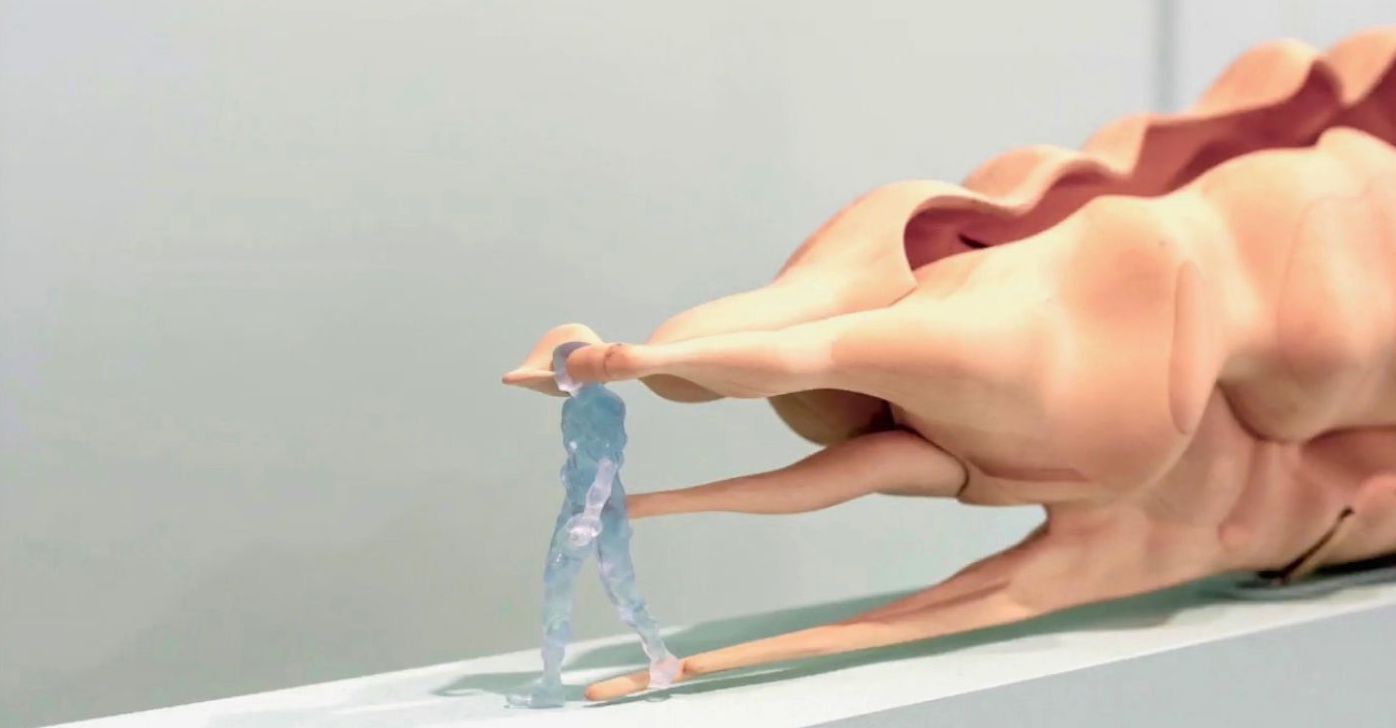
Anthony Dunne shows Plume 1, part of Designs for a World of Many Worlds: After the Festival, where a transparent human figure appears with a solid plume-like form, making the traces of human presence seem more substantial than the body itself. Presentation Slide/Anthony Dunne
Drawing on the influential American industrial designer and architect Charles Eames’s observation that “design depends largely on constraints,” James Auger, Associate Professor of Design at RMIT Europe, examined what happens when those constraints are hidden from view. In “Reconstrained Design,” he looked beyond practical limits such as cost, materials, or time, acknowledging the existence of larger, more complex or covert constraints embedded in infrastructure, markets, myths of progress, and inherited ideas about technology. “The obscure nature of these constraints means that they’re commonly not recognized by the designer, who simply works within or for the system, creating very, very narrow pathways into the future.”
Auger connected those hidden constraints to inherited visions of progress, where the future is often imagined as faster, larger, more automated, and more spectacular, even when such visions no longer fit the needs of the present. “Designers tend to be constrained by these technological dreams of the 20th century, as they continue to provide goals and aspirations, despite how contentious or inappropriate they are for the world of today.” Breaking those patterns begins by identifying the hidden constraints that limit design, then finding strategic ways to work around them or imagine beyond them, reopening paths toward more appropriate and locally situated futures.
He made this approach concrete through a project on Madeira, a Portuguese island in the Atlantic Ocean, where abundant sun, wind, rain, and steep cliffs coexist with an energy system shaped by centralized infrastructure, diesel generators, and restrictive market rules. Rather than treating those conditions as obstacles, Auger and his collaborators used them as the starting point for a different kind of design. Drawing on the local landscape, materials, know-how, and elements, they sought to work “more with nature than against nature.” The result was the Madeira gravity battery, a first working prototype that used the island’s terrain and gravitational force to imagine a less centralized energy system.

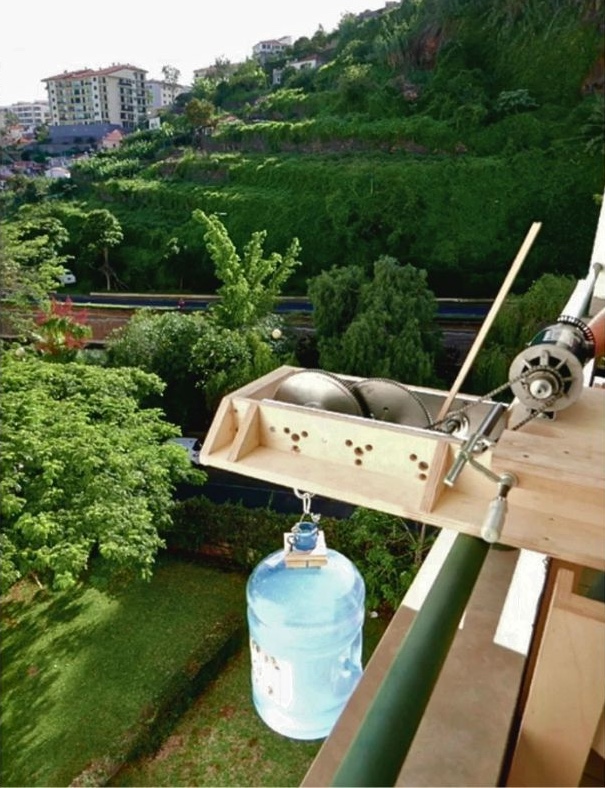
James Auger presents the Madeira gravity battery, a prototype that uses the island’s steep terrain and gravitational force to explore a less centralized way of storing energy. Presentation Slides/James Auger
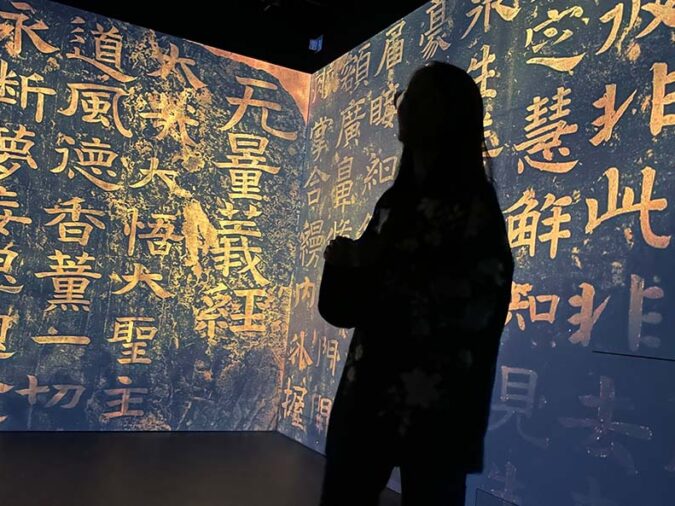
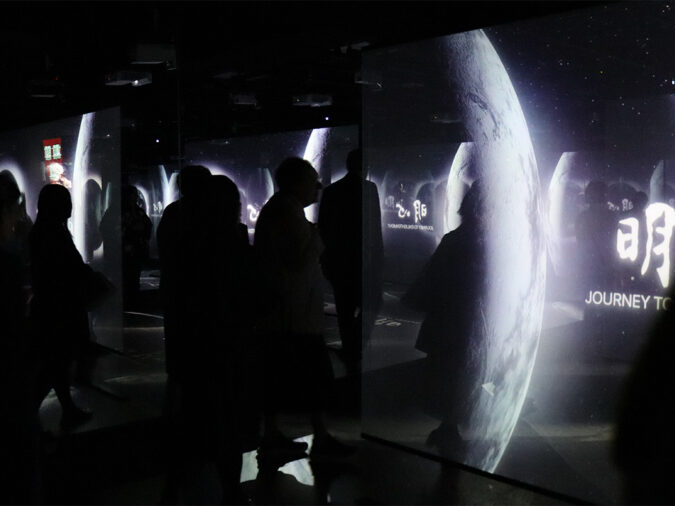
Chenchen Lu, CAMLab Co-Founder and Associate Director, used Journey to Enlightenment, the multimedia exhibition at CAMLab Cave that opened in conjunction with the symposium, as a case study in how immersive media can translate Buddhist cultural systems into spatial experience. “Enlightenment in Buddhism actually is not a simple idea. It is often understood as the culmination of countless lifetimes of practice, of compassion, of discipline, of wisdom, of sacrifice, and transformation,” Lu said, introducing the project’s principal challenge. “How can we express or deliver such a state of being to the public? And how could we translate it into something that can be spatially experienced?”
During the early stages of research, the team saw a video of Master Cheng Yen speaking about the Buddhist concept of Great Perfect Mirror Wisdom. “Suddenly something began to crystallize for us,” Lu recalled. “The mirror has probably been the most profound metaphor of enlightenment in Buddhist culture. It is small, yet it contains the whole world. It has no image of its own, yet it receives all images placed before it. It appears empty, yet endlessly reflective.” Across Buddhist traditions, the mirror has served as a metaphor for the enlightened mind. “A disturbed mind is like the rippled water, fragmented, distorted, unable to perceive clearly. But an awakened mind reflects reality without distortion. It reflects the world completely while remaining empty itself.”
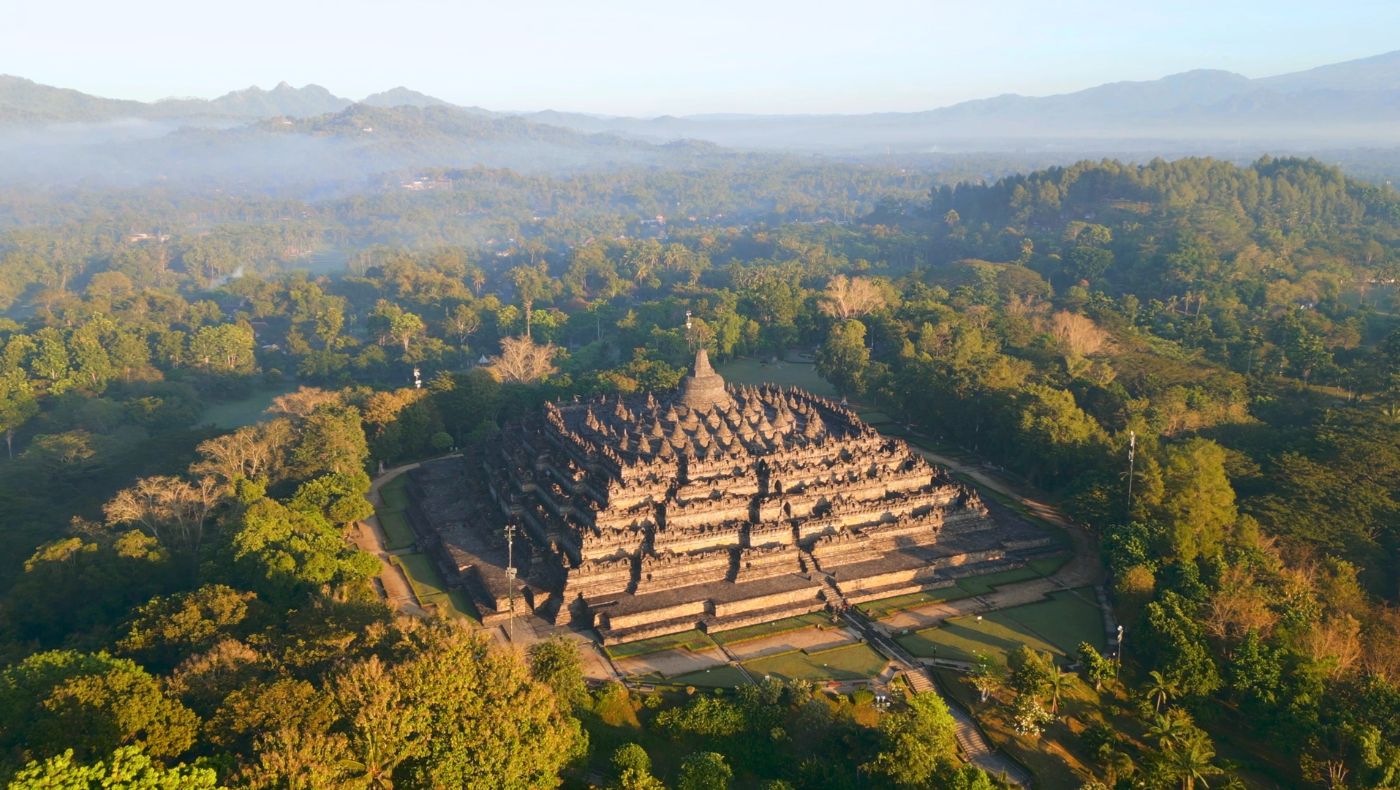
That insight shaped the design strategy for Journey to Enlightenment, which selected Buddhist sites to explore qualities of the mirror, including reflection, interconnection, and the transformation of perception. Lu focused on one of them, Borobudur, the eighth- to ninth-century Buddhist temple in Central Java, Indonesia, describing how its carved corridors and level-by-level ascent become a spatial and narrative journey toward enlightenment. The idea comes into focus through relief panels depicting Sudhana’s pilgrimage to the bodhisattva Maitreya, whose magical tower contains “infinite mirrors” reflecting visions of the past and future and revealing Indra’s Net, the Buddhist image of a cosmos in which each part reflects the whole. “Borobudur itself becomes Maitreya’s magic tower, the pilgrims become Sudhana, the ascent becomes this visionary journey along the Bodhisattva path, and the architecture becomes the tower of mirrors.”
Read more about the Journey to Enlightenment exhibition in this issue.
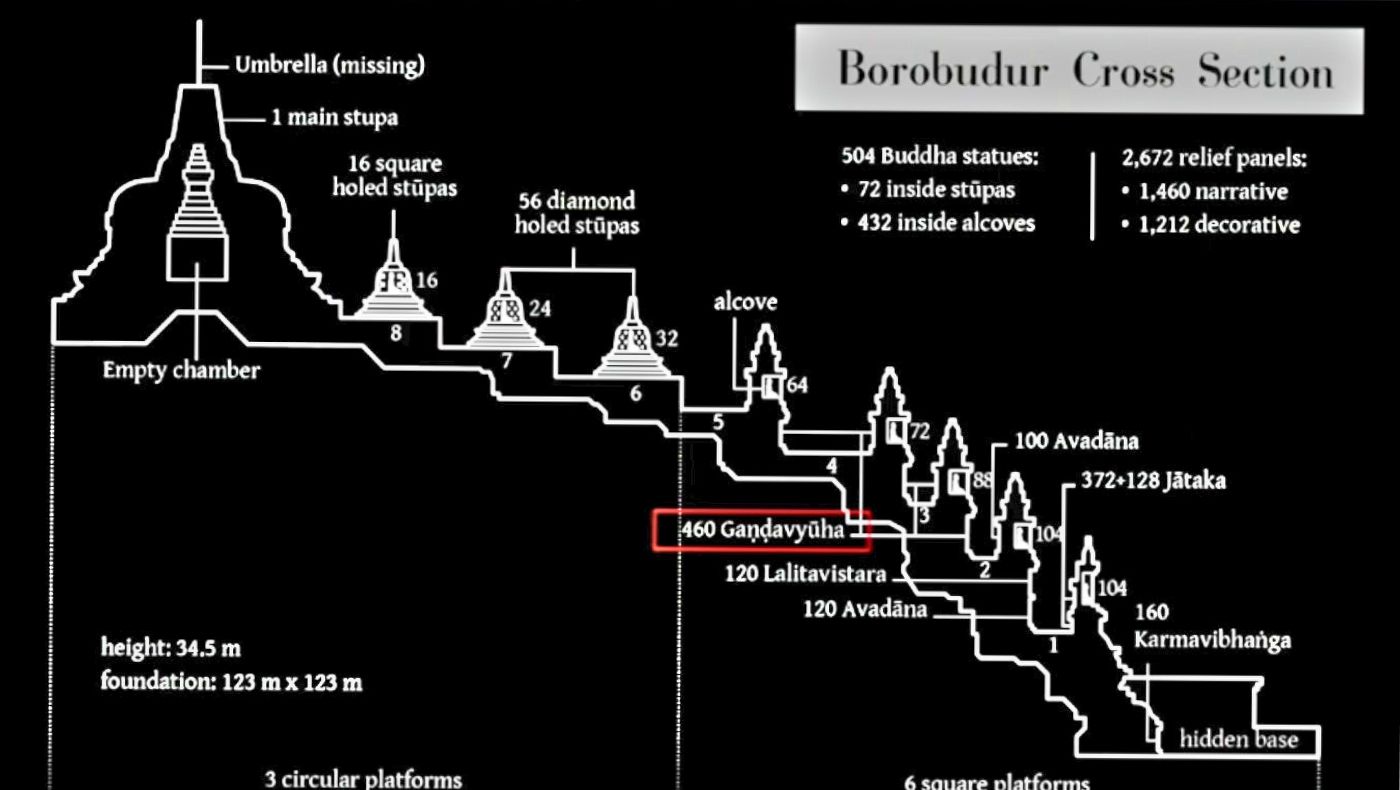
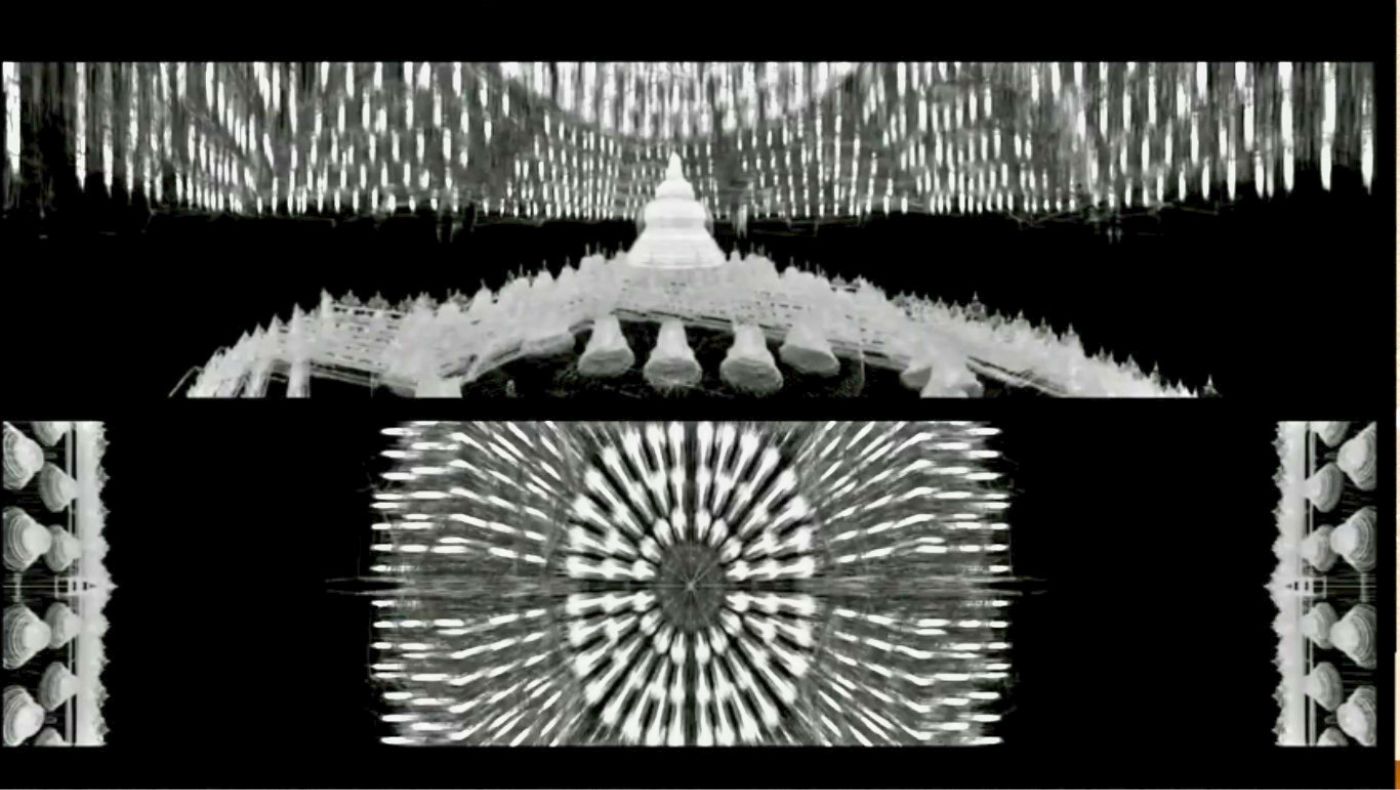
Chenchen Lu presents Borobudur’s ascent and narrative structure alongside CAMLab’s immersive interpretation, showing how the temple’s relief panels, stupa forms, and spatial path become a journey toward enlightenment. Presentation Slides/Chenchen Lu
In the Q&A that followed the panel’s presentations, the discussion widened to the role of design in a world increasingly shaped by artificial intelligence, digital systems, powerful technology companies, and uncertain futures. Rather than treating design as a matter of objects or tools alone, the panel returned to the importance of sensibility, education, agency, and new ways of seeing. Across their responses, the speakers emphasized that design’s power lies not simply in producing new technologies, but in helping people recognize the systems shaping their lives, imagine alternatives, and recover a more human relationship to the future. That concern with systems, perception, and relationship carried into the next panel
SHARE:
One ripple of kindness.
Thousands of lives touched.