page 46 part 2 – 2026 Tzu Chi Global Symposium for Common Goodness: Part II Bringing the Dharma Into Everyday Life (Part B)
Written by Ida Eva Zielinska
Published #81 | Summer 2026 Issue
SHARE
Charisma, Practice, and Religious Community in Tzu Chi
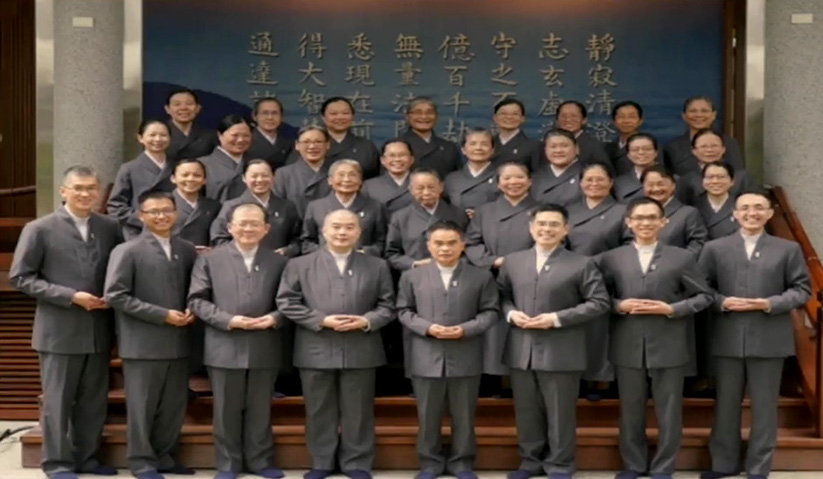
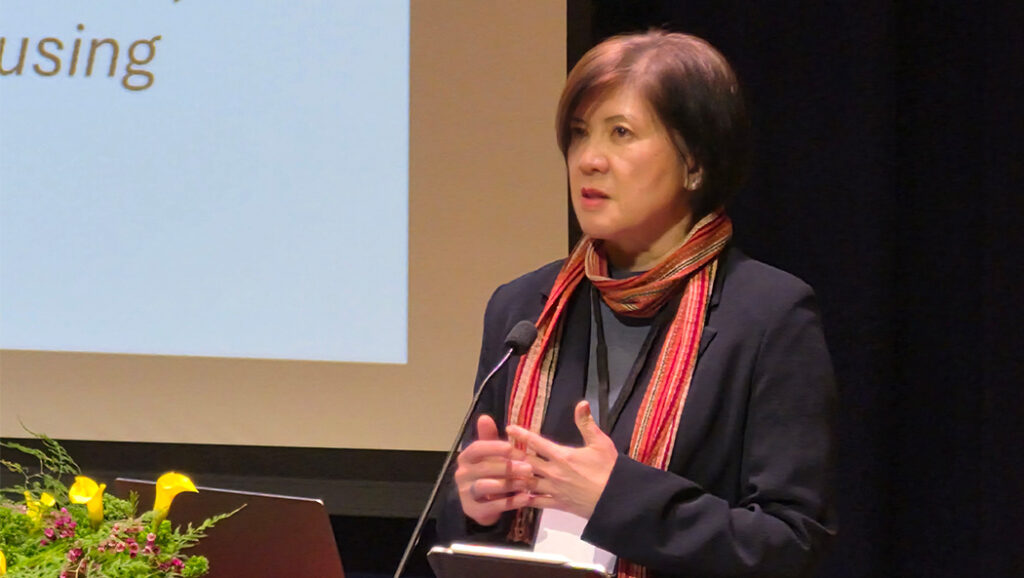
Opening the panel, Pei-Ying Lin, Associate Professor at the Graduate Institute of Religious Studies at Chengchi University in Taiwan, explored the ethical structures that allow compassion to become durable across cultures and communities. Her presentation, “Compassion Network: The Tzu Chi Pure Practitioners in the Age of Globalisation,” emphasized that Tzu Chi’s global growth cannot be understood through compassion alone. Its capacity to sustain humanitarian relief, medical care, environmental action, and volunteer service across national boundaries also depends on what she called “a codified ethical infrastructure,” rooted in the Ten Tzu Chi Precepts and the disciplined forms of life they shape.
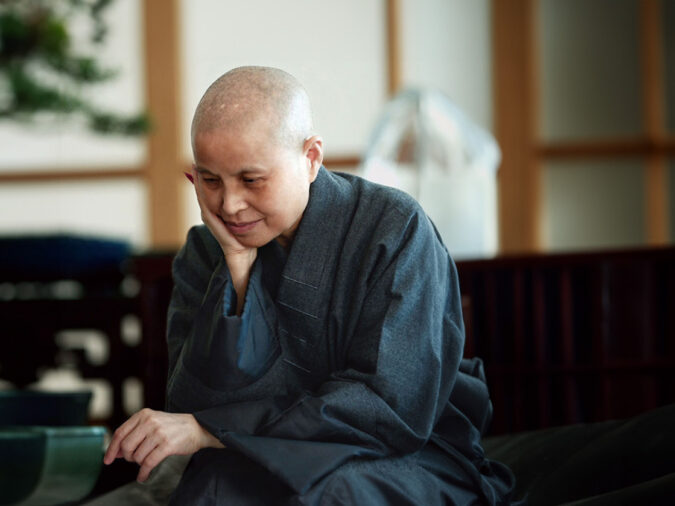
At the center of Lin’s analysis were Tzu Chi’s Pure Practitioners, or qingxiu shi, whom she described as occupying a distinctive position within Tzu Chi’s community. “A phrase frequently used to describe them is ‘a monastic mind, lay outfit,’” she said. “They do renounce household life, and they cultivate discipline and inward commitment that resembles monastic aspiration.” Many come from overseas Chinese and diaspora backgrounds, showing how Tzu Chi draws globally mobile individuals into a shared life of discipline, service, and spiritual commitment.
Lin’s analysis made the Pure Practitioners significant because they reveal the discipline that sustains Tzu Chi’s humanitarian work. In this sense, they are not simply exemplary volunteers. “The Pure Practitioners illuminate how ethics are translated into organization and how compassion becomes codified into durable institutional form. They embody a lay-centered moral modernity in which discipline and self-cultivation operate within civil society.”
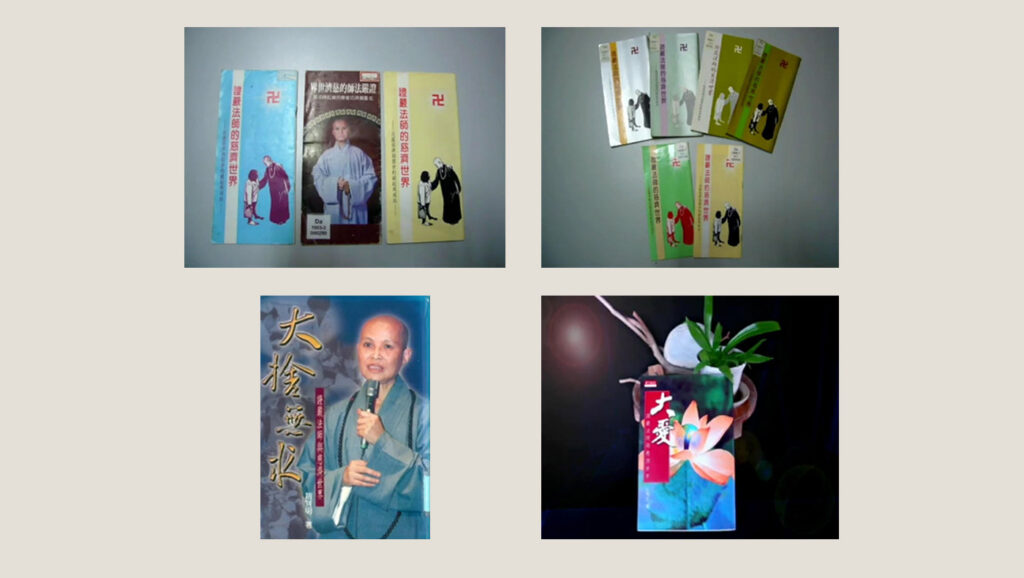
Yu-Chen Li, Director of the Graduate Institute of Religious Studies at Chengchi University in Taiwan, traced how religious charisma is not only embodied in a living teacher, but also recorded, circulated, and strengthened through writing and publication. In “Writing Religious Charisma: The Buddhist Publishing Industry and Bhikshuni,” Li situated Master Cheng Yen within the broader history of postwar Taiwanese bhikshuni biographies. “Historically, bhikshuni biographies were compiled as a collection appended to biographies of monks,” she explained. “People living 50 years ago couldn’t imagine a biographical genre featuring a standalone and publicly available biography dedicated to a single nun. This is a very new phenomenon.”
Li found that Tzu Chi ranked first among organizations publishing biographies of bhikshunis, with Master Cheng Yen’s life presented in relation to the development of Tzu Chi itself. “Each is written from Master Cheng Yen’s perspective, but reflecting the phased development theme of Tzu Chi at that time.” As Tzu Chi expanded, these publications helped readers encounter Master Cheng Yen’s teachings and presence beyond the circle of those who could meet her. “When we define charisma, we always focus on personal contact. But when the organization grows, not everyone gets a chance to get in touch with the leader. So these books use words to link you and the master together.”
In Master Cheng Yen’s biographies, Li identified three broad stages, beginning with early life and personal cultivation, then the gathering of authority needed to build a religious community, and finally the expansion of that authority as Tzu Chi’s work grew. “As a religious leader, you have to transform your charisma, because charisma becomes social credibility,” Li said. In this sense, publishing did more than preserve a life story. It helped shape how Master Cheng Yen’s religious leadership could be understood, shared, and recognized as Tzu Chi grew from a local Buddhist community into a global movement. “Charisma could be written. In Taiwan, especially, publication is very important for nuns.”
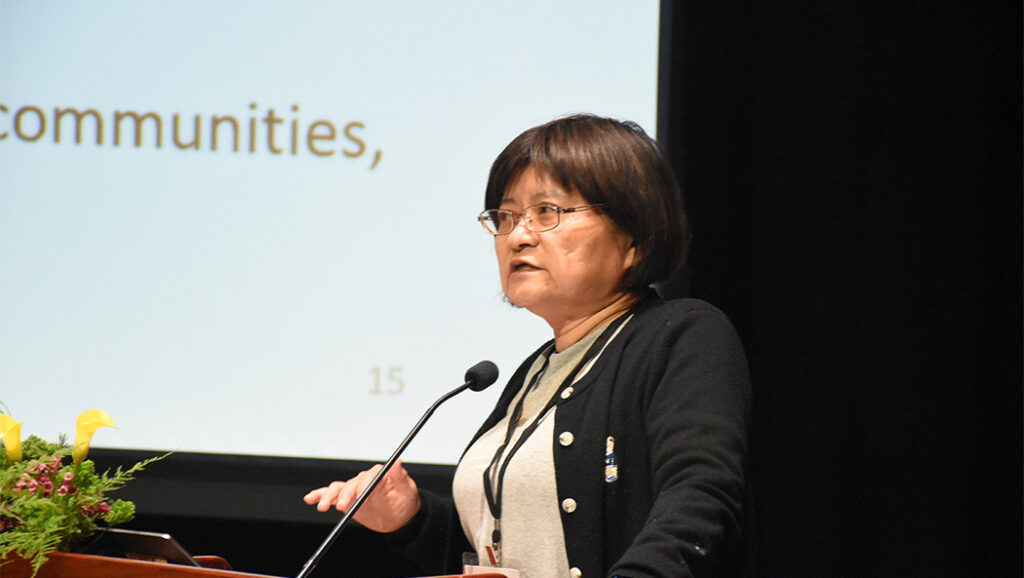
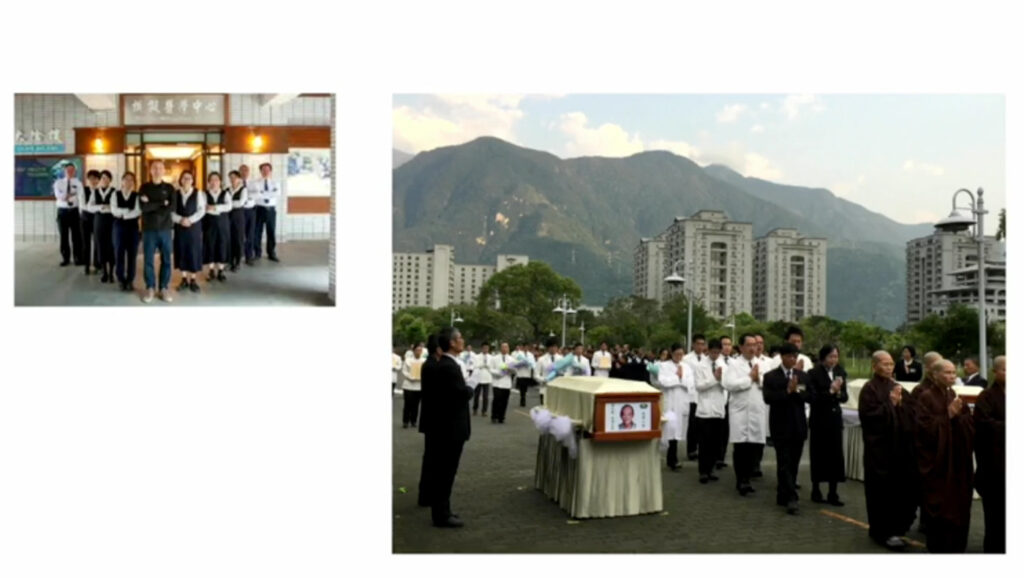
Julia Huang, Professor at the Institute of Anthropology at Taiwan Tsing Hua University, brought the discussion of religious practice into the intimate terrain of death, family caregiving, and end-of-life choice. In “Modern Body-Giving Bodhisattvas: Affect, Emotional Practice, and Ethics in the Whole-Body Donations to Tzu Chi,” she looked at Tzu Chi’s “Silent Mentors” program, through which whole-body donors become anatomy teachers for medical students and physicians. Since 1995, more than 1,400 donors have completed whole-body donations through Tzu Chi, reshaping not only medical education but also the emotional and ritual meanings of death in Taiwan.
Rather than focusing only on the donors themselves, Huang emphasized the sustained role of family members, who help fulfill the donor’s wish through end-of-life care, transportation, deferred cremation, and commemoration. She opened with the story of Ms. Song, whose mother had long hoped to donate her body to medical science and whose final journey required difficult choices to keep that possibility open. “My mother had never been to Hualien in her life,” Song told Huang. “So I was worried that she would feel alone here.” For the first 100 days after her mother’s death, Song traveled from Taichung to Hualien every week to visit her body, then continued monthly visits during the waiting period. “I wanted to keep her company.” After exactly one year, following the completion of a four-day surgical simulation, Song reflected, “Today my mother’s wish to become a teacher has finally come true.”
Such stories show how the “Silent Mentors” program creates a new moral and emotional timeline for death. Donation is not a single decision made at the end of life, but often the culmination of years of caregiving, family negotiation, and ritual participation. “The whole-body donation as modeled in the ‘Silent Mentor Program’ enabled the ethicalization of the end of life in traditional Han Chinese culture,” Huang said. It also opened what she described as “a freedom to choose one way to die and to end your life,” without being seen as “a bad son, a bad family, a bad daughter, or a bad wife.” In this sense, body donation becomes not only a contribution to medical science, but another expression of the Bodhisattva path, where even death can become an act of care and teaching.
SHARE
⊚ Reflections on the Presentations
Following the presentations, Pierce Salguero, Professor of Asian History and Health Humanities at Pennsylvania State University, Abington College, and Jonathan C. Gold, Professor of Religion and Director of the Center for Culture, Society and Religion at Princeton University, brought the panel into a broader consideration of how Tzu Chi’s modern religious community carries, transforms, and reworks older Buddhist forms.
Listening as a historian of medieval Chinese Buddhism, Salguero asked how remnants of the past might still be present in contemporary Tzu Chi. In the Pure Practitioners, he heard possible echoes of Buddhist ideas about moral discipline as a force that shapes conduct, presence, speech, and the ability to influence others. Turning to bhikshuni biographies, he asked whether older biographical traditions had already framed monks and nuns differently, with monks often associated with ritual power and miraculous healing, and nuns typically linked with piety, charity, education, and care. And in the “Silent Mentors” program, he wondered how older concerns about death, merit, ghosts, or death pollution might still matter in contemporary Taiwanese practice, even when transformed through Tzu Chi’s language of care and donation.
Gold brought the three presentations together around the relationship between self-cultivation and the social forms that sustain it. Tzu Chi offers a powerful case for studying how individual moral formation becomes organized practice, whether through the disciplined lives of the Pure Practitioners, the role of writing and publication in stabilizing charisma as an institution grows, or the “Silent Mentors” program’s creation of “an extended period where emotions around death are evoked and given space for expression.”
The Future of Buddhism
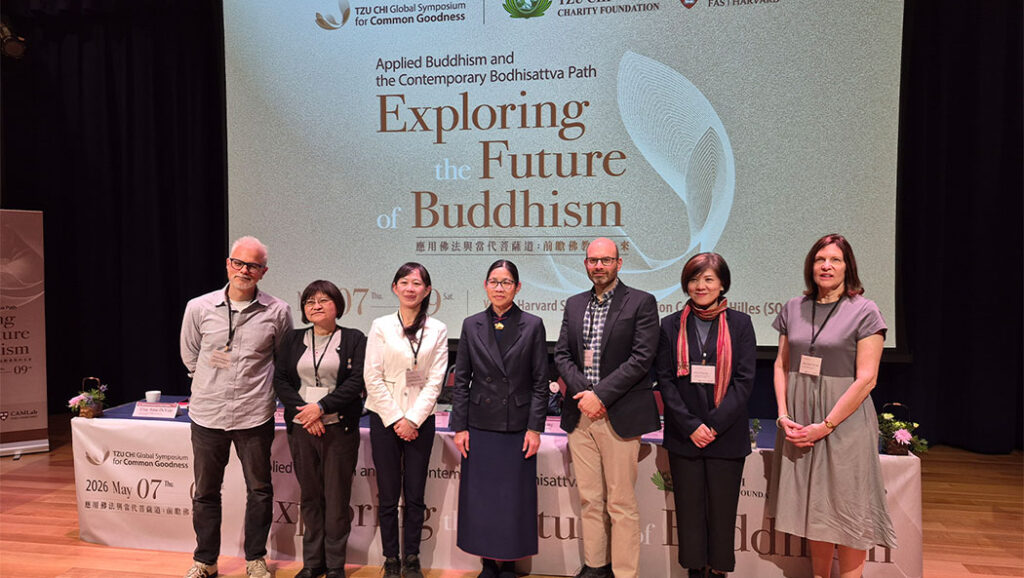
Rather than treating Buddhism’s future as a single destination, the roundtable that concluded the day’s discussions considered its possibilities from several directions. Moderated by Mayfair Yang, the exchange moved across philosophical, historical, anthropological, and scientific perspectives on how Buddhist thought and practice might respond to suffering, social conflict, technological change, ecological crisis, and the needs of contemporary life.
Jonathan Gold asked what Buddhism might uniquely contribute to social thought today. Buddhist concepts, he said, need not require full enlightenment to offer moral and psychological benefit. Applied to social and political problems, dependent origination can shift attention toward the causes, conditions, and systems that give rise to them. “Rather than blame-centered thinking, we can think about what brought this situation to pass, not who is the person who did this.” Karma, too, becomes useful when understood not as reward or punishment, but as a feedback system in which repeated actions shape habits, expectations, institutions, and the conditions for future action. Overall, the future of Buddhism may depend “less on whether people identify as Buddhists than on whether Buddhist methods for resisting reification and compulsive certainty can remain culturally available and can be made more widely available.”
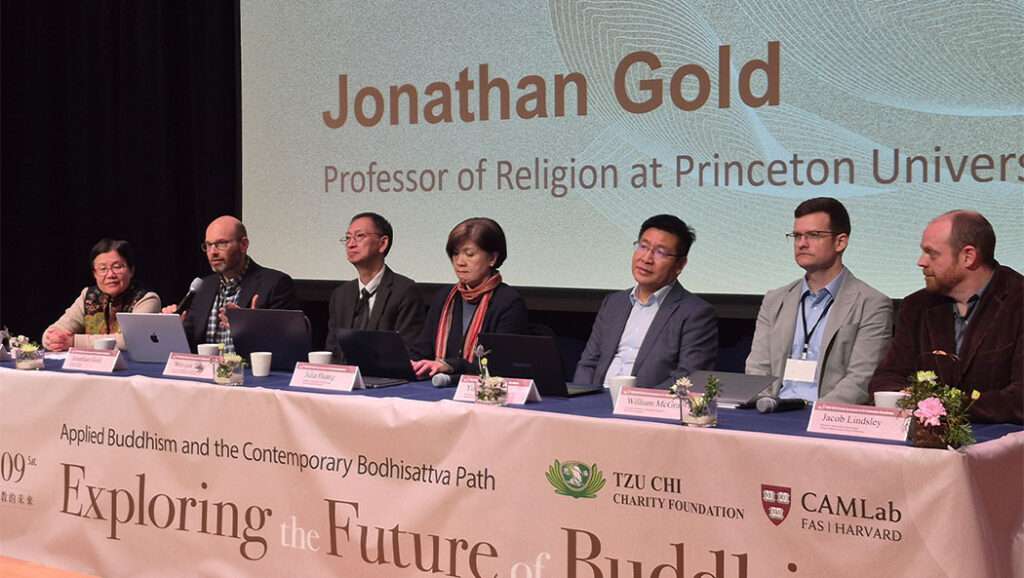
Weijen Teng cautioned against treating the future of Buddhism as something that could be predicted or prescribed in a single form. A more useful question is how Buddhist traditions can continue to develop under changing historical and cultural conditions while remaining meaningfully connected to their roots. “The future of Buddhism, if it is to have any depth, is not built by repudiating tradition but by rereading it,” he said. “When contemporary Buddhists speak of engaged or applied Buddhism, they are neither merely innovating nor merely repeating. They are continuing, extending the tradition’s own dynamic into new conditions.” In this view, Buddhism’s future depends on preserving its traditional foundations while allowing them to respond to the conditions of the present.
Julia Huang looked toward Buddhism’s future through the lens of globalization, social capital, and lived practice. She described two broad ways religious traditions travel, one through visible institutions and another through forms of life that become portable, adaptable, and quietly woven into everyday culture. Buddhism, she observed, may have unusual strength in this second mode because it can offer guidance for living while adapting to different cultures, societies, and generations. “I think the future of Buddhism is bright because it’s organic.” In Tzu Chi, she saw a striking example of this capacity, where practices that may appear secular, such as recycling or donating one’s body to medical education, are given religious meaning. “You do this, you recycle garbage, you can be a bodhisattva.”
Yinggang Sun framed the future of Buddhism in response to a turbulent world marked by conflict, fragmentation, and what he called “collapsing globalization.” Speaking as a historian, he emphasized common goodness as a foundation for Buddhism’s renewed intellectual, public, and international roles. It must offer value frameworks capable of guiding humanity away from “zero-sum games” and toward coexistence and shared flourishing. It must also enter public life more fully, including hospitals, communities, nursing homes, and “spiritual wastelands,” wherever people face illness, aging, mental exhaustion, or fear of death. “Only when the Dharma truly integrates into people’s daily necessities and the universal realities of birth, aging, sickness, and death can Buddhism once again become an indispensable warm force in society.”
William McGrath turned to Buddhist scriptures that imagine the future not as open-ended progress, but through predictions of decline, disease, and the eventual disappearance of the Dharma. Drawing on the Chandragarbha Sutra, also known as the Sutra of Moon Essence, he described a scriptural prediction that “the true Buddha Dharma” would last for 2,000 years after the Buddha’s death before entering a period of decline. And yet, against this darker vision, the Lotus Sutra offers a more hopeful view, in which the Buddha dies but persists, and great merit can still be generated through practice. “Those 2,000 years have long run out, and so we’re running on extra time here,” McGrath said. “I think the idea is actually through action, through activity, perhaps we can extend this true doctrine even just a little bit longer.”
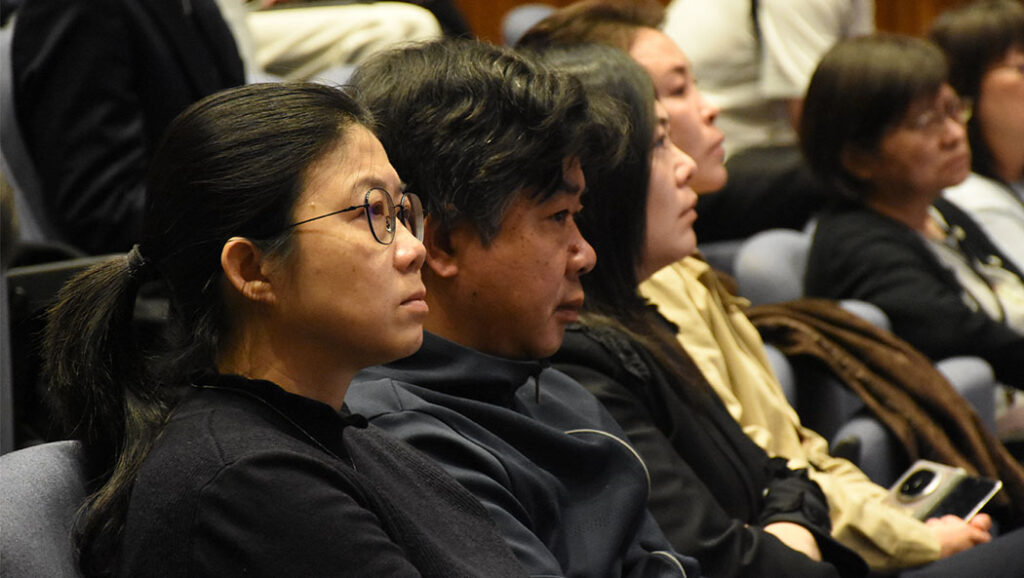
Jacob Lindsley, speaking from the field of contemplative science, focused on the scientific study of mindfulness, meditation, and Buddhist-derived contemplative practices. Over the past 40 years, meditation research has expanded scientific views of human potential and helped validate subjective experience as meaningful data for understanding the mind. He traced that development through three chronological research waves: mindfulness and focused attention, compassion and loving-kindness, and wisdom and nonduality. “What we’re really trying to do is take practices and experiences that we have had that are inspiring to us and attempt to create an evidence base in order to show that it is effective and helpful.” Yet this scientific translation also brings risks. Meditation can enter health care, education, and other secular spaces, but Buddhism may become less visible when practices are detached from their religious context. “If we have these programs that allow us to meditate in a non-Buddhist context, the path to enlightenment can disappear.”
Mayfair Yang closed the roundtable by reflecting on the range of perspectives it had brought together, including the possibility of new conversations between Buddhism and science. “I’m so glad to hear that Buddhism has turned around and now, in its own way, is helping to direct scientific research,” she said. “Religion and science don’t have to be in opposition, but they can be working together.”
Audience questions then raised American Buddhism, market humanism, gender equality, artificial intelligence, animal suffering, ecological crisis, and the meanings of “engaged,” “humanistic,” and “applied” Buddhism. Across these exchanges, Buddhism’s future appeared less as a matter of followers or institutions than of how its wisdom, compassion, and practices of interdependence could continue to respond to suffering in a changing world.
The Future of Tzu Chi
Before the symposium began, Rey-Sheng Her, Deputy CEO of the Buddhist Tzu Chi Charity Foundation, had also reflected on the future of Tzu Chi as a contemporary form of Buddhism. For him, the central issue was whether the Tzu Chi School of Buddhism can be sustained not only for one generation, but for “100 years, 1,000 years, or even longer than that.” To do so, three pillars are essential: the philosophy of Master Cheng Yen, an organizational structure capable of carrying her legacy forward, and a discipline that guides practitioners from compassion and altruism toward enlightenment.
“Master Cheng Yen’s teaching is crucial,” Her said, pointing to the importance of organizing her manuscripts, documenting Tzu Chi’s history, and preserving the lived record of the millions of volunteers who have put her philosophy into practice. That archive would serve not merely as institutional memory, but as a foundation for transmitting Master Cheng Yen’s teachings and Tzu Chi’s model of practice to future generations of volunteers. The need for organizational structure comes from the fact that Tzu Chi’s future cannot depend on one saintly figure alone, but on a global body of practitioners who share the same conviction and can carry the work forward with wisdom, commitment, and collective responsibility. Finally, it is discipline that shapes Tzu Chi practice itself, including what Her described as the bridge “from altruism to enlightenment.”
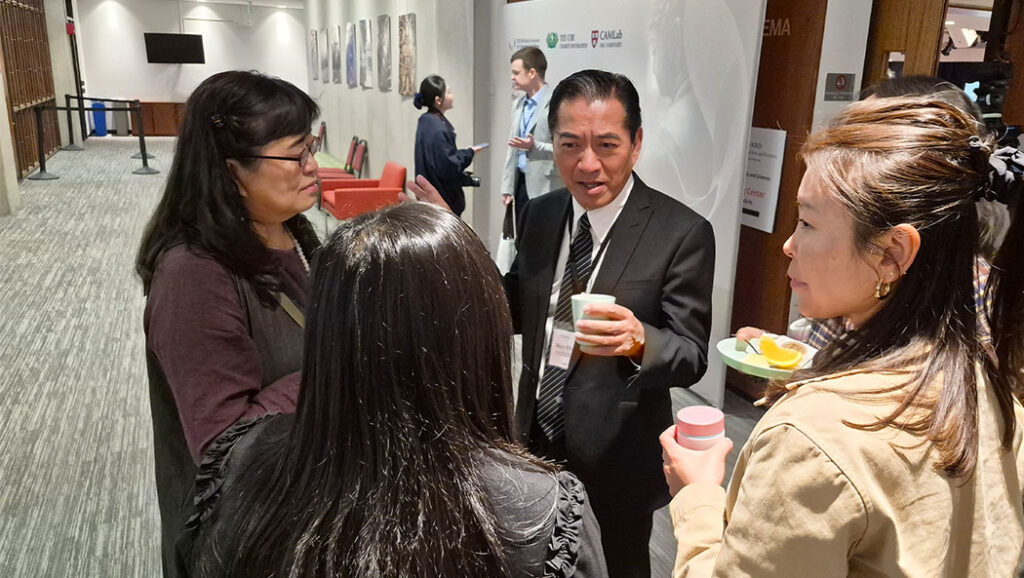
Her noted that Tzu Chi does not emphasize the practice of meditation or sutra chanting. Instead, it focuses on compassion and altruism expressed through action. “By delivering compassion to alleviate people’s suffering, we purify our spirit,” he said. The remaining question is how that active service becomes a clearly defined path of spiritual cultivation, and how altruism can lead toward enlightenment. Clarifying that path is essential if Master Cheng Yen’s teachings are to guide Tzu Chi practitioners into the future.
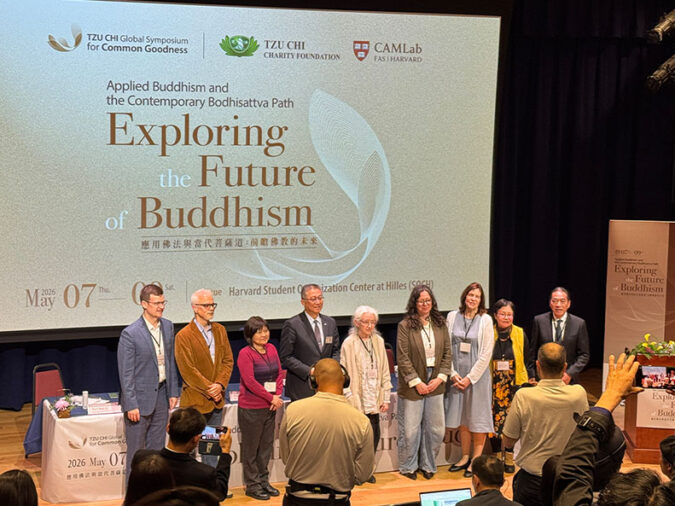
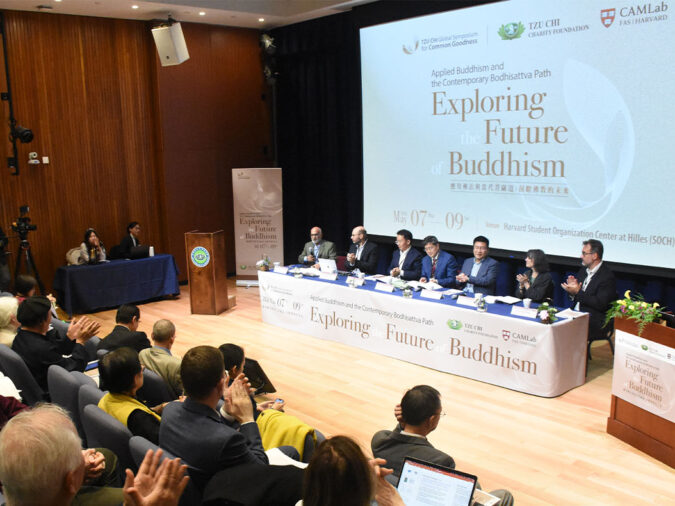
Across the presentations, reflections, and roundtable exchanges, the symposium’s guiding theme, “Applied Buddhism and the Contemporary Bodhisattva Path: Exploring the Future of Buddhism,” came into focus not through any single method or institution, but through the many ways Dharma can be brought into everyday life. What emerged was a vision of Buddhism’s future grounded in preserving wisdom, responding to suffering, and making compassion visible through action.
SHARE:
One ripple of kindness.
Thousands of lives touched.