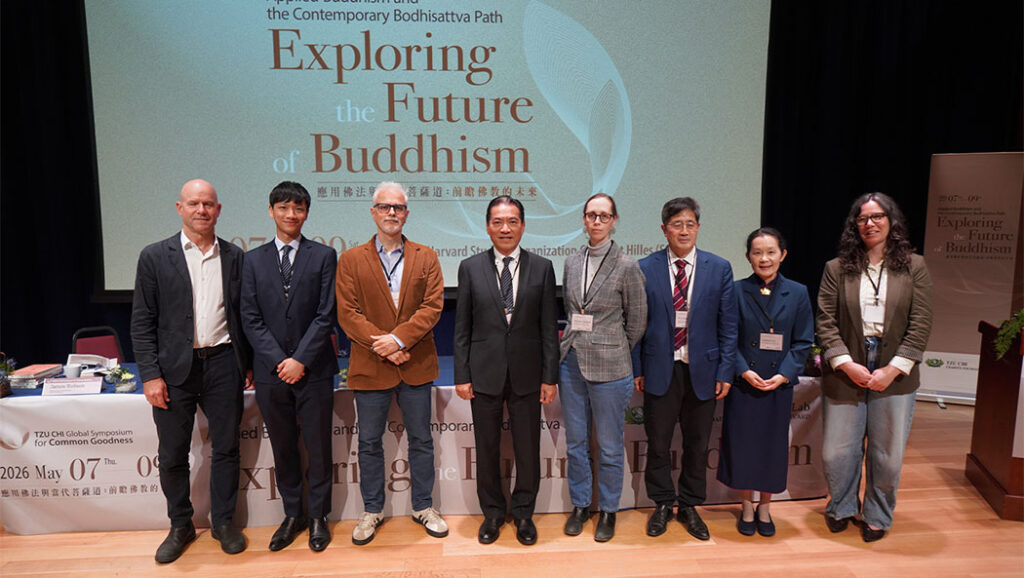
page 24 part 2 – 2026 Tzu Chi Global Symposium for Common Goodness: Part I Applied Buddhism in an Anxious World (Part B)
Written by Ida Eva Zielinska
Published #81 | Summer 2026 Issue
SHARE
Buddhism, Health, and Ethics of Care
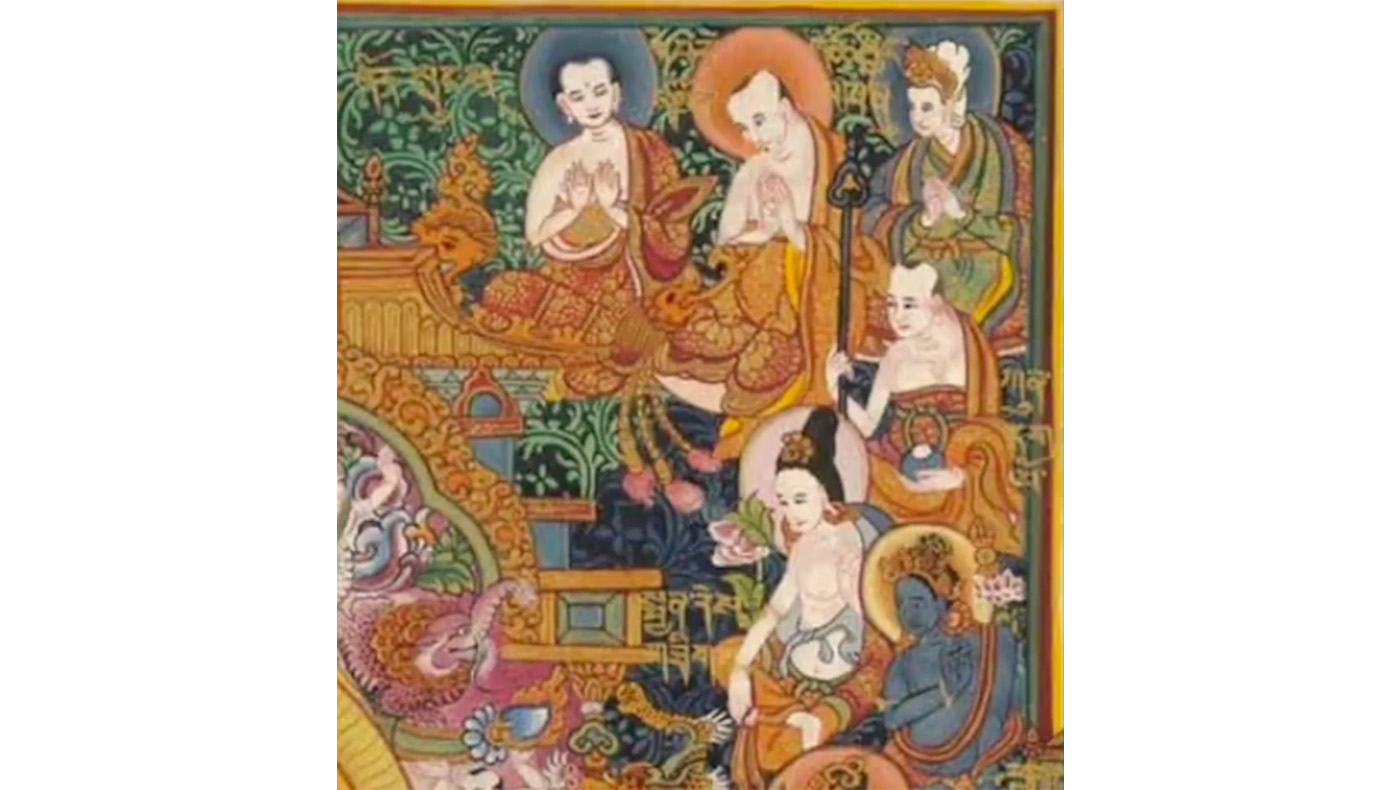
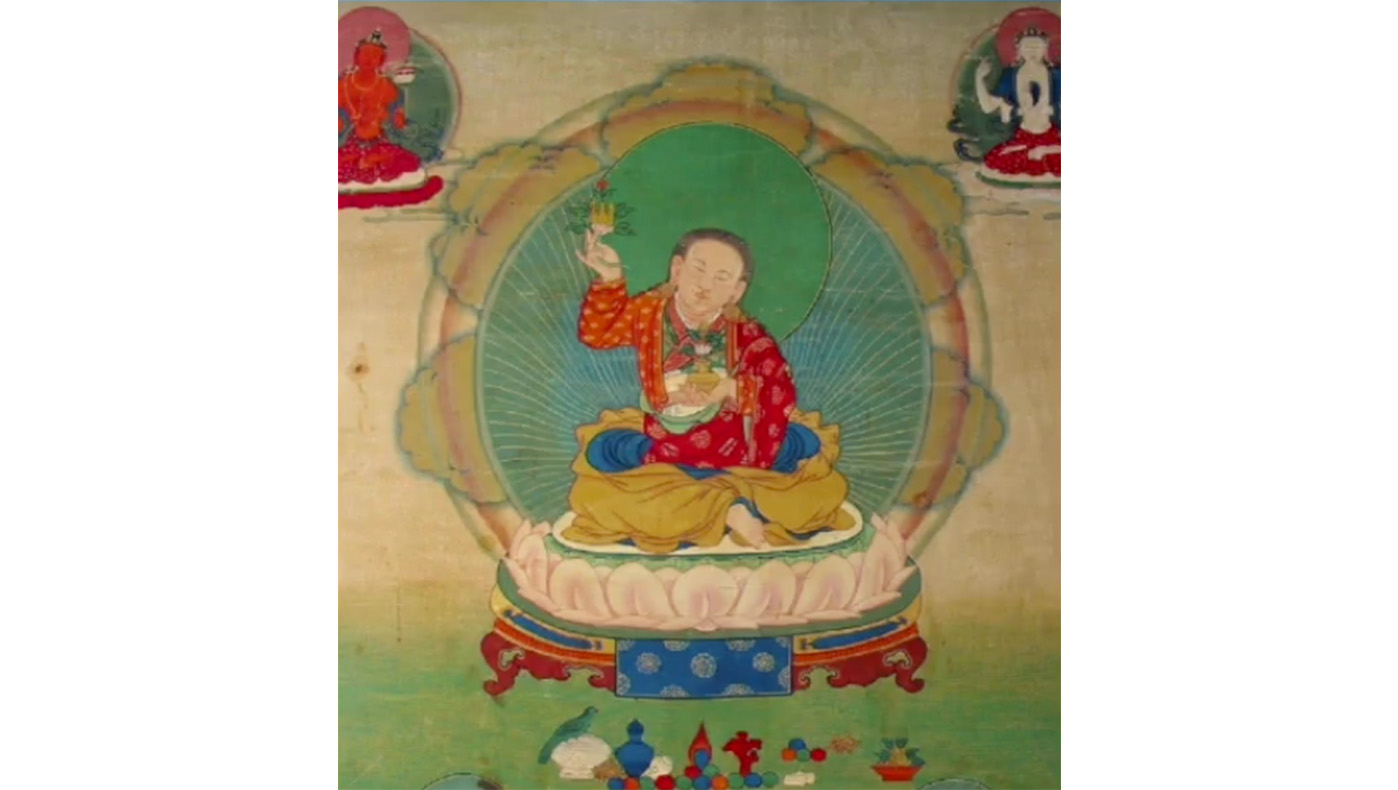
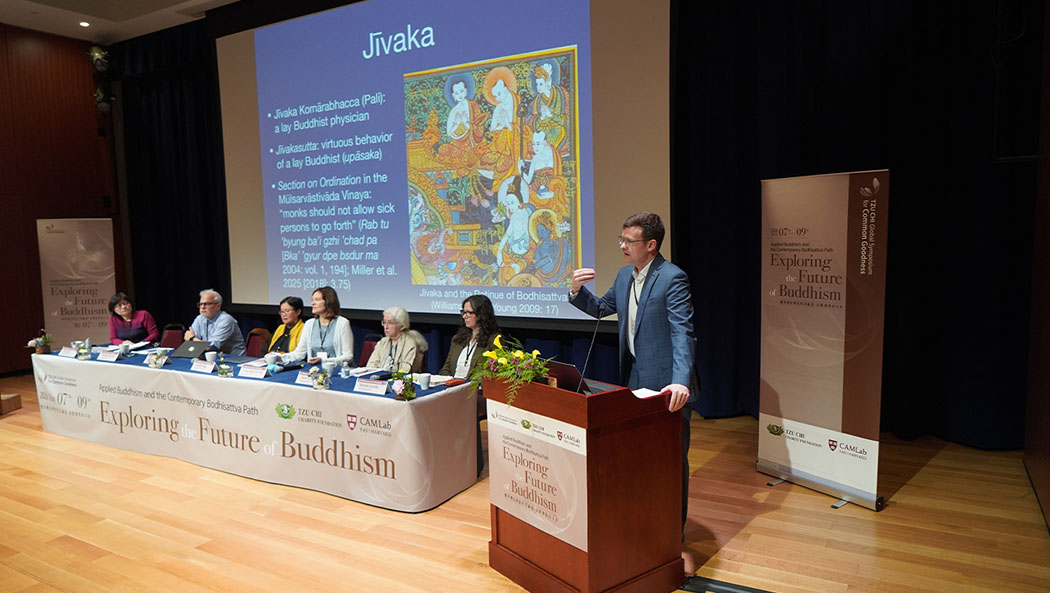
William A. McGrath, Robert H. N. Ho Family Foundation Assistant Professor of Buddhist Studies at New York University, opened the symposium’s consideration of health and care by turning to two paradigmatic Buddhist physicians, Jīvaka Kaumārabhṛtya and Yutok Yönten Gönpo the Elder. Speaking from Tibetan-language sources, McGrath framed his paper, “From Lay Physician to Medicine Buddha: Ethics in the Lives of Jīvaka and Yutok,” around the relationship between the worldly and the sacred, and how it shaped Buddhist understandings of medicine.


In Jīvaka, McGrath found an early Buddhist model of medicine as a worldly practice carried out by a lay professional in service to the monastic community. Jīvaka cared for members of the Sangha, made donations, and became renowned as a physician, yet the boundary between bodily healing and spiritual liberation remained clear. He could treat illness, but the Buddha alone addressed suffering at its deepest roots.
That distinction begins to blur in the Tibetan figure of Yutok, where healing, Buddhist practice, and awakening become more fully entwined. “In the life of Yutok, it’s more integrated, the worldly and the transcendent or even the sacred, and so the distinction begins to blur,” McGrath said. By placing Jīvaka and Yutok side by side, he traced a transformation in Buddhist medical ethics from a model in which medicine supports the Three Jewels – the Buddha, the Dharma, and the Sangha – to one in which compassionate healing can itself become an expression of the Bodhisattva path.
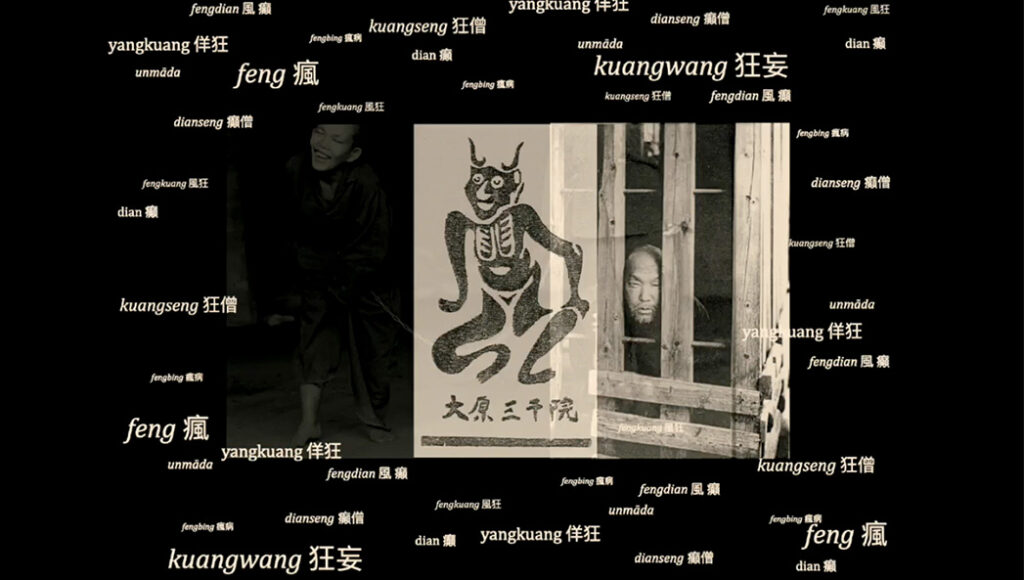
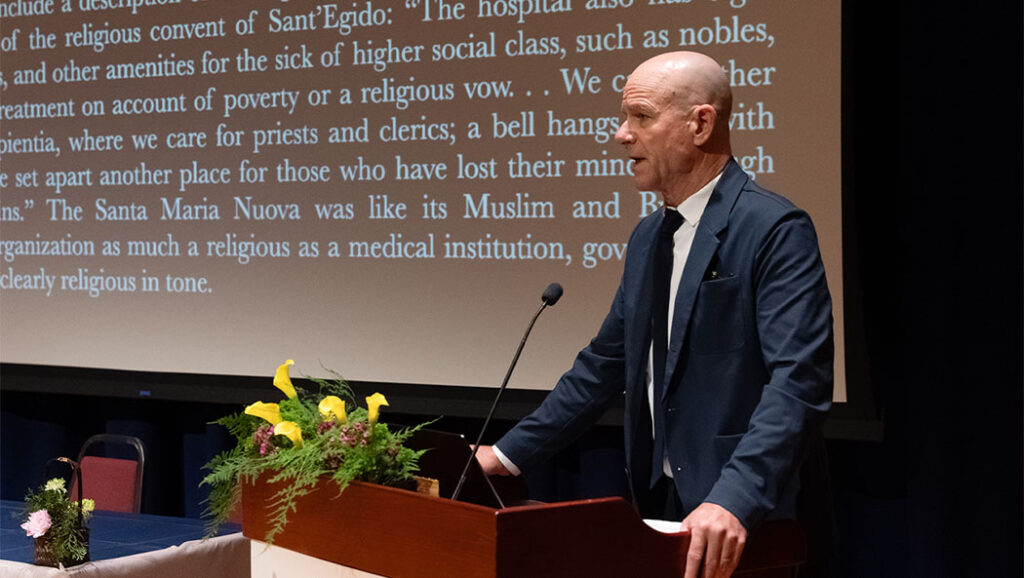
A later keynote during the symposium extended this inquiry into another dimension of Buddhist healing. In “Buddhism and Bedlam: Buddhist Monasteries and the Care (and Confinement) of the Insane,” James Robson, Director of the Harvard-Yenching Institute, began by exploring how and when Buddhist traditions came to recognize severe mental illness as distinct from more general problematic states of mind. From there, his inquiry moved beyond diagnosis to the institutional structures that connected Buddhist monasteries with the treatment and support of those considered mentally ill across China, Taiwan, and Japan.
SHARE
Focusing especially on Iwakura in northern Kyoto, Robson described how Buddhist temples became centers of treatment and refuge. As more people were brought there, nearby homes and residential care sites began taking in patients, who in many cases could take part in various forms of work and move freely throughout the village. This approach was rooted in ritual, practical activity, and community life. “The one therapy that we do not find in any of these historical records is what? Meditation or mindfulness. It’s about physical activity and getting people to do precise activities with their bodies rather than contemplating their mind, which would be probably disastrous,” Robson observed.
In the early 1900s, as Japan sought to modernize, these older forms of support gave way to mental hospitals modeled on European institutions. By the 1950s, however, Europe and the United States had begun moving toward decarceration and community care, returning to something closer to what Iwakura had once offered. For Robson, that reversal showed that Buddhist tradition may still offer resources that are worth revisiting and learning from. “As those troubled people were put behind closed doors, out of view, out of the way of society, so too was the history of the confluence of Buddhist monasteries and madness locked away and hidden in the archives.”
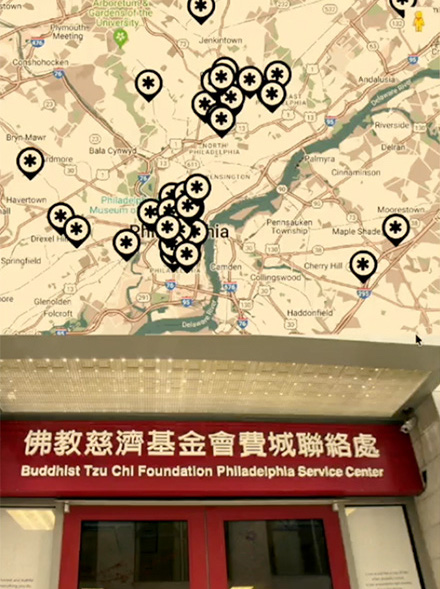
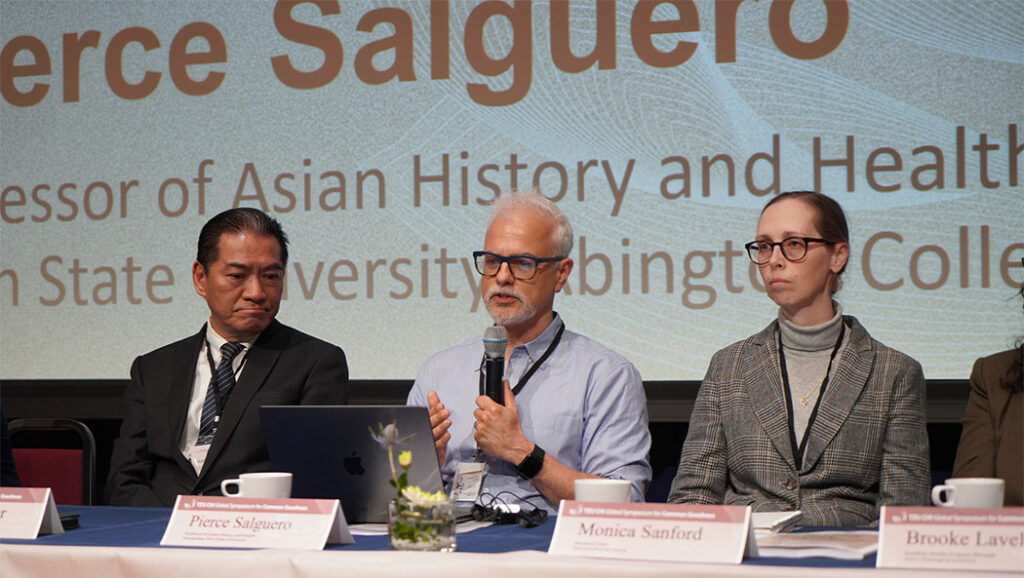
Pierce Salguero, Professor of Asian History and Health Humanities at Pennsylvania State University, Abington College, brought the discussion of Buddhist healing into the present-day United States. In “Beyond Mindfulness: Buddhism & Health in the US,” he examined a wide range of Buddhist health and health-seeking practices, challenging the tendency to equate American Buddhism’s role in health with meditation alone. Drawing on research into 45 Buddhist institutions in the Philadelphia area, Salguero focused especially on immigrant and Asian American communities, asking what everyday connections between Buddhism and medicine look like on the ground.
What emerged was a picture of temples, organizations, and service centers as active participants in medical outreach. In immigrant and Asian American communities, Salguero found that Buddhist institutions often help fill gaps in the mainstream healthcare system by offering ritual healing, practical support, cultural familiarity, and help navigating medical services. In this view, these institutions function as largely invisible but critical nodes in the broader healthcare landscape.
In that context, Tzu Chi’s medical outreach served as a particularly visible example. “I really think that it stands out as the preeminent example of charitable activities in health care, in the spirit of a bodhisattva mission,” he said. Such work shows that Buddhist health practice in the United States is not one-size-fits-all, but is shaped by global Buddhist networks, local resources, and the strategic ways communities respond to suffering where they are.
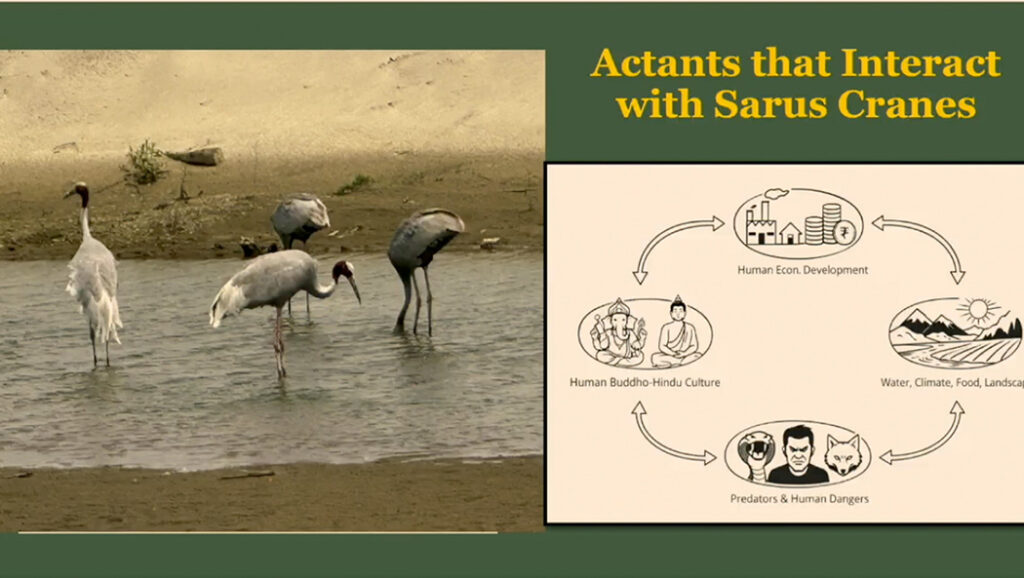
Mayfair Yang, Professor of East Asian Languages and Cultural Studies at the University of California, Santa Barbara, expanded the symposium’s discussion of care beyond human health and into the shared life of humans, animals, landscapes, and religious worlds. In “Chasing the Sarus Cranes: Buddhist and Hindu Multispecies Assemblages in Lumbini, Nepal,” Yang asked why 94% of Nepal’s endangered Sarus Cranes live in the Lumbini area, the birthplace of Gautama Buddha, rather than in national parks where wildlife is formally protected.
To answer that question, Yang looked beyond ecology alone. She examined the cranes’ habitat from multiple angles, including wetlands, rice paddies, food sources, climate, predators, and development, as well as the Buddhist and Hindu culture of local communities. Local farmers often share crops with the birds, protect their nests, and understand them as bearers of blessing, while Buddhist and Hindu narratives place the cranes within a moral world shaped by nonviolence, interdependence, and reverence for sentient beings. As one local resident told her, “We have many rivers and ponds here and the birds love the water. But the most important of all is that the local people treat them like gods and goddesses.”
“The Sarus Cranes choose the Lumbini area not just due to the geo-environmental features. The birds like this area because it’s also the religio-cultural landscape of the local people and their religious environmental ethics,” Yang concluded. Her insight extended the ethics of care beyond human suffering, showing how religious culture can sustain protection for other forms of life.
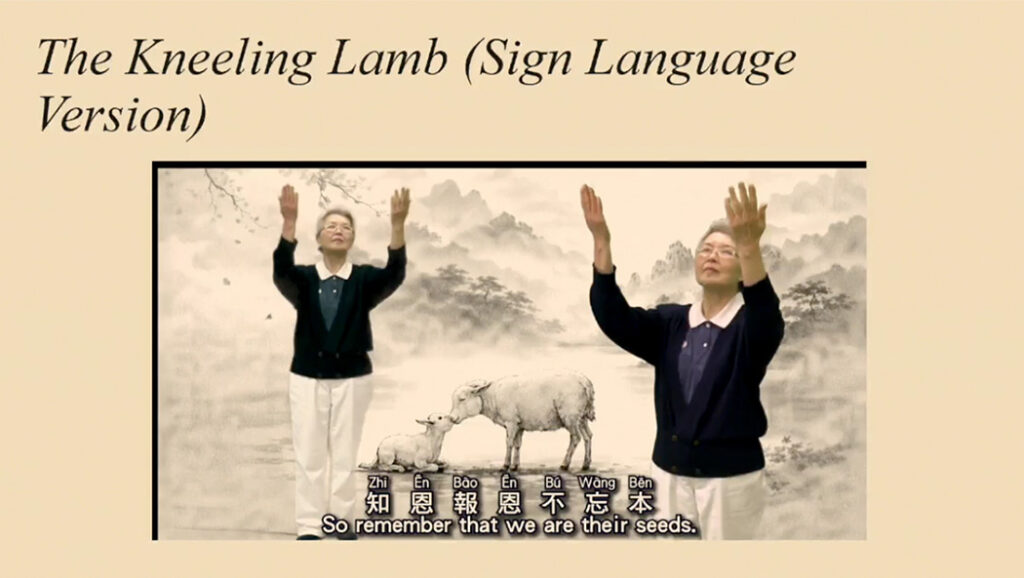
Elise Anne DeVido, Associate Professor and Director of the Institute of Religion and Humanities at Tzu Chi University, continued the inquiry into Buddhism’s relationship with nonhuman life through “A Study of the Concept of ‘Animals Repaying Debts of Gratitude’ in Tzu Chi Teachings.” The phrase refers to stories in which animals respond to kindness by returning care, protection, or moral action, revealing bonds of gratitude between humans and other sentient beings.
Drawing on Chinese Buddhist literature and Master Cheng Yen’s speeches and writings, DeVido considered what place animals occupy within a tradition so deeply focused on the human realm. “It’s really time for us to take a better, closer look at animals. What are they doing in this Pure Land on Earth? Where are they?” Returning to a question raised earlier in the symposium, she also asked, “What does ‘all sentient beings are equal’ mean?”
In DeVido’s view, stories of animals repaying gratitude open larger questions about compassion, karma, reciprocity, equality, and the limits of human-centered Buddhist ethics. Deeply rooted in Buddhist and Chinese traditions, these stories recognize animals as sentient beings capable of gratitude, loyalty, empathy, and suffering, even as they often portray them through human virtues such as filial piety and moral repayment. Master Cheng Yen’s teachings, however, also press beyond that framework. In one striking teaching DeVido highlighted, Master Cheng Yen says, “Animals have their own world. We should not invade. We should not intrude upon it.” For DeVido, such teachings invite a renewed dialogue between Buddhism and animal ethics, asking how the Buddhist claim that all sentient beings are equal might speak not only to animals’ suffering and moral capacity, but also to their autonomy, difference, and place within a shared moral community.
⊚ Reflections on the Presentations
The panel’s two commentators drew these four presentations into a broader reflection on the frameworks Buddhist traditions offer for care, whether directed toward bodies, communities, animals, or the planet. Janet Gyatso, Hershey Professor of Buddhist Studies and Associate Dean for Faculty and Academic Affairs at Harvard Divinity School, returned first to the relationship between medicine and liberation. She asked where Buddhism moves beyond the pursuit of enlightenment into the practical realities of relieving suffering in everyday life. Tibetan medicine, she noted, offers one important example of this shift, as a tradition shaped by Buddhist thought yet concerned with physical medicine, professional ethics, and the concrete work of easing pain.
Gyatso also named a deep tension in Buddhist approaches to animals. Buddhism participates in human exceptionalism, since animals are traditionally understood as belonging to a lower realm and unable to attain enlightenment in the same way humans can. “And yet, there also is this idea of compassion for all sentient beings,” including the recognition that animals suffer. That tension made the moral crisis of human violence against animals impossible to ignore. “As Buddhists, I feel, and as human beings, we are responsible to change our ways,” she urged, calling for greater attention to animals’ “specific intelligences” and forms of value that may not fit human categories.
Brooke Lavelle, Buddhist Studies Program Manager at Union Theological Seminary, shifted the discussion toward the power of frames and frameworks in shaping how people understand health, healing, care, and what is possible. Citing disability justice writer Eli Clare’s Brilliant Imperfection, she cautioned that ideas of healing and cure can carry hidden assumptions about “what counts as good, what counts as right, or, in some cases what counts as human or worthy of being saved.” Rather than looking for one fixed Buddhist framework, Lavelle pointed to the diversity of Buddhist traditions and asked which frameworks might help communities find coherence and respond to crisis from a perspective of care for all.
Among the panelists’ responses, Pierce Salguero sharpened the point. “If pressed to define what is the core question, the core dynamic, the core issue across all of those various times and places, I would probably say it’s getting clear on the relationship between healing and salvation,” he said. “That’s the central question that Buddhists have been asking for 2,000 years, and that’s as true today in Taiwan as it is in Tibet in the 12th century, or in China in the fifth century, or in India in the BCE period. And they’ve been answering it in all kinds of different ways.”

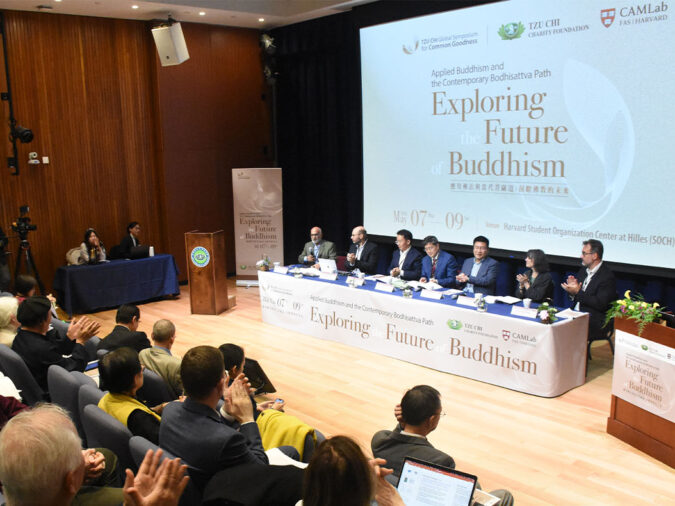
With that question still open, the symposium moved into a roundtable where scholars and practitioners turned more directly to how Buddhist ideas are studied, practiced, and brought into places of suffering and care.
Studies and Practices of Applied Buddhism
Introducing the roundtable, James Robson framed the discussion as one that could look both to “practices that one finds in the past in the historical record” and to “the practices that are happening in the present period.”
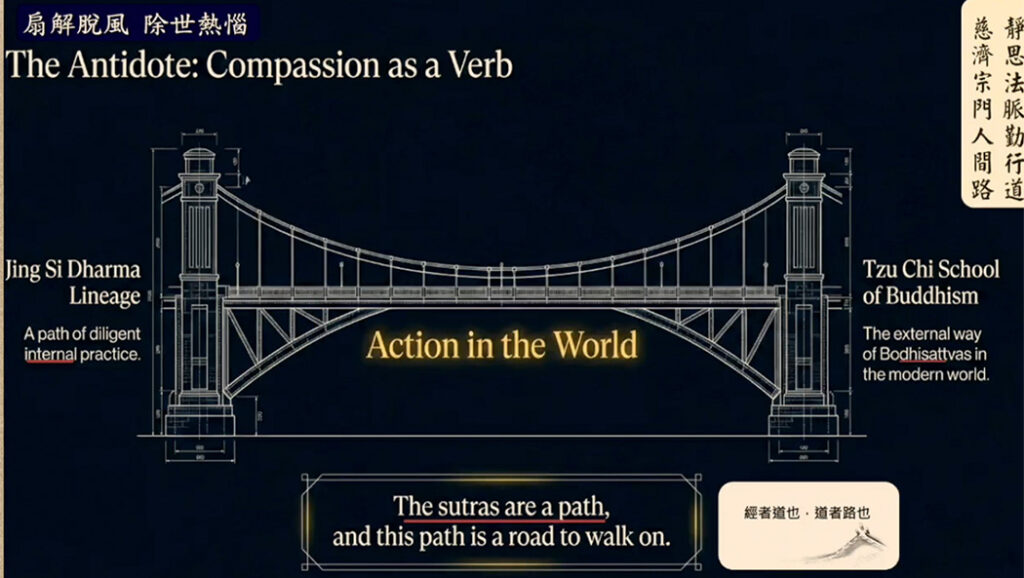
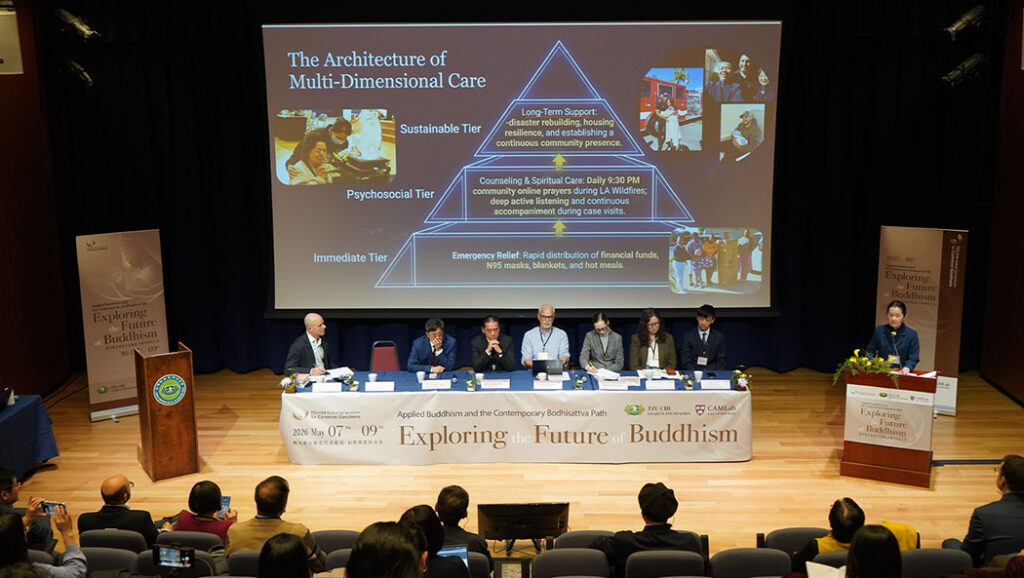
Debbie Lee, Chief Executive Officer of Tzu Chi USA, presented Tzu Chi’s work as a model for embodying Buddhist wisdom through service. “At Tzu Chi USA, we do not see Buddhism as distant or abstract. We practice it every day through helping people apply compassion.” Through Tzu Chi’s four missions of charity, medicine, education, and humanistic culture, Lee explained, invisible values such as faith, compassion, and mindfulness take shape in the world. “Compassion becomes not just an idea, but action that works.” She framed Tzu Chi’s model as a bridge between inner cultivation and outer action, sustained by faith, vows, and practice, and strengthened by transparency and accountability that help build public trust. Recalling Tzu Chi’s response to the January 2025 Los Angeles wildfires, she showed how that model moves from immediate relief to psychosocial care, reconstruction support, education, and long-term recovery. “Compassion means we stay,” Lee emphasized.

SHARE
Wen-liang Zhang, Professor in the School of Philosophy at Renmin University of China, raised the question of how applied Buddhist studies relates to classical Buddhist scholarship, especially the study of doctrine, scripture, and philosophy. Hearing the presentations, he observed that Tzu Chi’s applied Buddhism is not only a philosophy, but also “a philosophy of action.” He then pointed to the Lotus Sutra and the Sutra of Infinite Meanings, both central to Tzu Chi, as important ground for further scholarly reflection on how scriptural teaching and contemporary practice illuminate one another.

Rey-Sheng Her approached that relationship through Master Cheng Yen’s interpretation of the Lotus Sutra. “The sutra is not in the book. The sutra is in the heart of every sentient being,” Her said. In this understanding, service is itself a path of cultivation. “When we support others, we actually acquire wisdom and compassion. It’s not because we’ve reached Buddhahood that we turn to the secular world to save sentient beings. We save sentient beings so that eventually we can attain the state of Buddhahood.”
Pierce Salguero returned to the historian’s view and challenged the category itself. “Applied Buddhism is just simply Buddhism,” he said. From early Indian texts to Chinese Mahayana traditions, Buddhist kings, monastic hospitals, charities, and modern organizations, Salguero saw long continuities in Buddhist engagement with health, healing, and social care. Yet he also recognized what is distinctive in Tzu Chi’s contemporary form. “What might be new in Tzu Chi’s case is new institutional structures. These are modern organizational strategies and tactics that enable Tzu Chi to be more efficient perhaps than medieval organizations might have been. The amount of impact that Tzu Chi can have is truly new.”
Monica Sanford, Assistant Dean for Multireligious Ministry at Harvard Divinity School, shifted the focus to the relationship between scholarship and practice. As a scholar of Buddhist chaplaincy and a Buddhist chaplain herself, she emphasized the need for both practitioners’ insight and scholarly analysis. “There are things in this work that only insiders can see, and there are things that only outsiders can see. And we need both,” she said. The task is not only to study Buddhist care from a distance, but to help practitioners use research to improve practice itself. “It’s very powerful when we can connect the Dharma and the data,” she added, noting that research can help practitioners recognize Buddhist values not only as abstract teachings, but as patterns visible in lived practice.
Brooke Lavelle returned to the question of frameworks, reflecting on whether Buddhist work in the world is only about healing, or also about getting free. Drawing on her experience in contemplative education, health care, and movement chaplaincy, she considered how Buddhist traditions might help movements for justice and liberation sustain a broader moral imagination. “Rather than just fighting or resisting systems of domination and oppression, what would it look like to also develop these skills to imagine alternatives and build capacity for them as a kind of equal practice?” she asked.
Andrew Her, a chaplain in the Department of Spiritual Care and Chaplaincy at NewYork-Presbyterian/Weill Cornell Medical Center and a Tzu Chi commissioner, brought the discussion into the hospital room. Having grown up in Taiwan and in the Tzu Chi community, Her described navigating U.S. hospital chaplaincy as both an insider and outsider, carrying Buddhist and Tzu Chi formation into a field where patients often assume a chaplain is Christian. When patients are unsure why a chaplain has entered the room, Her makes clear that he is not there to convert them. “I’m just here for support, or some accompaniment,” he tells them. In this setting, Buddhist practice moves across religious and cultural boundaries through presence, compassion, and respect for the patient’s own beliefs.
Taken together, the roundtable reflections showed applied Buddhism as both a field of study and a lived practice. It was not presented as a departure from Buddhist tradition, but as one way of naming its movement into hospitals, disaster zones, classrooms, communities, and places of social crisis. In an anxious world, the Bodhisattva path emerged not as a distant ideal, but as a discipline of presence, learning, and action wherever suffering calls for care.
The next two articles in this series on the 2026 Tzu Chi Global Symposium for Common Goodness at Harvard University present the other central themes explored during this stimulating gathering, namely Venerable Dharma Master Cheng Yen’s philosophy and leadership, and how Buddhist wisdom can inform new ways of designing, sensing, living with the natural world, and imagining the future.
SHARE:
One ripple of kindness.
Thousands of lives touched.