page 4 part 1 – Journey to Enlightenment: From Buddhist History to Compassionate Action (Part A)
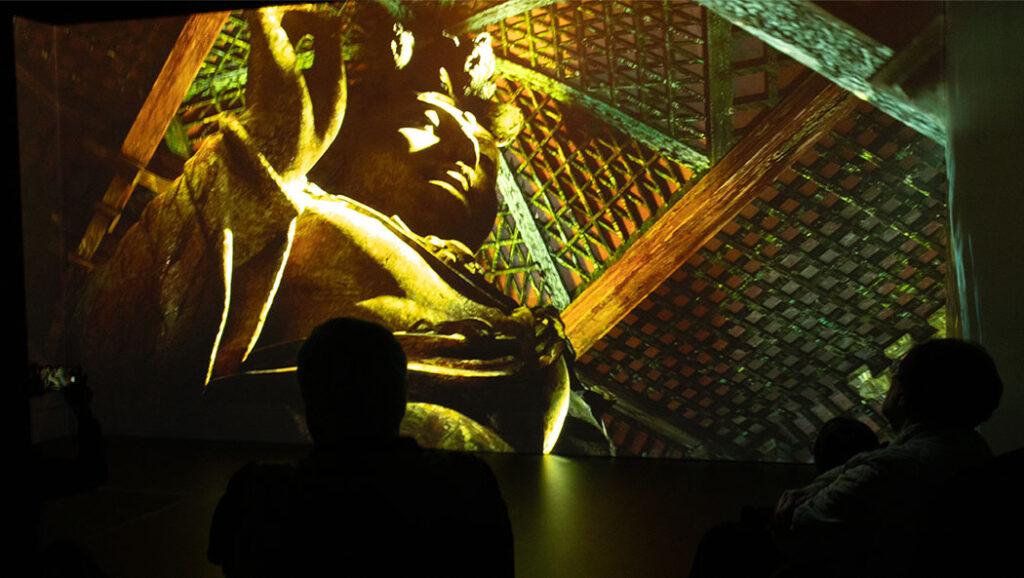
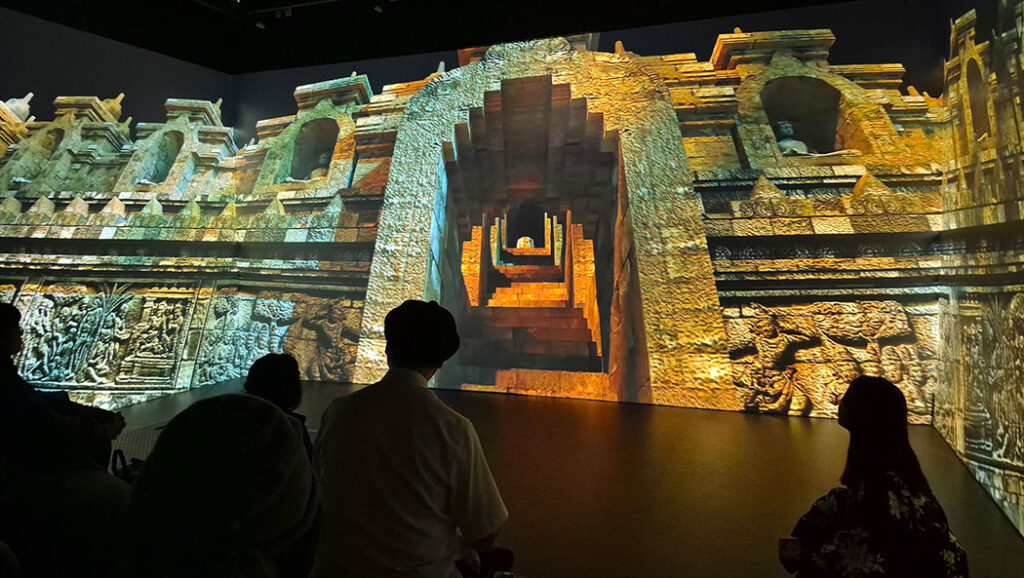
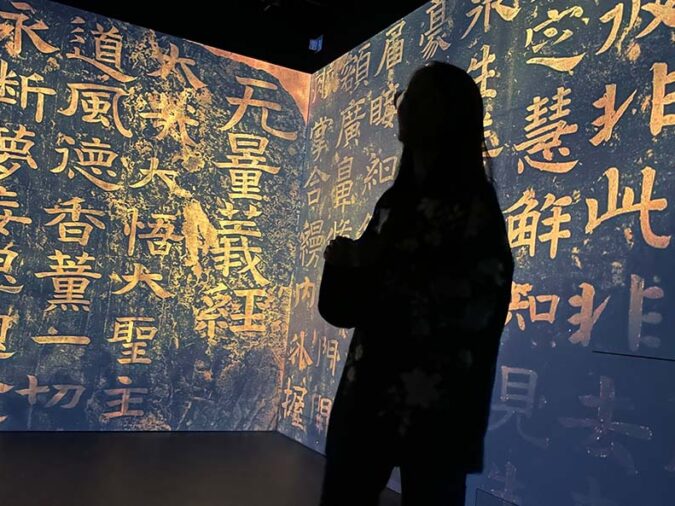
Visitors experience Journey to Enlightenment: A Multimedia Exhibition on Buddhist Cultural Heritage at Harvard University during the 2026 Tzu Chi Global Symposium for Common Goodness. Photo/Lily Chen
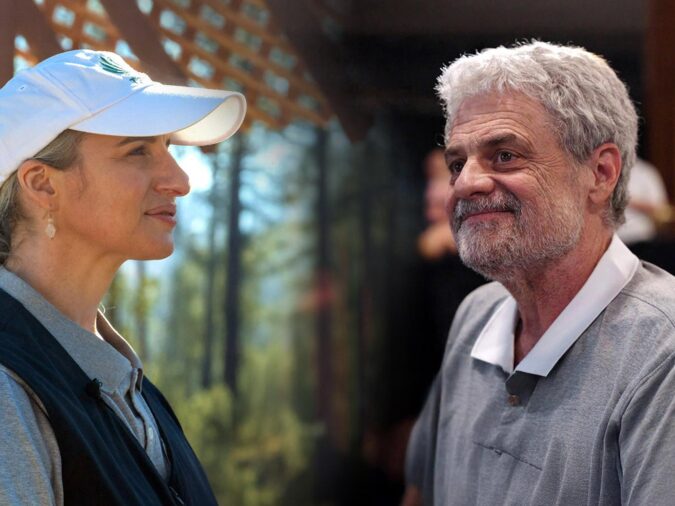
To bring Buddhist ideas to life in an exhibition like this, I think it truly is giving a body, giving a practice, giving a presence to Buddhism in a way that otherwise might not be the case.
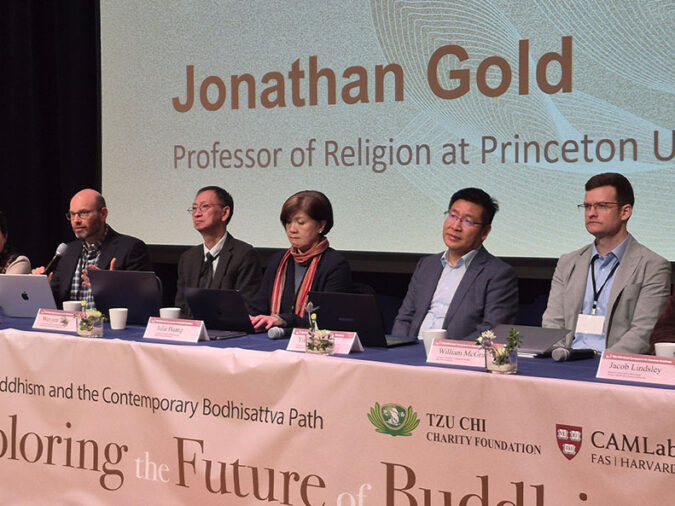
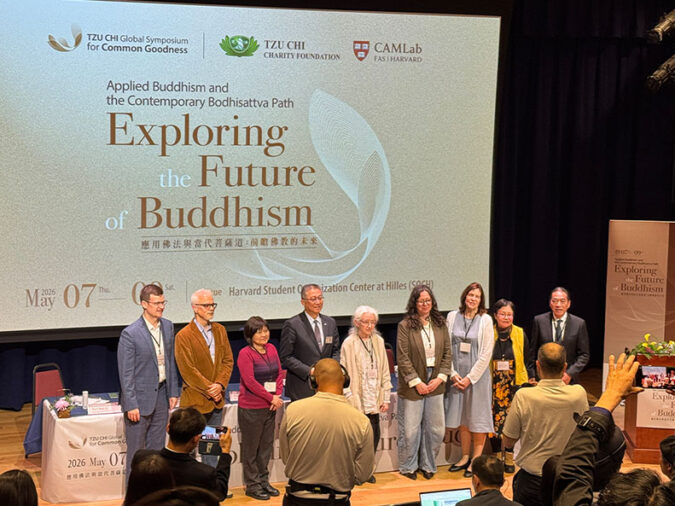
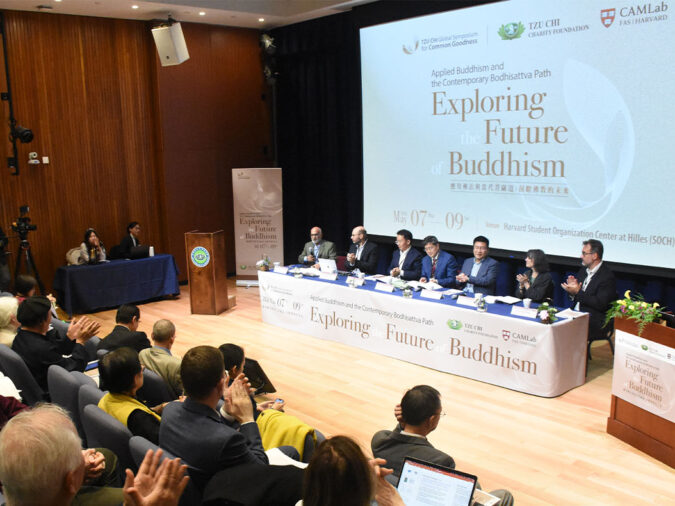
On May 9, Journey to Enlightenment: A Multimedia Exhibition on Buddhist Cultural Heritage opened at Harvard University in Cambridge, Massachusetts, during the 2026 Tzu Chi Global Symposium for Common Goodness. Co-curated by the Cognitive Aesthetic Media Lab at Harvard’s Faculty of Arts and Sciences (CAMLab) and the Buddhist Tzu Chi Charity Foundation, the exhibition traces more than 2,500 years of Buddhist art, architecture, and scripture. Coinciding with Tzu Chi’s 60th anniversary in 2026, it offers a timely opportunity to reflect on the spiritual principles that have guided its global humanitarian work from the beginning.
The Journey to Enlightenment immersive art exhibition presents a contemporary interpretation of Buddhist heritage through the lens of modern technology. Through this innovative expression, we are invited to enter more deeply into the meaning of the Buddhist scriptures, while reflecting the spirit of the Bodhisattva path as practiced by Tzu Chi volunteers under the guidance of Master Cheng Yen over the past 60 years. It is a spiritual epic spanning over two and a half millennia, truly worthwhile for everyone to come and experience.
An Auspicious Encounter
The story of how Journey to Enlightenment came to life began with what may have seemed like a chance meeting between two scholars, and perhaps something more. Several years ago, Eugene Y. Wang, Abby Aldrich Rockefeller Professor of Asian Art at Harvard University and Founder and Director of CAMLab, met Rey-Sheng Her, Deputy CEO of the Buddhist Tzu Chi Charity Foundation, who was then a visiting scholar at Harvard. Wang described it as “an interesting, happy occasion.”
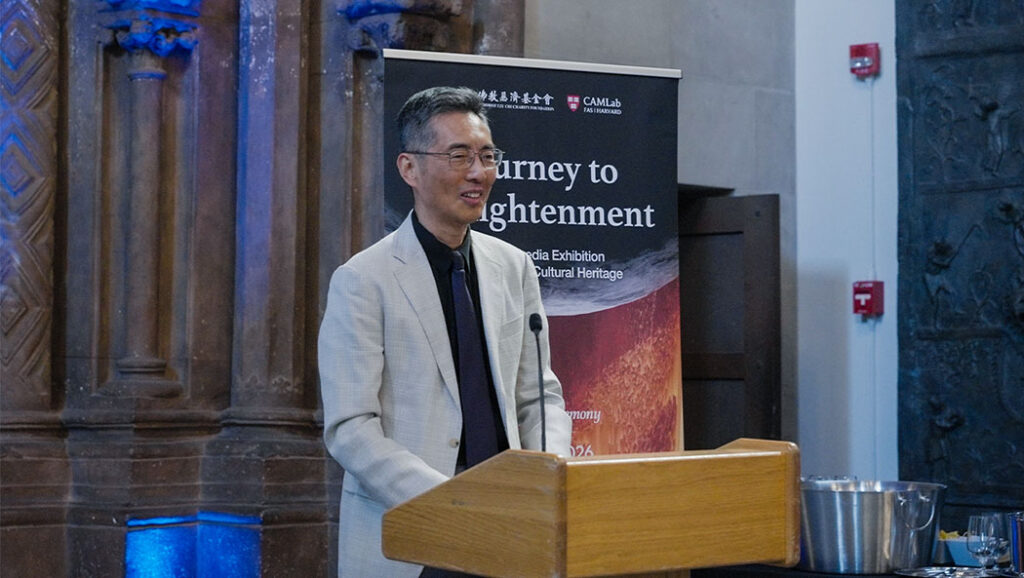
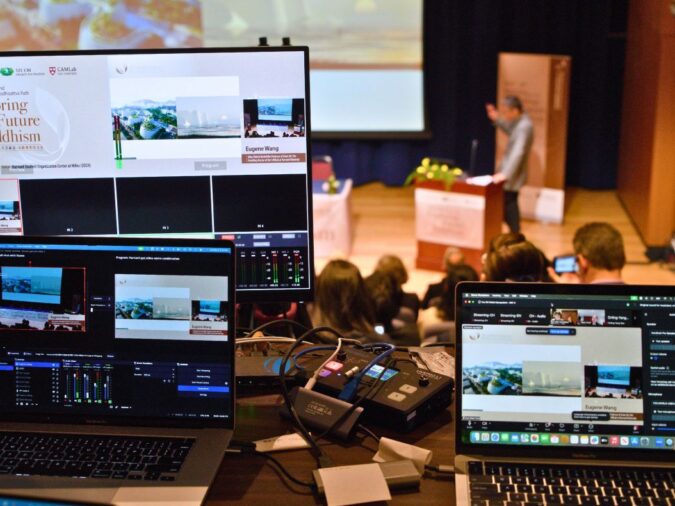
Eugene Wang, Founder and Director of CAMLab, addresses guests at the opening ceremony for Journey to Enlightenment on May 8, 2026. Photo/Daniel Ferrara
Founded at Harvard in 2019, CAMLab explores how research, technology, and storytelling can open new ways of experiencing cultural heritage. When Wang introduced Her to the lab’s work, the encounter became the starting point for what would eventually become Journey to Enlightenment. “The Tzu Chi Foundation engaged artists working in traditional media. And yes, it has worked. But he felt that what we have been doing breaks new ground and signals a new direction. He clearly saw the potential of this medium,” Wang recalled. “So we started conversations. He was convinced that we could do really interesting things.”
In fact, Her saw CAMLab’s immersive approach to storytelling as part of the long evolution of how Buddhist teachings and history have been transmitted across time. “We had oral communication after the Buddha reached nirvana,” he noted, referring to the roughly 400 years of oral transmission before the teachings were written down in what is now Sri Lanka. “And then we had print technology, then radio, then TV, then the internet, and now we have an immersive exhibition. It’s quite advanced and avant-garde media that can tell the story of Buddhism, Buddha, Master Cheng Yen, and Tzu Chi.”
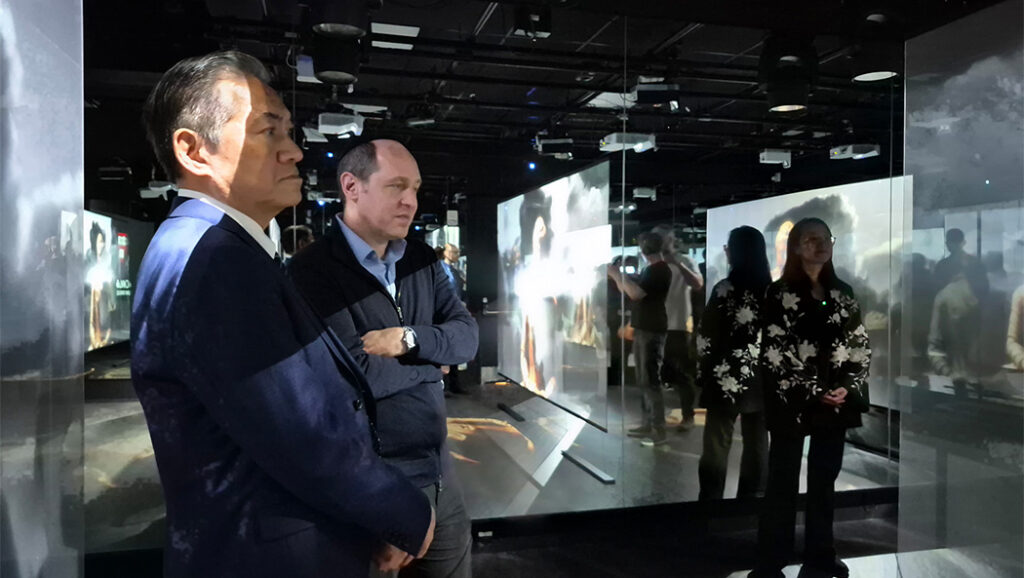
Rey-Sheng Her (left), Deputy CEO of the Buddhist Tzu Chi Charity Foundation, contemplates the completed Journey to Enlightenment exhibition, a milestone in Tzu Chi’s collaboration with Harvard’s CAMLab. Photo/Wendy Tsai
In Wang’s view, the collaboration also carried a deeper sense of alignment. “Buddhism always believes in causal conditions. Things happen for a good reason. Certain things didn’t seem to be aligned, but then they were,” he said, noting that Master Cheng Yen’s path had been profoundly shaped by the Lotus Sutra and that his own scholarly work likewise began there. “Once these alignments take place, you start to wonder what leads to it. There’s a certain kind of happy, unintended causal alignment that seems to be at work that none of us saw coming. Since that alignment is already a fact, we can probably just go with it.”
And go with it they did. “For four years, they put effort into that,” Her explained. “Their team came to Tzu Chi to understand our spirit, our work, our premises, and to meet with Master Cheng Yen. They came up with the storytelling and combined it with ancient Buddhist sacred sites. So I think this is an extraordinary combination for the art, and for Buddhism, and also for Tzu Chi practices.”
“Journey to Enlightenment has been the longest, largest project we’ve worked on,” said Lorna Campos, CAMLab’s Financial & HR Manager. “From the beginning to now there have been dozens of individuals with different expertise that have been involved.” Although the core lab team is small, Campos shared, it is highly competent and dedicated, with people willing and able to “wear many different hats,” all of which benefited an undertaking of this scale.
Guiding this far-reaching endeavor were Wang and CAMLab Co-Founder and Associate Director Chenchen Lu. Together, they envisioned CAMLab as, in Lu’s words, “an interdisciplinary platform where we can translate academic research into contemporary and cutting-edge experiences of traditional art and sites through immersive projection, 3D technology, and other new technologies.” Journey to Enlightenment offered a rich opportunity to do just that, and each brought particular strengths to the venture. Wang contributed a deep understanding of Buddhist art, philosophy, and sacred imagery, while Lu brought her background in architecture and design to help give those ideas visual and spatial expression.
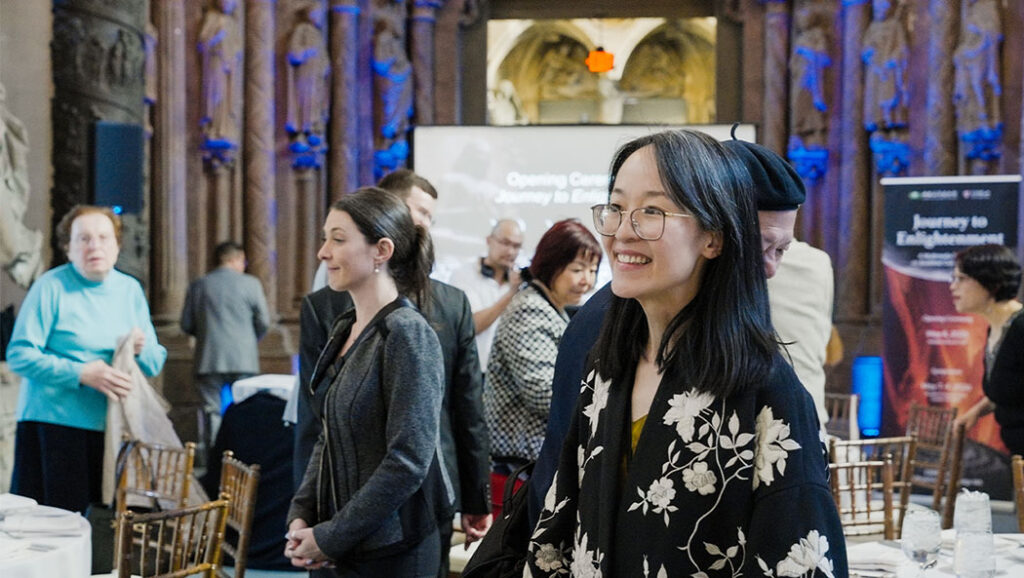
Chenchen Lu, CAMLab Co-Founder and Associate Director, mingles with guests during the opening ceremony and dinner for Journey to Enlightenment on May 8, 2026. Photo/Daniel Ferrara
Establishing the Storyline
The process began with shaping the exhibition’s narrative and identifying the deeper Buddhist structure that would guide it. “Initially we had a team working on the Tzu Chi story. In the end I felt that what happened with Venerable Cheng Yen, what happened with the organization, has a certain trajectory that seems to reinforce a deep structure. It has a certain scenario that was repeatedly evoked and rehearsed in Buddhism and Buddhist art, with regard to the Lotus Sutra and other scenarios,” Eugene Wang said. “So when one reads the history of the Tzu Chi organization, Venerable Cheng Yen’s life story and so forth, it’s almost like no one wrote a script, but the organization kind of enacted that script. There was a moment of recognition.”
The exhibition’s storyline was never conceived as a simple linear presentation. Wang’s scholarship helped inform that approach. “I was attracted to Buddhist art for its sense of multiple perspectives… the universe as some kind of multiverse. It’s a flexibility in shifting viewpoints.” He found a similar logic in the Lotus Sutra, which departs from the more linear story model found in earlier Buddhist texts. “It’s no longer about one Buddha. It’s about multiple Buddhas. It’s no longer about one planet. It’s about multiple planets. It essentially pulls down the single world model. It’s a constant shift of perspectives, the dismantling of time-space.” That way of thinking, with its shifting viewpoints and layered realities, has informed CAMLab’s work and would also shape Journey to Enlightenment.
“We were very fortunate to have many chances to meet Master Cheng Yen and receive her suggestions and guidance in the design of this exhibition,” Chenchen Lu shared. “It’s not only about history, it’s really about how we use this exhibition to influence contemporary action. Master Cheng Yen instructed us to send a concrete and clear message instead of abstract concepts to the contemporary audience. So based on this guideline, we chose eight different sites, and each site echoes one aspect of Tzu Chi’s spiritual roots. In each section, we try to convey straightforward messages that will inspire action and guide the audience on how to practice Buddhism in daily life.”
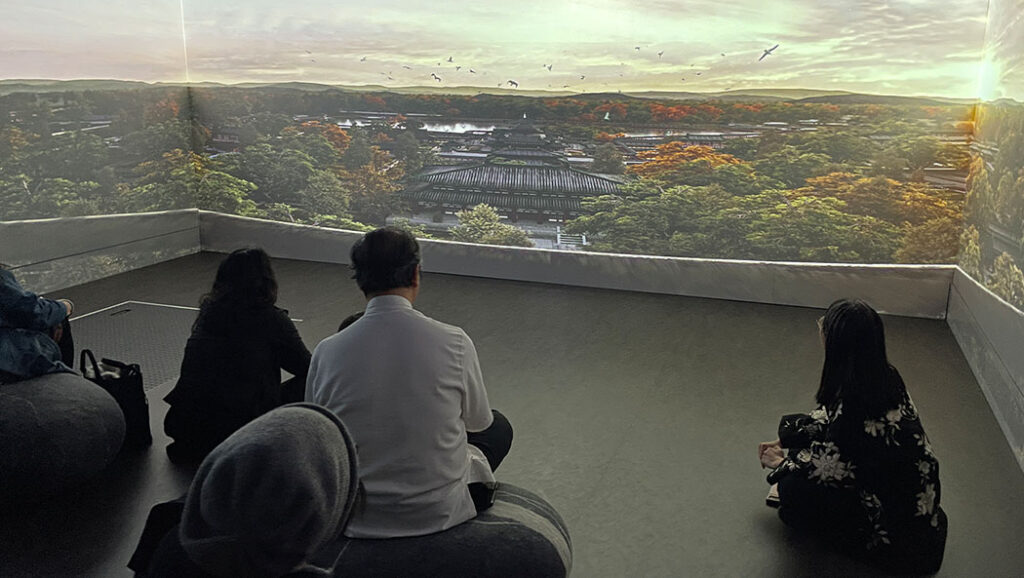
An aerial view of one of the Buddhist sacred sites featured in Journey to Enlightenment appears within the immersive projection space, transporting audiences to places connected to Tzu Chi’s spiritual roots. Photo/Jennifer Chien
An Eightfold Presentation
Rather than functioning as a conventional museum exhibition in which visitors simply look at objects, Journey to Enlightenment unfolds more like an immersive spiritual journey, even a modern pilgrimage. As visitors move through its eight sections, they can recognize how ancient Buddhist values are carried into today’s world through Tzu Chi’s humanitarian efforts.
⊚ Bodh Gaya and the Origin of Awakening
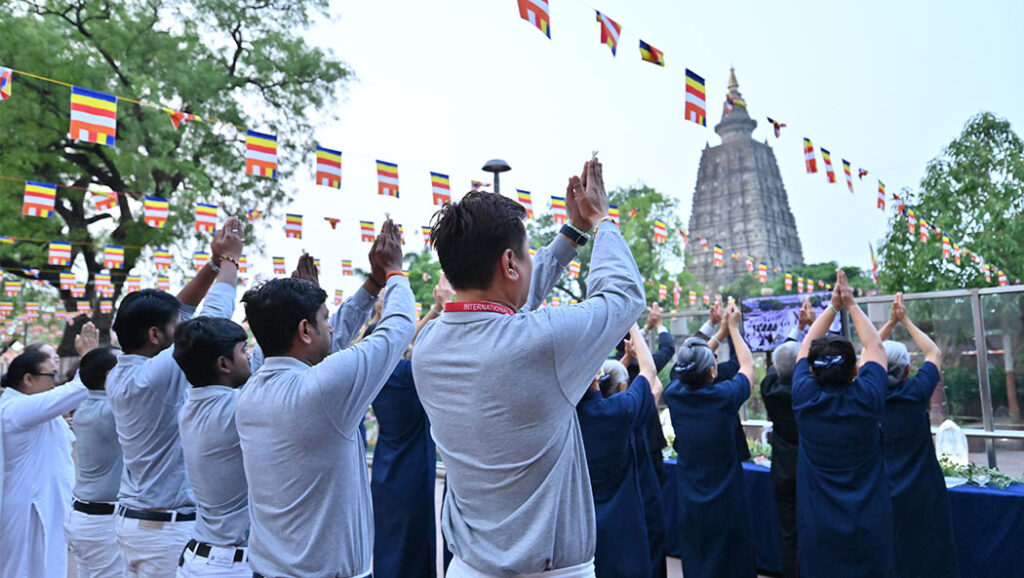
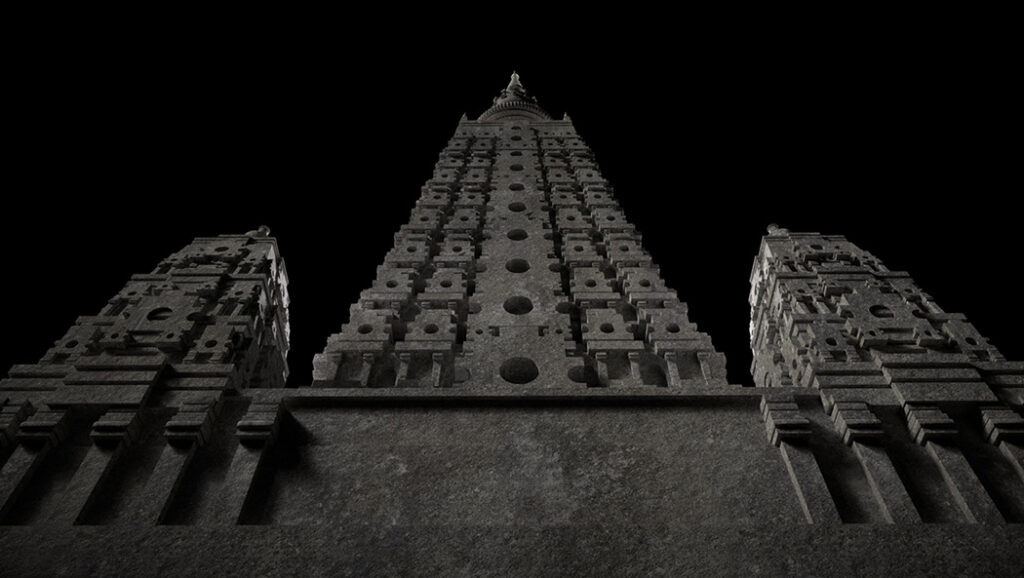
Located in Bihar, India, Bodh Gaya is revered as the place where Siddhartha Gautama, the historical Buddha, attained enlightenment beneath the Bodhi tree. The Mahabodhi Temple preserves the Vajrāsana, or “Diamond Throne,” believed to mark the site of that awakening. As a UNESCO World Heritage Site, Bodh Gaya commemorates the transformation of suffering into insight and the beginning of the Buddhist path.
In the exhibition, this foundational moment is paired with Master Cheng Yen’s own awakening to human suffering and her vow to help relieve it. The message is simple, as compassionate action begins with seeing suffering clearly and allowing that recognition to awaken the heart.
Tzu Chi volunteers pray at the Mahabodhi Temple in Bodh Gaya, the sacred site associated with the Buddha’s enlightenment. Photo/Buddhist Tzu Chi Foundation
A digital rendering of the Mahabodhi Temple appears in the Bodh Gaya section of Journey to Enlightenment. Photo/Harvard FAS CAMLab
⊚ Sarnath and the First Turning of the Dharma Wheel
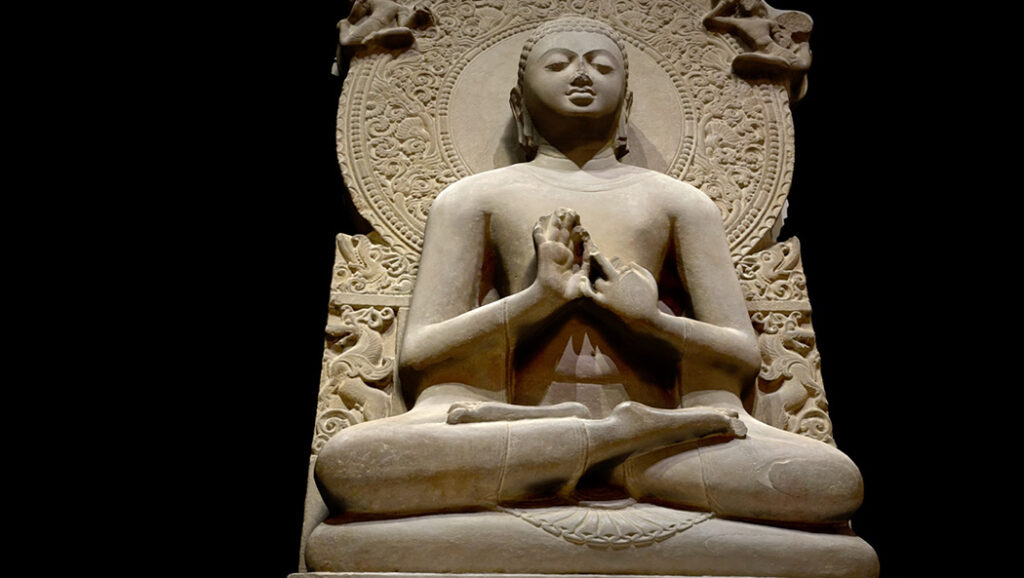
Near Varanasi in northern India, Sarnath is home to the ancient Deer Park, where the Buddha delivered his first teaching after enlightenment. That event, known as the “First Turning of the Dharma Wheel,” established the early Buddhist community. The site later flourished as a major center of teaching and pilgrimage, and its surviving stupas, monasteries, and archaeological remains reflect its lasting importance as a place where the Dharma was first shared with the world.
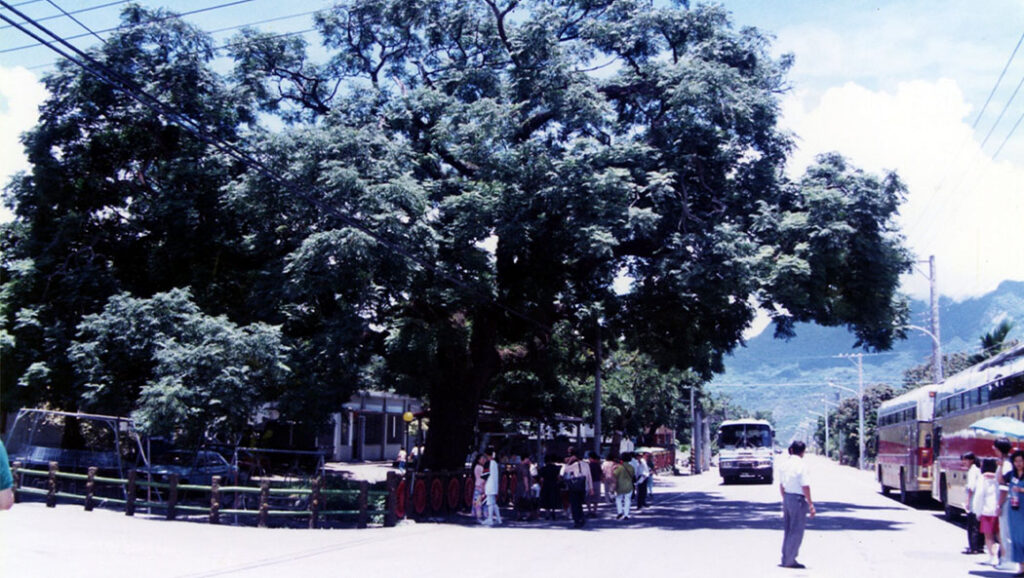
In the exhibition, that moment is paired with Master Cheng Yen teaching beneath a tree in Luye, Taiwan. The meaning of Luye in Chinese is associated with deer, creating a connection across time and space between the ancient Deer Park at Sarnath, where the Buddha first shared the Dharma, and Luye, where Master Cheng Yen’s early teachings helped establish Tzu Chi’s Dharma lineage and modern humanistic Buddhist practice.
The finished items of clothing hanging throughout the learning space are evidence of the program participants’ progress. Photo/Keziah Jean
All the students and teachers gather for a photo celebrating their accomplishments and the benefits of this vital program. Photo/Keziah Jean
⊚ Xiangtangshan and the Lotus Sutra Traditions
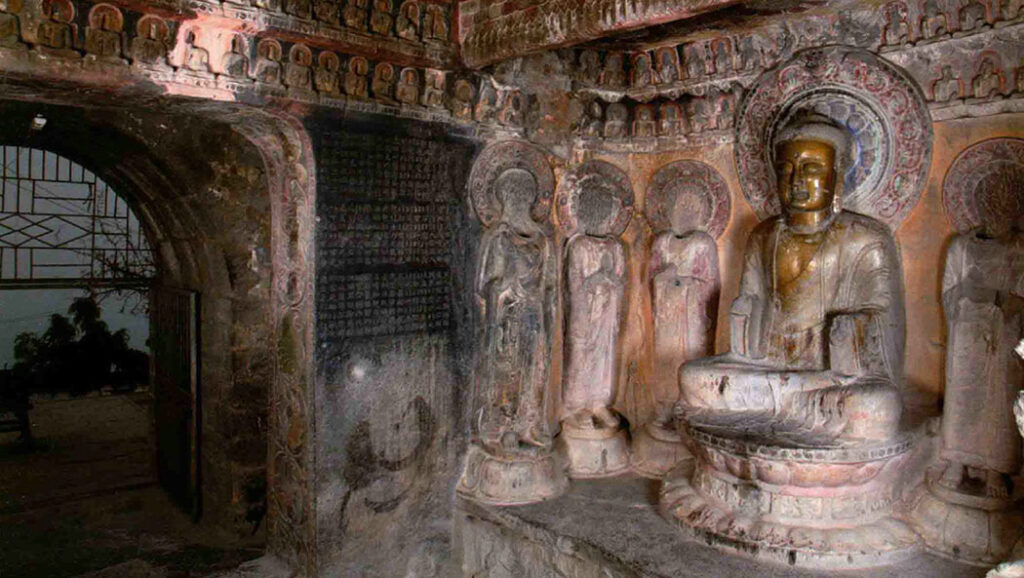
Located in Hebei province in northern China, the cave temples of Xiangtangshan, “Mountain of Echoing Halls,” preserve early inscriptions of the Lotus Sutra and the Sutra of Infinite Meanings, teachings that remain central to the Tzu Chi School of Buddhism. There, Buddhist teachings were not left only to recitation or study, but given physical and visual form in the caves themselves, creating a setting for contemplation and practice.
In the exhibition, that movement from scripture to practice is paired with Tzu Chi’s emphasis on applying the Dharma in daily life. The message is that sutras are not only meant to be read, but expressed through compassionate service.
Inscriptions and sculptures at Xiangtangshan preserve passages from Buddhist sutras central to the Tzu Chi School of Buddhism. Photo/Harvard FAS CAMLab
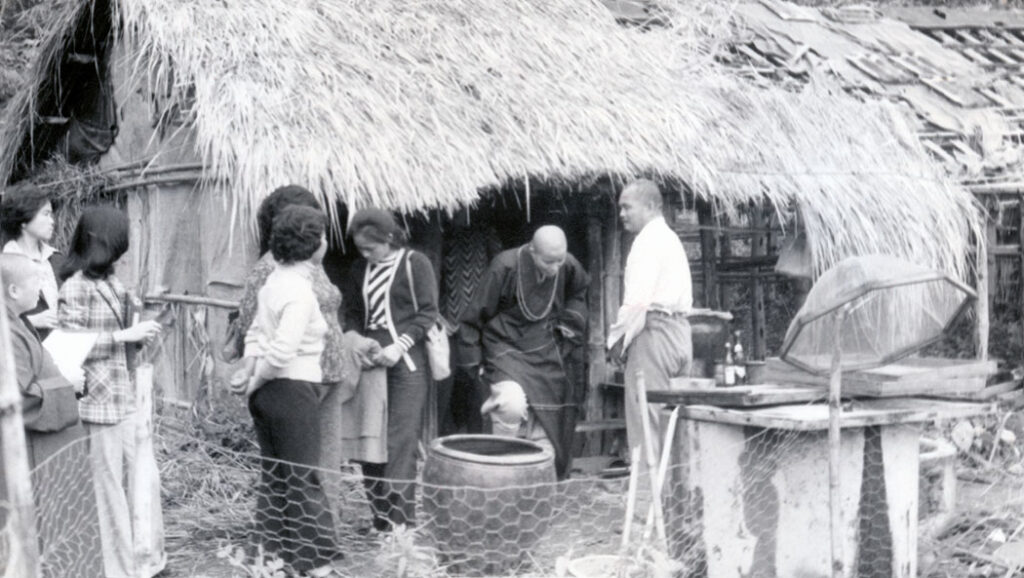
Master Cheng Yen visits care recipients in Tzu Chi’s early years, reflecting how sutra teachings can take shape through compassionate action. Photo/Buddhist Tzu Chi Foundation
⊚ Dule Temple and the Spirit of Guanyin
Located in Jizhou, Tianjin, China, Dule Temple, or “Temple of Solitary Joy,” is home to the Guanyin Pavilion and its monumental statue of Guanyin, the bodhisattva of compassion. With multiple heads and hands, the statue gives visual form to Guanyin’s vow to respond to suffering in many ways.
In the exhibition, Guanyin is connected with Tzu Chi’s work in the present. “In ancient times, people used the multiple heads and hands to express Guanyin’s power and spirit of helping all kinds of sentient beings facing different disasters,” Chenchen Lu explained. Today, Tzu Chi volunteers are presented as the hands through which Guanyin’s compassion continues to act in the world.
Guests view the Guanyin section of Journey to Enlightenment during the exhibition preview on May 6, 2026. Photo/Lily Chen
Tzu Chi volunteers around the world embody the spirit of Guanyin’s many hands, bringing compassion into action through service. Photo/Buddhist Tzu Chi Foundation
⊚ Dunhuang and the Ethics of Giving
Located at the edge of the Gobi Desert in northwestern China, the Mogao Caves at Dunhuang form the largest surviving Buddhist cave complex in the world, with 492 preserved painted caves created over the course of a millennium. “They were actually shrines made in cliffs away from urban centers,” Eugene Wang noted. “At some point, people started to decorate the caves with paintings. It’s not just to beautify. It was more of a way of programming a space, allowing things to be imagined and transformed.”
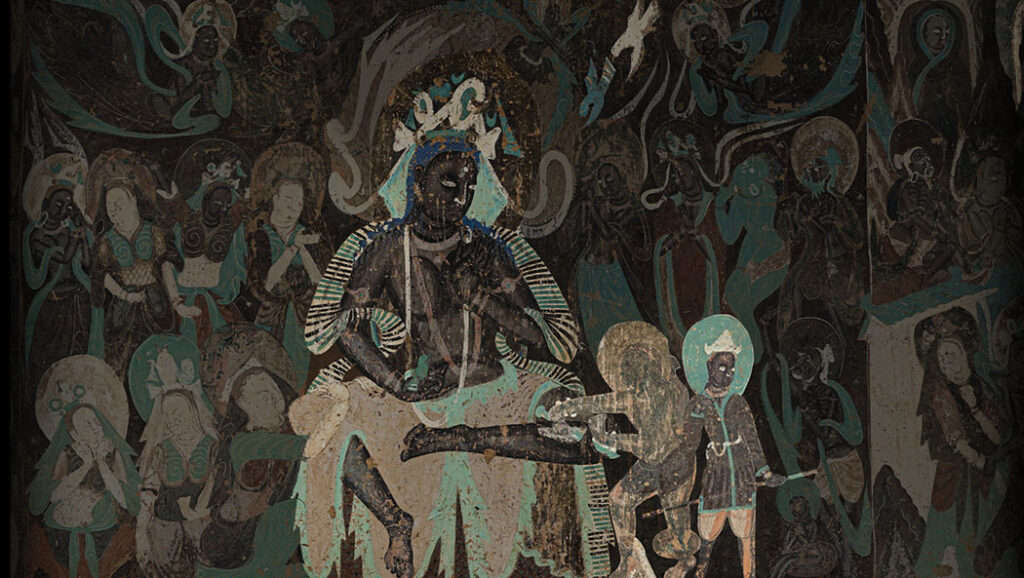
Cave 254 features Jātaka stories of self-sacrifice and bodily offering, giving visual form to the Buddhist ideal of selfless giving. In the exhibition, that ideal is paired with Tzu Chi’s practices of bone marrow, organ, and full body donation. The message is that compassion can take material form through giving, even beyond one’s lifetime.
A Dunhuang mural depicts a Jātaka tale of bodily offering, in which the Buddha, in a past life, cuts his own flesh to save a dove. Photo/Harvard FAS CAMLab
A Tzu Chi bone marrow donor card reflects one form of giving highlighted in Journey to Enlightenment. Photo/Buddhist Tzu Chi Foundation
⊚ Borobudur and the Fifty-Three Visits
Located in Central Java, Indonesia, Borobudur remains the largest Buddhist monument in the world. Designed as a three-dimensional mandala, it integrates architecture, movement, and sacred narrative into a spiritual journey, guiding pilgrims upward through a sequence of images and spaces meant to instruct as well as inspire.
In the exhibition, Borobudur is paired with the story of the Fifty-Three Visits, in which the young pilgrim Sudhana travels from teacher to teacher in search of the Bodhisattva path. For Tzu Chi, that search suggests that wisdom is not confined to temples or scriptures, but can be found through everyday encounters and service. The message is that spiritual practice unfolds in the world, and that all people can become our teachers.
Guests view the Borobudur section of Journey to Enlightenment during the exhibition preview on May 6, 2026. Photo/Wendy Tsai
Tzu Chi volunteers share Master Cheng Yen’s Jing Si Aphorisms with students, passing on Buddhist wisdom through words of guidance and care. Photo/Buddhist Tzu Chi Foundation
⊚ Yingxian Wooden Pagoda and Interconnected Compassion
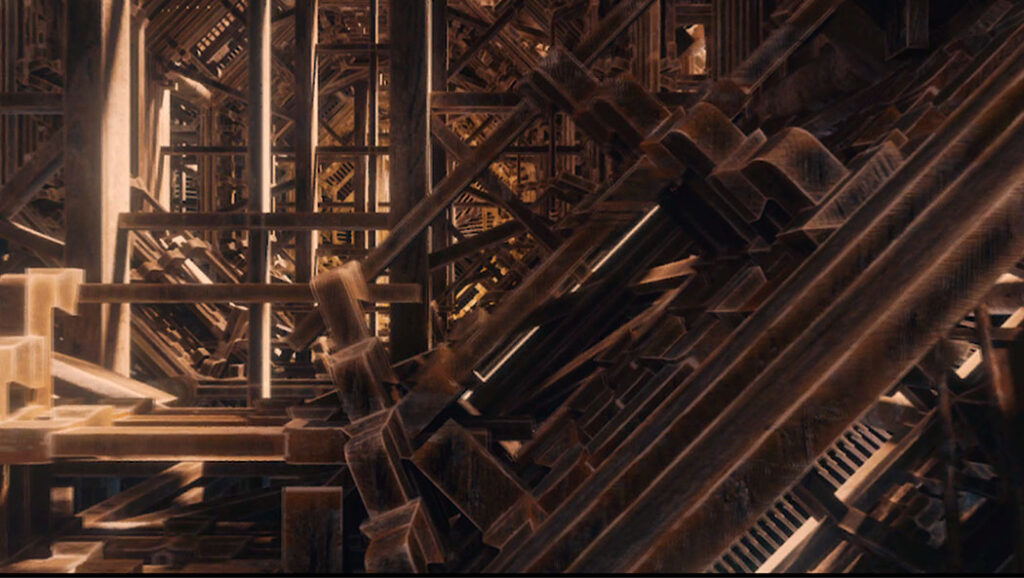
Located in Shanxi province in northern China, the Yingxian Wooden Pagoda remains the tallest and oldest surviving wooden pagoda in China. Constructed without nails, its intricate timber framework reveals a system of structural interdependence, with each element relying on the others for balance and strength. In Buddhist thought, such interconnection points to a larger truth, that all things arise in relation to one another and no part stands alone.
In the exhibition, that vision of interdependence is paired with Tzu Chi’s global humanitarian network. Just as each element of the pagoda supports the whole, each act of compassion contributes to a larger web of relief and care. When disasters strike, volunteers, donors, and communities across continents work together, turning compassion into organized action.
A digital rendering highlights the Yingxian Wooden Pagoda’s timber framework, where each element relies on the others for balance and strength. Photo/Harvard FAS CAMLab
Tzu Chi volunteers and local community members join a coastal cleanup in Taiwan, turning compassion into collective action. Photo/Buddhist Tzu Chi Foundation
SHARE:
One dollar a day. One ripple of kindness. Thousands of lives touched.