Love Converges at the 2025 Wildfires Resource Hub
Written by Pheel Wang
Edited by Adriana DiBenedetto
Published #76 | Spring 2025 Issue
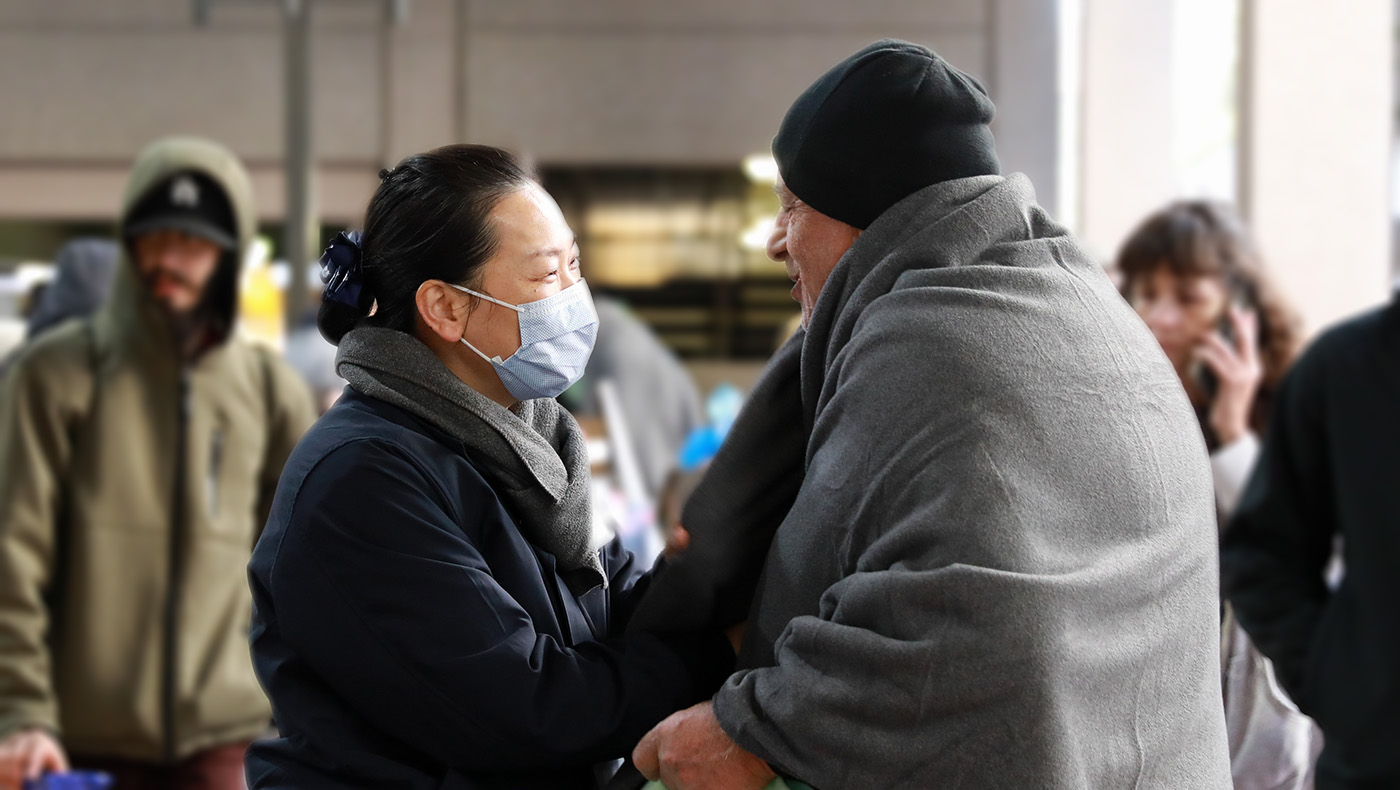
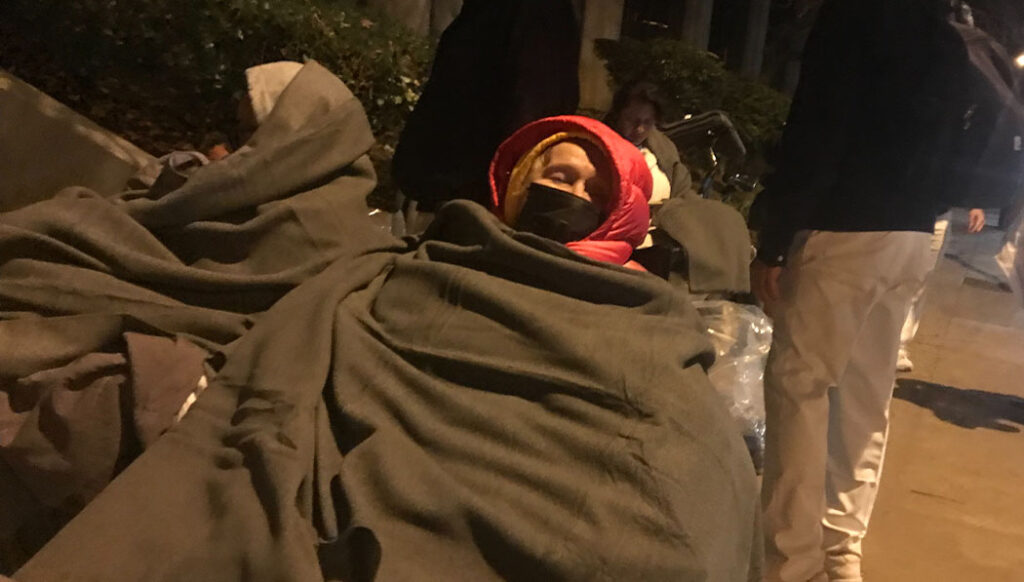
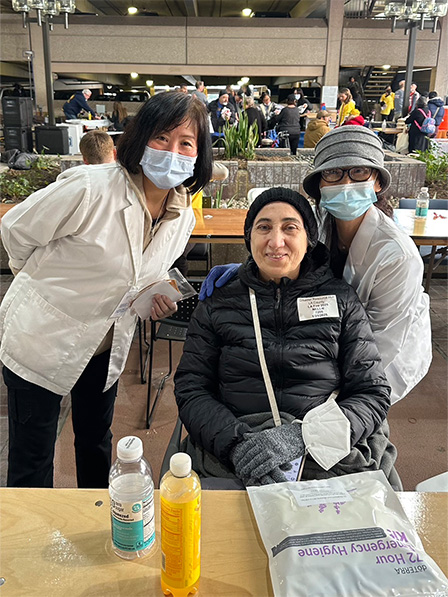
As the cold weather crept in, Tzu Chi volunteers wrap Los Angeles wildfire survivors in warm eco-blankets during disaster relief distributions. Photo/Tony Ng
SHARE
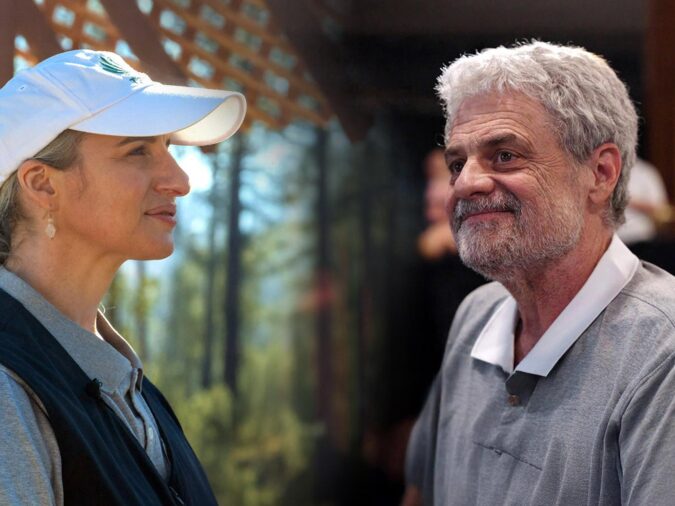
“When we left, at 4 in the morning, we saw embers… flying around like snowflakes… but it’s fire,” David, an Eaton Fire survivor in Southern California, recalled. “We were loading our car, and just saw the embers flying around, and they hit some brush on the floor, and it was dry, so it just, whoosh! It just lights up immediately. After that, I was just like, ‘Oh, no, we have to get out of here, or we won’t make it.’”
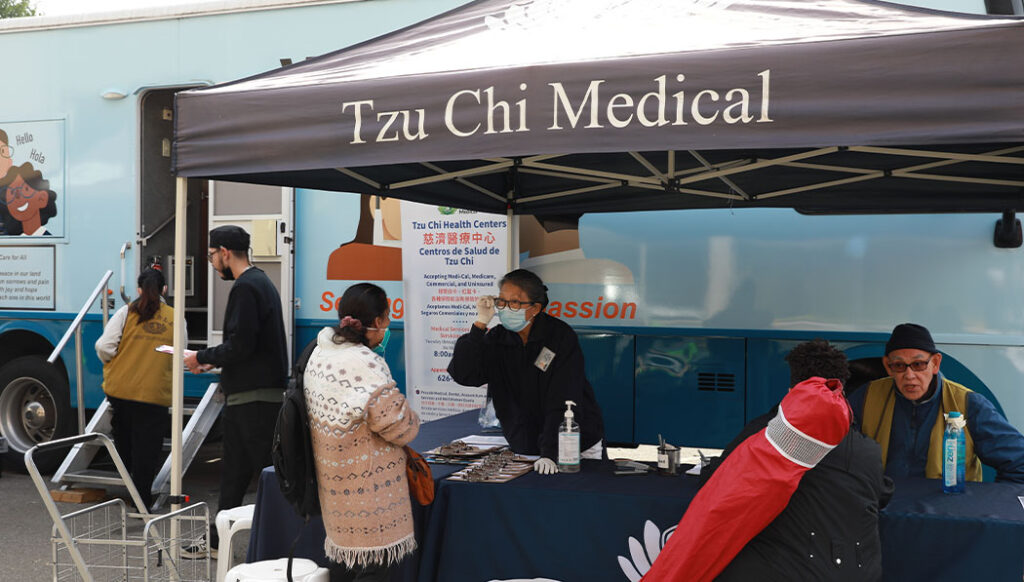
Across the state, relief efforts were launched, and volunteers mobilized amidst the ongoing crisis. Then, after days of uncertainty and hardship, David had received profoundly welcome news: He and other wildfire survivors were invited to the 2025 Wildfires Resource Hub in Pasadena, where he could seek out assistance, varied relief supplies – and free prescription eyeglasses from Tzu Chi.
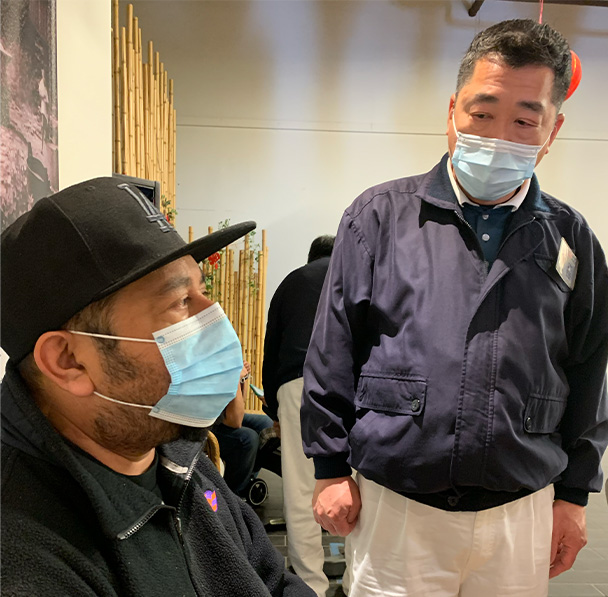
“I went to the Kaiser building, and I found out they were helping out with glasses. I had lost my glasses in the fire. So I asked, and they were very helpful. Very, very helpful… They took me inside, helped me fill out the paperwork, did the exam, and I told them I had pressure in my eye, and they checked it out, and they told me, ‘You’re okay.’ They made my glasses, and it was an excellent experience. I am very, very grateful.”
David’s face, even protected by a mask, reflected the hardships he’d endured. The wildfire destroyed his rented home in Altadena, but didn’t shake his sense of humor. After the disaster, he had to contend with a great deal of paperwork, which was a challenging task without his glasses. “It was so hard to read all the paperwork,” said David. “My arms are only so long, and I have to hold the paper far away.” He imitated his far-sightedness, stretching his arm out and blinking theatrically, making the volunteers laugh. His tired eyes squinted with gladness, though tears shone. “So yeah, I needed that to fill out the paperwork and stuff like that. So, it was a blessing as well. I didn’t even know it was going to be that same day I was going to get my glasses, so that’s… that’s amazing. Such a blessing.”
Nonprofit Giants Unite to Help Survivors
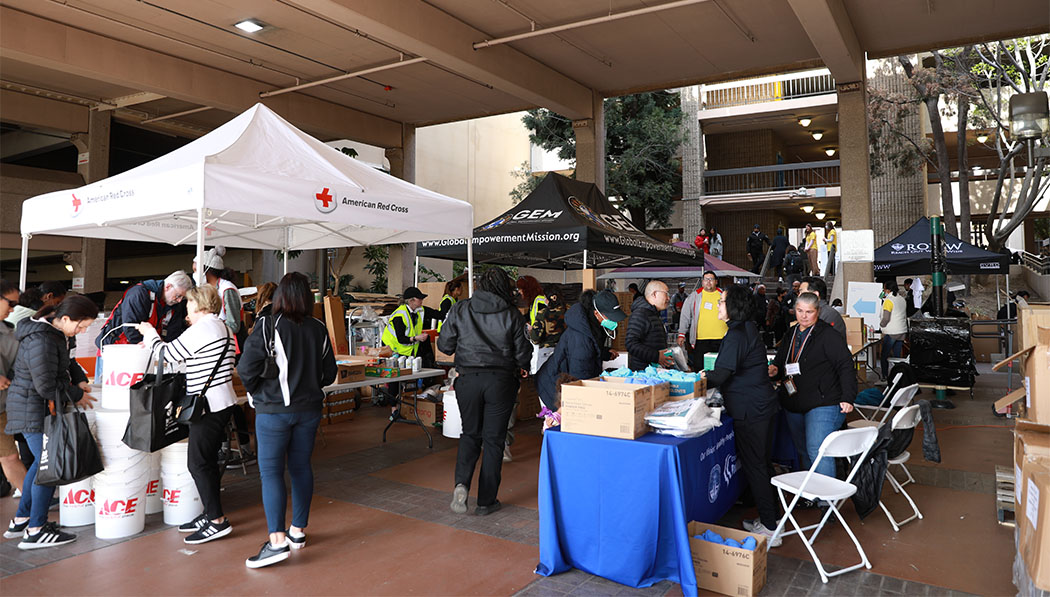
David’s visit to the 2025 Wildfires Resource Hub occurred on its last day of service. This center was one of Tzu Chi’s key stages in assisting Southern California wildfire survivors. Unlike the distributions at Tzu Chi’s El Monte and West Los Angeles offices, the 2025 Wildfires Resource Hub was a joint effort, encompassing not only Tzu Chi, but several major U.S. and international nonprofit organizations, offering a one-stop nexus for relief resources and information sharing.
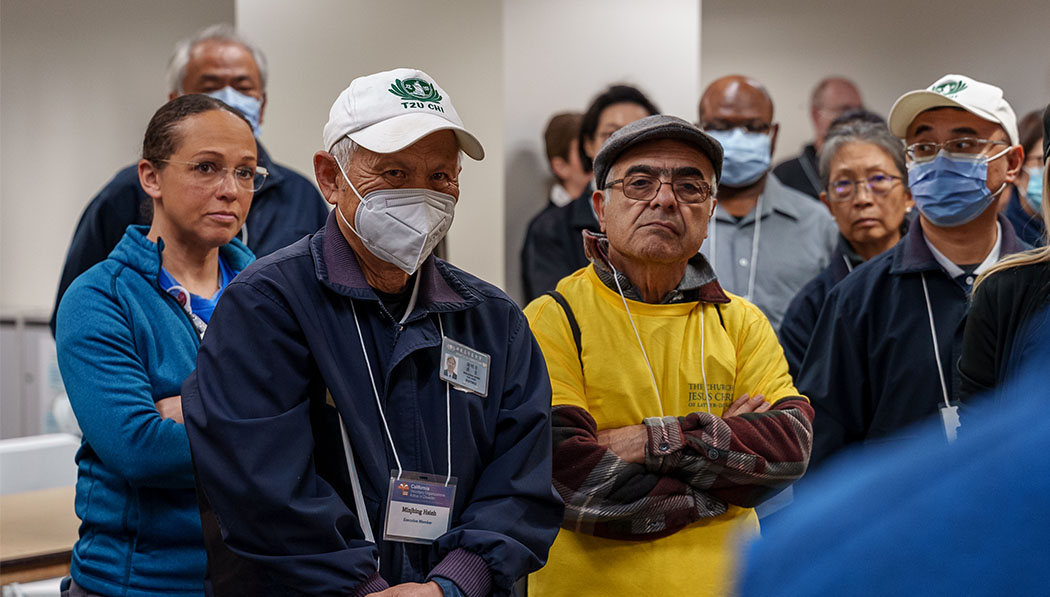
“The one-stop service allows survivors to receive various necessary items in one place, which is crucial during such times when survivors have so much to endure. This center integrates all the resources, saving survivors from the hassle of running around, which is very important,” said Minjhing Hsieh, Deputy Executive Director of Tzu Chi USA’s Northwest Region and member of the Board of Directors of the California Voluntary Organizations Active in Disaster (Cal VOAD). “In the past, Disaster Recovery Centers (DRCs), established by FEMA and local governments in various states, allowed survivors to apply for all essential documents in one place, while also inviting nonprofits to distribute necessary supplies.”
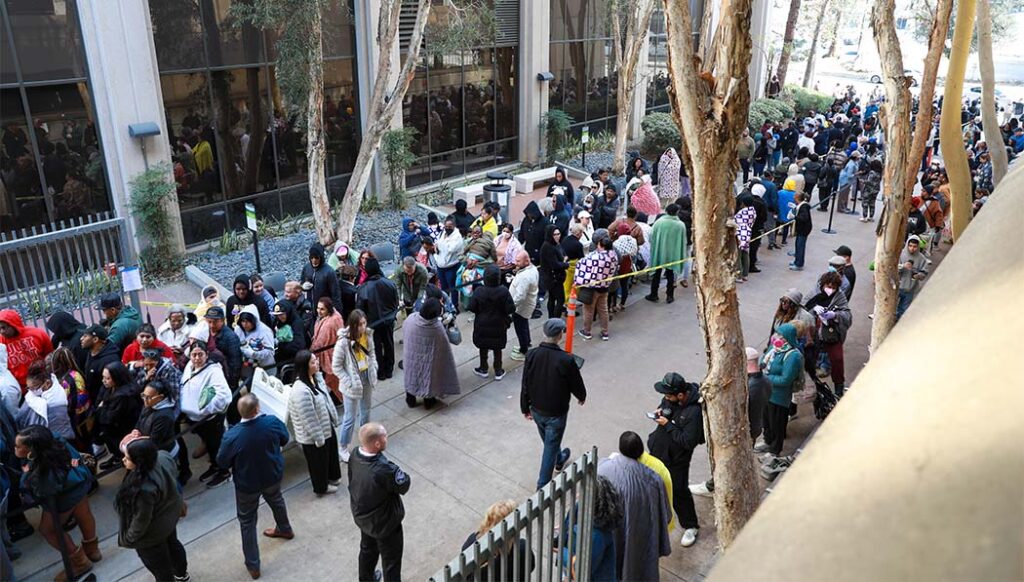
However, these wildfires occurred in densely populated areas, and the number of affected people was immense. What’s more, the availability of ideal DRC locations was inadequate for such large crowds, and nonprofits could not distribute directly to survivors in these spaces. Cal VOAD reached out proactively to work with the Emergency Network Los Angeles (ENLA), leading to the creation of the 2025 Wildfires Resource Hub.
The Wildfires Resource Hub is the first large-scale one-stop service center that non-profit organizations took the lead in forming in the history of major disasters in the United States.
Minjhing Hsieh
Deputy Executive Director
Tzu Chi USA Northwest Region


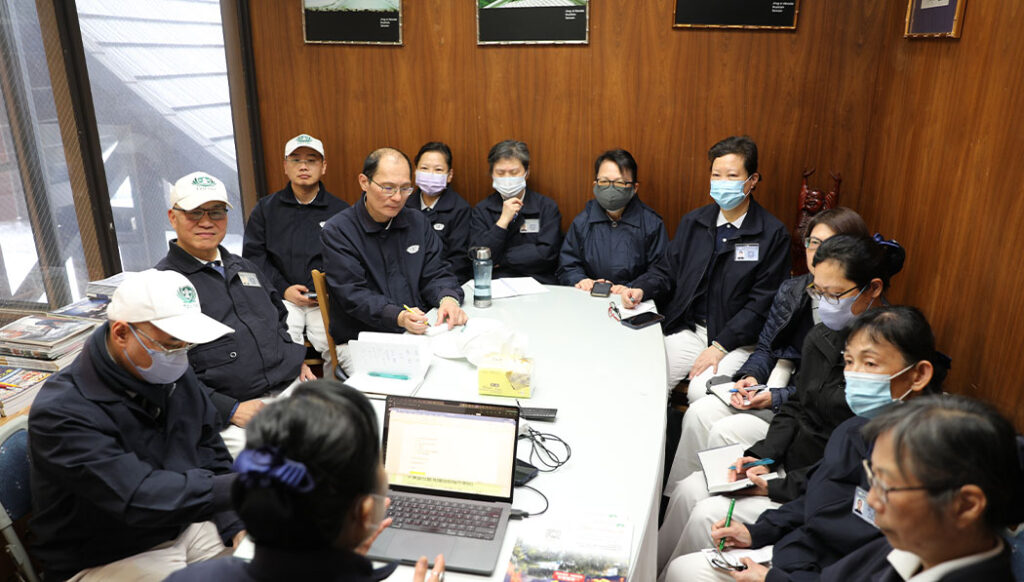
Tzu Chi’s dedicated wildfire relief efforts spanned Northern California across the years, and a strong partnership with California VOAD’s Chairman, Kevin Cox, emerged. Upon the Wildfires Resource Hub’s inception, Cox invited Tzu Chi’s aid. Hsieh explained that it took just one week from the initial idea to reach implementation. “The timeline was tight; we had to coordinate with many parties, gain approval, and evaluate how to execute it,” said Hsieh. “Fortunately, Kaiser Permanente was very supportive and offered space at their Pasadena building, which was large enough to serve as the Wildfires Resource Hub’s base of operation.”
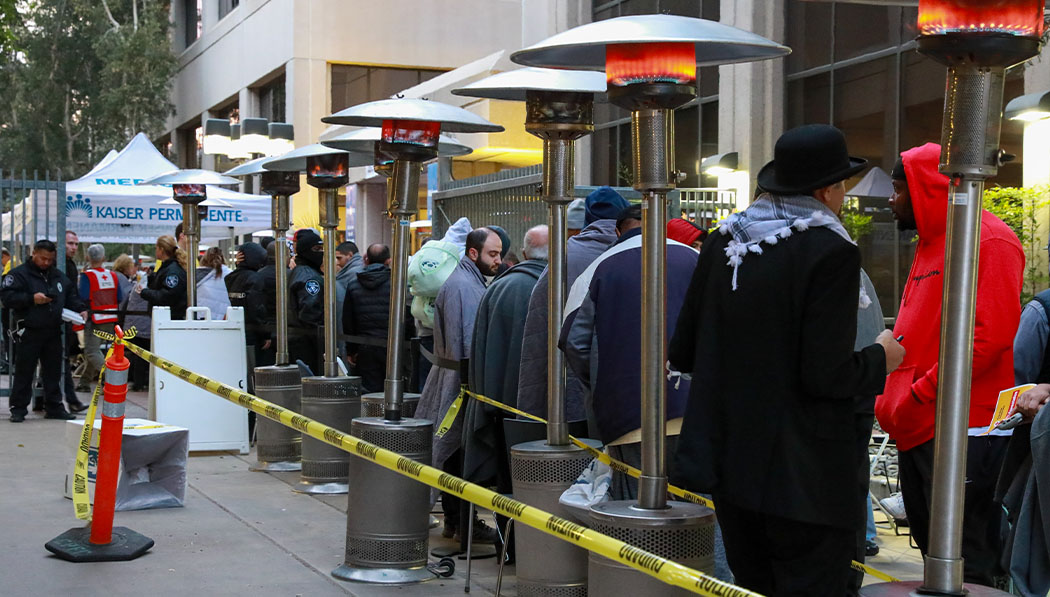
Starting January 27, nonprofit organizations served thousands of people over six consecutive days. But even before the resource center opened, survivors wrapped in thick blankets were waiting outside in the cold under a dark sky, reflecting the bleak frame of mind felt by many at the time.
Assembling a Compassionate Team
“Here, survivors can take a brief rest while receiving financial assistance and guidance on what government subsidies or insurance compensations they can expect over the next 45, 90, or 180 days, along with the various help nonprofit organizations can offer at different stages,” said Tzu Chi USA CEO Debra Boudreaux. The cash cards provided by Tzu Chi were loaded with funds, starting at $1,000, and depending on family size, households could receive up to $1,500. Word spread quickly among wildfire survivors, and Tzu Chi’s distribution station was a continuous stream of activity.
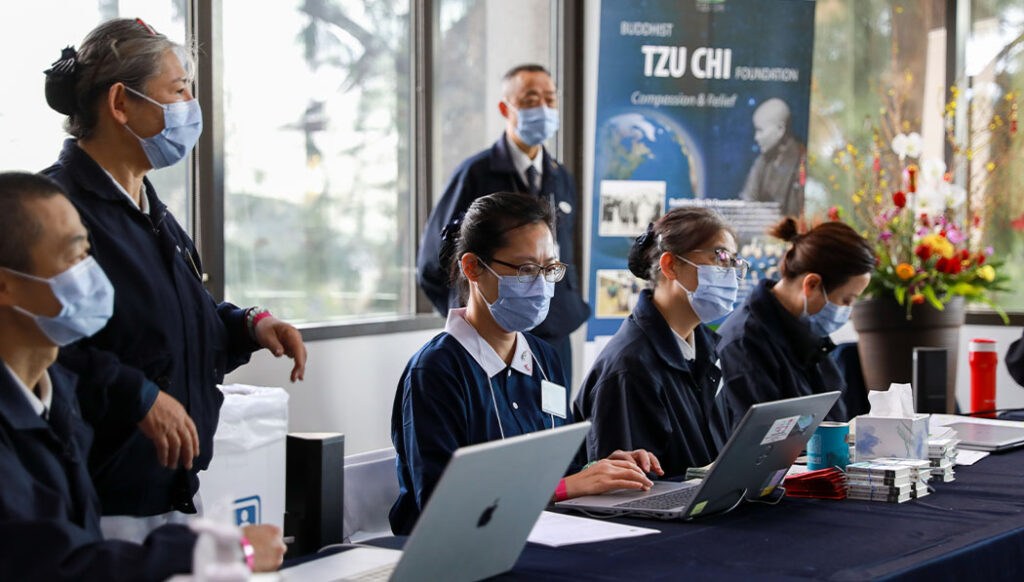
“Many nonprofits referred their cases to us,” said Ting Fan, Tzu Chi USA’s Culture and Communications Department Director, who was also in charge of verifying survivor’s identities and registration during the cash card distribution. “Because of the Wildfires Resource Hub, more and more people are learning about Tzu Chi.” In addition to eye exams, financial support, and eco-blankets, Tzu Chi also provided hot vegetarian meals and personal hygiene essentials.
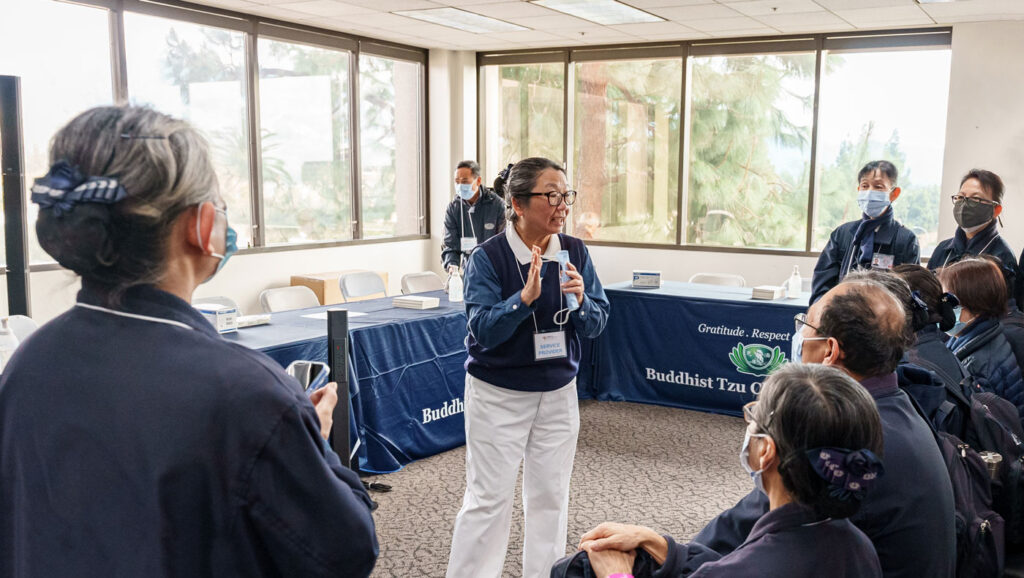
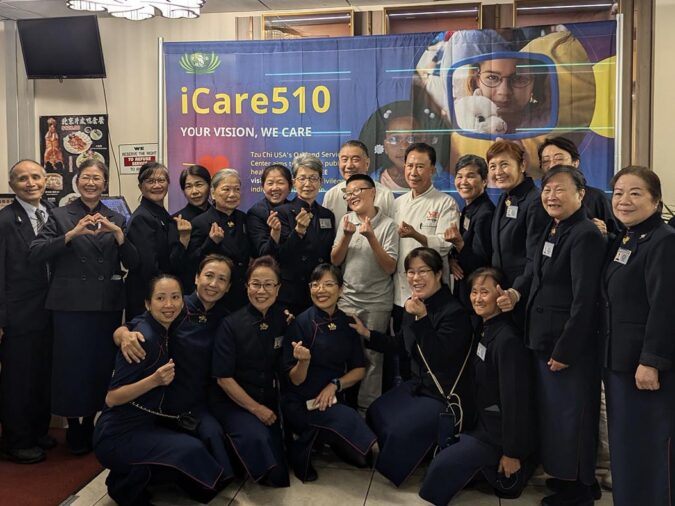
Spanning six consecutive days, such a large operation required a team of committed volunteers who could be mobilized quickly and ready to help immediately, providing not only financial aid, but genuine emotional support.
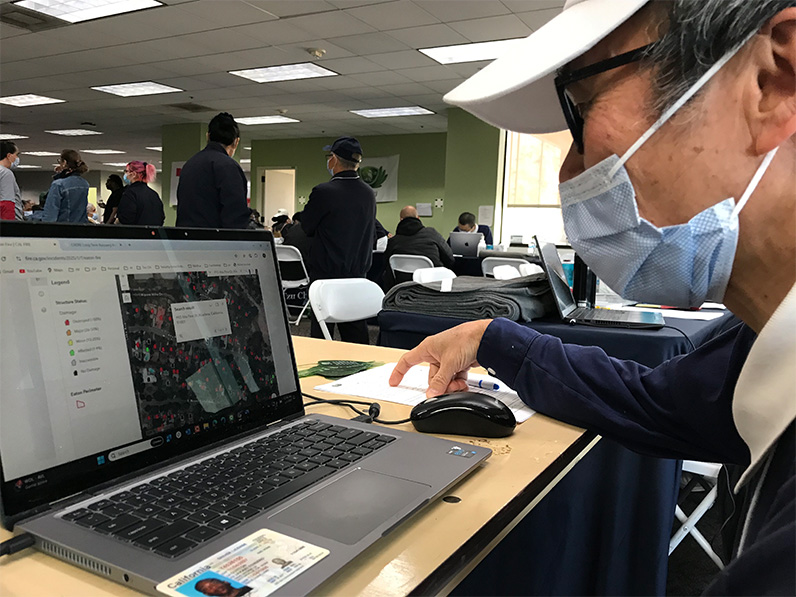
“We needed bilingual volunteers fluent in English and Chinese, and who had good computer skills,” Minjhing Hsieh explained. “The Wildfires Resource Hub uses a different registration system for survivors than Tzu Chi’s own system.”
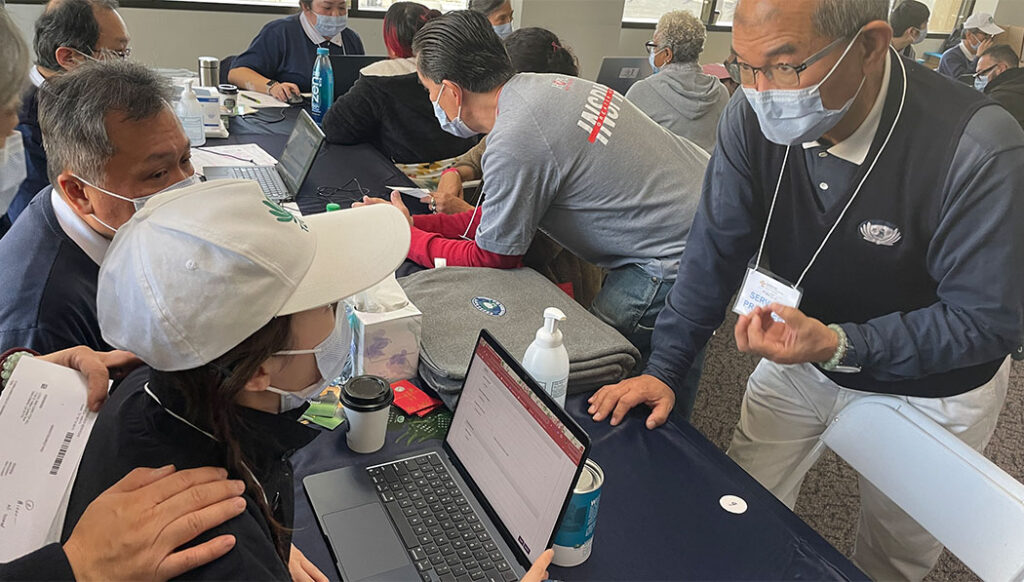
“The system used at the Wildfires Resource Hub is called VisionLink, which is still in the testing phase. When survivors arrived, they registered for an account that documented their basic information, damage situation, and what resources they had already received, and Tzu Chi volunteers are able to view the individual’s profile in the system.” Hsieh said.
To further support Tzu Chi’s wildfire relief efforts, Stephen Huang, Executive Director of Tzu Chi Global Volunteers, sent out a call for aid, and Tzu Chi’s Canadian team responded quickly, with over 20 people taking time off to come at their own expense. Volunteers from the East Coast, led by Freeman Su, Executive Director of Tzu Chi USA’s New York Branch, also arrived to help. Volunteers from Northern California’s Silicon Valley, Seattle, and as far as Taiwan also joined, ready to assist.
SHARE
However, as more and more people learned about Tzu Chi’s relief, some attempted to impersonate disaster survivors to claim cash cards, and the volunteers had to remain vigilant. Some individuals tried to submit fraudulent documents in the following days, but after the volunteers carefully verified their information and asked for additional proof of property damage, they did not return.
“Registering disaster survivors at the resource center is truly a battle of wit and strength. Even more challenging than my usual cybersecurity work,” said Tzu Chi volunteer Andersen Chu from Toronto, Canada. Together with his wife, Momo Hsueh, and their 24-year-old son, Austin Chu, they took time off work and flew in to assist, ensuring that every donation from the public reached those in dire need.
“These past few days have been exhausting, but I am very satisfied with the results of the relief efforts. We were able to help many people who truly needed it, and I hope our efforts can bring hope to the disaster survivors,” said Austin Chu, who works in IT management at a hospital, and his expertise in both human relations and technology made him invaluable in relief efforts.
There are about a dozen well-known organizations working together, including the Salvation Army, the Red Cross, Catholic Charities USA, and the Global Empowerment Mission. The entire atmosphere is warm and welcoming for the survivors, and the supplies are well-stocked.
Minjhing Hsieh
Deputy Executive Director
Tzu Chi USA Northwest Region
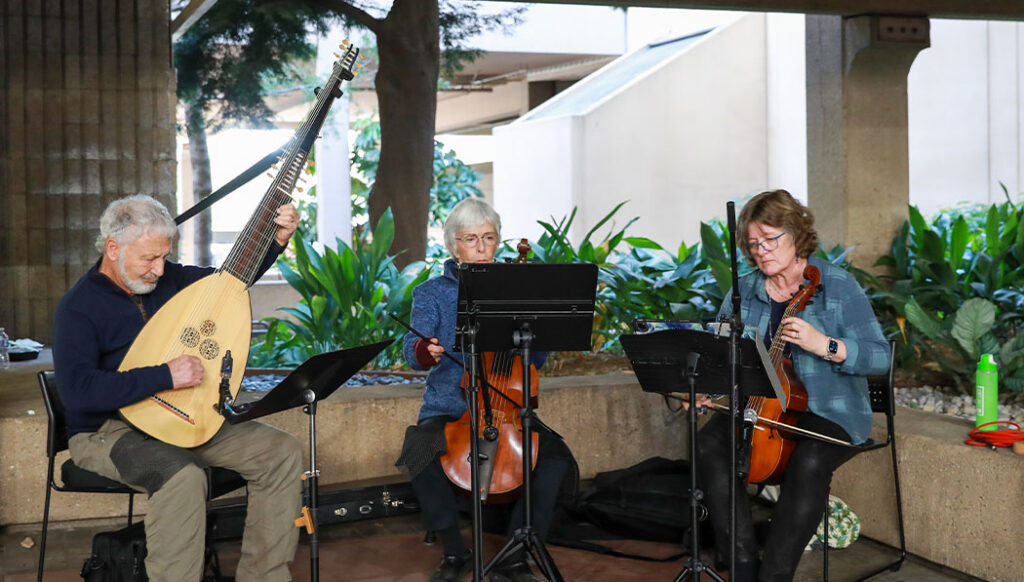
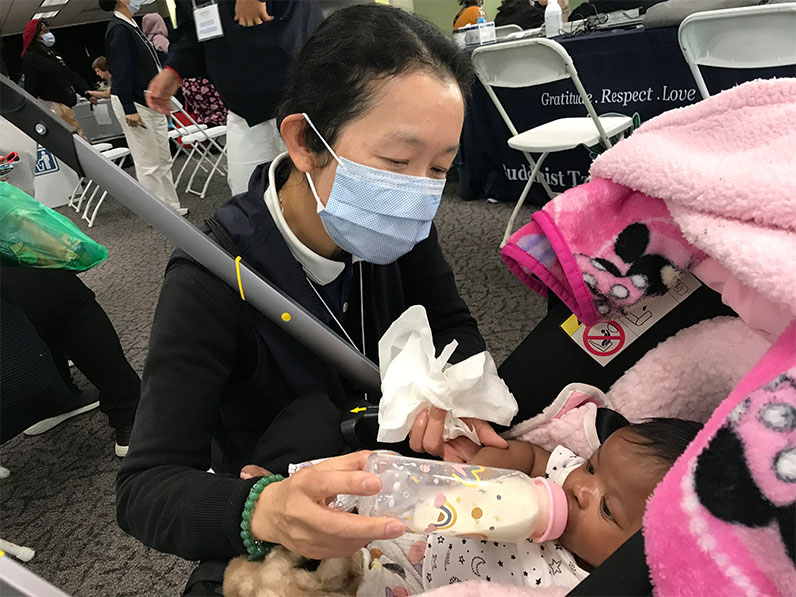
Hsieh felt fortunate that Tzu Chi could offer such critical aid at the relief event, and connect people with different services to provide holistic support. “Many survivors bring their children, so we set up a play area for them. This way, parents can move freely between stations to collect supplies. There were also outdoor concerts with live performances from artists,” said Minjhing Hsieh. These details, though small, greatly helped ease the pressure that weighed upon survivors.
SHARE
The Mission-Driven Mobile Vision Clinic
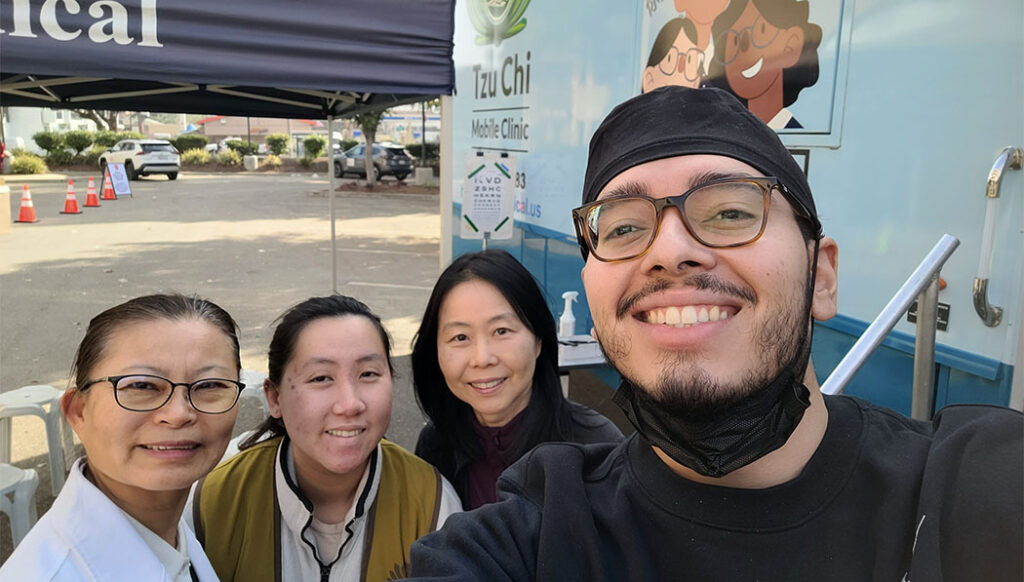
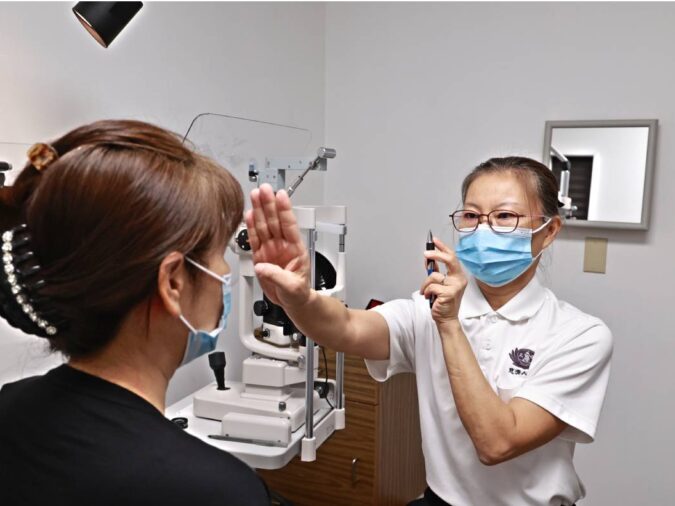
“The Eaton Fire was only five miles from my house. Although my home was not affected, I still felt very anxious,” said Lina Lin, an optometrist at Tzu Chi USA’s South El Monte Health Center as well as a member of the Tzu Chi International Medical Association. “Our home became a shelter. Friends who lived in the mountains, as well as my sister-in-law’s family, came to stay with us. One friend even lost their home.” Amid the uncertainty, Dr. Lin received an urgent call from Stephen Huang — Tzu Chi’s Vision Mobile Clinic needed to be deployed immediately. “Stephen called me on a Friday, saying the clinic needed to be dispatched by Monday. It was a bit challenging because of the short notice, but I told him, ‘Mission accepted,’ and started recruiting a team.”
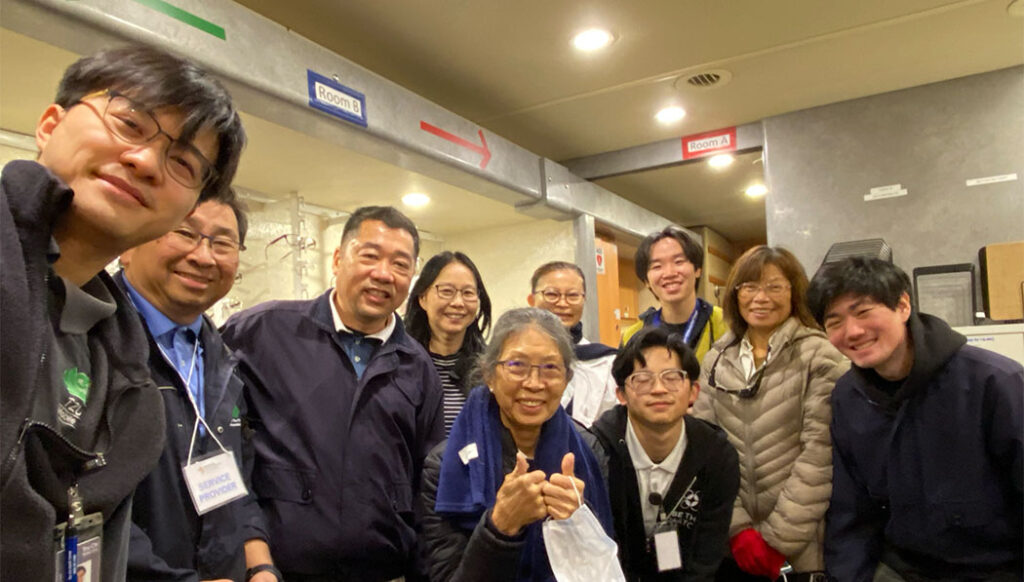
This mission was different from Tzu Chi’s regular free prescription eyeglass services. The number of patients they had to serve was two to three times the usual daily average, requiring many optometrists. “Finding doctors was tough since everyone is busy, and it was last minute. I started reaching out to my friends, and luckily, one of them, Derek Tong, is a well-known optometrist in the community. He spread the word across different optometry networks. It was touching. He even helped organize a shift schedule so that doctors could sign up based on their availability. More and more names filled up the slots — some doctors even returned after their shifts because they enjoyed helping so much. It truly felt like bodhisattvas emerging from the earth to answer the call for help,” said Dr. Lin with deep gratitude.
Some survivors lost their glasses in the fire, some had their glasses broken while evacuating, and others were anxious because they only had one pair. If anything happened to them, it would severely impact their ability to drive and function in daily life. We made sure they got what they needed.
Lina Lin
Optometrist
Tzu Chi Health Center – South El Monte
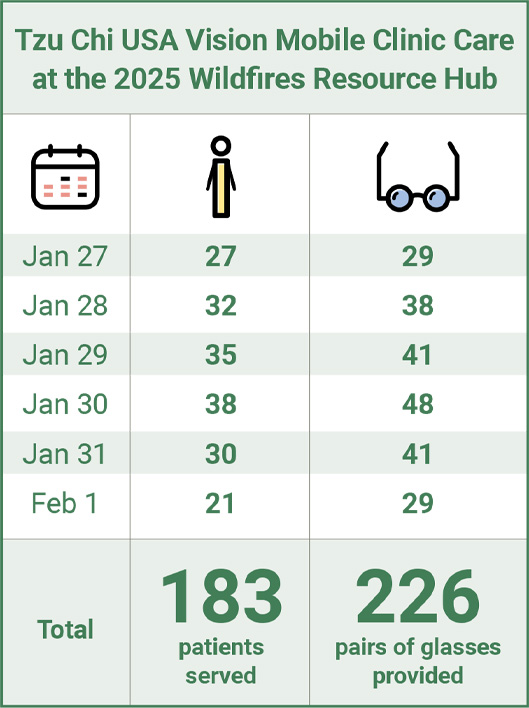
A total of 16 optometrists took turns providing free services to 183 survivors over six days, distributing 226 pairs of eyeglasses.
SHARE
2025 Wildfires Resource Hub Statistics*
(January 27 to February 1)
*Source: Organizers of the Wildfires Resource Hub
| Households Served: | 12,725 |
| Participating Organizations: | Over 40 |
| Participating Volunteers: | 1,250 |
| Total Volunteering Hours: | 13,550 |
| Total Cash Relief Distributed: | $8,459,400 |
| Relief Supplies Distributed: | Value of $2,904,942 |
| Hot Meals Supplied: | Value of $139,000 |
Efforts Continue
February 1 marked the final day at the Wildfires Resource Hub, but Tzu Chi’s relief efforts were far from over.
Due to safety considerations, the organizers had to place a daily limit on financial aid distributions. David, who was able to collect supplies and a pair of reading glasses, missed the deadline for financial aid registration, and a Tzu Chi volunteer helped him register through Tzu Chi’s own system, ensuring he could pick up his cash card at the Tzu Chi USA Health Center in Alhambra the following day.
“I got $1,200. This helps a lot,” said David, who had lived in an Altadena apartment with his brother and nephew before the fire. “The first couple of days, I had to pay for the hotel myself. So, $500 for three days is a lot, you know? I can’t afford it. And then, after that, we stayed in a truck for about five days, and then the truck broke down, so we had to tow it to a shop, and I had to go rent a car, so we were in the car for a little bit. And then we got Airbnb for a week, and now we’re out tomorrow,” David recounted, and explained that he’d been diagnosed with kidney failure at a young age. At the time, he felt active and otherwise healthy, so it was a shock to the system. He received dialysis treatment for ten years, with little hope he would receive the kidney he needed — but fortunately, he did, and tries to remain mindful of his health. Even so, the present situation made that a difficult goal to uphold.
“When we were living in the truck, we had to buy [takeout] every day. And I have to have a special diet. Low-sodium, low-cholesterol, because of my kidney. So that kind of messed me up because my blood pressure was high during those days that we were just running around, because you just eat what you can… I used to do marathons. I would do marathons for multiple sclerosis here in San Diego on a bicycle, and I would do multiple events like that throughout the years. I was telling my brother, ‘I think dialysis trained me for this, because I’ve gone through worse.’ I was able to keep a calm head and not panic. Because I’ve been through emergencies before. You gotta keep fighting.”
Once, David suffered septic shock from a dialysis transfusion and ended up in the ICU, his family uncertain of his survival as his condition became critical. But David ultimately pulled through. “At some point, once I got to dialysis, and I saw all the people there, I was like, ‘Wow, there’s like a language barrier. And a lot of people here are suffering because they don’t kind of understand each other.’ So, what I would try to do is, I told myself, ‘Maybe God put me here on purpose. Maybe I’m supposed to do this, supposed to walk this journey.’ And so I will stay and help translate whatever I understood so they won’t have to suffer.” And, this desire to be of aid to others persists.

“We were trying to help out everybody at the apartments first because the electricity went out, so it was dark, and nobody could really see what was going on,” he shared with volunteers. “We had flashlights because I work in tech and all kinds of stuff, so we always have battery-powered stuff. It hit 4:00 AM, and you couldn’t breathe. Everything was on fire, so you just… You just had to go. Everybody just had to go,” said David, sharing the winding journey that led him to Tzu Chi calmly, without fear or despair.

Moved by the experience, Tzu Chi volunteer David Hoy reminded him that Tzu Chi hosts weekly fresh produce distributions in Alhambra to help ease financial burdens, and shared how Dharma Master Cheng Yen founded Tzu Chi by gathering small acts of kindness into a global force for good. David took these words to heart, and responded, “Sometimes you think, ‘Oh, just a little bit, it’s going to do nothing. But… If everybody helps a little bit, it changes the world.”
And as Tzu Chi’s founding story proves, it certainly does, indeed.