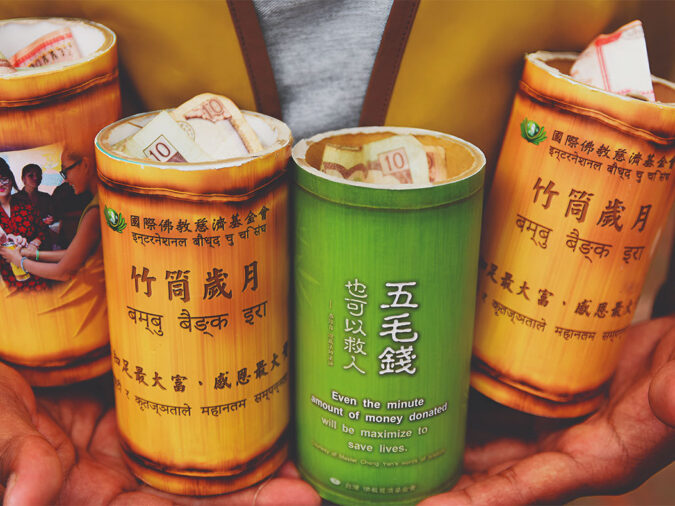
Tzu Chi volunteers are introducing humanistic and character education in schools and communities around Bodh Gaya. Through Jing Si Aphorisms and Buddhist parables, children learn moral lessons that extend into family and community life, promoting filial piety, respect for teachers, and parent-child bonding. Other programs encourage environmental protection, vegetarianism, and the spirit of giving through bamboo banks.
Instilling Values Through Aphorisms and Stories
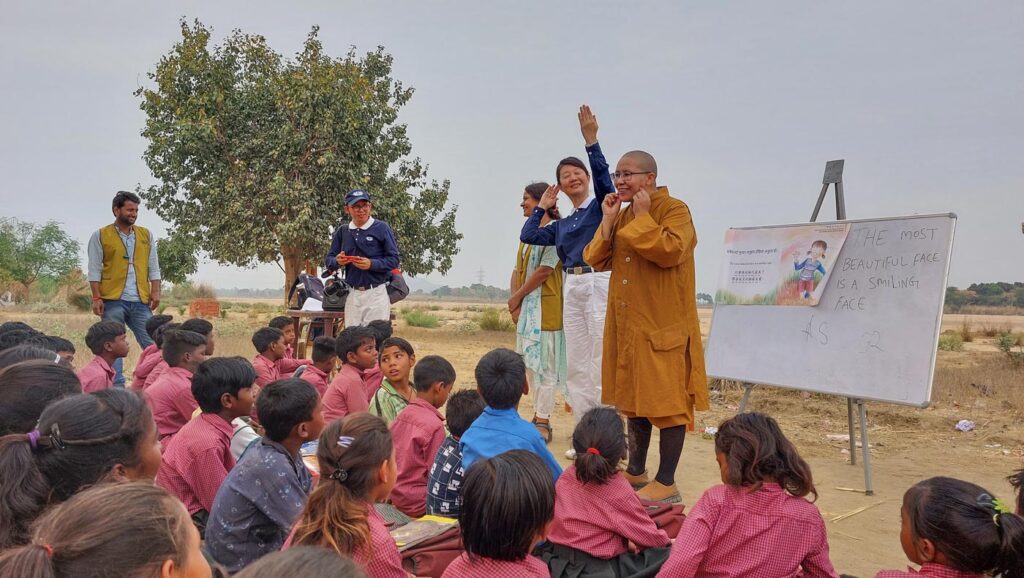
In Silaunja, where lower-caste children attend government schools in the summer but often resort to begging in the winter, a local monastic from Ladakh, Master Ruxin, launched an informal tutoring program in 2022. Known as the Tree School because it takes place beneath the shade of a large tree, the program serves 280 to 300 marginalized students, aiming to keep them off the streets and engaged in learning throughout the year.
Tzu Chi volunteers introduce Jing Si Aphorisms at Master Ruxin’s Tree School tutoring program in Silaunja. Photo/Yixuan Deng
In March 2023, Tzu Chi volunteers introduced Master Cheng Yen’s Jing Si Aphorisms to the children. “Every sentence, every word of the Jing Si Aphorisms has profound meaning,” Master Ruxin said, welcoming the initiative. “I believe that continuously imparting these teachings to the children will bring great rewards in the future.”
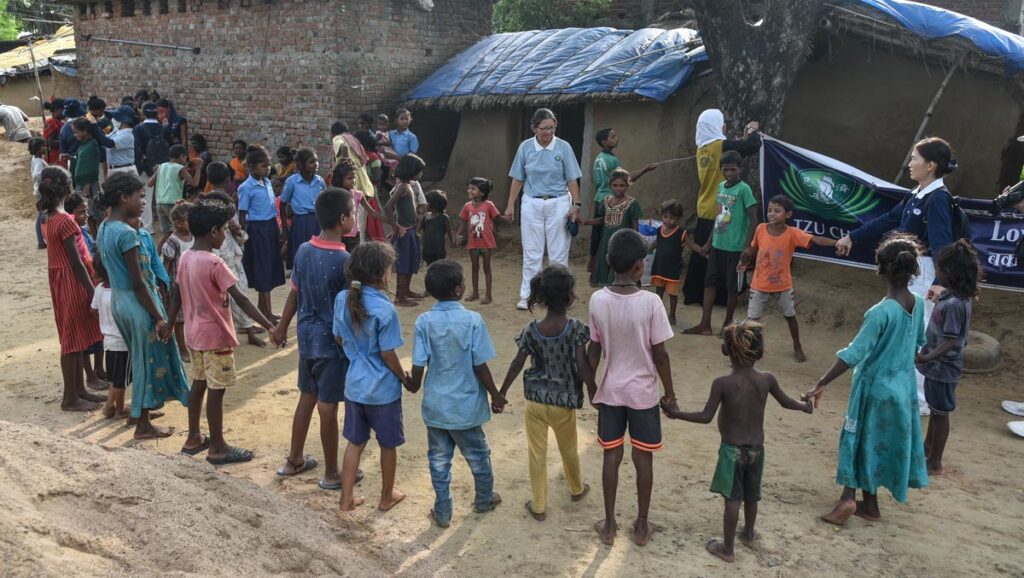
Tzu Chi then launched a weekly Humanities Course Beneath the Bodhi Tree in Silaunja, expanded its curriculum to include hygiene education, environmental awareness, and moral storytelling. The children are taking these lessons to heart, incorporating them into daily life through simple acts of kindness and mutual support.
Tzu Chi volunteers conduct group activities during their Humanities Course Beneath the Bodhi Tree in Silaunja. Photo/Lixue Chen
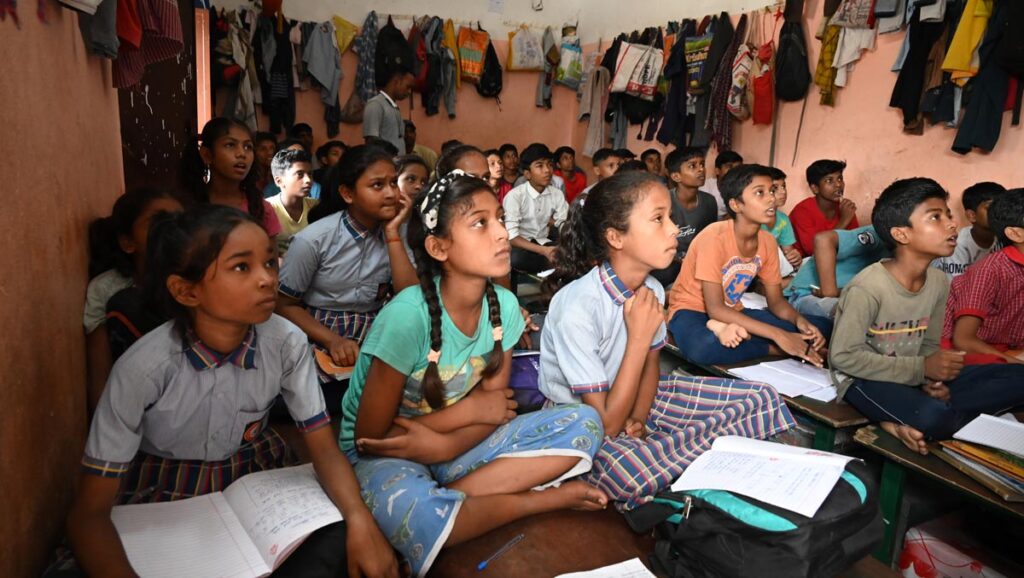
The education team also provides humanistic education at schools in Gaya District and invites educators to join the Tzu Chi Teachers Association. Tzu Chi volunteers regularly conduct sessions at Buddha Gyan Niketan Residential School, which provides shelter and education to orphans and children from impoverished families. Despite challenging conditions, where classrooms double as sleeping quarters and resources are limited, the students remain eager to learn and embrace the values being taught.
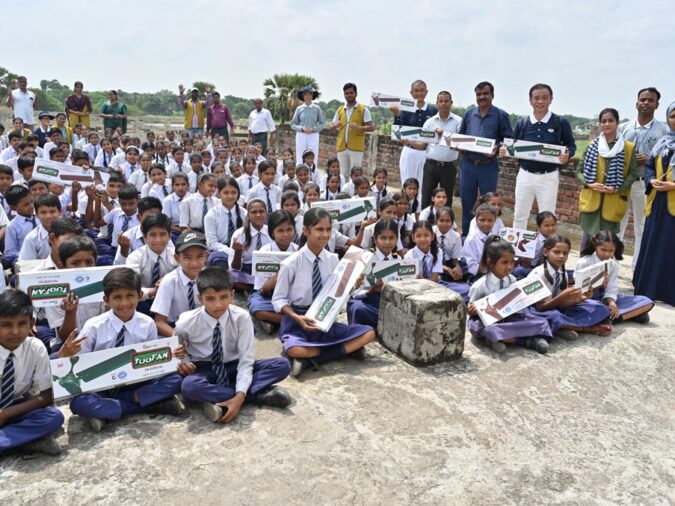
Students at Buddha Gyan Niketan Residential School listen attentively during a Jing Si Aphorisms class. Photo/Wenying Chung
At Suryapura Middle School, weekly sessions have become an integral part of student life, with teachers noting improvements in classroom discipline and attentiveness. Jing Si Aphorisms have been incorporated into the daily routine at Sujata Bakraur Government School as well.
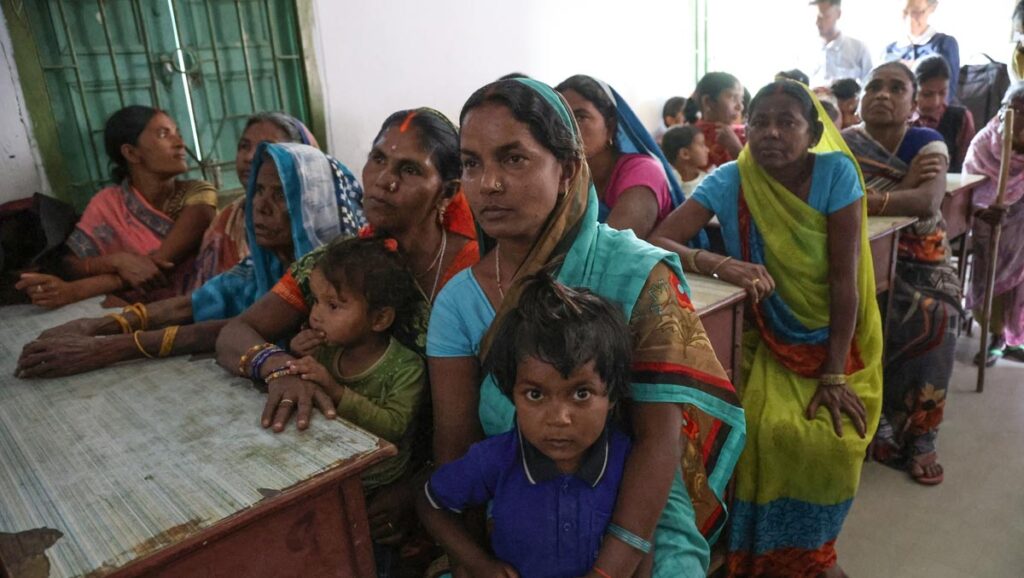
Tzu Chi volunteers also include Buddhist parables from Stories Told by Dharma Master Cheng Yen in their humanistic education initiatives. At Niranjana Public Welfare School in Bakraur, one session in March 2024, which was open to the entire community, emphasized giving and inspired participants to practice kindness daily.
Villagers watch Stories Told by Dharma Master Cheng Yen at Niranjana Public Welfare School in Bakraur in March 2024. Photo/Peiling Lu
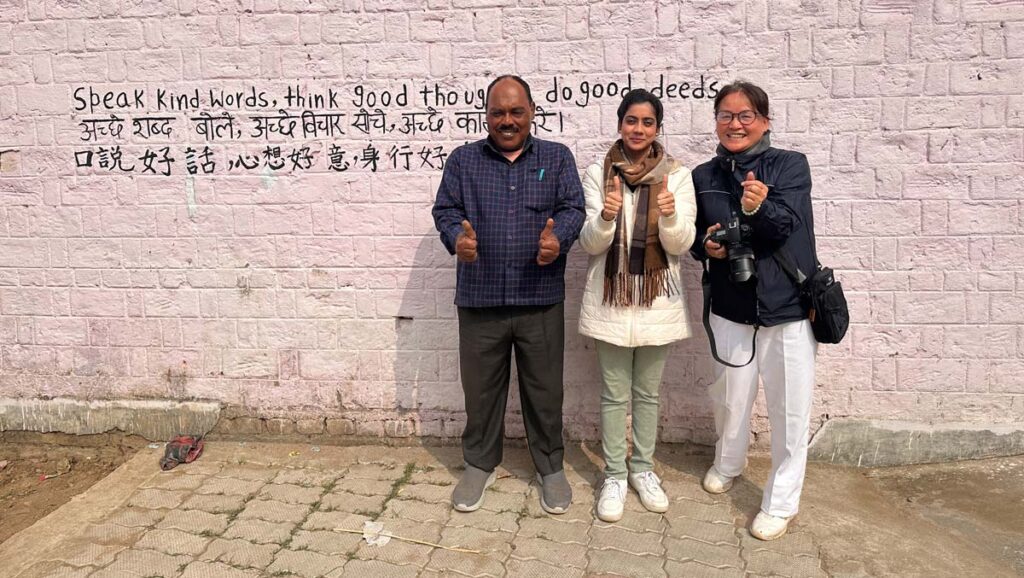
The humanistic education effort extends beyond classroom instruction as well. In January 2025, students and teachers at Suryapura Middle School collaborated with Tzu Chi volunteers to paint murals featuring Jing Si Aphorisms across the campus. Phrases like “Speak kind words, think good thoughts, do good deeds” now inspire daily reflection, fostering responsibility and respect.
Suryapura Middle School Principal Bajnath Kumar (left), colleague Aliya Rahman (middle), and Tzu Chi volunteer Cuilien Ling (right) stand before a Jing Si Aphorism painted on a wall at the school. Photo/Meihui Li
Introduced in 2025, Tzu Chi’s Humanistic Award further motivates students to embody positive character traits and values. All these ventures not only influence individual student behaviors but also foster a supportive community where everyone inspires each other to strive for personal growth and contribute positively to society.
Nurturing Respect and Connection Across Generations
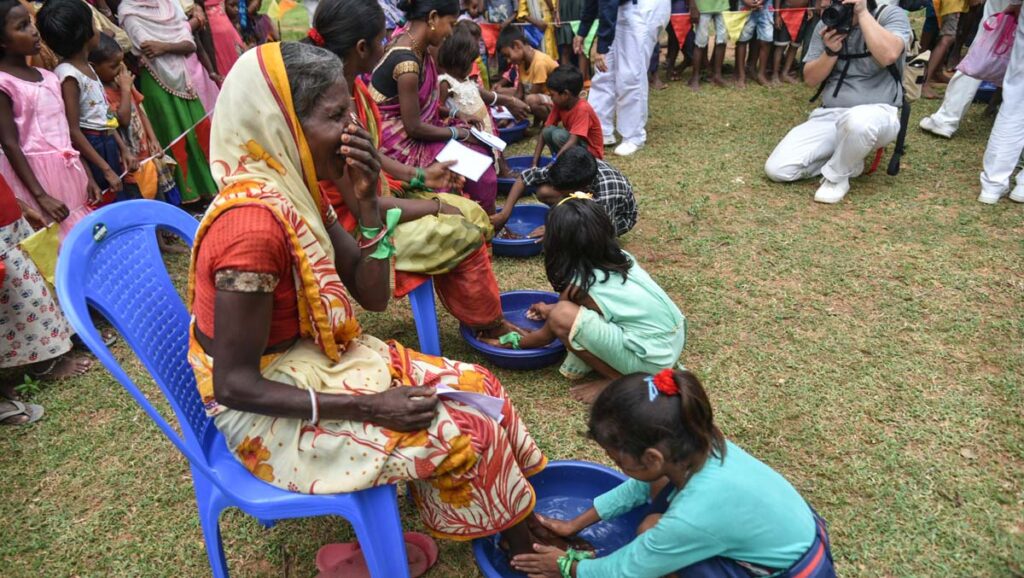
In communities throughout Gaya District, Tzu Chi volunteers are actively cultivating values of filial piety, intergenerational bonding, and respect for teachers through various activities. For instance, in May 2023, at the Buddha Day celebration in Bodh Gaya commemorating Buddha’s birthday, Mother’s Day, and global Tzu Chi Day, volunteers held a foot-washing ceremony. Children knelt before their parents, gently washing and massaging their feet in a symbolic act of gratitude. The ritual moved many parents to tears.
A similar ceremony took place in September 2023 in the village of Jagdishpur, where children again expressed their appreciation to their parents through a foot-washing ritual. The event reinforced bonds between generations and underscored the importance of honoring one’s elders.
Accompanied by the Indian song Thank You, Parents, children bathe their parents’ feet during a Tzu Chi community gathering in Jagdishpur. Photo/Vikash Kumar
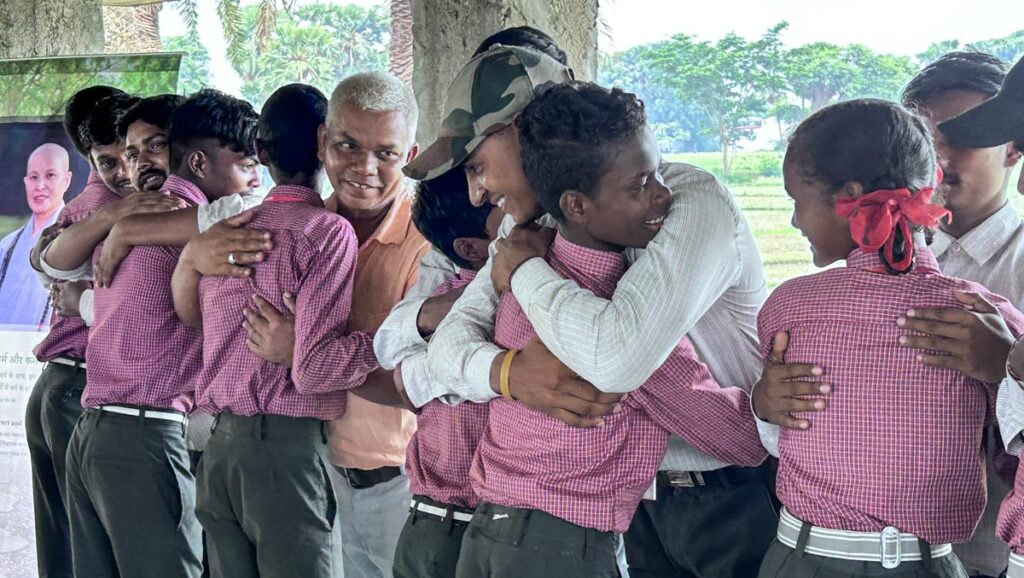
Tzu Chi also emphasizes the importance of respect for educators. For example, in July 2023, at Senani Samaj Seva Ball Jagrup School in Bakraur, students participated in a tea-offering ceremony. Bowing deeply as they presented cups of tea, the children expressed their gratitude to their teachers with genuine sincerity.
Following a tea-offering ceremony at Senani Samaj Seva Ball Jagrup School in Bakraur, students warmly embrace their teachers, a gesture that clearly touched the educators’ hearts. Photo/Hsiulien Chu
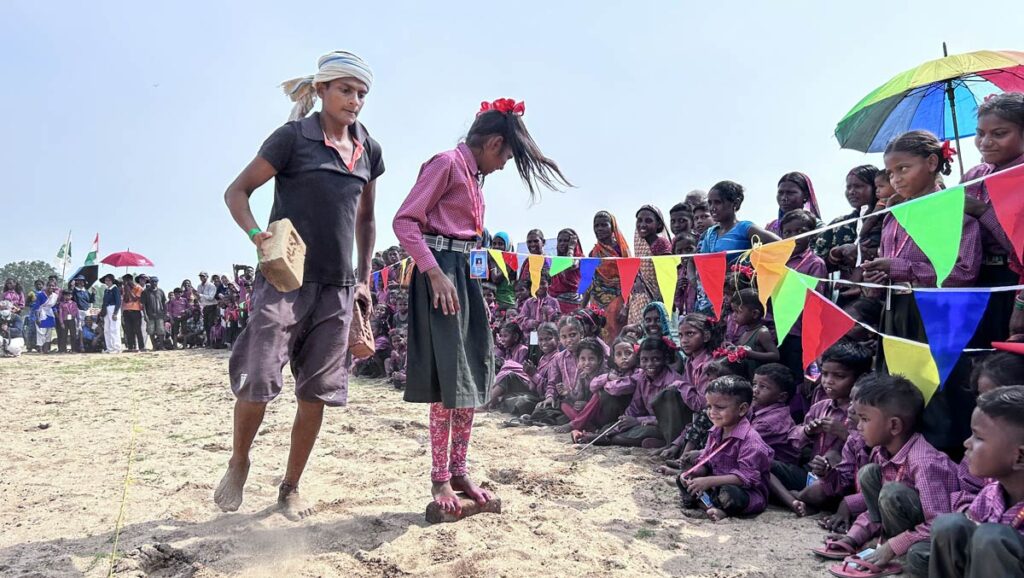
Later that month, the school hosted a Parent-Child Sports Day, featuring collaborative games such as three-legged races and blindfolded obstacle courses. These activities were designed to build trust and strengthen the emotional connection between parents and children through joyful shared experiences.
In the Steady Steps game at the Parent-Child Sports Day event in Bakraur, parents and children work together to complete the challenge as a team. Photo/Hsiulien Chu
Through these thoughtfully designed community events across Gaya District, Tzu Chi is nurturing a culture of gratitude, respect, and connection across generations, one heartfelt interaction at a time.
Promoting Environmental Protection
Tzu Chi volunteers are actively promoting environmental protection as part of their ongoing activities in India. These efforts not only align with Tzu Chi’s global missions but also respond directly to the conditions observed in Bodh Gaya and surrounding villages, where streets and alleys are often strewn with garbage, flies swarm freely, and unsanitary conditions raise serious health concerns. Additionally, residents often lack awareness of the numerous benefits of recycling.
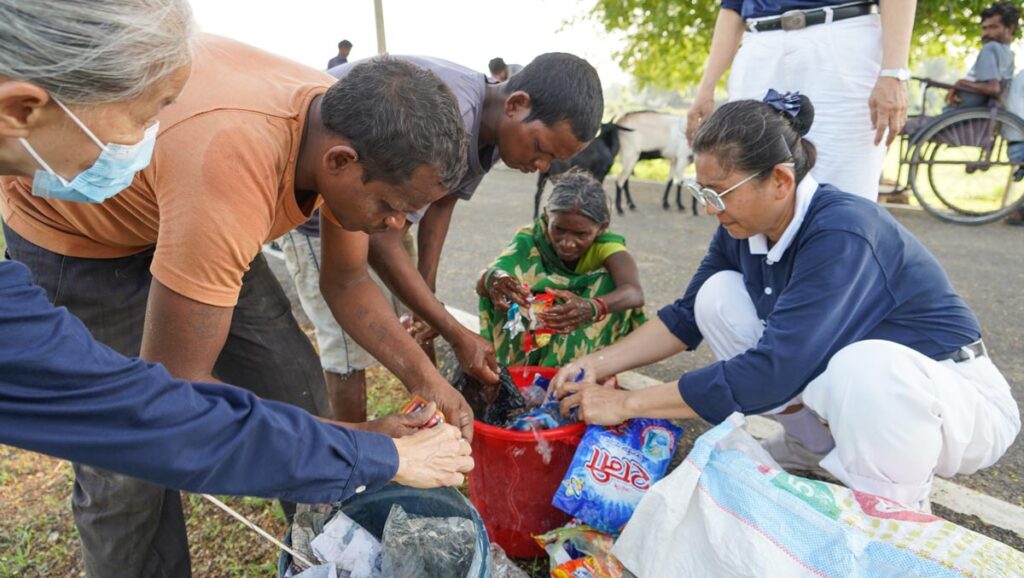
As part of such ventures, in 2023, Tzu Chi volunteers established a recycling point under a large tree in Bakraur. “The environment here is incredibly beautiful. Without all this garbage, it would be like a paradise,” Tzu Chi Malaysia volunteer Lihua Lee shared.
Villagers join Tzu Chi volunteer Lihua Lee and others at the recycling point in Bakraur to help clean plastic for recycling. Photo/Chinhung Yeh
In fact, the village is a Buddhist pilgrimage site, home to the Sujata Stupa, which commemorates Sujata, the young woman who offered milk and rice to Gautama Buddha. In accepting it, he ended his period of extreme asceticism, realizing it was not the path to enlightenment. This insight gave rise to the Middle Way, which ultimately brought him to awakening beneath the Bodhi Tree in Bodh Gaya.
“Today, we established this recycling point, and in the future, there will be more,” Lee said. The volunteers also educated locals on the 5 Rs – Reuse, Reduce, Repair, Refuse, and Recycle – and introduced the concept of eco-bricks, where non-recyclable plastics are stuffed into bottles to create building materials.
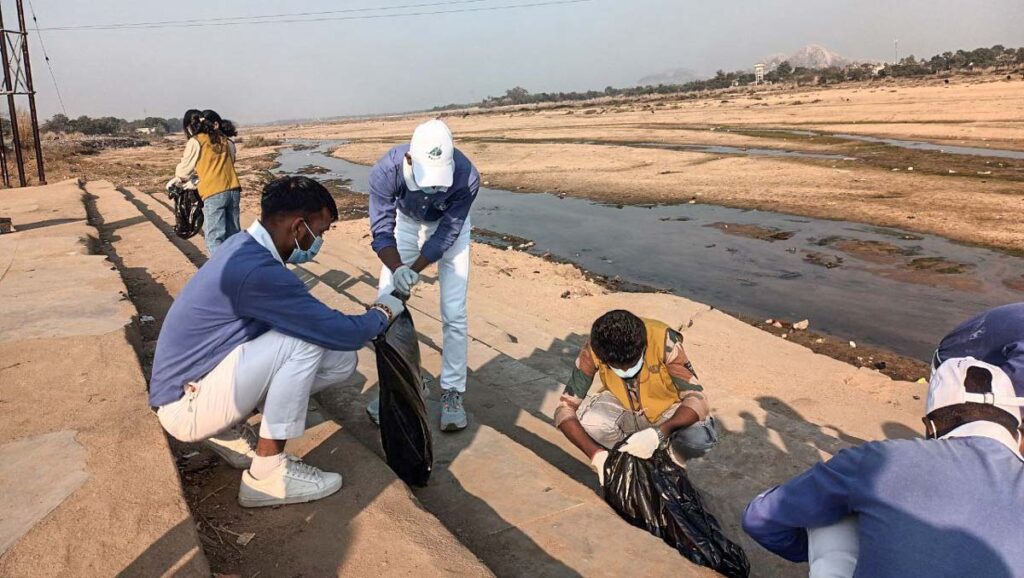
Another environmental protection initiative took place in January 2025. Tzu Chi Youth volunteers organized a cleanup activity along the banks of the Niranjana River, known today as the Phalgu River. This waterway, which flows through Gaya District, is considered one of the most sacred rivers in both Buddhism and Hinduism.
According to Buddhist tradition, it was near this river that Siddhartha Gautama practiced asceticism and received Sujata’s nourishing offering. The cleanup, which included participation from young community volunteers, not only honored the environment but also served as an educational example for local residents who witnessed the team in action.
Tzu Chi youth and community volunteers gather garbage along the banks of the Niranjana River, inspiring others by example. Photo/Prince Kumar
Advancing Vegetarianism
As they do around the world, Tzu Chi volunteers promote vegetarianism in India, not only out of compassion for all living beings, but also for health reasons and the reduced carbon footprint of a plant-based diet. These efforts are reaching schools across Gaya District, where students are learning to embrace compassionate living.
At one in particular, Suryapura Middle School, they are flourishing. Principal Bajnath Kumar, a vegetarian himself, has expressed his desire for the entire school to adopt vegetarianism. “I want my school to be fully vegetarian, with no one eating chicken or meat,” he said. “But I need everyone’s support. I believe we can achieve this one day.”
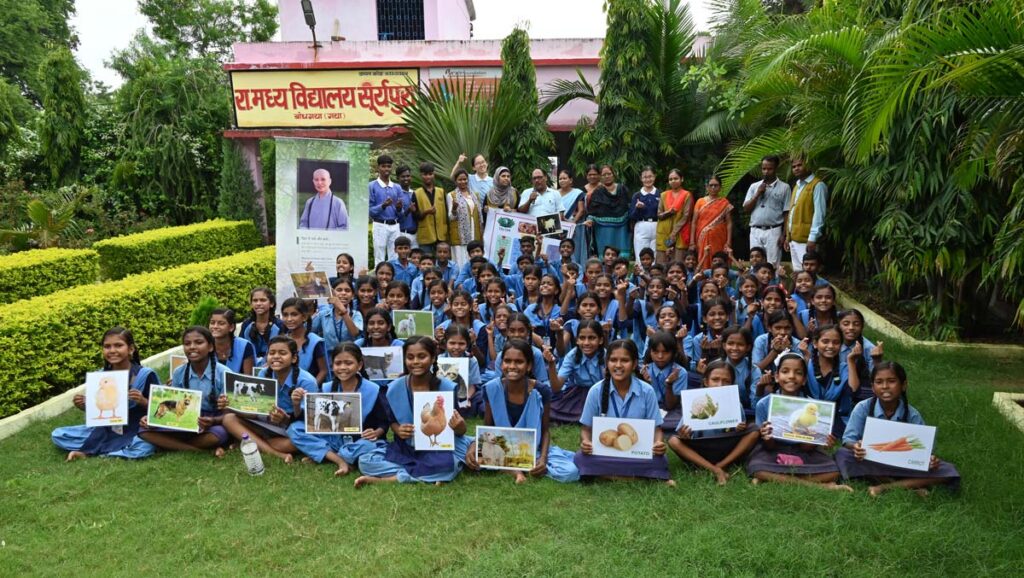
In July 2024, Suryapura Middle School students participate in an event promoting vegetarianism. Photo/Tsunchih Cheng
Tzu Chi volunteers organized a vegetarianism promotion event at the school in July 2024. The message resonated with students. Rahul Kumar shared, “When I went to buy fish, the seller tied the fish up. I thought, if someone tied me up, it would be very painful for me, so it must be painful for them, too. That’s why I hate eating any animal meat. With a vegetarian diet, we get protein, calcium, vitamins, and iodine, which give us energy and keep us healthy. So, we should be vegetarians.”
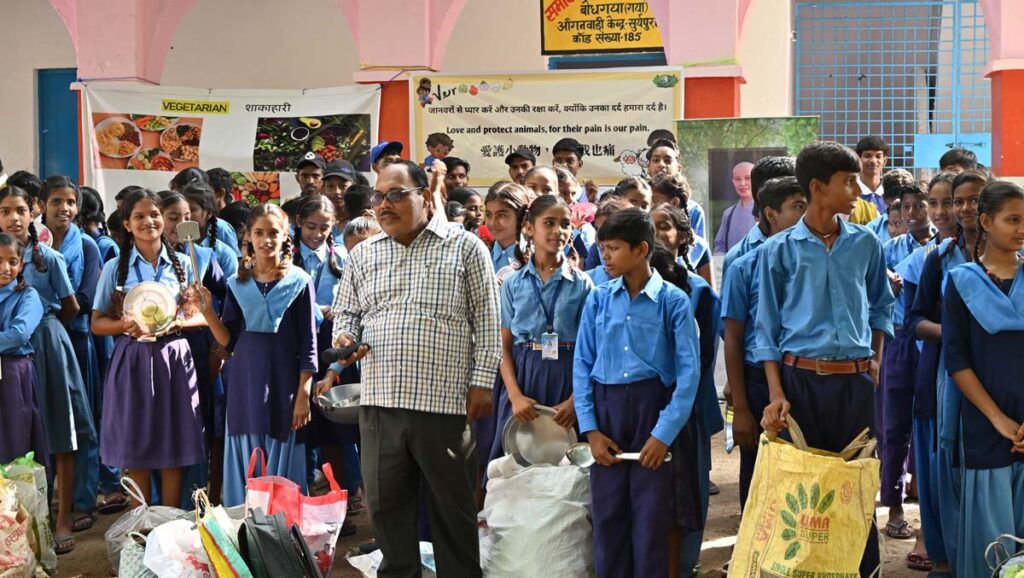
Later that month, the school hosted a vegetarian cooking competition led by Tzu Chi volunteers. Students worked in teams to prepare plant-based dishes, learning about nutrition, teamwork, and ethical eating. They ended the day by sharing the meals they had made together.
With their cooking utensils from home in hand, Suryapura Middle School students wait as Principal Bajnath Kumar (front) prepares to start the vegetarian cooking competition. Photo/Chunchih Cheng
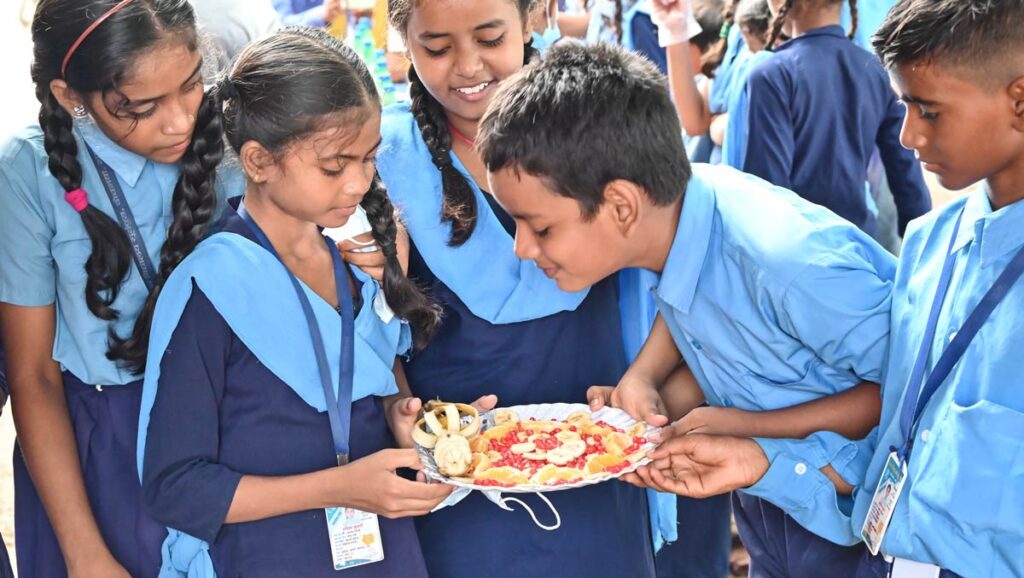
Students savor the enticing aroma of a freshly prepared dish during the vegetarian cooking competition at Suryapura Middle School. Photo/Chunchih Cheng
In August 2024, inspired by Tzu Chi’s teachings, several female students took the initiative to promote vegetarianism in their village. Accompanied by teachers and volunteers, they went door-to-door, sharing the health and ethical benefits of a plant-based lifestyle. Their gesture led to increased awareness and a shift towards vegetarianism within the community. And such efforts are not confined to this community or the school here.
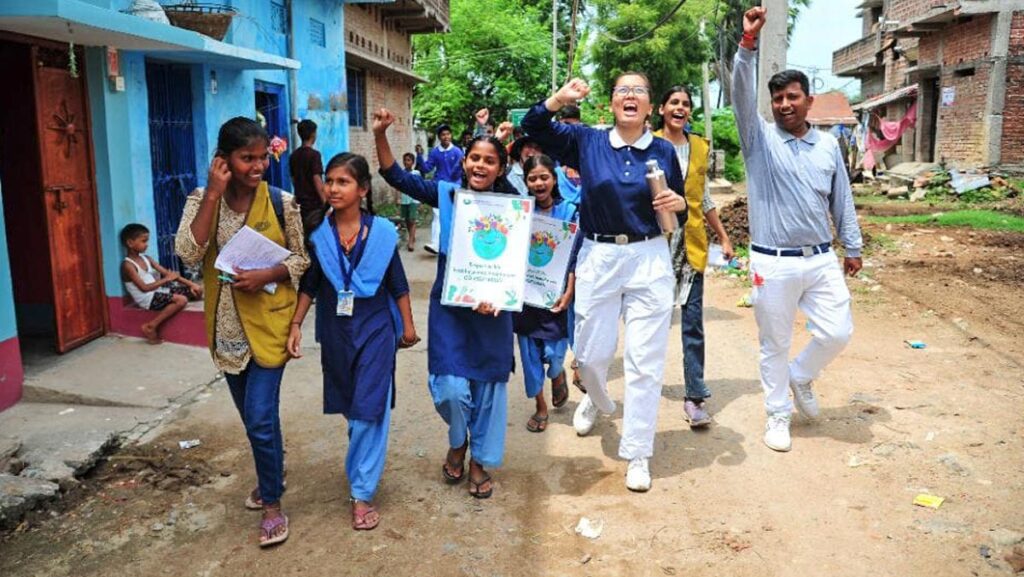
“Tzu Chi Foundation is promoting vegetarianism, and we invite you to join,” shout students from Suryapura Middle School as they walk through their village. Photo/Prince Kumar
Inspiring Generosity Through Bamboo Banks
The Bamboo Bank Spirit, which encourages everyone to save small amounts daily to help those in need, lies at the heart of Tzu Chi’s efforts to foster a culture of compassion and giving worldwide. Across all its activities in India – from one village to the next and from school to school – Tzu Chi volunteers introduce this central concept with sincerity and hope.
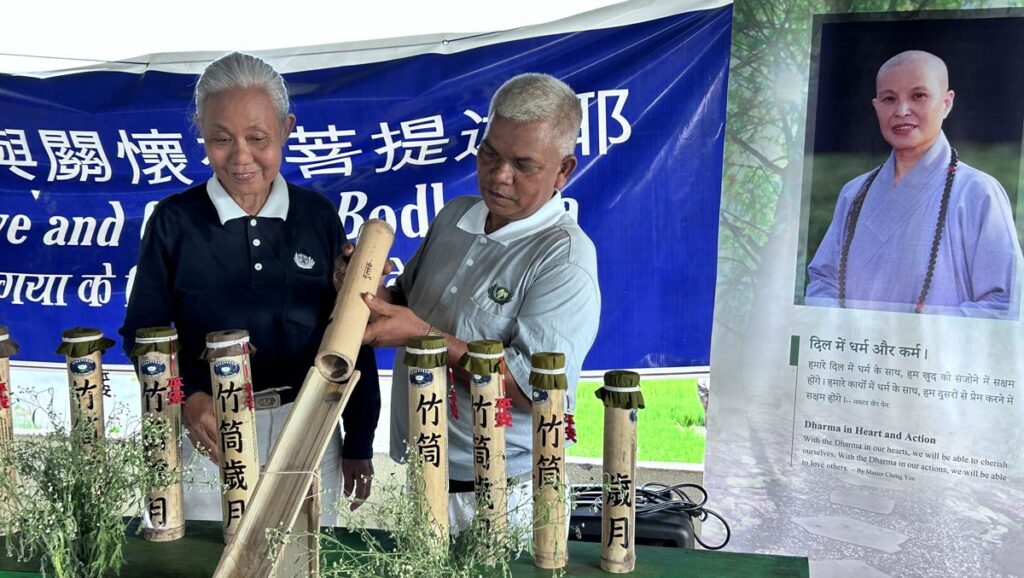
Tzu Chi volunteer Li Hua and Principal Ranjee Manjhi of Senani Samaj Seva Ball Jagrup School demonstrate how individual donations to bamboo banks combine to support a global fund of relief for people in need. Photo/Hsiulien Chu
Tzu Chi volunteers have also extended the bamboo bank initiative to local shops, encouraging entrepreneurs to become Loving Shops. In November 2024, following a volunteer training at the Tzu Chi office in Bodh Gaya, the group helped spread this message of benevolence and generosity, hoping shopkeepers around the Mahabodhi Temple – the site of the Buddha’s enlightenment – would adopt bamboo banks in their stores.
As they visited the shops, Gaina Manjhi from Bakraur shared his journey from a beggar to a giver, inspiring others to embrace Tzu Chi’s spirit of giving. “Tzu Chi’s support transformed my life, and I am now part of Tzu Chi, doing good deeds, which makes me feel really good,” he told the entrepreneurs.
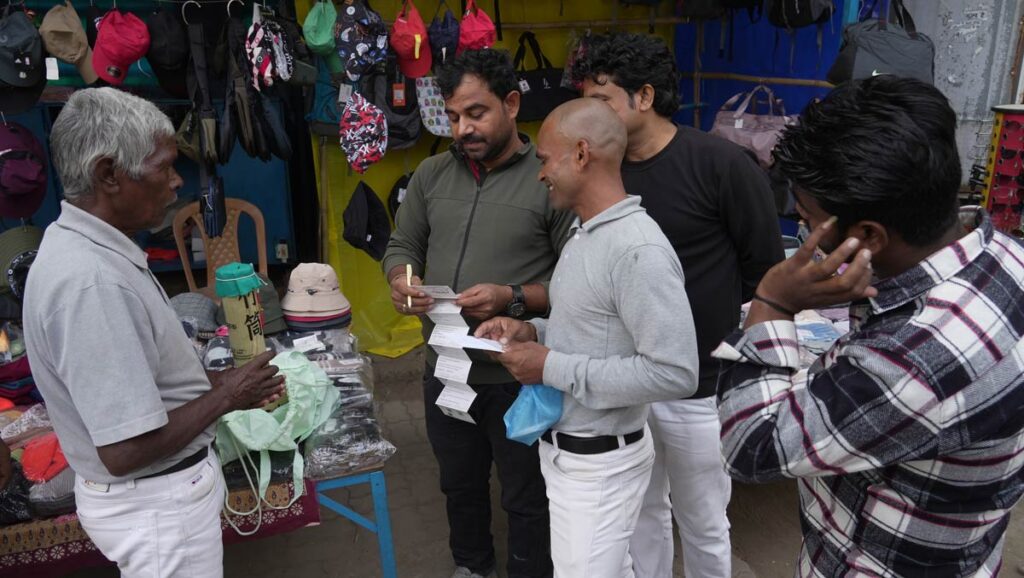
Tzu Chi volunteer Gaina Manjhi (left) shares his story with a shop owner in Bodh Gaya. Photo/Munfei Yong
Arman Kumar, one of the shop owners, was moved by Manjhi’s story. He signed up to become a Loving Shop and placed bamboo banks in his store to collect donations for the underprivileged. “The bamboo bank is wonderful. I can donate one rupee, two rupees, or even five rupees every day. A small drop can eventually form an ocean, just like daily contributions can accumulate into a significant amount to help others,” he said, pledging to contribute regularly himself.