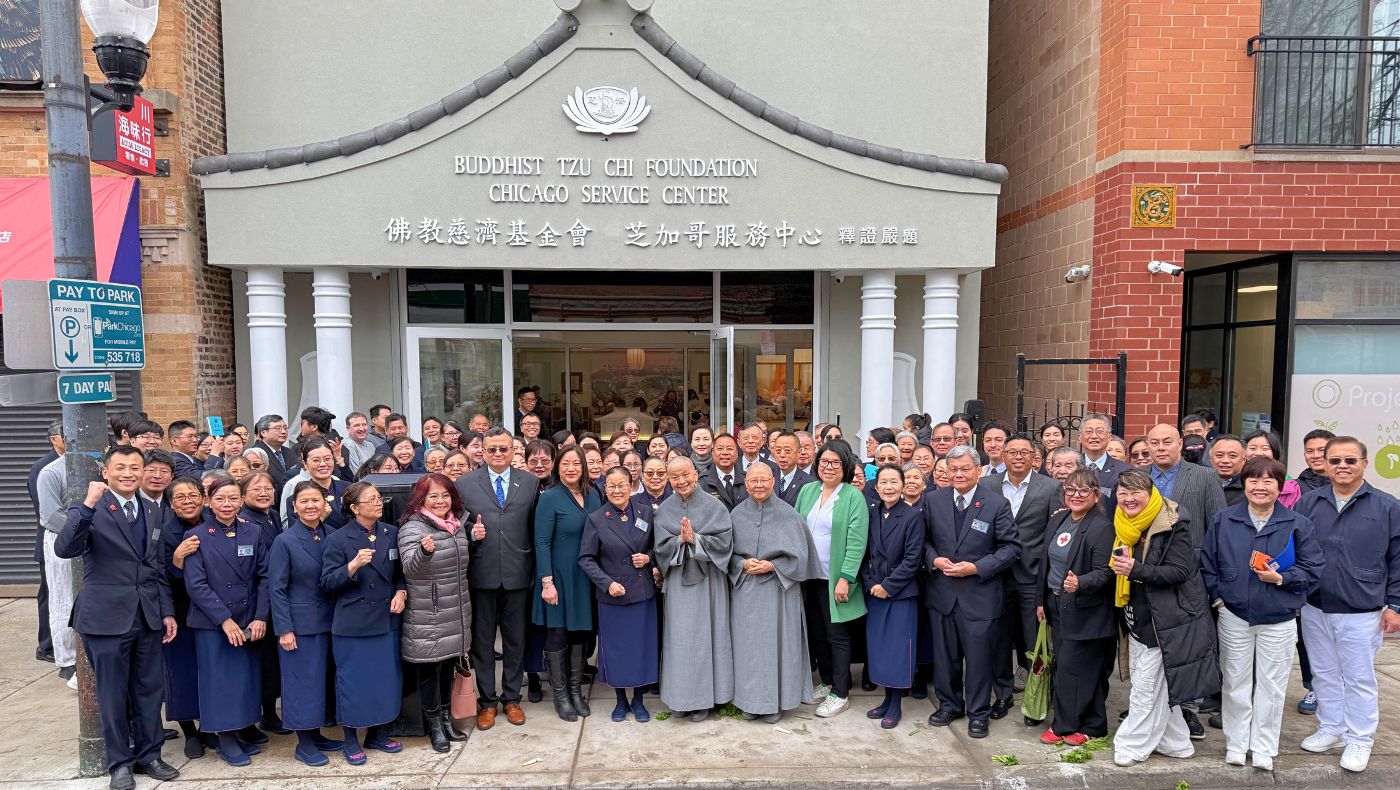
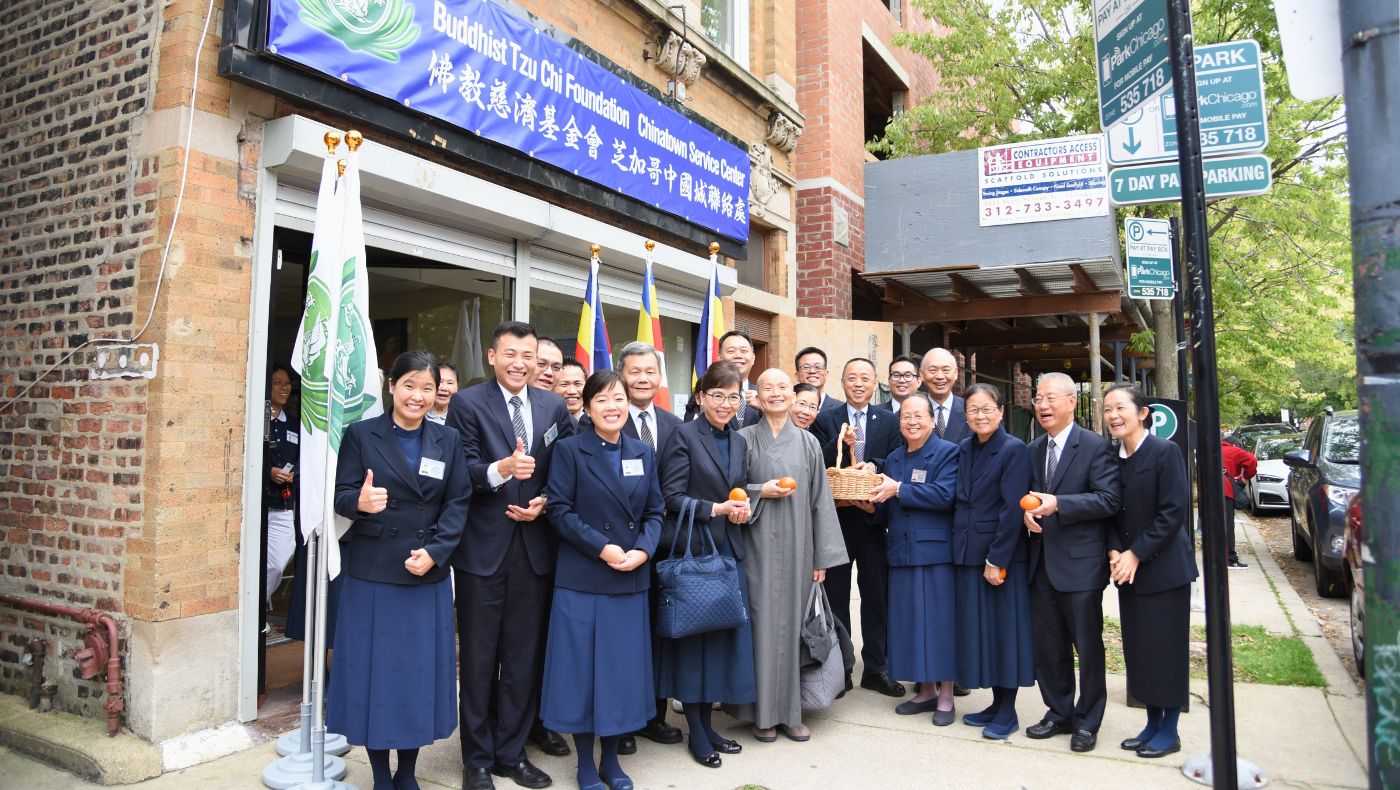
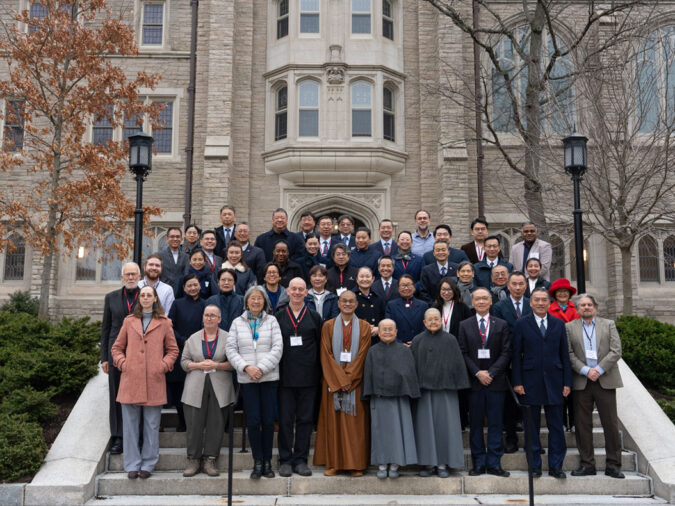
Guests commemorate the grand opening of Tzu Chi USA’s new Chicago Service Center with a group photo after the unveiling. Photo/Ting Fan
SHARE
On the morning of April 5, 2025, a slight chill hung in the air in Chicago, Illinois, and the community thrummed with anticipation. Police cars had already blocked off West 23rd Street in Chicago’s Chinatown, waiting for the celebration to begin. It wasn’t long, however, before the sound of gongs and drums rang out, and two dancing lions “chewed up” lettuce, oranges, and green onions one by one, signifying good luck, auspiciousness, and wisdom in turn. Tzu Chi USA’s new Chicago Service Center would soon open its doors.
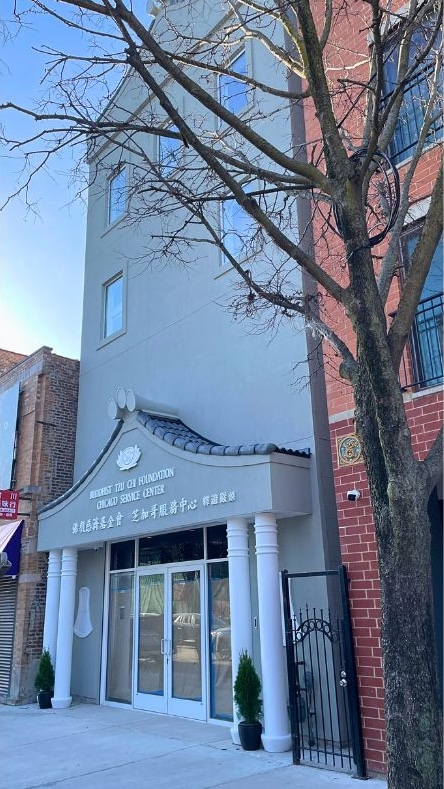
The traditional Chinese architectural features utilized in the construction of Tzu Chi USA’s Chicago Service Center evoke comfort and familiarity for many local community residents. Photo/Jennifer Chien
Dharma Masters De Yue and De Wei from the Jing Si Abode in Hualien, Taiwan, Tzu Chi’s Executive Director of Global Volunteers, Stephen Huang, Tzu Chi USA CEO Debbie Lee, Tzu Chi USA Midwest Region Executive Director Chong Hsieh, and Deputy Executive Director Amy Hsieh, along with nearly 100 guests, had gathered on this day to unveil the new home for Tzu Chi in the neighborhood.
Tzu Chi’s newest service center stands tall in Chicago’s Chinatown, surrounded by history. Photo/Jennifer Chien
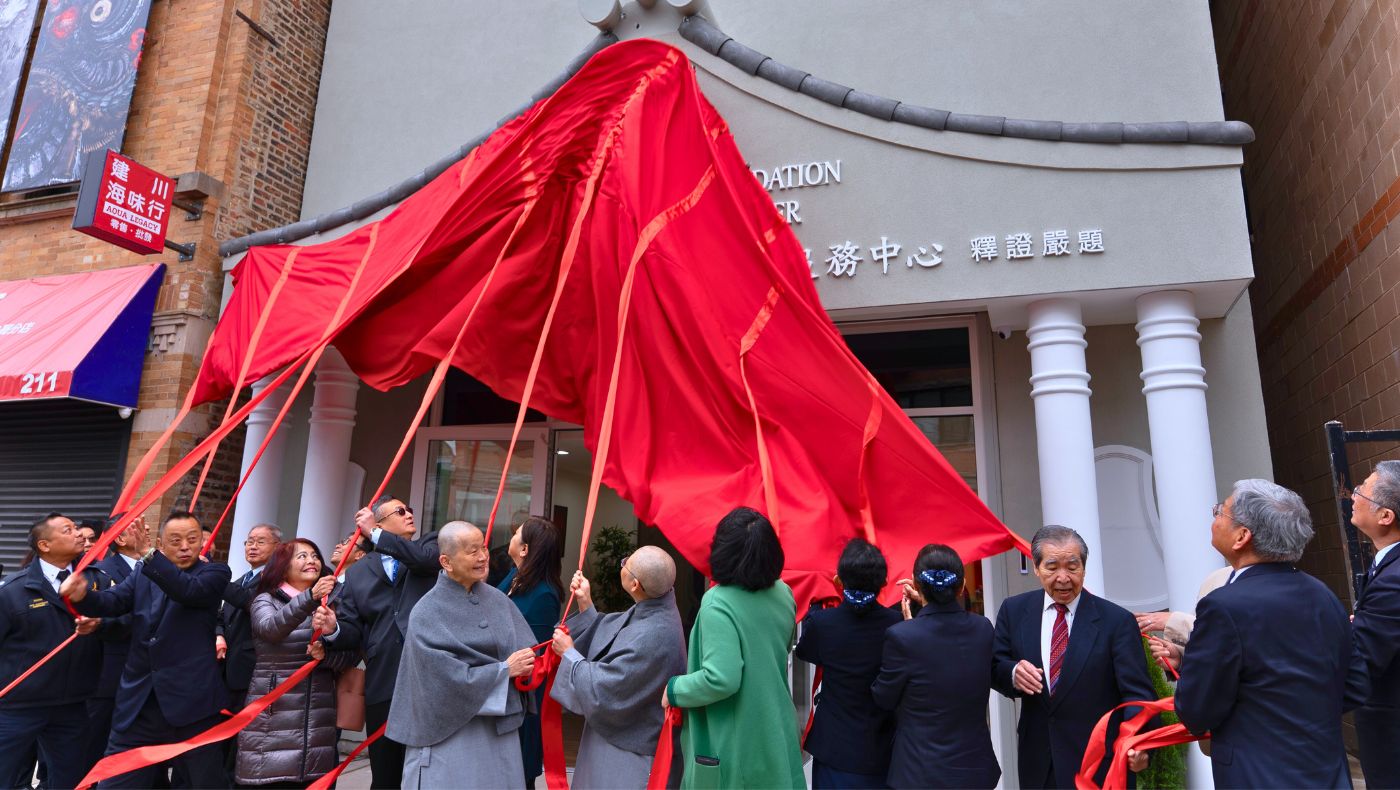
Distinguished guests unveil the new Chicago Service Center together. Photo/Dan Ferrara
With its iconic gable roof and pebbledashed, gray walls, the new office building felt fitting within a community that witnessed the footprints of countless Chinese immigrants in the Midwestern United States.
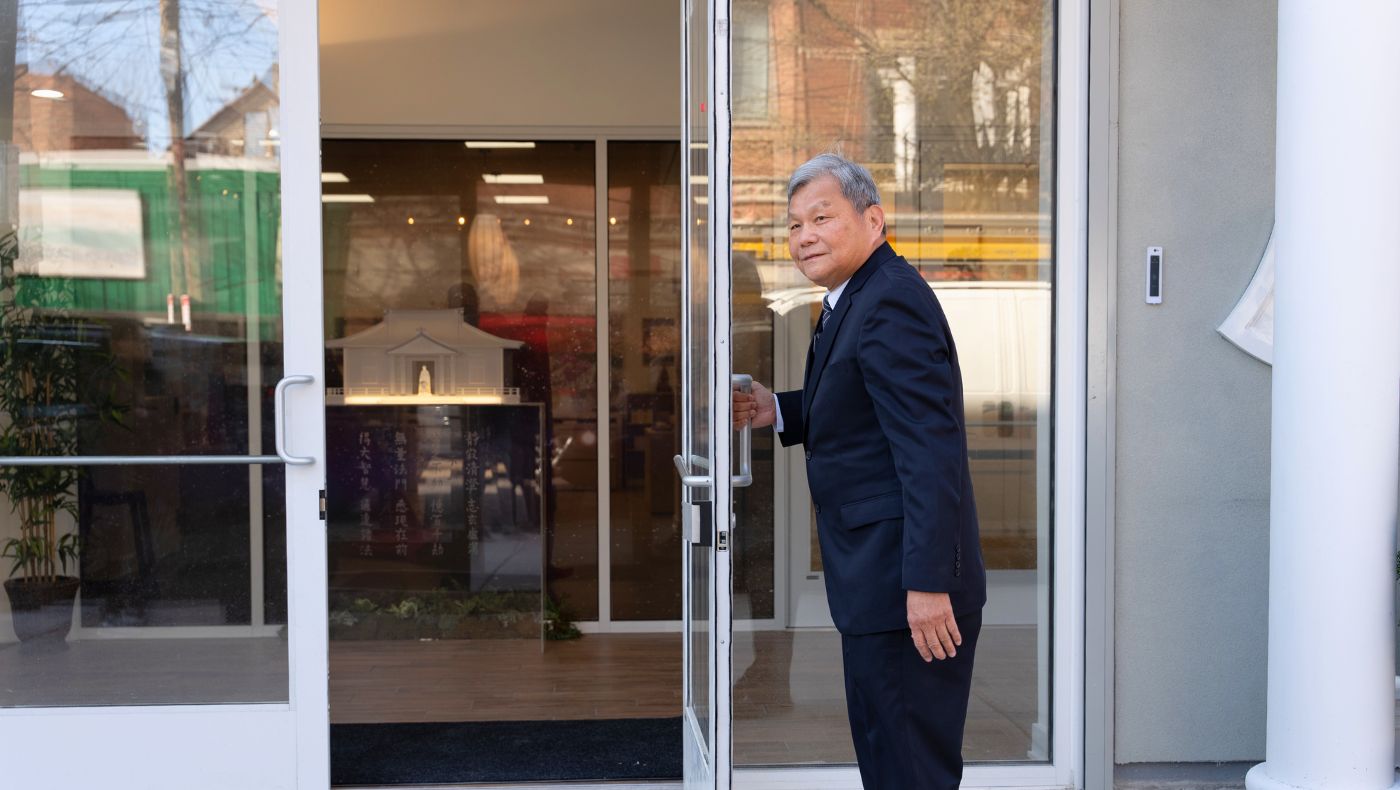
The sky cleared as a spring breeze blew through the neat entrance, a crystal clear sculpture of the Jing Si Abode, silently inviting visitors upon entry. Peering up at the pagoda, Chong and Amy Hsieh, who had worked so hard to make this day a reality, couldn’t help but shed tears of joy.
Chong Hsieh, Executive Director of Tzu Chi USA’s Midwest Region, welcomes guests to the new office. Photo/Dan Ferrara
Amy Hsieh’s Grand Vow
The Hsiehs, initially Tzu Chi volunteers from Cleveland, Ohio, had received several calls from Tzu Chi USA’s Headquarters in 2003 informing them that Tzu Chi’s founder, Dharma Master Cheng Yen, wanted Amy to take on the role of Executive Director for the Midwest Region. With Chong’s support, Amy accepted the position and moved to Chicago by herself, while Chong flew there one to three times weekly to visit Amy. Gradually, the couple moved the focus of their lives and careers to Chicago.
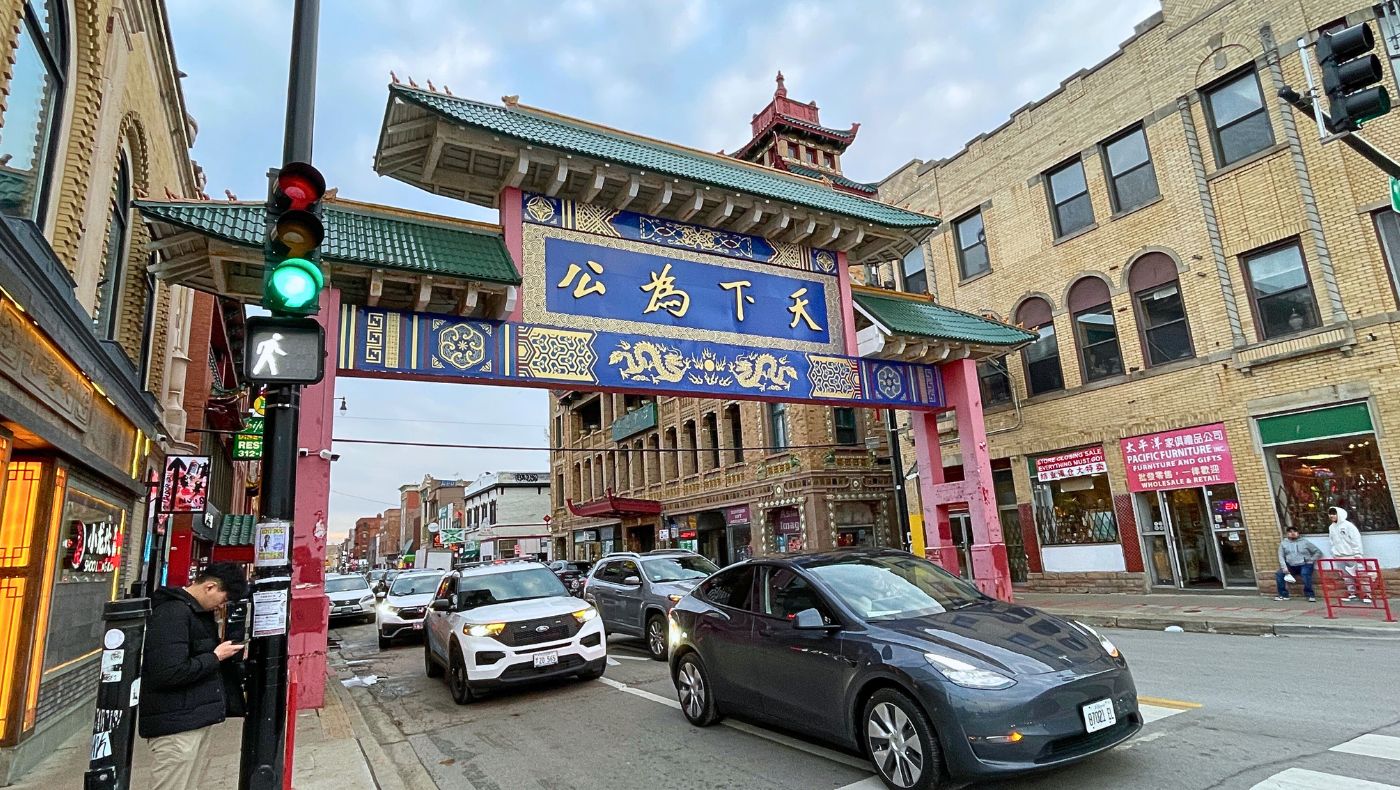
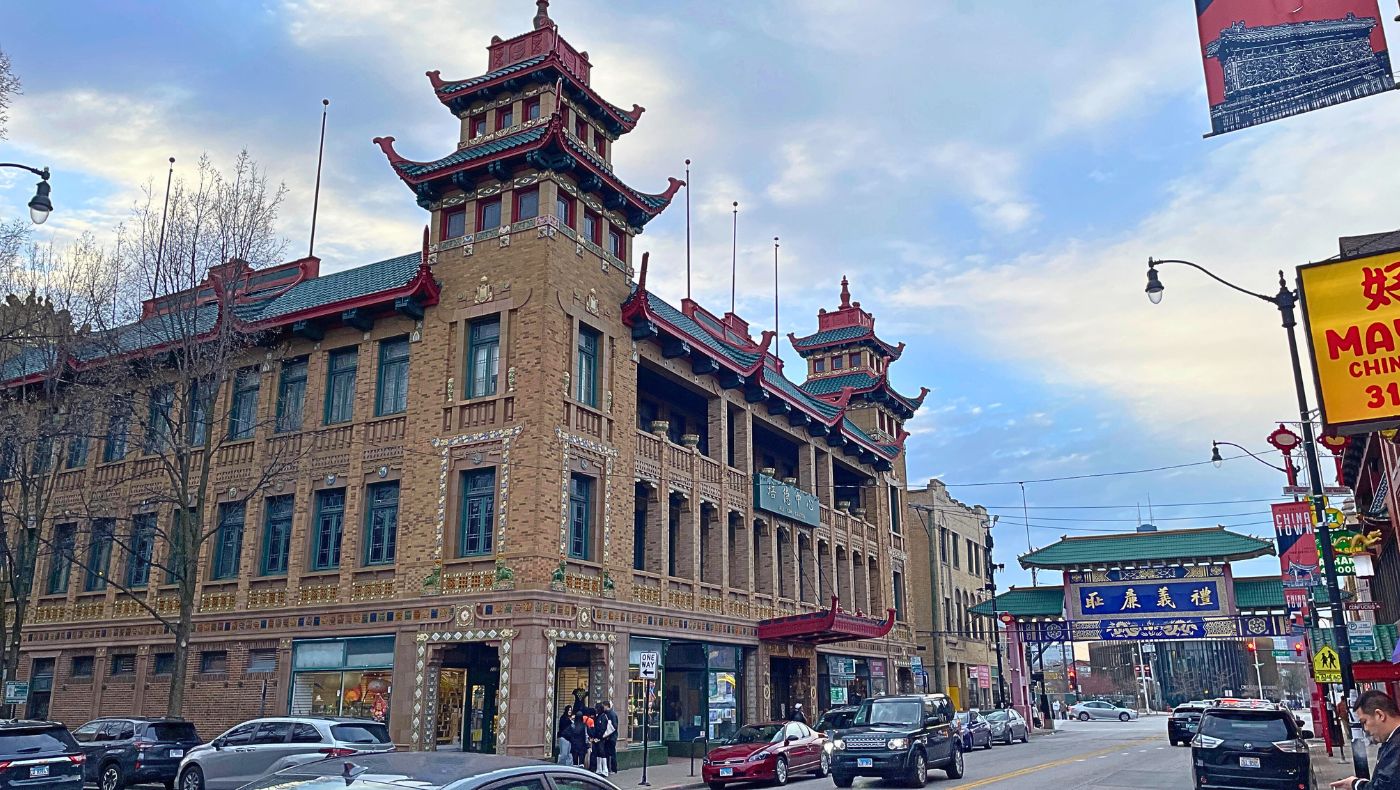
The Pui Tak Center building is one of many historic sites in Chicago’s Chinatown. Photo/Jennifer Chien
When Amy first visited the Windy City, Tzu Chi didn’t yet own an office space. The volunteers had leased a storefront at 28 N Cass Avenue in Westmont for group activities. “When I became Executive Director, the first place that came to mind was Chicago’s Chinatown. When studying abroad in Chicago, everyone would come to Chinatown for a Chinese meal,” Amy recalled. “Chicago is an important city in the Midwest. Everyone, including international students, Chinese residents, or tourists, would definitely come to Chinatown.”
When I arrived in Chicago, my first vow was to establish a Tzu Chi pagoda in Chinatown and bring Tzu Chi’s philosophy here.
Amy first moved the office to a larger space at 6601 N Cass Avenue, also located in Westmont. After considering rent increases and the growing number of members, she finally purchased buildings in Darien, a suburb of Chicago, in October 2006 and January 2007 to serve as the dormitory and local Jing Si Hall, respectively. Only then did the Chicago Chapter finally have a home. Even so, Amy still had her heart set on finding Tzu Chi a home in Chinatown.
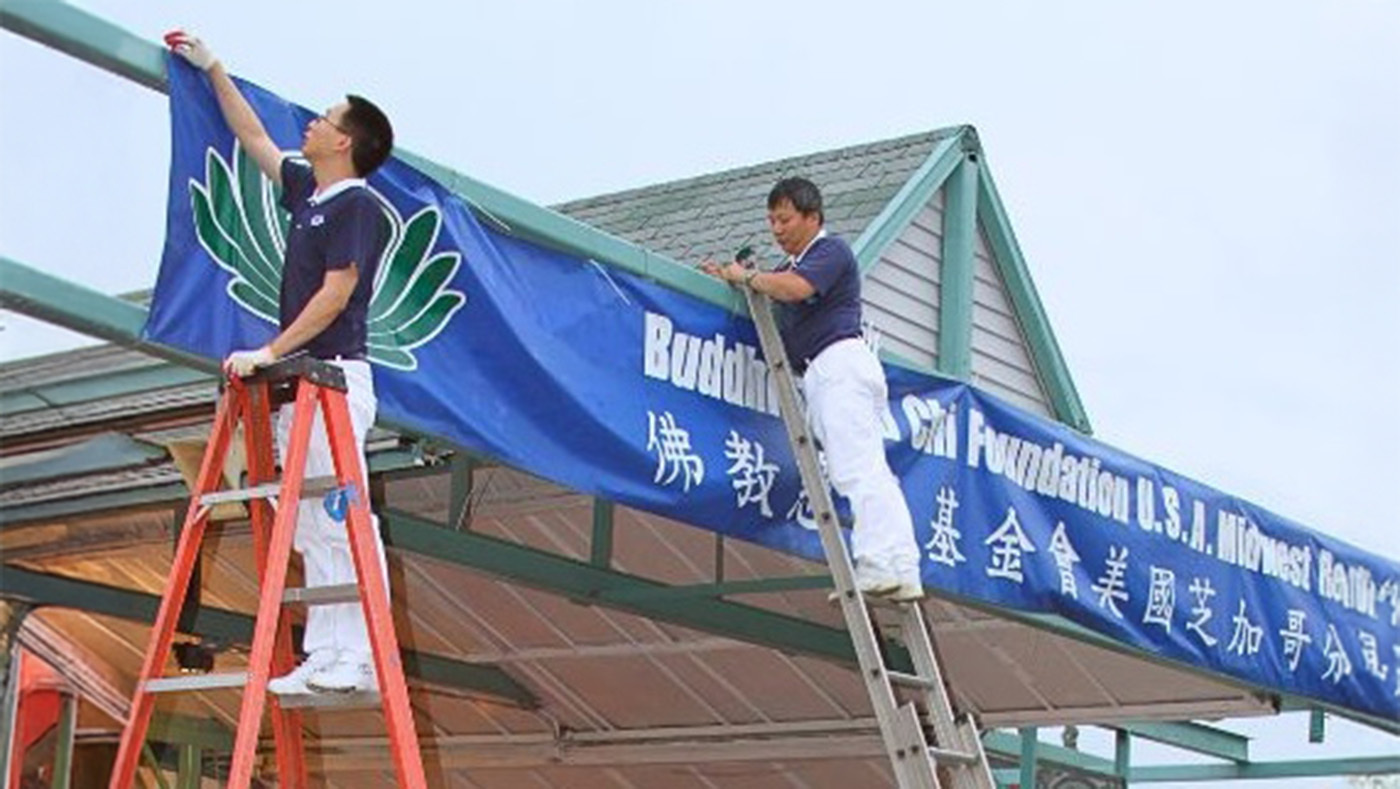
Tzu Chi’s connection with Chicago’s Chinatown originated in 1996 when Tzu Chi volunteers participated in the Chinatown Summer Fair, where they set up stalls to sell Tzu Chi products to raise funds and advocate bone marrow donation. Amy also began organizing free health checkups and medical consultations at Harry S Truman College in 2004. In 2011, an office space was rented to set up a Chicago Chinatown Office.
“Earlier generations of Chinese immigrants to the U.S. mostly lived in Chinatown, where Chinese people gathered. Starting within the Chinese community first to spread Master Cheng Yen’s Dharma would be more convenient and faster,” said Stephen Huang, Tzu Chi’s Executive Director of Global Volunteers. “That’s why I always asked each chapter and branch to buy an office space in Chinatown. But there hadn’t been such an opportunity in Chicago. At the time, Tzu Chi shared an office with a newspaper press in Chicago’s Chinatown. We couldn’t really develop in a small place like that. New members wouldn’t be able to come.”
Tzu Chi USA’s Midwest Region holds the “Giving Back to the Community - Four Major Missions” event at Chinatown Square Plaza on September 3, 2011. Photo/Bot Huynh
Vow Before the Buddha
It was an incredible journey full of ideals, perseverance, and persistence, from the purchase to the completion of the Chicago Service Center.
In December 2003, we held a tea party at a library near Chinatown. It was packed that day. Since then, there were huge crowds every time we held an event. This shows that the community needs Tzu Chi very much.
“We didn’t have a fixed office,” Chong Hsieh said. “We had to lease a venue and move around each time, so we really wanted a permanent place, a home.”
On August 6, 2018, when Chong came to the Chinatown office with Amy, a volunteer named Yee Chui Chi informed them that a three-story storefront had just been listed for sale. The Hsiehs immediately seized the opportunity to view the property. Since most residents in this area were early immigrants from Guangdong and Hong Kong, real estate transactions in the area often relied on word of mouth, with many properties having already changed hands before they were listed, the Hsiehs shared. “Everyone knew that I was looking for a property. It just so happened that Chong came to Chinatown with me that day. We looked at the property and immediately decided to buy it. We called Stephen Huang, who had just returned from Mozambique,” said Amy Hsieh.
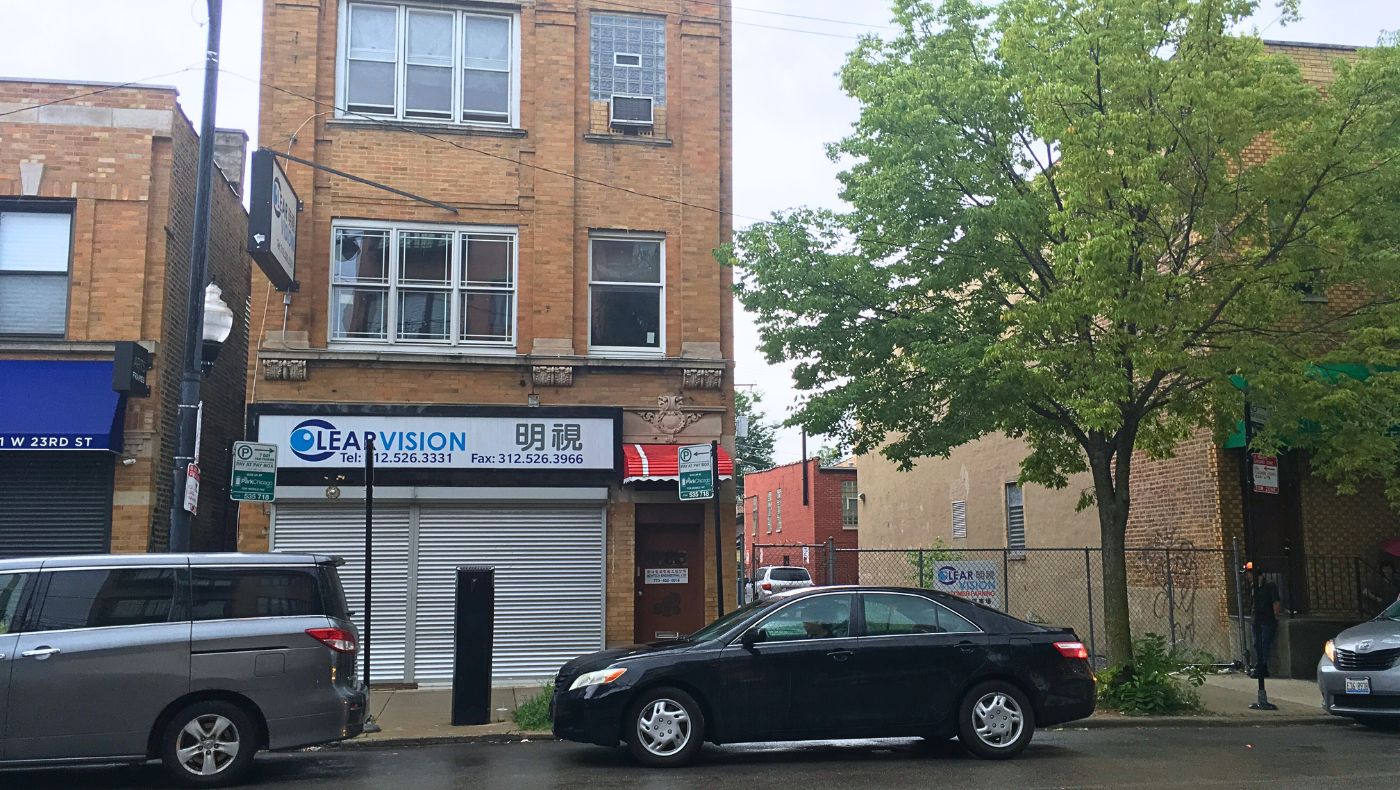
The building that would ultimately become Tzu Chi USA’s Chicago Service Center. Photo/Tzu Chi USA Midwest Region
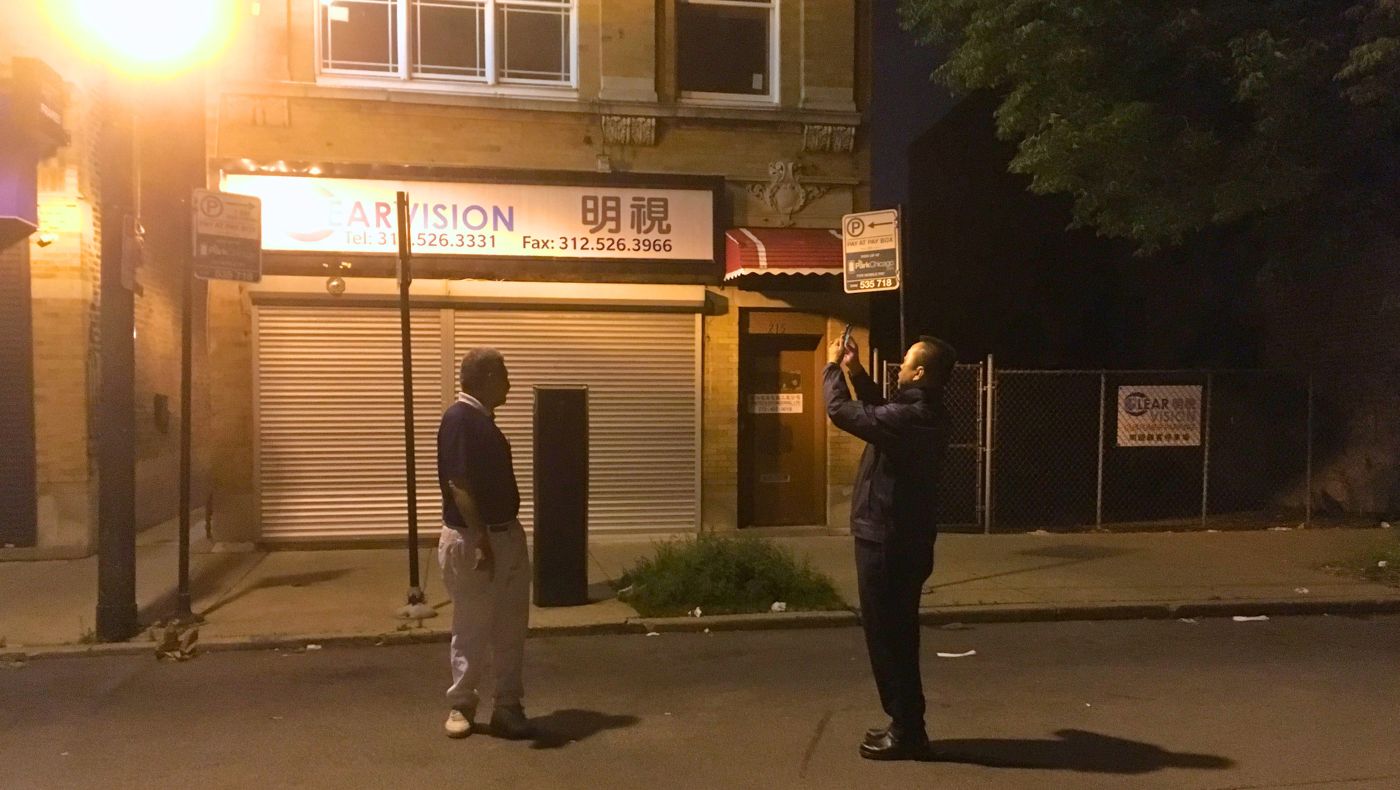
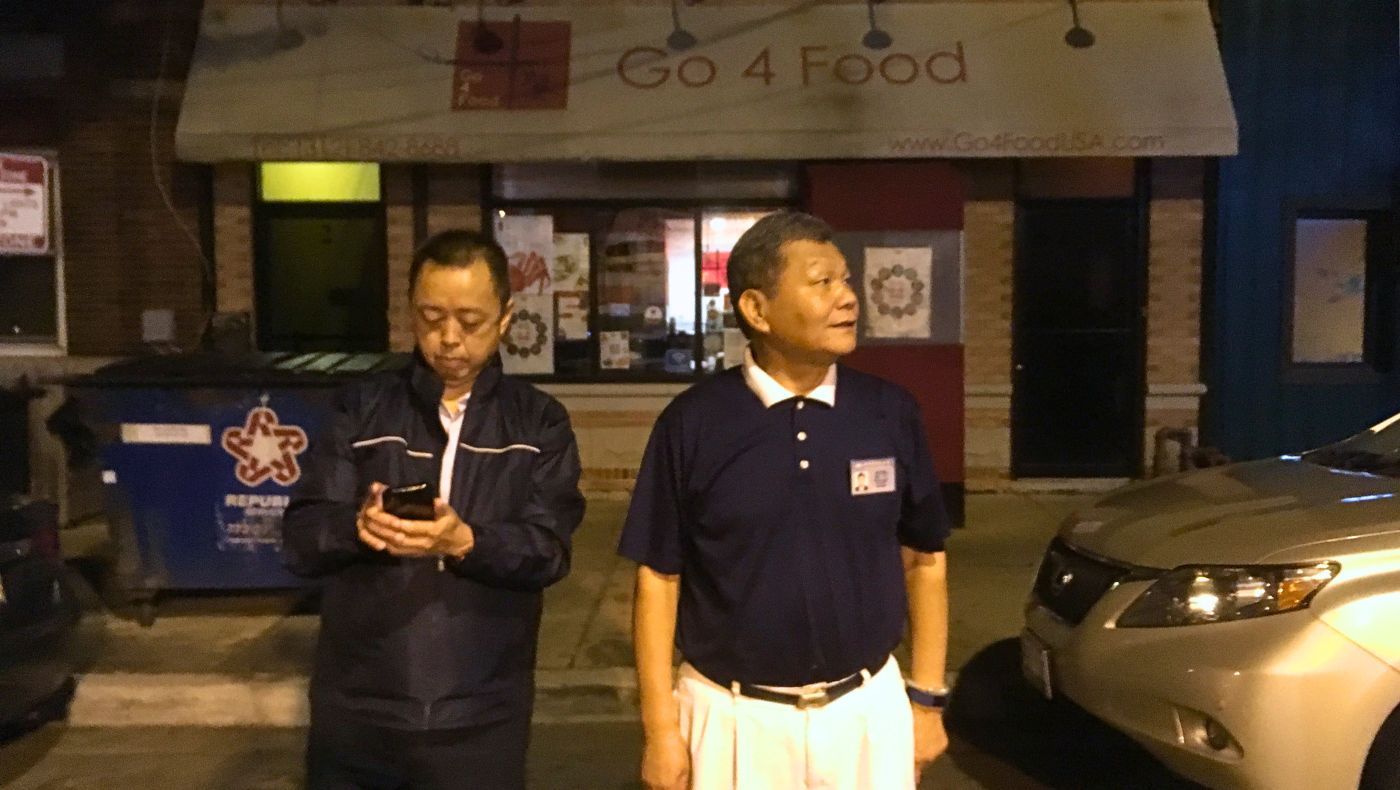
Huang flew from Los Angeles, California, to Chicago that night. He left the airport at 11:30 PM and went directly to see the property with the Hsiehs to confirm that the area was safe at night. The three took photos of the property and reported the matter to Master Cheng Yen in Hualien.
“When I buy an office for Tzu Chi, I will definitely check five time periods: Early morning, morning, noon, afternoon, and evening. Sometimes, I will even check around midnight to see if the surrounding environment is safe, whether there is good Dharma energy, and the five conditions of location, function, condition, financing, and view,” Huang explained. “I saw that the building was good. Although the front and back were separate buildings that were later connected, we could still use them. We could remodel it after a few years, so I said that we should buy this building right away. We must buy it.”
On August 6, 2018, Stephen Huang and Chong Hsieh visit the prospective Chinatown office building at night to confirm that the area was safe. Photo/Tzu Chi USA Midwest Region
SHARE
On August 7, 2018, Huang and the Hsiehs met with the seller to negotiate the price, agreeing to later sign a handwritten contract before the Buddha in the existing Tzu Chi office. However, the seller did not appear at the appointment. Later, they learned that someone had made a cash offer at a higher price. Fortunately, however, the seller kept their promise to the Hsiehs, and within less than 48 hours, a property was purchased, and Tzu Chi had finally established its roots.
The new Chinatown office is officially purchased on August 7, 2018. Photo/Tzu Chi USA Midwest Region
In 2018 and 2019, while utilizing the newly purchased location to organize large-scale events, including free clinics and seminars held by the delegation from the Jing Si Abode in Hualien, the Hsiehs also made plans to renovate the original structure.
“After purchasing the property in 2018, the Jing Si Abode suggested demolishing the entire building to build something new. I refused because I didn’t have funding. Of course, we believe in Master’s words that the money could be raised from everyone’s pocket. But the volunteers in the Midwest are all middle-income and office workers,” Amy explained. “I wanted to be frugal. I thought that I only needed to demolish the front third of the 100-year-old building, rebuild it, and connect it with the rear two-thirds, which was built 30 years ago, and then decorate the whole building simply.”
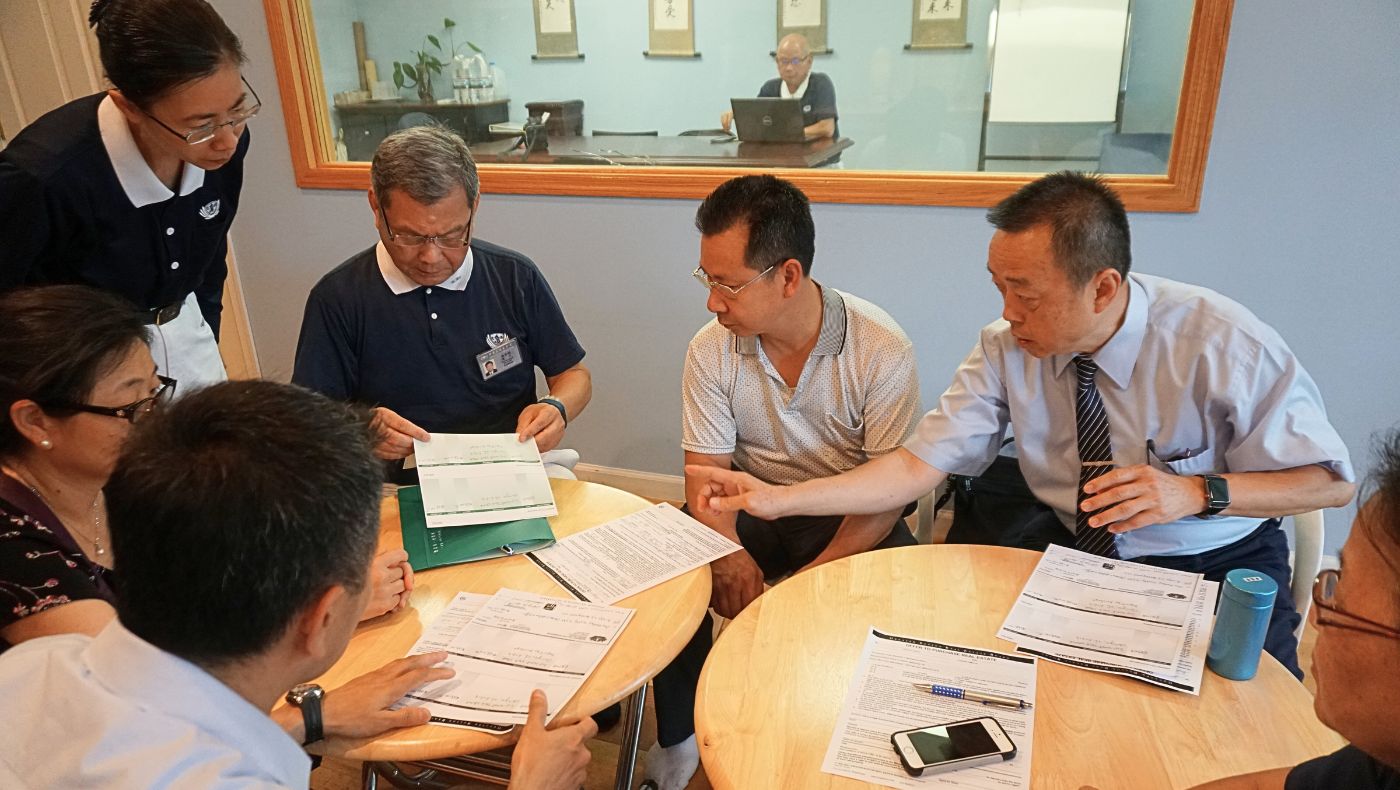
On October 5, 2019, a delegation from the Jing Si Abode in Hualien visits the U.S., holding a seminar at the Chicago Chinatown Office before commemorating the occasion with a group photo. Photo/Dennis Lee
An Unprofitable Project
The Construction Division of the Jing Si Abode in Hualien provided the architectural design, and an American architect was hired to implement the design. Unexpectedly, the COVID-19 pandemic and global lockdowns unfolded in 2020, resulting in the Chicago City Government requiring nearly a year to approve the permit. Then, construction finally started in 2022, but came to a halt again when disconnecting the front part of the structure destabilized the rear. Ultimately, Amy Hsieh’s plan for a simple renovation was no longer feasible.
“After the construction was suspended, we reported to the Board of Directors. One option would be to demolish and rebuild the whole building, but we didn’t know how much it would cost. The other option was to use reinforced concrete to stabilize the structure,” Amy recalled the dilemma at the time. “I am grateful that the Board of Directors and the Jing Si Abode suggested rebuilding. The contractor, Danny Mark, also suggested that reinforcing would not be much cheaper than demolishing and rebuilding the whole structure. In the end, we demolished everything and rebuilt it. Indeed, the cost didn’t increase too much.”
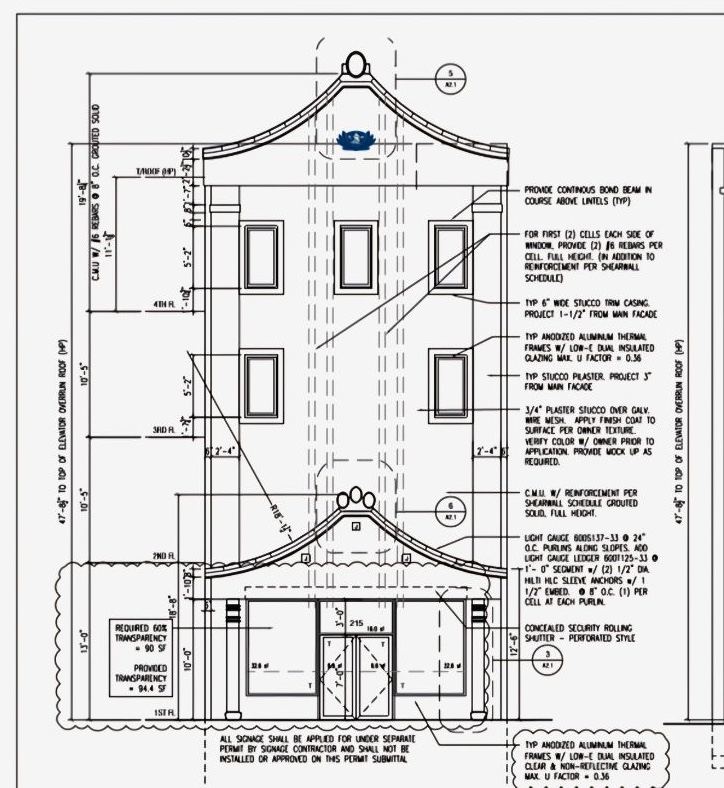
A blueprint of the Chicago Service Center. Photo/Tzu Chi USA Midwest Region
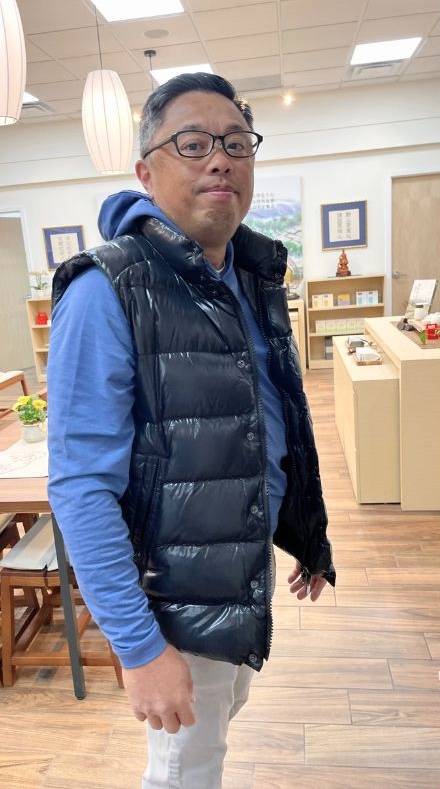
Contractor Danny Mark helps Tzu Chi USA’s Chicago Service Center become a reality. Photo/Jennifer Chien
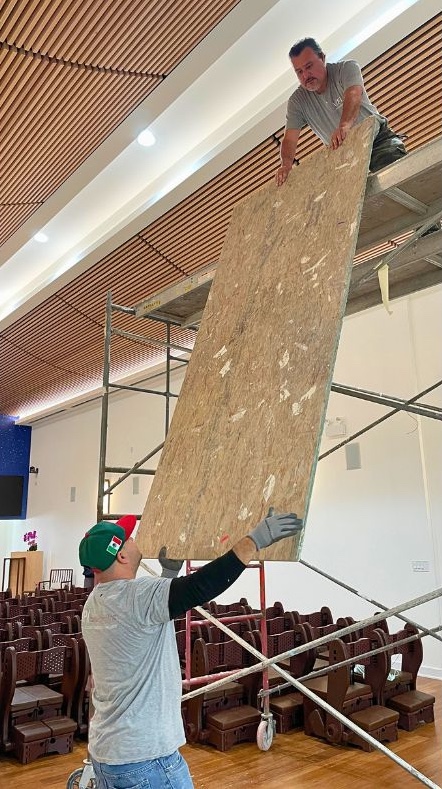
Danny Mark’s team works until April 3 to complete the project for the grand opening two days later. Photo/Jennifer Chien
SHARE
To find a professional, responsible, and down-to-earth contractor, Chong Hsieh had interviewed many contracting companies since the early stages of the renovation. Yet, he was not fully satisfied until 2021, when a company working right next door caught his attention. He asked the onsite supervisor if he could contact his boss, hoping to discuss construction details and costs. As a result, the Hsiehs met Danny Mark, a contractor who was born and raised in Chicago’s Chinatown.
“The first time I met the Hsiehs was in the original structure. It was a cold day, and the building had no heating. They emphasized the importance of staying within the budget, but I remembered thinking what was more important to them was to build a Tzu Chi office that would stand and last forever,” Danny Mark recalled. “We hit it off right away when we first met. I did my best to help them achieve their goal, and I think we did a good job.”
The team makes minor adjustments on April 3. Photo/Jennifer Chien
Mark won the bid with less than $2 million, whereas other contractors bid more than $2 or $3 million. When the original plan of a simple renovation was overturned to instead demolish and rebuild, he didn’t extensively increase the construction cost. When the Hsiehs wanted to hire another architect to supervise the work but were apprehensive about the high hourly rate, Mark, who holds an architectural license, volunteered to supervise for free, thereby preserving every bit of the budget. As for why he did the work at the contracted price, he simply said, “I know your budget is very tight. I told them from the beginning that I wouldn’t make money from this project.”
My goal was to help them realize their dream and help them set up an office in Chinatown to serve the Chinese community.
Seeing Tzu Chi volunteers arriving from all over the world to attend the opening ceremony in Chicago, Mark beamed with satisfaction. “The Hsiehs have achieved their goal. There are very few people like them in the world. They are unique and the best representatives of Tzu Chi. I have seen from them that there are people who are wholeheartedly and passionately doing good in the world. This makes me understand the true meaning of Tzu Chi.”