After-School Tutoring Enters Disaster Zones, Touching Children’s Lives
Written by Sophie X. Song
Translated by H.B. Qin
Edited by Ida Eva Zielinska
Published #78 | Fall 2025 Issue
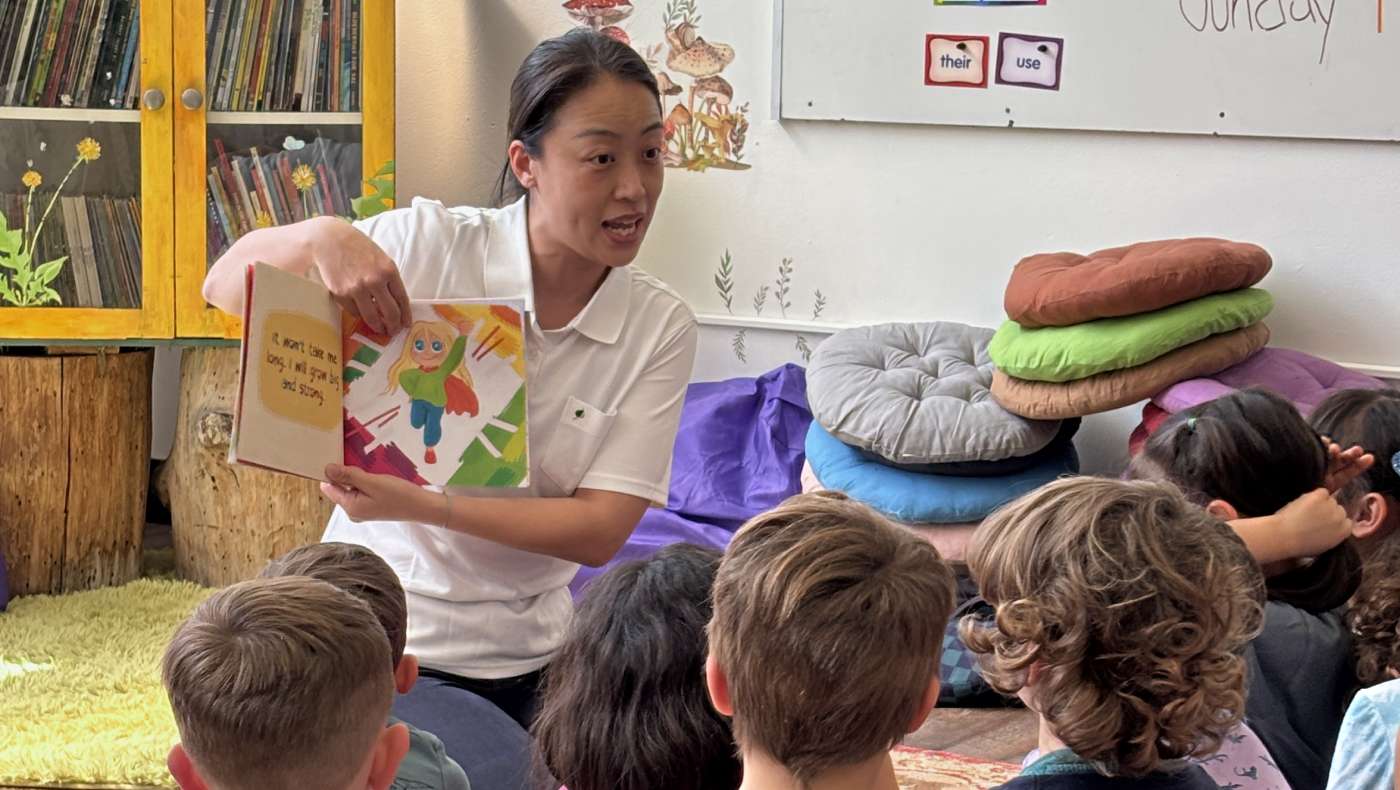
Tzu Chi volunteer I-Chih Sun tells stories to children at Aveson Charter School as part of the Tzu Chi Education Foundation’s medium- and long-term care following recent wildfires in Southern California. The initiative offers academic tutoring and helps children from affected families understand and manage their emotions through lively, engaging activities. Photo/Ihsuan Tsai
SHARE
On Tuesday, May 20, 2025, volunteers from the Tzu Chi Education Foundation visited Aveson Charter School and Altadena Arts Magnet in Pasadena, California, as they had been doing for a while, to provide character education and academic tutoring to students affected by recent California wildfires.
After six weeks together, a close bond had formed between the children and the volunteers. That day, as the Tzu Chi team prepared to leave, the children waved and smiled in farewell.
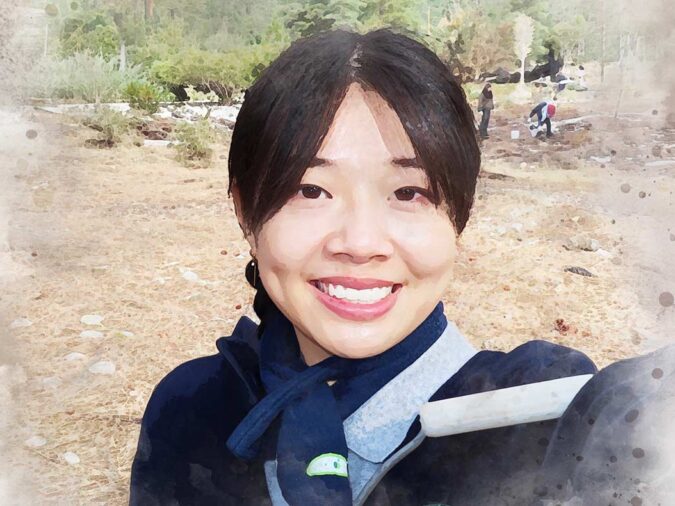
“The children all said to me, ‘See you next week, Miss Rosi!’ I also said, ‘See you next week!’” Tzu Chi volunteer Rosi Ueng, who provides tutoring at the Altadena Arts Magnet, recalled with emotion. “It wasn’t until later [since the school year had ended] that we found out we wouldn’t be going next week – I didn’t even get to say goodbye to the children…”
Visiting Schools One by One
The Southern California wildfires began ravaging the Los Angeles area at the start of 2025. Tzu Chi immediately organized the distribution of supplies and cash cards to address the urgent needs of disaster survivors, followed by mid- to long-term care programs. However, the aftermath of the wildfires brought chaos, making collaboration between the Tzu Chi Education Foundation and local schools especially difficult from the outset.
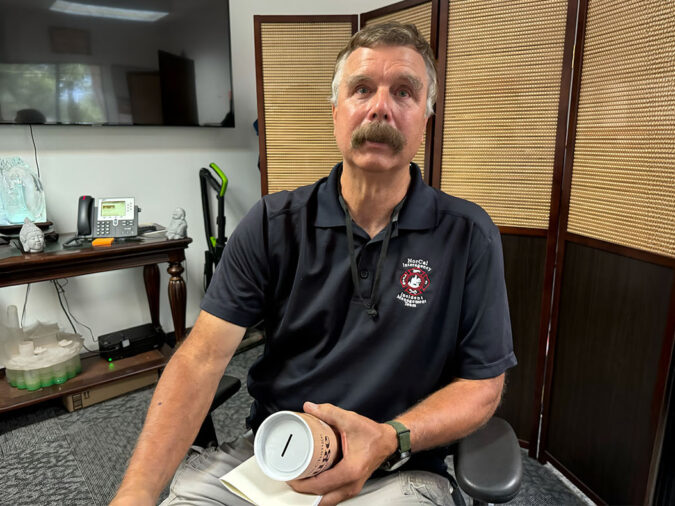
“At the time, the Education Foundation’s CEO Debbie Lee [now CEO of Tzu Chi USA] wanted to provide ongoing support to the disaster-stricken areas. She asked me to quickly connect with schools and find out what they needed. I first emailed the superintendent of the Pasadena school district. Although I received a prompt reply, it simply pointed me to a website where people could donate money or sign up to volunteer,” Phil Huang, Administrative Director of the Education Foundation, remembers.
With no progress, Huang reached out to a member of the California State Legislature, but still received no response from the Pasadena Unified School District. It was only later, through news reports, that he learned the district was in disarray due to severe budget cuts, widespread school destruction, and teacher layoffs caused by the fires.
Realizing that waiting wasn’t an option, Huang decided to drive nearly two hours to the disaster zone to assess the situation in person. Later, he and Hazel Kuang, the Education Foundation’s Director of Character Education Development and Outreach, visited the relocated schools together.
“The disaster area was dotted with burned-out schools. After driving around for an entire afternoon, I finally encountered two passersby and asked them about the situation,” Huang said. “Afterward, I checked the school district’s website again and finally found an announcement listing which schools had burned down and where they had been relocated. With that information, we mapped out a route and spent two days driving to the affected schools, knocking on doors, and visiting each one. In the end, we were able to make contact with the principals of both Aveson and Altadena.”
Schools in Chaos
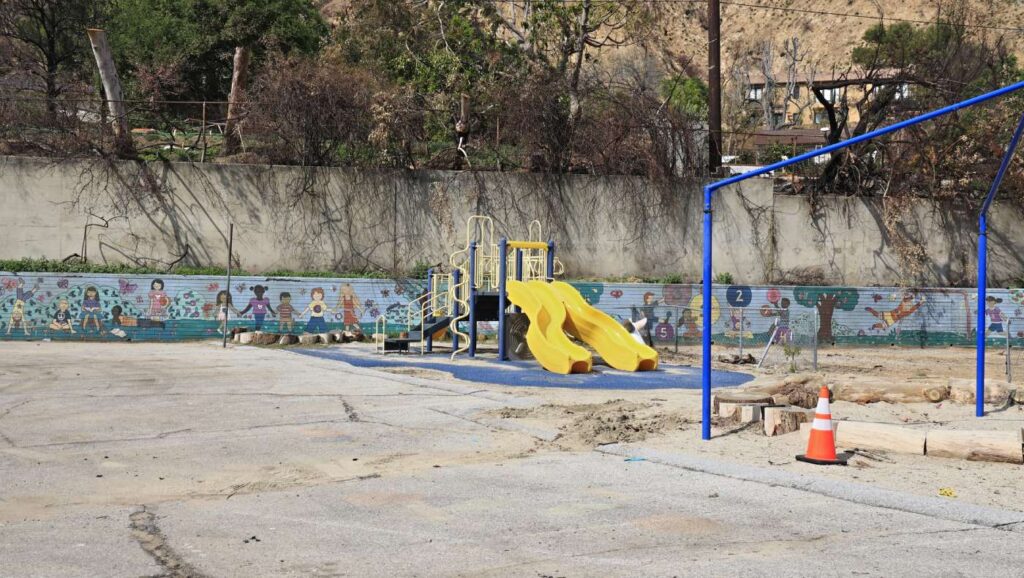
By February, Phil Huang and Hazel Kuang finally had the opportunity to visit Aveson Charter School and Altadena Arts Magnet for the first time. But when they arrived at the temporary campuses that had been established, they were met with scenes of hardship and helplessness. The buildings were in complete disarray, and the disruption caused by the wildfires felt endless.
“At that time, everything was chaotic. Furniture and donated supplies were still piled up in the hallways of the temporary buildings. The principal of Aveson didn’t even have a proper desk; she had to bring in student desks and chairs to use as an office next to the restroom. There weren’t any hooks in the corridors, so the children’s backpacks were stacked on top of their desks,” Kuang described. “It was the same at Altadena. They had moved into an abandoned school building with not enough space. Two teachers and more than 40 students from two classes had to squeeze into a single classroom.”
A pressing issue was the weeks of lost class time. Teachers couldn’t follow their usual lesson plans and didn’t have the capacity to address both the children’s academic setbacks and their emotional trauma.
“The principal and teachers were most concerned about the children’s learning,” said Huang. “The teachers were overwhelmed. Even when they could return to campus, some didn’t have the teaching materials they needed and weren’t sure how to move forward.”
In the past, schools always followed the previous year’s plans; they knew precisely when to teach which lesson, what materials to order, and when. Now, having moved to a completely new place, everything had to be rebuilt from scratch. You could really feel how disruptive the wildfires had been for these schools.
Hazel Kuang
Director
Character Education Development and Outreach
Tzu Chi Education Foundation
Listening to Needs
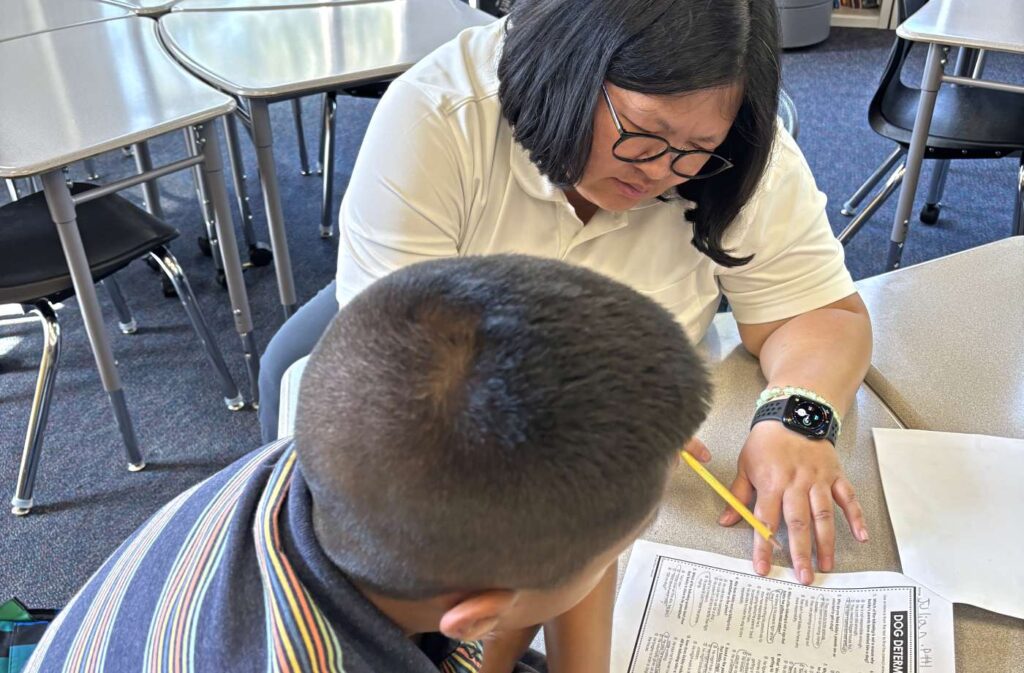
Even during the initial disaster relief phase following the wildfires, Tzu Chi volunteers were already listening closely as survivors shared their concerns. Education Foundation volunteers, in particular, brought a unique perspective that helped them gain valuable insights into the difficulties families were facing, especially when it came to their children’s disrupted education.
“We spoke with a mother at the Disaster Recovery Center who told us her child’s school had to relocate after being destroyed by the fire,” Hazel Kuang recalled. “Some families had to move out of the area, while others found their schools relocated far away. Either way, this created huge challenges for parents when it came to transportation and caregiving.”
During school visits, volunteers made a point of understanding each school’s original educational philosophy, as well as the new realities that had emerged after the fires, hoping that Tzu Chi’s support could truly meet the evolving needs of teachers and their students.
“Aveson’s educational philosophy turns out to be very similar to Tzu Chi’s. The teachers reminded us: ‘We don’t scold the children here!’ I reassured them, laughing, ‘Don’t worry, Tzu Chi doesn’t believe in scolding or corporal punishment either!’” Phil Huang explained.
He added that the impact of the fires was especially noticeable in Altadena. “At their old campus, seniors from a nearby retirement home would come to read with the children and help tutor them. Now that the school has moved so far away, those senior volunteers can no longer visit.”
Considering the varying circumstances at each school, the Education Foundation developed two distinct programs. At Aveson Charter School, the focus would be on character education and academic tutoring, while at Altadena Arts Magnet, the plan was to fill the gap left by the senior volunteers with book clubs and tutoring.
We hope that, even amidst all this upheaval, Tzu Chi’s character education can offer the children a positive and steady source of strength.
Phil Huang
Administrative Director
Tzu Chi Education Foundation
Mobilizing Tutoring Volunteers
Once discussions with the schools were finalized, the Education Foundation began recruiting volunteers immediately. Because this would be a long-term program involving close interaction with children, there were many hurdles to clear.
“Public schools have a lot of requirements. Tuberculosis tests, fingerprinting, background checks,” Hazel Kuang pointed out. “We’re truly grateful that so many volunteers were willing to join, even though it meant taking time from their jobs and going through all the school’s screening procedures.”
Transportation in Los Angeles posed another major obstacle. For the Tuesday morning tutoring sessions, volunteers had to leave home early and drive long distances to reach the temporary campuses.
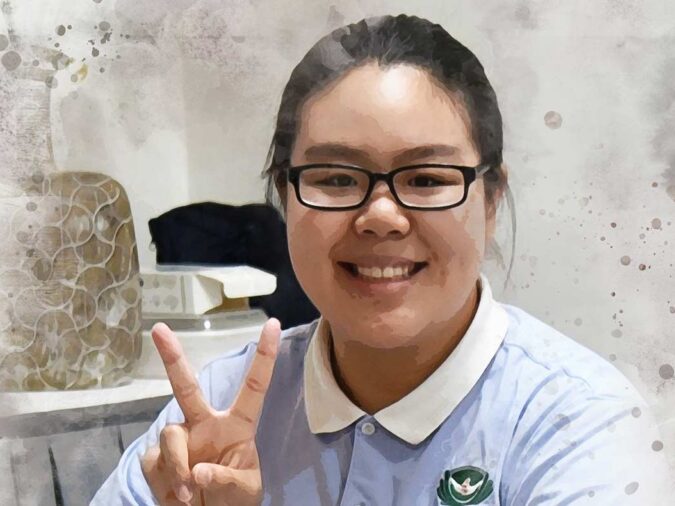
“It takes me an hour and a half each way to get to the school, so I have to leave by 7:20 in the morning,” said Tzu Chi volunteer Yulin Shaw, who tutored at Altadena. Still, her initial hesitation was about more than just the commute. “I heard we would be tutoring English, and I was worried. I’m not confident about my pronunciation,” she admitted. “How could I possibly tutor someone else?”
What finally convinced Shaw was what she witnessed during a distribution event. “I went to the frontlines and saw how downcast the survivors were. Many were crying,” she recounted. “When I heard that the children especially needed care, I told myself, ‘Then I will go.’”
Motivated by a desire to help, the volunteers began their weekly tutoring sessions. But once they entered the classroom, they realized the struggles the children were facing were even greater than they had expected.
“Our first time there, we read picture books with the children. The teacher had brought out lots of books and flashcards. There were ten cards in all, but the kids only recognized four or five of the words. Some could spell them but didn’t know what the words meant,” Shaw remembers.
Seeing the children’s learning situation really affected me. How could just a few weeks, or a month or two of missed classes, have such a significant impact? Their English and math were noticeably not up to par. More than anything, it was their attitude toward learning: They had trouble focusing, they could barely sit still.
Yulin Shaw
Tzu Chi Volunteer
Small Stickers, Big Impact
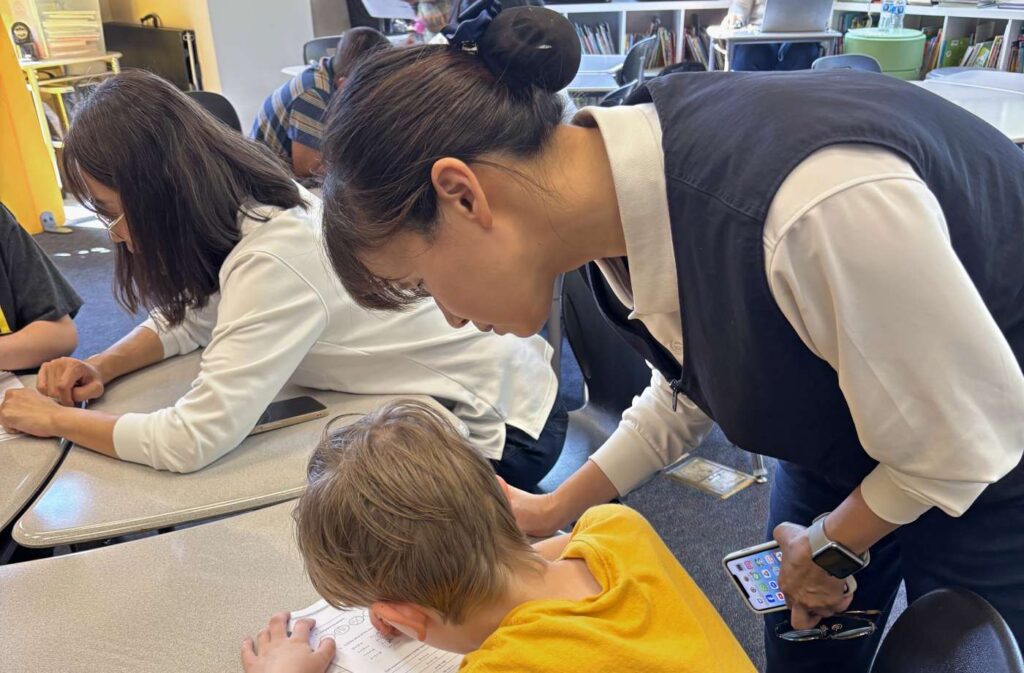
After observing the students’ academic progress, the tutoring volunteers began brainstorming ways to better support their learning.
“After the first class, we thought we should bring something to interact with the kids and help them concentrate. After the second class, we all started bringing stickers; when the children finished their reading, we would give them one as encouragement,” said Tzu Chi volunteer Yulin Shaw, reflecting on how the team adapted their approach.
“The stickers really helped the kids because they wanted to decorate their homework.” Sammi Banh, a Tzu Chi volunteer who was tutoring at Aveson School, shared with a smile.
As a college student at California State University, Fullerton, Bahn finds tutoring English relatively easy, but making math understandable for children has been more challenging. “Working with them on math took me a little bit of time to get used to because I had to put my thoughts into words they could understand,” she said. “The first thing that I used were my fingers, but when we got to the bigger numbers, we ended up drawing little circles on paper, so it’s easier for them to visualize the numbers.”
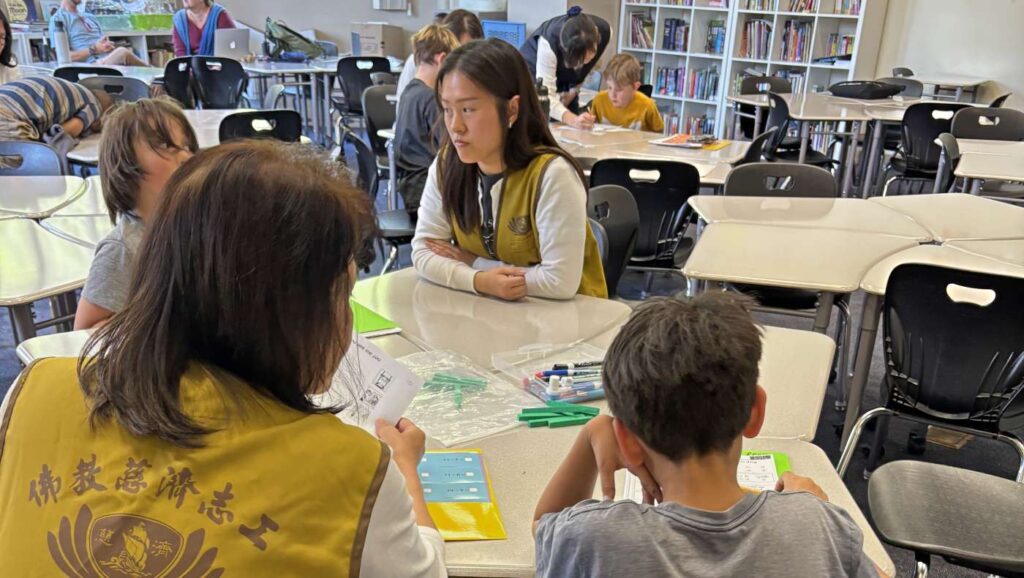
Banh believes the greatest strength of Tzu Chi’s tutoring lies in the long-term, individualized support it provides. “Tutoring gives them a lot of individual attention to assess and address their individual needs,” she shared. “In particular, one of the students is a lot better at math than at literacy. Math is really quick to go through, but when it comes to reading, we have to look at each individual word and even break up some of the words, decoding them for him,” she recounted.
A lot of these kids enjoy seeing somebody who cares about what they’re doing and would be supportive of their learning.
Sammi Banh
Tzu Chi Volunteer
Starting With Emotions
Beyond academic tutoring, the volunteers never lost sight of the fact that these children came from families affected by the recent wildfire disaster. They remained attentive to each child’s emotional state and paused lessons when needed to comfort them.
“When we noticed a child was feeling unsettled, we would put the lesson aside and just have a chat,” said Tzu Chi volunteer Yulin Shaw. “If a child couldn’t sit still, I would ask them about their favorite cartoon character.”
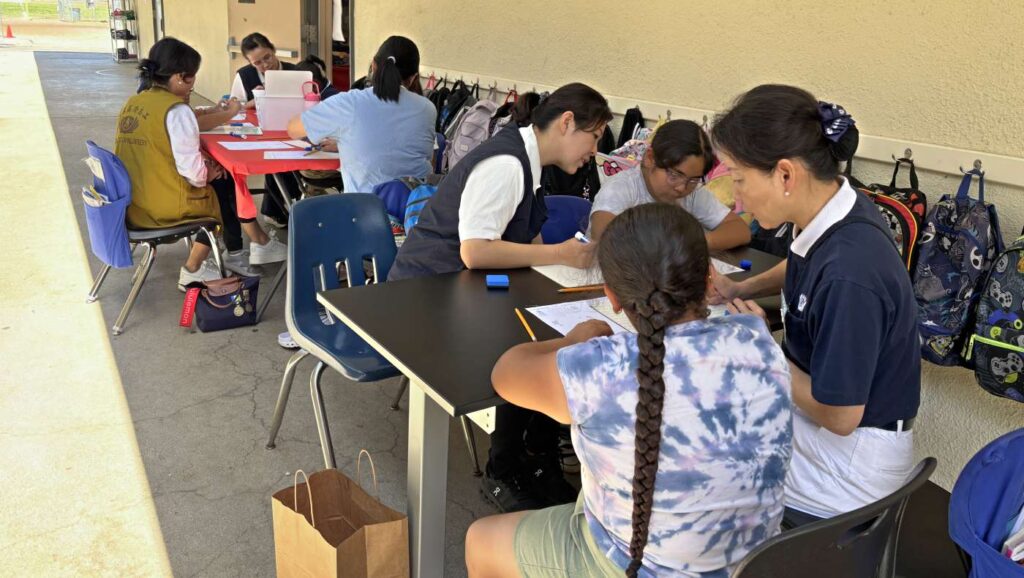
This thoughtful approach was evident not only in day-to-day interactions but also throughout each character education lesson. Fortunately, both the schools and parents recognized the importance of supporting the children’s emotional well-being.
“Given what the students have been through, this round of character education has focused entirely on emotional regulation. For example, we began by helping children identify their emotions, explore what sadness feels like, and talk about how to calm themselves when they’re upset, or how to support someone else who is feeling down,” said Hazel Kuang, Director of Character Education Development and Outreach.
“At both schools, teachers and parents have paid a lot of attention to the kids’ mental health, so we haven’t encountered any children who were extremely anxious because of the fires,” she added. “For instance, when we asked the children what made them happy, one little boy answered, ‘Moving to a new home.’ That surprised us because it’s not the answer you would usually expect. But thinking about it, we realized his family probably had to move because of the wildfires. His parents must have chosen to frame the move in a positive light, so he wouldn’t feel sad or distressed by it.”
Children's Cheers and Gratitude
After six weeks with the volunteers, the children showed remarkable academic progress and grew closer to those guiding them. Every small step forward was noticed and cherished by the attentive volunteers.
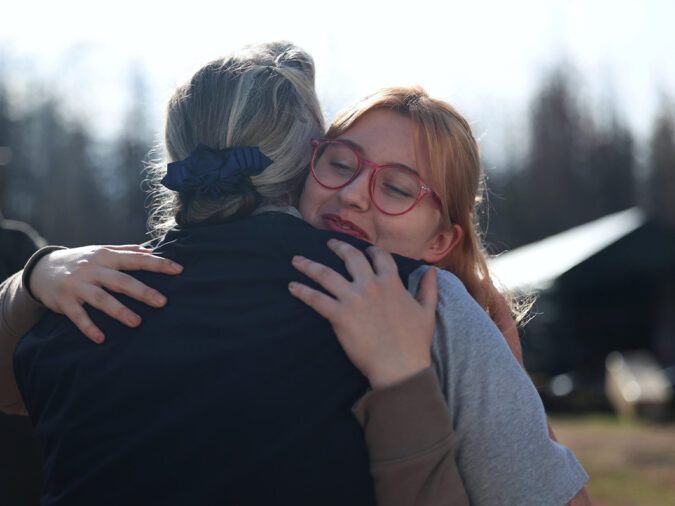
“Today, the kids did exactly as I’d hoped. They pointed to the words in their books and read them aloud, not skipping over any unfamiliar words. It was perfect,” exclaimed Tzu Chi volunteer Rosi Ueng on May 20, when the team visited Altadena Arts Magnet. “There was one girl who, in the beginning, didn’t want to interact and always sat as far away as she could. Today, she sat right next to me, and when it was time to leave, she stood up and gave me a hug. I was both surprised and deeply moved.”
“This kind of progress comes from the children’s own willingness to learn. I told them, ‘Let’s read together.’ When someone is there to sit with them, they naturally want to learn,” Ueng added. Seeing the children’s growth made her even more determined to overcome any setback or difficulty.
During the final class, the students presented the volunteers with handmade cards with their gratitude written in cheerful, childlike handwriting.
“It was really fun! I like it when you help us read different words.”
“Thanks for taking time out of your day to read with us, and I liked that you gave us stickers.”
“You are so kind to us. You are so kind to the whole class because you are the best volunteers.”
“I hope we’ll see you again soon!” the messages read.
Just like the butterflies flying out of a book drawn on one of the children’s cards, the volunteers’ presence had helped awaken the students’ curiosity and joy in learning.
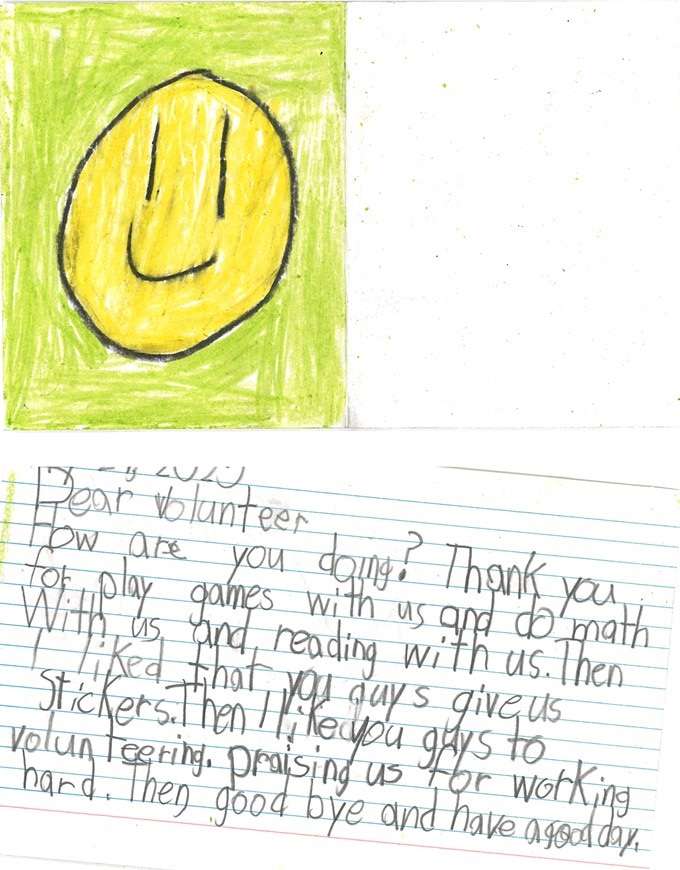
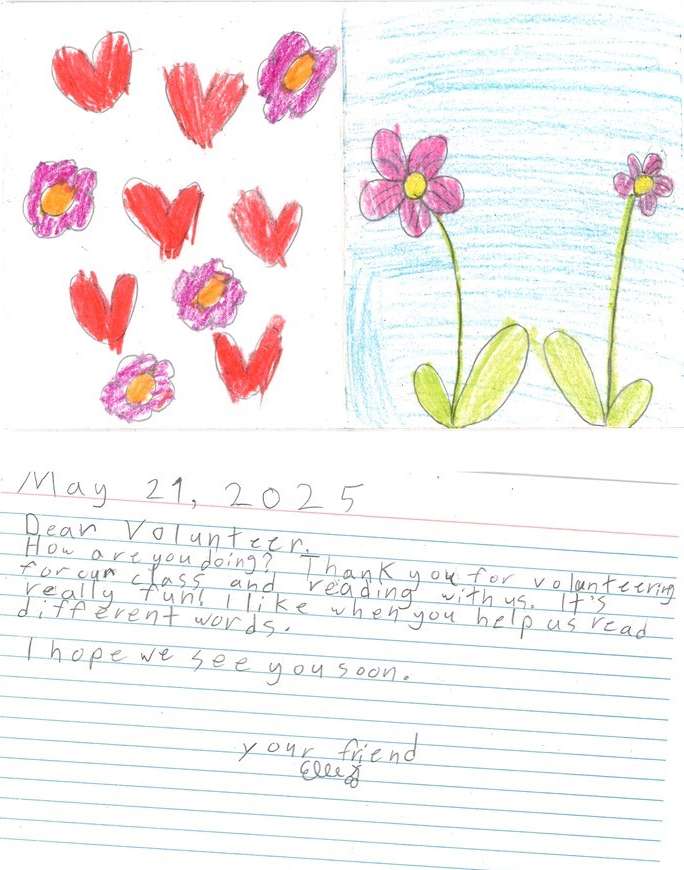
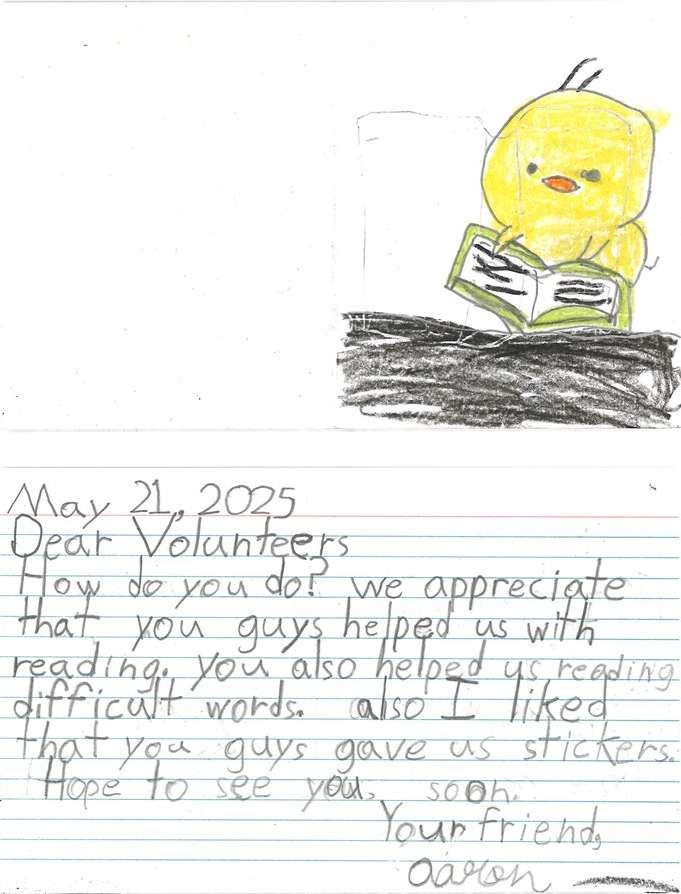
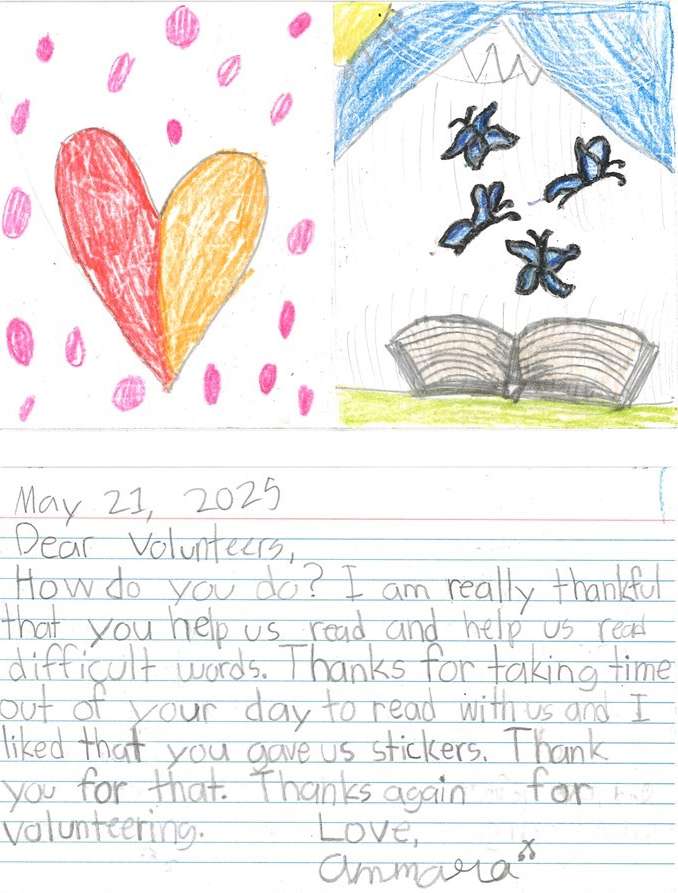
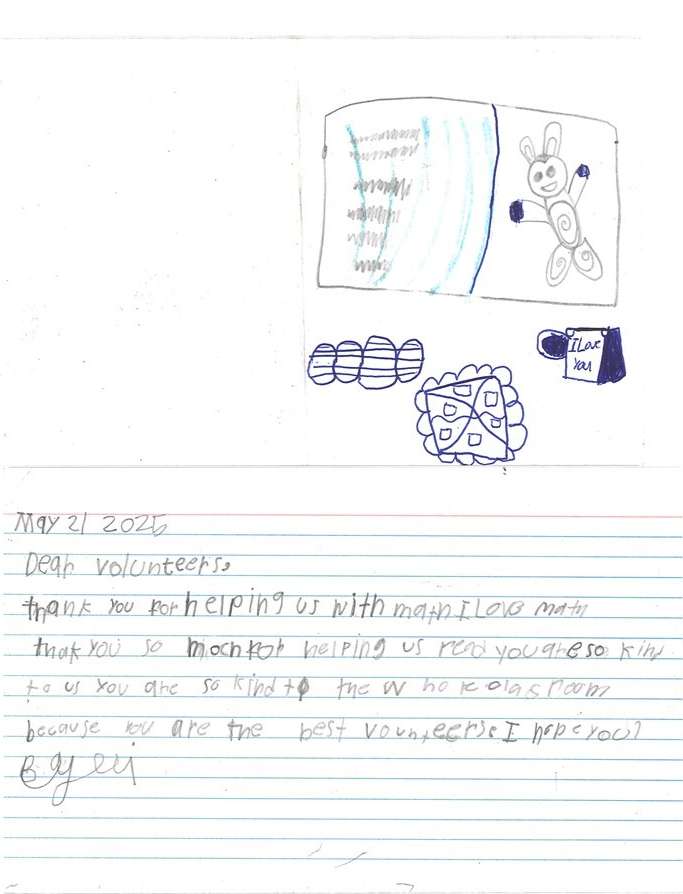
The children express their gratitude for the volunteers’ presence with colorful drawings and heartfelt thank-you notes. Photos/Tzu Chi Education Foundation
The children weren’t the only ones to offer genuine feedback; their teachers and school administrators also expressed heartfelt appreciation for the volunteers’ support.
“The kids really enjoyed being with the volunteer teachers. Every time we walked into the classroom, the children would quietly cheer,” shared Hazel Kuang. “Another thing that stood out was that after every class, the teachers would sincerely thank us and express their hope that we could continue supporting their students next semester. Some teachers even told us they wished their classes could have some time with Tzu Chi volunteers too.”
“I think they’re in talks about doing a summer program. I’ve already let them know that I would be interested in joining that!” noted Tzu Chi volunteer Sammi Bahn. Other members of the Tzu Chi tutoring team felt the same way.
Every time I went to class, I would put on my Tzu Chi uniform and my name tag. I hope the kids remember Tzu Chi’s ‘blue sky and white clouds’ uniform. Tutoring and being there for the children is also part of serving the community. If there’s a tutoring program next semester, I’ve already told them to sign me up!
Rosi Ueng
Tzu Chi Volunteer
Even though there wasn’t time for a proper goodbye at the last tutoring session, since everyone left hoping to meet again, perhaps the reunion they wished for would not be too far away.