Natural disasters inevitably take a toll on those affected, who may struggle for years to recover. In fact, it was severe flooding caused by torrential rain in 1993 that first brought Tzu Chi volunteers to Nepal, turning Master Cheng Yen’s long-held aspiration to provide aid here into a concrete reality. That initial mission led to the construction of four Great Love Villages across three districts, completed in 1995.
“The process was quite tough because at that time the people were not familiar with Tzu Chi. But we were able to construct 1,800 permanent houses,” Piyu Lin, Vice President of the Buddhist Tzu Chi Charity Foundation in Taiwan, recounted. When Tzu Chi volunteers returned to Nepal in 2015, they found that the villages had become self-sustaining, moderately prosperous communities. More than two decades after the 1993 floods, another devastating disaster had called Tzu Chi back.
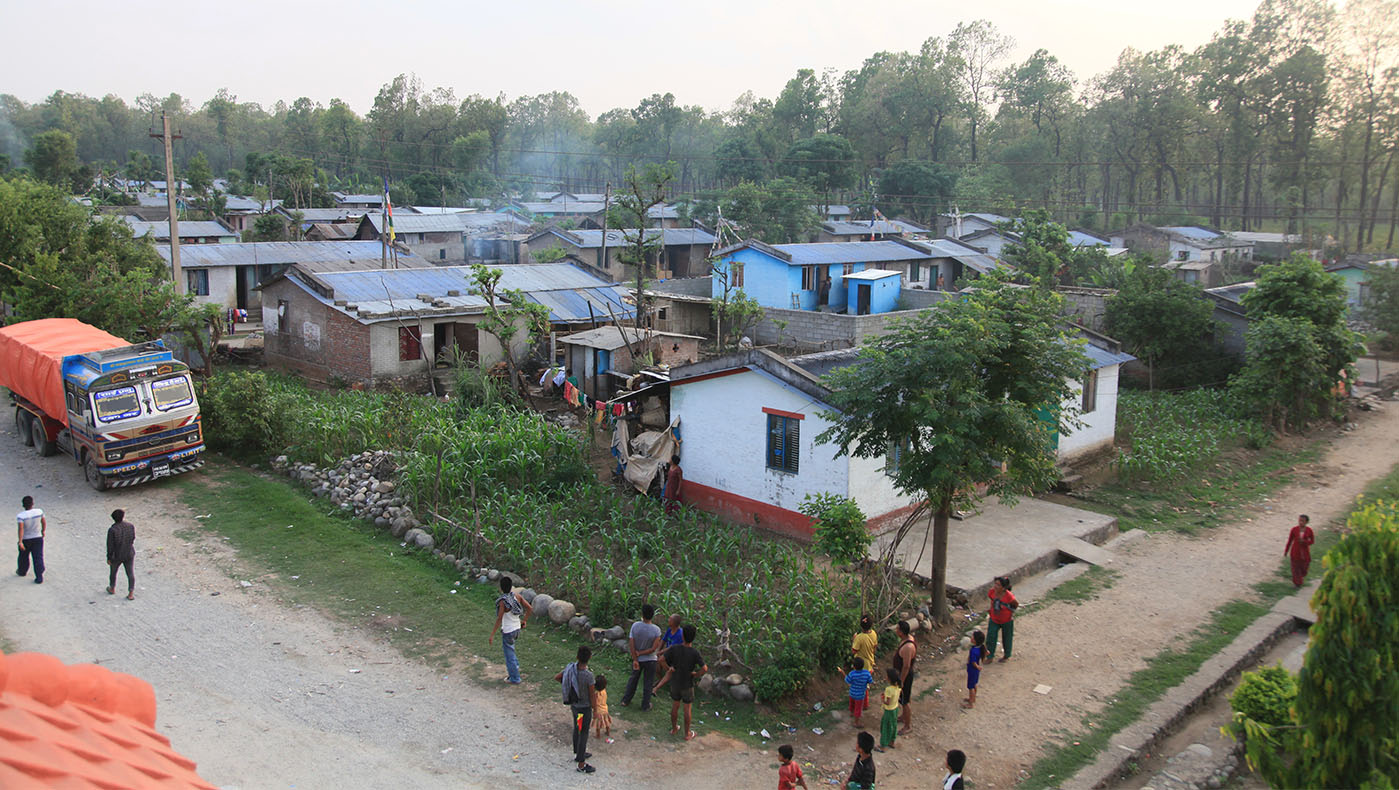
The Great Love Village built for survivors of the 1993 flood in Padam Pokhari, Bagmati Province, has become a well-established community by 2015. Photo/Chingwen Chang
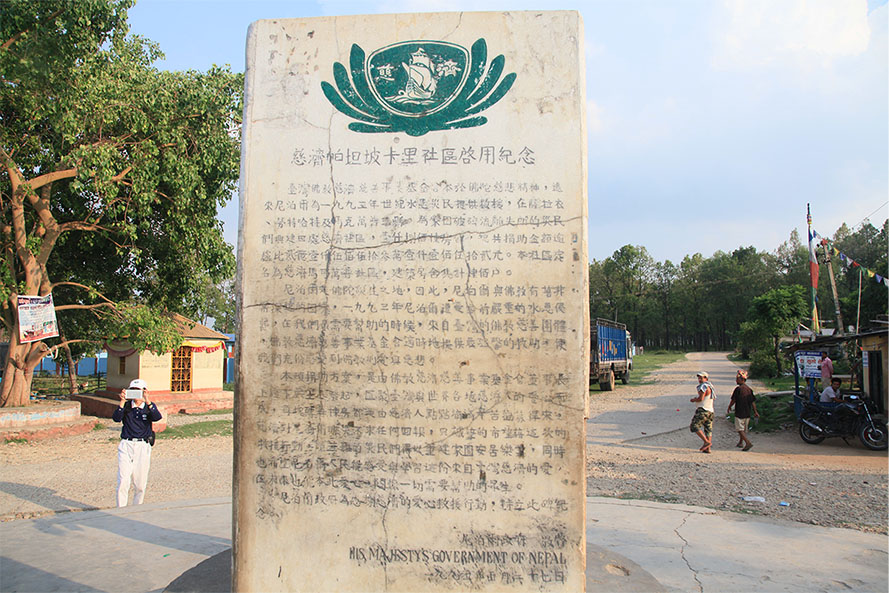
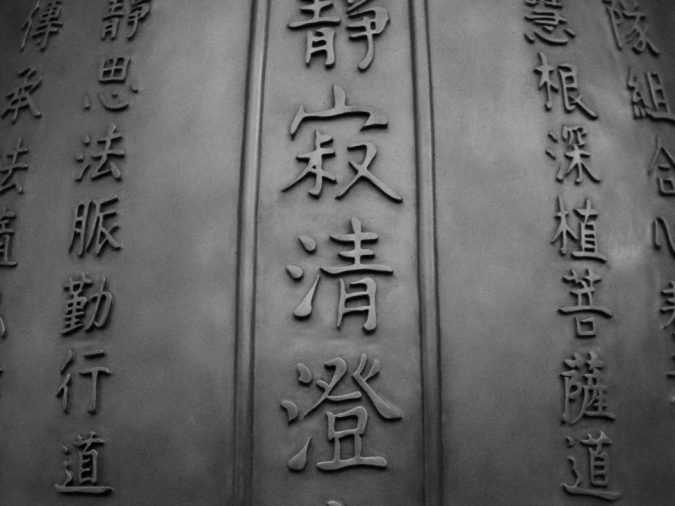
A commemorative slate bears an inscription honoring the construction of the Great Love Villages. Photo/Chingwen Chang
SHARE
In 2015, Nepal endured a deadly and devastating magnitude 7.8 earthquake that struck on April 25 – the strongest the country had experienced since 1934. Tzu Chi responded immediately, launching an extensive disaster relief operation and dispatching successive international teams to provide medical care and emergency supplies.
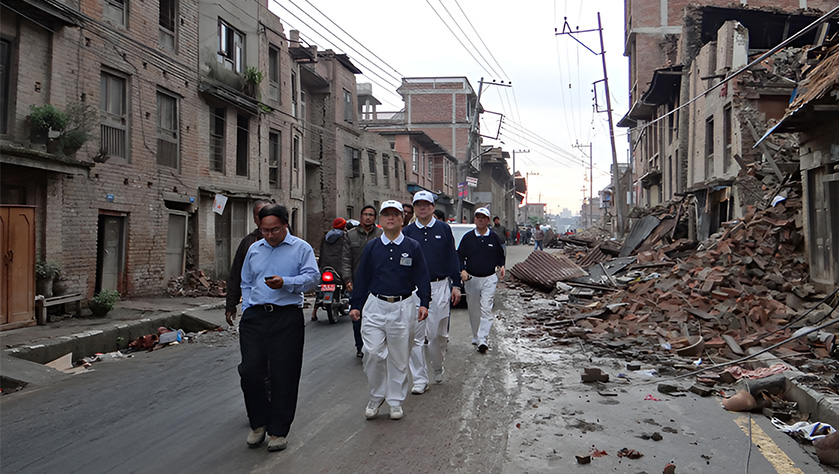
Tzu Chi volunteers assess damage in Nepal after the April 25, 2015, earthquake. Photo/Buddhist Tzu Chi Foundation
The first wave of volunteers and medical professionals arrived in Nepal on April 28, bringing more than one ton of medical supplies. “We were the first batch of disaster relief medical teams to arrive at the disaster site,” Lin remembers. In total, 11 medical and relief teams would serve during the mission, which also included the launch of Cash-for-Relief work programs to support clean-up efforts.
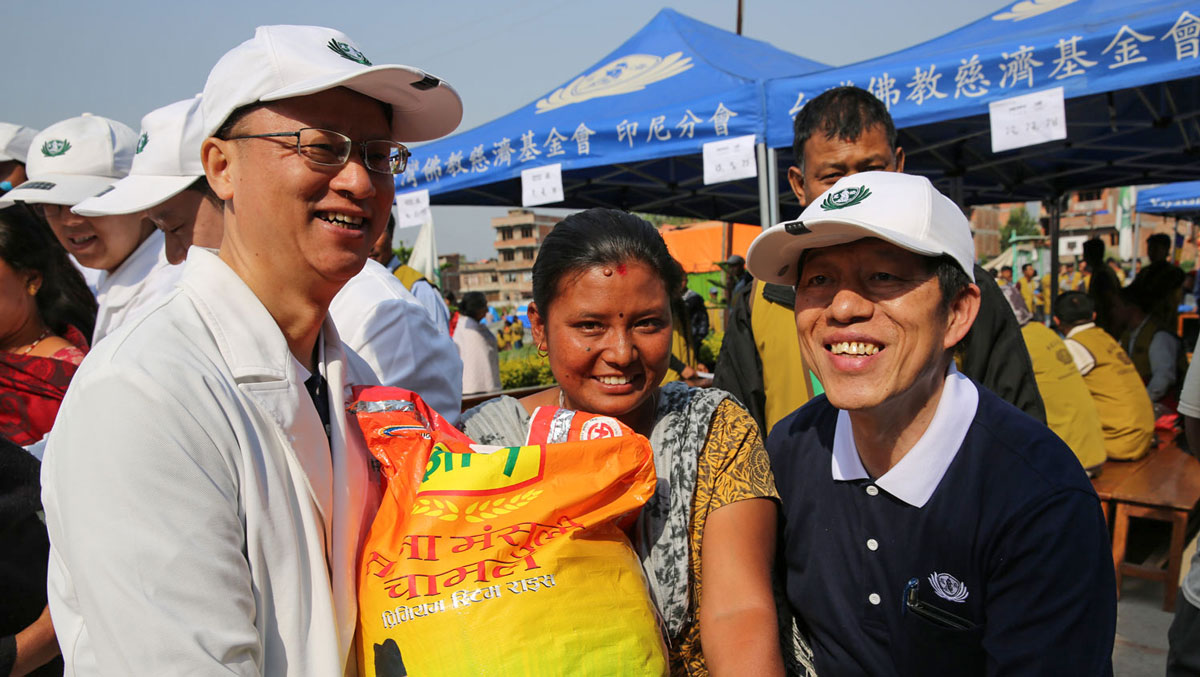
Tzu Chi disaster relief teams distribute food following the April 25, 2015, earthquake. Photo/Huichen Chuang
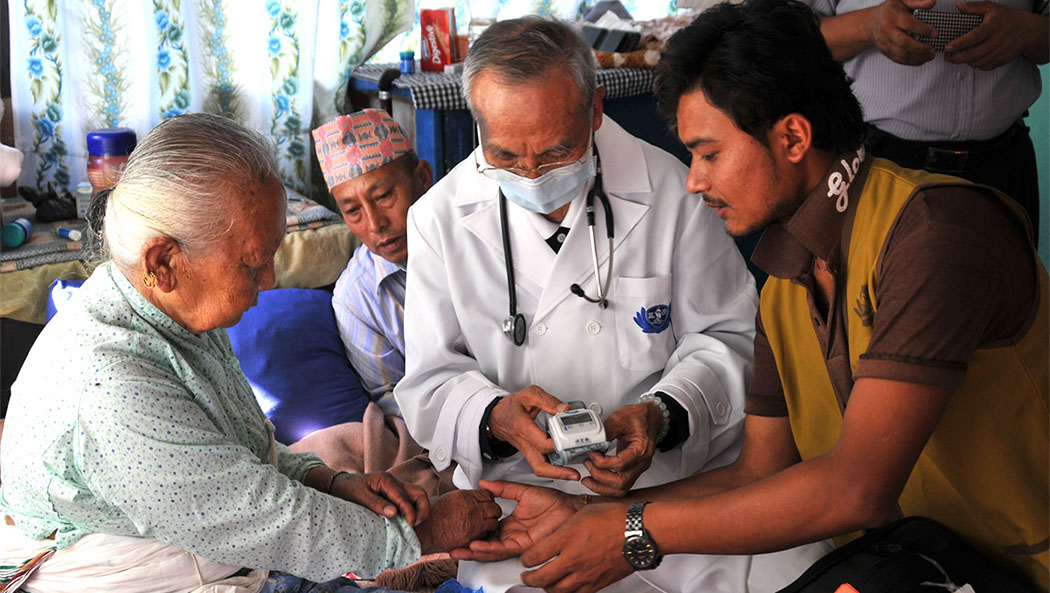
Tzu Chi medical relief teams continue offering care weeks after the earthquake. Photo/Qingqing Hu
The mission quickly led to the establishment of a Tzu Chi International Medical Association Nepal Chapter on June 22. By that time, Tzu Chi had also launched rebuilding efforts focused on the construction of prefabricated semi-permanent classrooms. An estimated one million students had been left without proper learning spaces, with many attending classes in corridors or under open-air tarps.
When Dhan Kumar Shrestha, principal of Bagiswori Secondary School in Bhaktapur, expressed his gratitude for the new classrooms to Master Cheng Yen via teleconference, she replied, “Education is Project Hope. This is like a fertile field in which we plant many seeds; in the field can grow many talented people among the students.” By the first anniversary of the disaster, Tzu Chi had built over 100 classrooms across 22 schools in Nepal, helping thousands of children resume their studies.